
Have you ever lost something you really cared about and felt a heavy, quiet ache in your chest?
That feeling is called grief, a deep response to loss that humans have experienced for thousands of years. It is a natural part of attachment, showing us that we are capable of great love and connection.
Imagine you are standing in a city made of giant stone walls, nearly four thousand years ago. This is Uruk, one of the oldest cities in the world. The king, a legendary man named Gilgamesh, is weeping because his best friend has died.
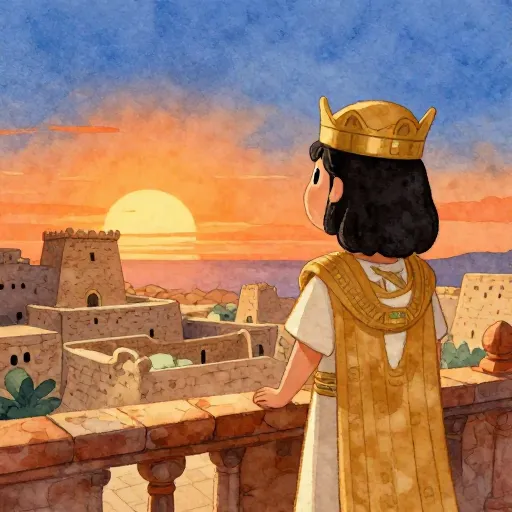
Imagine a king standing on a balcony overlooking the desert. He is wearing golden armor, but he is shaking with tears because he realizes he cannot bring his friend back. For the first time, he sees that even kings cannot control everything.
Gilgamesh was a mighty hero, but his grief made him feel small and frightened. He realized that everything he loved might one day go away. This story, the Epic of Gilgamesh, is the first time in history someone wrote down how it feels to lose someone you love.

Finn says:
"Sometimes I feel like I am supposed to 'get over' things, but I still miss my old dog every single day. Is that okay?"
Psychologists tell us that grief is not just one feeling, like sadness. It is more like a giant soup of many different feelings. You might feel angry, or confused, or even nothing at all for a while.
Why We Feel This Way
To understand grief, we have to understand why we care about things in the first place. A famous psychologist named John Bowlby spent his whole life studying attachment, which is the special bond we form with the people and pets who take care of us.

We are as much afraid of losing the person we love as we are of losing our own life.
Bowlby realized that humans are built to stay close to the people they love. When that person is gone, our brain sends out a signal that something is wrong. That signal is what we experience as the pain of grief.

Did you know that grief can actually change the way your brain works for a little while? It is like your brain's computer is busy downloading a huge, complicated file, which makes everything else run a little slower.
When we lose someone, our brain has to learn how to live in a world that looks different than it did yesterday. This takes a lot of energy, which is why grieving can make you feel very tired or like you cannot focus on schoolwork.
The Holding Environment
Another thinker, Donald Winnicott, talked about something called a holding environment. This is a safe space where you can feel whatever you need to feel without anyone trying to "fix" it right away.

Mira says:
"It is more than okay, Finn. Maybe missing them is just another way of keeping them close. It shows how much room they still have in your heart."
In a holding environment, you are allowed to be messy. You can cry, you can play, or you can sit in silence. The goal of grief is not to stop being sad, but to find a way to carry the sadness until it feels a little lighter.
Some people believe that the goal of grief is to reach 'acceptance' and move on from the person you lost.
Others believe the goal is to create a 'continuing bond,' where you find new ways to keep that person in your life forever.
Think of your feelings like a heavy backpack. You cannot just throw the backpack away, but you can learn how to adjust the straps so it fits better. Over time, your muscles get stronger, and the pack does not feel quite as heavy as it did at the start.
The History of Goodbyes
Humans have always used rituals to help them manage the big feelings of loss. Rituals are special things we do to show that a life mattered. They help us turn our private sadness into something we share with others.
Through the Ages
In Victorian England, about 150 years ago, people wore black clothes for a long time to show they were in mourning. They even made jewelry out of the hair of people who had died so they could keep a piece of them close.

Create a 'Memory Jar.' Whenever you think of a happy or funny story about what you lost, write it on a small slip of paper and put it in the jar. On days when the grief feels heavy, you can pull out a slip and remember the light.
In Mexico, during Día de los Muertos (Day of the Dead), families build beautiful altars called ofrendas. They fill them with bright orange flowers, candles, and the favorite foods of the people they miss. This turns a sad thing into a colorful celebration of memory.
Finding Your Way Through
Grief does not move in a straight line. Some people used to think you went through "stages," like levels in a video game. But most people find that grief is more like the ocean: it comes in waves.

In some ways suffering ceases to be suffering at the moment it finds a meaning.
Some days the water is calm and you feel okay. Other days, a giant wave of sadness might knock you over when you least expect it. Both of these days are a normal part of the process.
Finn says:
"It is weird how some days I feel fine and then suddenly I am sad again. It is like a weather report that keeps changing."
When things feel very hard, some people find comfort in resilience. This is the ability to keep growing even when life is difficult. A thinker named Viktor Frankl believed that humans can survive almost anything if they can find a reason to keep going.
The Fear and the Love
Sometimes, grief feels very scary. It can feel like a cold wind or a dark room. C.S. Lewis, a famous author who wrote The Chronicles of Narnia, once said that he never realized how much grief felt like being afraid.

No one ever told me that grief felt so like fear.
If you feel scared when you are grieving, that is okay too. It is your heart's way of trying to protect you. The most important thing to remember is that you do not have to carry the fear or the sadness all by yourself.
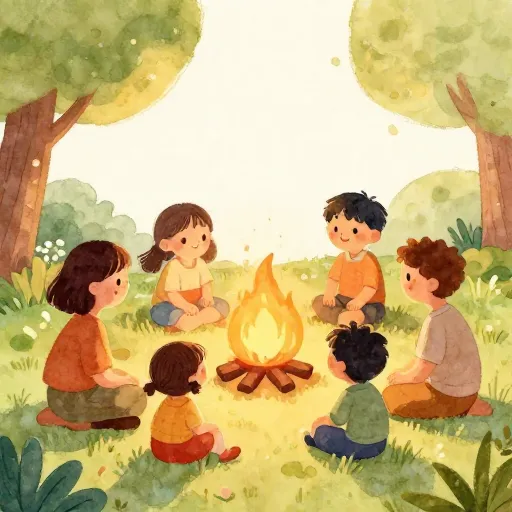
In some cultures, people believe that as long as we speak the names of those we have lost, they are never truly gone. This is why many families tell stories about their ancestors every single year.
Even when someone is gone, the love you had for them stays. That love often turns into memories, which are like little treasures you keep in a mental box. You can take them out and look at them whenever you want.
Something to Think About
If grief is the shadow that love casts, what does that tell us about the light?
There are no right or wrong answers here. Just think about how love and sadness might be two parts of the same very big thing.
Questions About Psychology
How long does grief last?
Is it okay to feel happy when I'm supposed to be grieving?
Why do some people get angry when they are sad?
Holding Space for the Heart
Grief is one of the hardest things humans go through, but it is also one of the things that connects us all. By learning to be patient with ourselves and others, we can create a world where it is safe to be sad, safe to remember, and safe to keep loving.