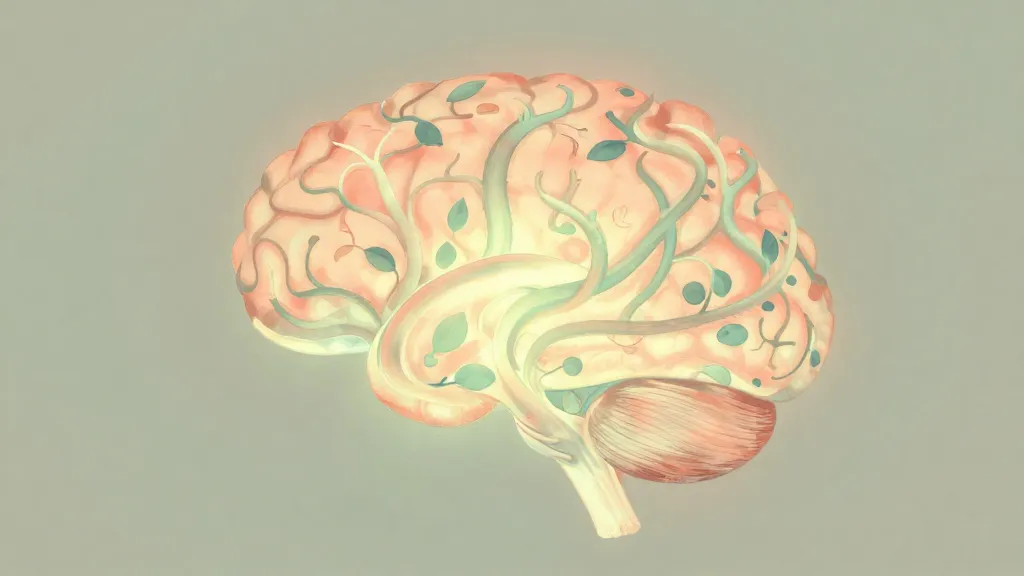
Have you ever felt like you were just 'born' bad at something, like soccer or long division?
For a long time, people thought our intelligence was a fixed amount we were given at birth. But psychology shows us a different story: through a Growth Mindset, we can see our brains as malleable tools that physically change when we struggle with new ideas.
Imagine you are sitting in a quiet, sunlit room at Stanford University in California. It is the 1970s, and a scientist named Carol Dweck is watching a group of children through a one-way mirror.
She gives the children a series of puzzles to solve. Some are easy, but others are nearly impossible. She wants to see how they handle the feeling of being stuck.
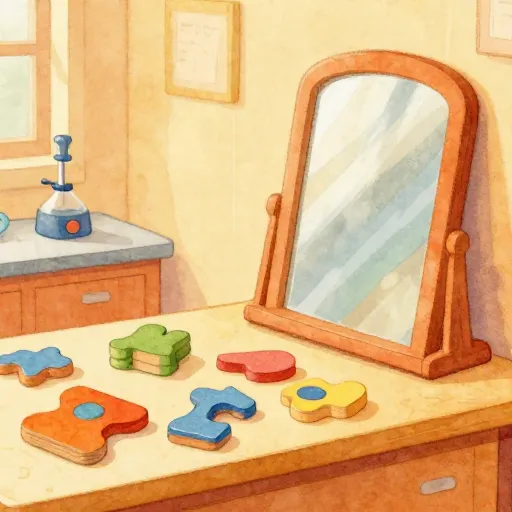
Imagine a room with a two-way mirror. On one side, children are trying to fit complicated wooden blocks together. On the other side, scientists are taking notes on every sigh, every smile, and every time a child says 'I give up.' This was the laboratory where the idea of the growth mindset was born.
Some children get frustrated and give up, assuming they just aren't "puzzle people." But other children do something that shocks the researchers. They don't just try hard: they actually seem to enjoy the struggle.
One young boy, after failing a very hard puzzle, rubs his hands together and says, "I love a challenge!" Dweck realized that these children had a secret way of looking at the world.
The Two Ways of Thinking
Dweck discovered that most people carry around one of two different sets of beliefs about their own brains. She called these mindsets.
A Fixed Mindset is the belief that your intelligence and talents are carved in stone. If you have this mindset, you might think you are either "smart" or "not smart," and there is nothing you can do about it.

Becoming is better than being.
A Growth Mindset is the belief that your basic qualities are things you can cultivate through your efforts. It is the idea that your brain is like a muscle that gets stronger the more you use it.

Finn says:
"Wait, if my brain is like a muscle, does that mean it gets 'sore' when I'm learning something really hard? Is that what frustration actually is?"
When you have a growth mindset, a mistake isn't a sign that you are a failure. Instead, a mistake is just a piece of information that tells you which way to go next.
I have to look smart at all costs. If I fail, it means I'm not talented. Challenges are scary because I might look bad.
I want to learn as much as I can. If I fail, it means I need to try a different strategy. Challenges are exciting opportunities to get better.
The Secret Life of Your Brain
For centuries, even the smartest doctors thought the adult brain was a finished machine. They believed that once you grew up, your brain stopped changing and you were stuck with the skills you had.
But in the late 20th century, new technology allowed us to look inside the living human head. Scientists discovered something called neuroplasticity.
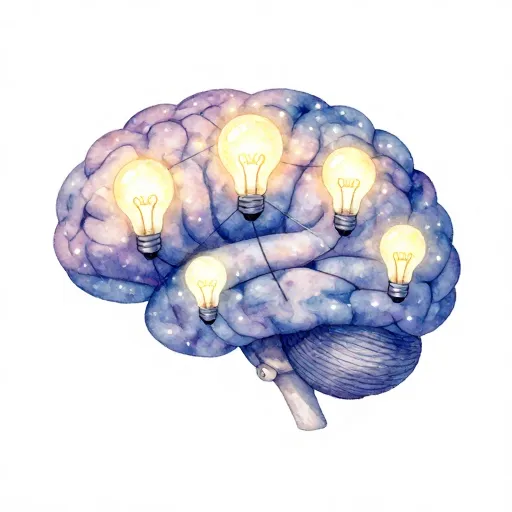
Your brain uses about 20 percent of your body's energy. When you are learning something difficult, your brain actually burns more fuel! It is hard work to build new neural pathways, which is why you might feel tired after a long day of school.
Your brain is made of billions of tiny cells called neurons. Every time you learn something new, these neurons send electrical signals to each other and form new connections.
These connections are called synapses. When you practice a new skill, the connection between those neurons gets thicker and faster, like a dirt path turning into a paved highway.

Mira says:
"It's like our brains are constant drafts. We never really have a 'final version' because every day we add a new sentence or a new connection."
This means that your brain is literally changing its physical shape every time you struggle to understand a difficult book or master a new skateboard trick. You are the architect of your own mind.
The Power of Yet
One of the most important words in the history of psychology is the word "yet." It is a tiny word, but it holds a massive amount of power.
When a student with a fixed mindset fails a test, they say, "I'm not good at math." But a student with a growth mindset says, "I'm not good at math... yet."
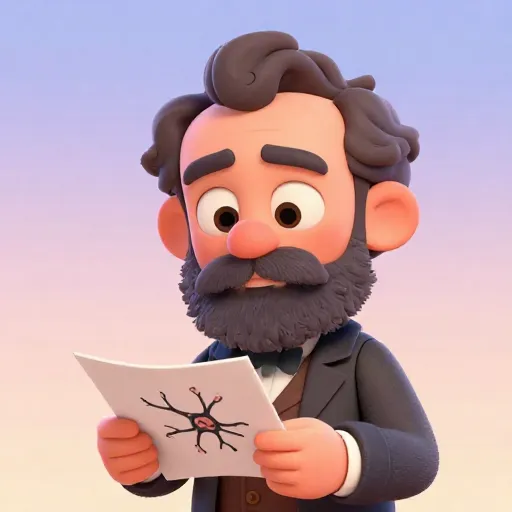
Any man could, if he were so inclined, be the sculptor of his own brain.
That one word changes everything. It turns a wall into a bridge. It acknowledges that while you might be struggling right now, you are in the middle of a process of becoming.
This is why psychologists say we should praise effort rather than talent. If someone tells you that you are "naturally smart," you might become afraid of making mistakes because you don't want to lose that title.
But if you are praised for your hard work and persistence, you learn to value the process of learning. You become more interested in the journey than the trophy at the end.
Through the Ages
Why Failure is Actually Data
In our modern world, we often see failure as something to be ashamed of. We hide our rough drafts and only show people our finished masterpieces.
But to a scientist or an inventor, failure is just a data point. It is a sign that you have found one way that doesn't work, which brings you one step closer to the way that does.
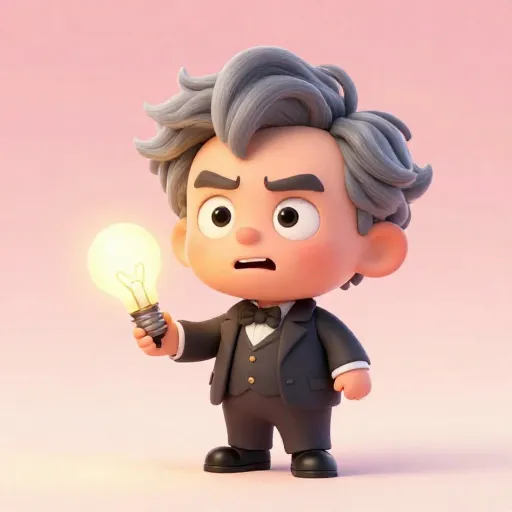
I have not failed. I've just found 10,000 ways that won't work.
When you feel that hot, prickly feeling of frustration when you can't get something right, that is actually the feeling of your brain growing. It is the sound of those neurons reaching out to find new partners.
This kind of resilience is what separates people who reach their potential from those who stay stuck. It isn't that successful people never fail: it is that they fail better.
Finn says:
"What if the world's greatest experts are just the people who were willing to be bad at things for the longest amount of time?"
Growing Your Own Mindset
So how do you actually change the way you think? It starts by noticing the "voice" in your head when things get difficult.
If that voice says, "I can't do this," you can practice talking back to it. You can tell yourself, "I can't do this yet, but I'm building the pathways to get there."
The next time you find yourself saying 'I can't do this,' stop and add the word 'yet' to the end of the sentence. Notice how it feels in your chest. Does the problem feel a little bit more like a mountain you can climb, rather than a wall you are stuck behind?
This isn't about being "fake happy" or pretending that things are easy. Learning is often hard and sometimes boring.
But the growth mindset gives you the courage to be a beginner. It allows you to be messy and imperfect, knowing that mastery is something that is earned, not something you are born with.
Something to Think About
If you knew for a fact that your brain would grow stronger every time you failed, would you try more difficult things?
There is no right or wrong answer here: some people prefer to master one thing, while others love the constant scramble of being a beginner. Think about how your day might change if you stopped worrying about being 'smart.'
Questions About Psychology
Does a growth mindset mean anyone can do anything?
Is it bad to have a fixed mindset sometimes?
How long does it take for the brain to change?
The Unfinished Map
Your mind is like a map that is constantly being redrawn. Every time you ask a question, every time you try a new hobby, and every time you get back up after a fall, you are adding new territory. The beauty of the growth mindset is that the map is never finished. There is always one more path to explore, provided you are willing to take the first step into the unknown.
