
Have you ever wondered why we say we 'pursue' happiness, as if it were a fast-moving rabbit we need to catch in a net?
For thousands of years, humans have tried to define what it means to live a good life. We often think of happiness as a feeling of pure joy, but psychologists and philosophers look at it as a complex mix of well-being, purpose, and how we handle the times when things go wrong.
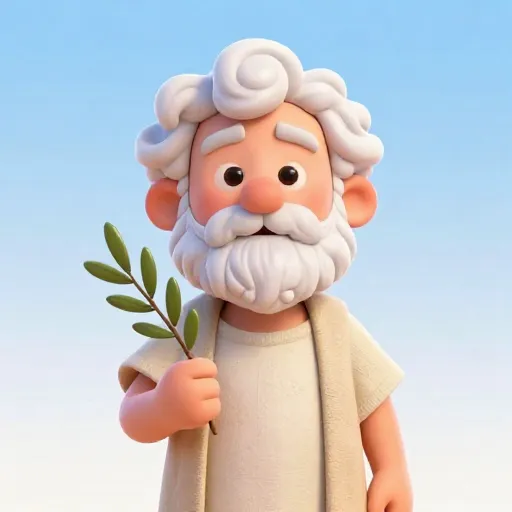
Imagine standing in a garden in Athens, Greece, more than two thousand years ago. The air smells of rosemary and warm stone, and the sound of cicadas buzzes in the trees. You are not at a fancy palace or a busy market. You are in a place simply called 'The Garden,' where a man named Epicurus is talking to his friends about what makes life worth living.
At this time, many people thought happiness meant having lots of money, power, or winning great battles. Epicurus disagreed. He believed that the secret to a happy life was actually very quiet. It was about having good friends, thinking deep thoughts, and not being afraid of the world.

Imagine a school with no desks, no tests, and no walls. Epicurus's 'Garden' was a place where anyone: including women and people who were enslaved, which was very unusual at the time: could come to talk. They ate simple meals of bread and water, sometimes with a little bit of cheese as a treat. They believed that having deep conversations with friends was the highest form of luxury.
Epicurus taught that we often chase things that don't actually make us happy. We think a new toy or a bigger house will change everything, but the feeling usually fades. He called this focus on simple, physical pleasure Hedonism, though he warned that too much of a good thing often leads to a headache later.
Instead of big thrills, he suggested we look for 'ataraxia.' This is a Greek word that means 'undisturbedness.' It is the feeling of being like a calm lake on a windless day.

Finn says:
"If happiness is just about feeling calm like a lake, does that mean we shouldn't get excited about big things, like rollercoasters or winning a game?"
While Epicurus was looking for peace in his garden, another philosopher named Aristotle was thinking about happiness in a different way. Aristotle lived in the same city but had a much busier idea of joy. He didn't think happiness was a feeling you just 'had' while sitting still.
He used a special word: Eudaimonia. It is hard to translate, but it basically means 'flourishing.' Think of a plant that has exactly the right soil, sun, and water to grow into its strongest, most beautiful self. That plant is flourishing.
Happiness is the meaning and the purpose of life, the whole aim and end of human existence.
For Aristotle, being happy was a bit like being a great gardener for your own soul. He believed we are happy when we are doing things well. This might mean being a good friend, learning a difficult skill, or making a brave choice.
He thought that every human has a 'function,' or a special job. Just as the 'job' of a knife is to cut, the 'job' of a human is to think and act with virtue. When you use your brain and your kindness to solve a problem, you are experiencing eudaimonia.
Happiness is a feeling. It’s the buzz of joy when you eat ice cream or the thrill of an amusement park ride. It is something that happens inside your body and makes you smile.
Happiness is an action. It is the work of being a good person and doing things that matter. You might not be 'smiling' while you study for a test or help a friend, but that is the 'Good Life.'
Aristotle also talked about the 'Golden Mean.' This is the idea that happiness is usually found in the middle of two extremes. For example, being brave is the happy middle between being a coward and being reckless.
It takes a lot of practice to find that middle spot. Aristotle believed that happiness wasn't a lucky accident. Instead, it was a habit. The more often you make good choices, the easier it becomes to be happy.

Mira says:
"I like the idea of flourishing. It makes me think that being happy is something we 'do' rather than just something that 'happens' to us, like a plant growing its leaves."
As the centuries passed, the way people thought about happiness began to change. In the Middle Ages, many people believed that true happiness couldn't be found on Earth at all. They thought life was meant to be hard, and joy was something that only happened in the afterlife.
But during a time called the Enlightenment, thinkers started to suggest that being happy was a natural human right. In 1776, the United States even put the 'pursuit of happiness' into its Declaration of Independence. Suddenly, being happy wasn't just a nice idea: it was a goal for everyone.

The word 'happy' actually comes from the Old Norse word 'hap,' which means 'luck' or 'chance.' This tells us that for a long time, people thought happiness was just something lucky that happened to you, like finding a gold coin on the street!
By the time we get to the 1900s, scientists started to get curious about what was happening inside our heads when we felt good. They discovered that our brains use special chemicals called neurotransmitters to send 'happy' signals.
One of these chemicals is Dopamine. Your brain releases it when you expect a reward, like when you’re about to eat your favorite pizza. Another is Serotonin, which helps you feel calm and important. These chemicals are like the brain's internal messaging system for joy.

The greatest discovery of my generation is that a human being can alter his life by altering his attitudes.
However, scientists noticed a strange problem called the Hedonic Treadmill. Have you ever really, really wanted a specific birthday gift? You think about it for weeks, and when you finally get it, you feel amazing. But a month later, it’s just another toy on the shelf.
This happens because our brains are designed to get used to things. We return to a 'baseline' level of happiness fairly quickly. If we didn't, we might stay so excited about one toy that we never bothered to go out and find food or learn new things!
Finn says:
"Wait, if our brains just get used to new things, does that mean we're stuck on a treadmill forever? How do we ever get anywhere?"
This brings us to a modern psychologist named Martin Seligman. He noticed that for a long time, psychology only studied what made people sad or angry. He wanted to start a new field called Positive Psychology to study what makes life go right.
Seligman found that happiness isn't just one thing. He created a model called PERMA. Each letter stands for something that helps us flourish: Positive emotion, Engagement, Relationships, Meaning, and Accomplishment.
Psychologists have found that 'Savoring' is a great way to boost happiness. Next time you eat something you love, don't just gulp it down. Try to notice the texture, the smell, and every different flavor. When you slow down to really experience a good thing, you are training your brain to notice the 'sunny side' of life more often.
One of the most interesting parts of this is 'Engagement,' which another psychologist named Mihaly Csikszentmihalyi called Flow. You have probably felt this before. It is that moment when you are so busy drawing, playing a game, or reading that you completely lose track of time.
When you are in a state of flow, you aren't exactly 'smiling' or 'laughing.' You are simply focused. Paradoxically, this deep focus is one of the most satisfying things a human can experience. It feels better than just sitting on the couch eating candy.
Through the Ages: The Search for Joy
Today, many people practice something called Mindfulness to find happiness. This comes from ancient Buddhist traditions. It means paying attention to the present moment without judging it. Instead of worrying about tomorrow or regretting yesterday, you just feel the breath in your lungs right now.
There is also a big focus on Resilience. This is the ability to 'bounce back' when things are tough. Psychologists have realized that being happy doesn't mean being happy 100% of the time. That would actually be quite exhausting and a bit strange!
In some countries, like Bhutan, the government doesn't just measure how much money the country makes (GDP). They also measure 'Gross National Happiness.' They believe it is the government's job to make sure the environment, culture, and people's minds are healthy, not just their bank accounts.
A healthy life includes sadness, anger, and frustration. In fact, knowing how to be sad is a very important part of being a happy person. If we never felt sad, we wouldn't know when something was wrong or when someone we love needed our help.
Sometimes, the pressure to 'be happy' can actually make us feel worse. This is why some thinkers suggest we should focus less on the feeling of happiness and more on the feeling of Compassion. When we help others, our own 'happiness' often takes care of itself.

If you want others to be happy, practice compassion. If you want to be happy, practice compassion.
So, is happiness a garden you sit in, a skill you practice, a chemical in your brain, or a way of helping others? The truth is, it's probably a little bit of all of them. Happiness isn't a destination you reach and then stay at forever.
It is more like a weather system. Sometimes the sun is out, sometimes it rains, and sometimes there's a beautiful, complicated fog. Understanding that all these 'weathers' are part of a full human life is perhaps the biggest idea of all.
Something to Think About
If you were to create your own 'Happiness Garden,' what three things would absolutely have to be there?
Remember, there is no right answer. Some people might need books and silence, while others might need music and a crowd of friends. What does your flourishing look like?
Questions About Psychology
Can I be happy all the time?
Does money make you happy?
Is happiness a choice?
The Never-Ending Garden
Whether you are a philosopher in a Greek garden or a student in a modern classroom, the search for happiness is a journey you share with every human who has ever lived. It isn't a puzzle to be solved, but a life to be lived: one quiet, curious, and kind step at a time.
