
If you could look inside your own head, you wouldn't see thoughts, dreams, or memories.
Instead, you would find a soft, wrinkled, gray-pink organ about the size of two clenched fists. This is the brain, the most complex object we have ever discovered in the entire universe, working as the command center for your nervous system.
Imagine you are standing in a dark room. You decide to wiggle your left big toe. In less than a blink of an eye, a signal travels from your head, down your spine, and all the way to your foot.
This happens so fast you don't even have to think about it. But inside that quiet, dark space in your skull, a massive electrical storm is happening every second. Your brain is never truly off, not even when you are fast asleep.
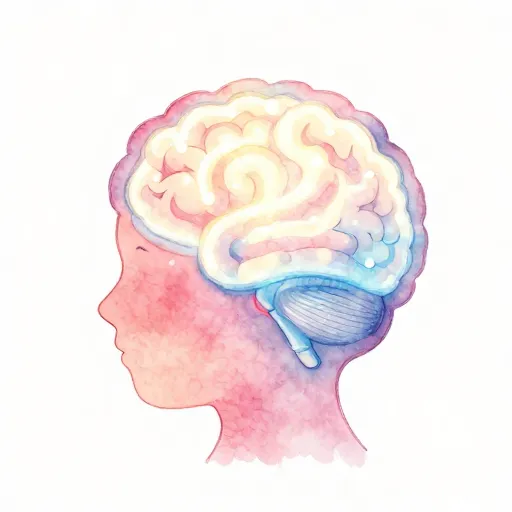
Your brain is about 75 percent water. It has the consistency of soft gelatin or firm tofu. Even though it is so soft, it uses 20 percent of all the energy your body produces!
For most of human history, we had no idea what the brain was for. People looked at this jelly-like substance and thought it was just a cooling system for the heart. It took thousands of years of curiosity to realize that everything you are is stored right there.
The Great Heart Mistake
If you traveled back to Ancient Egypt four thousand years ago, you would find doctors who were experts at fixing broken bones. They were very careful about the body, especially when someone died. They believed the heart was the home of intelligence and the soul.
When they prepared a body for the afterlife, they kept the heart safely inside. But the brain? They thought it was useless. They actually used a metal hook to remove it through the nose and threw it away.
Finn says:
"Wait, they just threw it away? I bet those Egyptians would be so embarrassed if they knew the brain was actually doing all the thinking!"
It wasn't until around 500 BCE that a Greek doctor named Alcmaeon started to notice something. He saw that the eyes and ears were connected to the brain by thin tubes. He began to wonder if the brain was actually the place where we process what we see and hear.
Later, another famous Greek doctor named Hippocrates made a bold claim. He argued that the brain was the most powerful part of the body. He realized that when the brain was hurt, the person’s personality or ability to move changed.
Men ought to know that from nothing else but the brain come joys, delights, laughter and sports, and sorrows, griefs, despondency, and lamentations.
The Discovery of the Tiny Workers
For a long time, people thought the brain was just one solid mass. They didn't know it was made of billions of individual parts. In the late 1800s, a Spanish scientist named Santiago Ramón y Cajal spent his nights looking through a microscope in his home laboratory.
He used a special silver stain to color brain cells so he could see them clearly. What he saw changed everything. He discovered that the brain is made of trillions of tiny, separate cells called neurons.
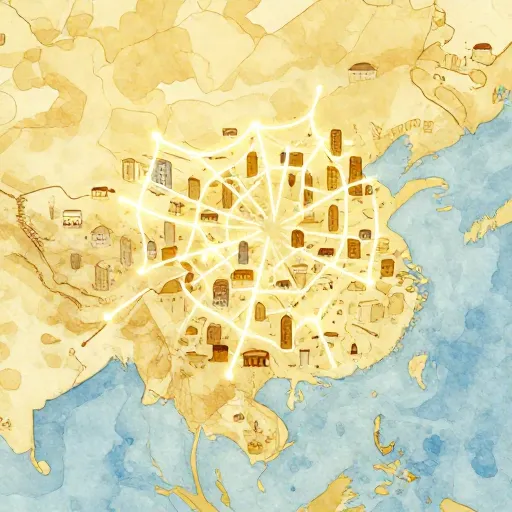
Imagine a giant map of the world where every single house is connected to every other house by a telephone wire. Now imagine all those phones ringing at once. That is still simpler than what is happening inside your head right now.
Cajal saw that these neurons didn't actually touch each other. There was a tiny, microscopic gap between them. We now call this gap a synapse. For a thought to move, it has to jump across that gap using a tiny spark of electricity and a squirt of chemicals.
- There are about 86 billion neurons in your brain.
- Each neuron can connect to 10,000 other neurons.
- Messages travel through your neurons at up to 268 miles per hour.
- Your brain generates enough electricity to power a small LED lightbulb.

Mira says:
"It’s like my brain is a giant forest made of electricity. Every time I learn something, a new path opens up through the trees."
The Map of Your Mind
If you look at a brain, it has two halves that look like mirror images. These are the hemispheres. People often say that the left side is for math and the right side is for art, but that is a bit of a myth. Both sides work together for almost everything you do.
However, different areas of the brain do have special jobs. This is called localization of function. It means your brain is like a giant house where different rooms are used for different activities.
Some scientists believe that every specific thought or memory has one exact spot in the brain where it lives, like a file in a cabinet.
Others believe that thoughts are 'distributed,' meaning a single memory of a cat is spread out across many different parts of the brain at once.
At the very back of your head is the occipital lobe, which handles your vision. If you get hit on the back of the head and "see stars," it's because that part of your brain just got shaken up. Your ears send signals to the sides of your brain, and your touch is handled by a strip right across the top.
But the most interesting part for humans is the very front, called the prefrontal cortex. This is the part of the brain that helps you make plans, decide between right and wrong, and stay focused. It is like the conductor of an orchestra, making sure all the other parts play together.
The brain is a world consisting of a number of unexplored continents and great stretches of unknown territory.
The Amazing Growing Garden
One of the most exciting things about your brain is that it is constantly changing. Scientists used to think that once you grew up, your brain was "fixed" and stayed the same forever. We now know that isn't true at all.
This ability to change is called neuroplasticity. Think of your brain like a garden. When you learn something new, like how to ride a bike or play a video game, your neurons grow new branches and make new connections.
- You try a new skill and it feels difficult because the path is weak.
- You practice, and the neurons start sending signals more often.
- The brain builds a layer of insulation called myelin around those neurons.
- The signal now travels lightning-fast, and the skill becomes "second nature."
Try to write your name with your 'wrong' hand. It feels weird and slow, right? That is because the path in your brain for that hand is like a trail through thick weeds. If you did it every day for a month, your brain would build a smooth, paved road for those signals, and it would become easy!
This means you aren't stuck with the brain you were born with. Every time you struggle with a hard math problem or try to learn a new language, you are physically re-wiring your own head. You are the architect of your own mind.
Through the Ages
The Mystery of You
Even though we know a lot about how neurons fire and which parts of the brain do what, there is still a massive mystery. Scientists call it the "Hard Problem." We can see the electricity moving, but we don't know how that electricity turns into the feeling of being you.
How does a chemical reaction in a neuron become the smell of a rose? How does a burst of electricity become the feeling of being happy or the memory of your grandmother's house? This is where psychology and philosophy meet.
Finn says:
"What if my brain is actually dreaming right now, and this whole world is just a very realistic movie it's playing for me?"
Some people think of the brain as a computer and the mind as the software. Others think the brain is more like a radio, receiving signals from somewhere else. We don't have the answer yet, and that is what makes being a brain scientist so exciting.
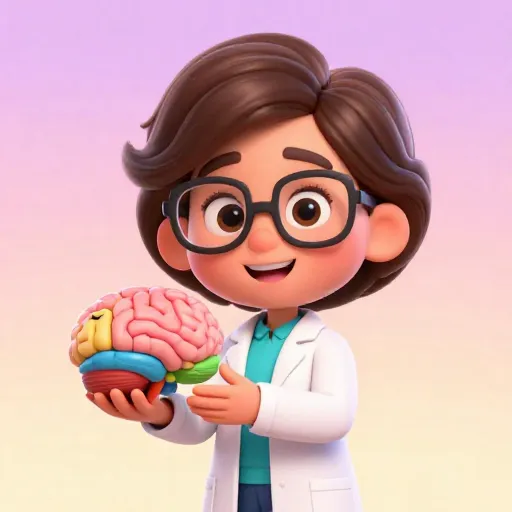
The brain is the only organ in the human body that grows with use.
Your brain is also very good at protecting you. It has an amygdala, a tiny almond-shaped part that acts like a smoke alarm. When it senses danger, it takes over and prepares you to fight, run away, or freeze. This kept our ancestors safe from tigers, even if today it sometimes goes off just because you have to give a speech in class.
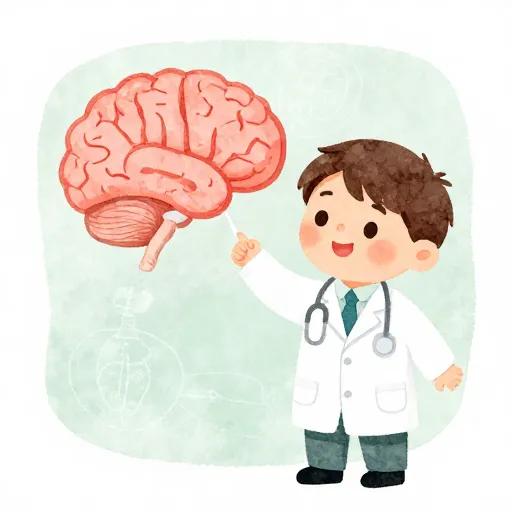
The brain itself cannot feel pain. Even though it processes pain signals from your whole body, the brain tissue has no pain receptors. This is why surgeons can sometimes perform brain surgery while the patient is awake and talking!
As you go through your day, remember that your brain is listening to everything you do. It is absorbing the world, building new paths, and trying to make sense of the universe. It is the only organ that has named itself!
Something to Think About
If you could swap brains with your pet for one hour, would you still be 'you' inside a dog's body, or would you simply be a dog?
There is no right answer to this question. It's something philosophers and scientists have argued about for hundreds of years. What do you think makes you who you are?
Questions About Psychology
Does a bigger brain make you smarter?
Do we really only use 10 percent of our brains?
Can the brain get tired?
The Explorer in the Mirror
The next time you look in the mirror, remember that you are looking at a master of the universe. Behind your eyes is a three-pound wonder that can imagine things that don't exist, remember things from years ago, and ponder its own existence. Your brain is the tool you use to build your world, and the more you use it, the more it grows.
