Have you ever felt a strange fluttering in your stomach right before a big test or a stage performance?
That feeling has a name that adults use a lot: anxiety. It is one of the oldest experiences in human history, tied deeply to our evolutionary biology and the way our brains try to keep us safe in an uncertain world.
Long before there were schools, skyscrapers, or even cities, humans lived in a very different world. Imagine standing in a wide, grassy field thousands of years ago.
Every rustle in the tall grass could be the wind, or it could be a hungry predator. Your brain had to decide very quickly if you were safe or in danger.

Imagine your brain has a smoke detector. Its job is to beep when there is a fire. But sometimes, it's so sensitive that it beeps just because you're making toast. Anxiety is like that toast-triggered beep, it's a loud alarm for a small heat.
This early human brain developed a system called the stress response. When your ancestors sensed a threat, their bodies would flood with energy to help them run away or stay and fight.
Today, we call this the 'fight or flight' response. Even though we don't usually have to worry about lions, our brains still use this same old system.
The Guard Dog in Your Brain
Inside your head, there is a tiny, almond-shaped part called the amygdala. Think of it as a very loyal, but sometimes over-eager, guard dog.
Its only job is to watch for danger and bark loudly to warn you. When the amygdala barks, your heart beats faster and your breathing gets shallow.

Finn says:
"So, if my heart starts racing before a soccer game, that's just my 'guard dog' thinking a striker is a sabre-toothed tiger?"
This is what anxiety feels like in the body. It is your guard dog barking at something it thinks might be a problem, like a math test or a new group of people.
Sometimes, the dog barks at things that aren't actually dangerous at all. It might bark at a harmless shadow or a 'what if' thought about the future.

Anxiety is the dizziness of freedom.
Kierkegaard was a philosopher who lived in Denmark a long time ago. He thought that anxiety wasn't just a mistake or a 'bad' feeling.
Instead, he believed it was a sign that we are free to make choices. When we realize we have many different paths to take, we feel a bit dizzy, and that dizziness is anxiety.
The Invention of 'Nervousness'
For a long time, people didn't use the word 'anxiety' the way we do now. In ancient Greece, doctors like Hippocrates thought feelings came from the balance of fluids in the body.
They called deep sadness or worry 'melancholy.' They believed it was caused by having too much 'black bile,' which they thought was a heavy, dark liquid.
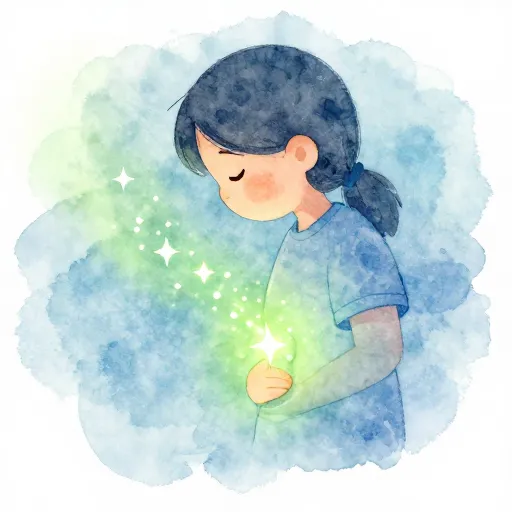
In the 1600s, people thought anxiety lived in the stomach. They weren't entirely wrong! Today, scientists call the gut our 'second brain' because it is full of nerves that talk directly to our head.
By the 1800s, the world was changing fast because of the Industrial Revolution. People moved into crowded cities and started working in loud factories with strict clocks.
Doctors began to notice a new kind of feeling they called 'neurasthenia' or 'nervous exhaustion.' They thought the modern world was simply moving too fast for the human brain to keep up.
A History of Worry
As you can see, humans have always been trying to find words for that tight feeling in the chest. We have always known that living can feel overwhelming.
A Safe Place to Feel
In the middle of the 1900s, a doctor named Donald Winnicott looked at anxiety in a new way. He spent a lot of time watching how babies and parents interact.
Winnicott realized that we all need something he called a holding environment. This isn't just a physical hug, though hugs are very important.
Try the 5-4-3-2-1 technique to help your 'guard dog' feel safe. Look around and name 5 things you can see, 4 things you can touch, 3 things you can hear, 2 things you can smell, and 1 thing you can taste. This tells your brain you are right here, right now, and you are okay.
A holding environment is a space where you feel safe enough to be yourself, even when you are scared. It is a place where someone else can 'hold' your big feelings so they don't feel so heavy.
When we are anxious, we often feel like we are falling or that things are falling apart. A parent, a teacher, or a friend helps by showing us that we are still safe.

Mira says:
"Exactly! And sometimes, just having someone sit with you while you feel that way makes the 'tiger' turn back into a soccer ball."
Winnicott also talked about the potential space. This is the area between your inner world (your thoughts) and the outer world (the real things around you).

It is in playing and only in playing that the individual child or adult is able to be creative and to use the whole personality.
Winnicott believed that when we feel safe, we can use our imagination to 'play' with our fears. We can turn a scary thought into a story or a drawing, which makes it feel smaller.
The Mystery of the Unknown
Another thinker named Adam Phillips believes that anxiety is often about things we are 'missing out' on. He thinks we worry because we want our lives to be perfect.
But life is rarely perfect, and it is almost always full of surprises. Phillips suggests that being 'good enough' is actually better than being perfect.
Some anxiety is helpful because it reminds us to prepare. It’s like a nudge saying, 'Hey, don't forget to study for that quiz!'
Too much anxiety is unhelpful because it freezes us up. It's like a loud noise that makes it impossible to think about the quiz at all.
If we try to be perfect, our guard dog barks all the time because perfection is impossible. If we accept that we are 'good enough,' the dog can finally take a nap.
Anxiety often shows up when we don't know what is going to happen next. Humans generally prefer knowing the plan, but life doesn't always provide one.
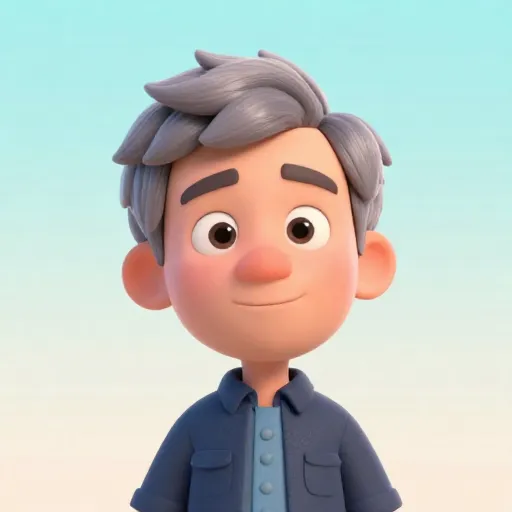
Finn says:
"I guess not knowing what's for dinner is a little bit like a mystery story. It's scary if I'm super hungry, but kind of cool if I'm curious."
Phillips suggests that uncertainty is actually where the most interesting things happen. If we knew exactly what would happen every day, life would be very boring.
The capacity to be bored can be a developmental achievement for the child.
Phillips wants us to see that feeling a bit lost is part of being a person. We don't have to have all the answers right away.
Why Your Brain Does This
It helps to remember that your brain isn't trying to be mean to you. It is actually trying to be your best friend and protector.
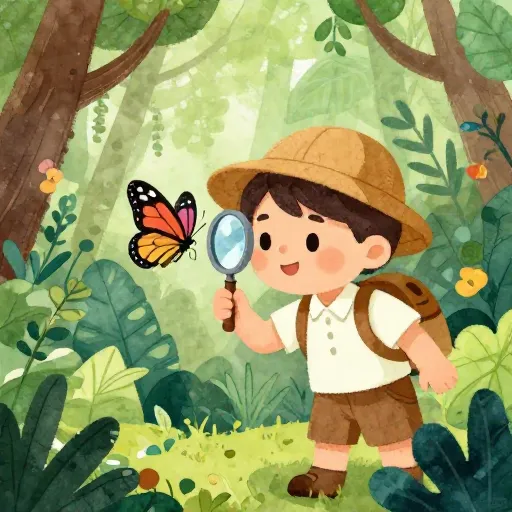
Imagine you are an explorer in a thick jungle. You are alert and your senses are sharp. That 'alertness' is a form of anxiety that keeps you from stepping on a snake. In small doses, anxiety is actually a survival skill!
When you feel that rush of adrenaline, your brain is saying, 'Hey! Pay attention! Something important is happening!'
The problem is that the brain doesn't always know the difference between an 'important' thing and a 'scary' thing. It treats a difficult spelling word the same way it treats a tiger.
How to Talk to Your Anxiety
Since anxiety is a part of being human, we don't need to try to get rid of it forever. Instead, we can learn how to live with it, like a roommate who talks a bit too loud.
One of the best ways to handle it is to name it. Scientists have found that saying 'I am feeling anxious' actually helps the amygdala calm down.
- Give your anxiety a nickname, like 'The Worry Whistler' or 'Professor Panic.'
- Thank your brain for trying to protect you, but tell it you've got this.
- Focus on the feeling of your feet on the floor to remind your brain you are on solid ground.
Something to Think About
If your anxiety was a character in a movie, what would they look like, and what would they be trying to protect you from?
There is no right or wrong answer here. Your 'character' might be a tiny mouse, a giant robot, or even a cloud. Thinking about it this way helps you see anxiety as something you have, not something you are.
Learning about anxiety is like learning how to sail a boat. You can't control the wind or the waves, but you can learn how to move the sails.
History shows us that every person you admire has felt this way at some point. It is simply the price we pay for having such powerful, imaginative brains.
Questions About Psychology
Is anxiety a bad thing?
Why do I feel it in my stomach?
Will I ever stop feeling anxious?
The Brave Act of Not Knowing
Anxiety is often just a way of saying that you care about what happens next. By learning about where these feelings come from, you are doing something very brave: you are getting to know yourself. Remember that you don't have to carry your worries alone, and that even the oldest philosophers and the smartest doctors felt exactly the same way you do.
