What happens when a life comes to an end?
Death is one of the few things that every single living thing on Earth shares. For thousands of years, humans have used philosophy and science to understand mortality, trying to find a way to hold the big feelings that come with grief.
Around 60,000 years ago, deep inside a place called the Shanidar Cave in modern-day Iraq, something remarkable happened. A group of Neanderthals gathered to say goodbye to a member of their family.
We know this because archaeologists found clumps of pollen from wildflowers like yarrow and cornflowers buried right alongside them. This tells us that even before we built cities or invented writing, humans were already trying to make sense of the end.
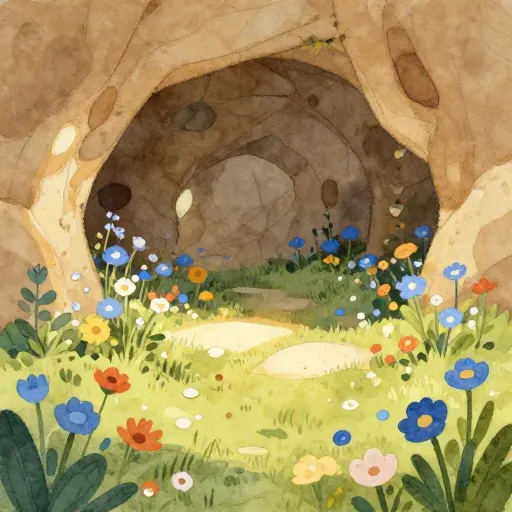
Imagine the inside of a quiet cave, flickering with firelight. You see a group of people carefully placing blue and yellow flowers around someone they loved. It is quiet, and the air smells like damp earth and fresh petals.
They didn't just leave their friend behind: they stopped, they felt sad, and they offered a gift. This is perhaps the very first recorded moment of a funeral, a way for the living to show that a person's life mattered.
It shows that humans have always been 'meaning-makers,' even when faced with things that feel scary or confusing.
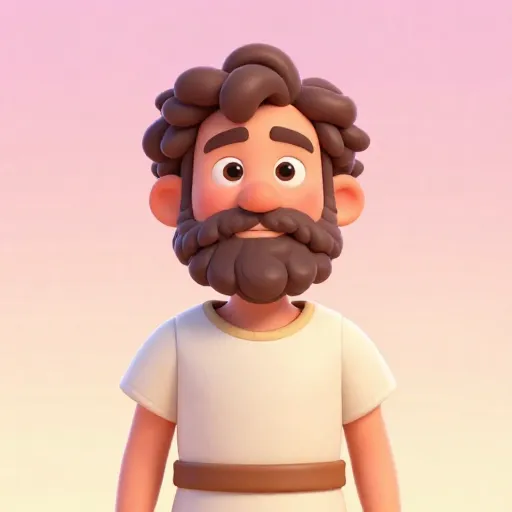
Finn says:
"It feels a bit strange to think that people were leaving flowers in caves so long ago. I wonder if they felt the same 'wobbly' feeling in their tummies that I do when I think about this?"
The Biological Machine
To understand death, we first have to understand how bodies work. Every living thing: a sunflower, a blue whale, or a human being: is like a very complex, self-sustaining machine.
For a long time, the body is able to repair itself and keep its systems running. We call this vitality, which is the energy that keeps our hearts beating and our brains thinking.
The beautiful thing about the cycle of life is that there is a time for everything to begin and a time for everything to end.
However, these systems are not designed to last forever. Eventually, the body becomes too old, too sick, or too damaged to keep going.
When the heart stops pumping blood and the brain stops sending signals, the body's work is finished. This state is irreversible, which means that once a body has stopped working completely, it cannot start up again.
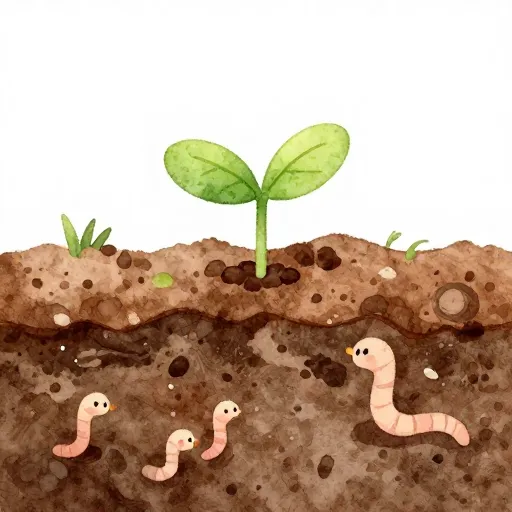
In the natural world, death is actually an engine for life! In just one teaspoon of healthy soil, there are billions of tiny organisms that are busy breaking down old leaves and wood to turn them into food for new plants.
This is the part of death that scientists can explain. They can track the cells and the oxygen. But for most of us, the biological part is only half of the story.
We also want to know what happens to the person, the 'you' that lived inside that body. This is where history and psychology help us find a different kind of answer.
The Big Questions
When a person dies, their thoughts, their jokes, and their unique way of looking at the world seem to vanish. Philosophers call this the end of consciousness.
Because we can't see where those thoughts go, humans have spent centuries imagining what might happen next. Some people believe in an afterlife, where the spirit continues on in a different form.
Many religions and philosophies suggest that our consciousness, or 'soul,' is separate from our body and continues on into another realm or another life.
Many scientists and secular thinkers believe that our thoughts and feelings are created by our brains, and when the brain stops, our experience of the world simply ends.
Others believe that death is like a deep, dreamless sleep. They find comfort in the idea that the person is finally resting after a long life of doing and being.
Both of these ideas are ways of trying to 'contain' the mystery. We don't have a telescope that can look past the end of life, and that uncertainty can feel heavy.
Mira says:
"I like to think of it like finishing a really great book. You're sad it's over, but you get to keep the story in your head forever. The ending is what makes the whole book a story."
Holding the Sadness
Psychologists like Donald Winnicott believed that when we face something big and hard like death, we need a 'holding environment.' This isn't a physical place, but a way of feeling safe even when we are sad.
He noticed that children often use things like teddy bears or blankets to feel safe when they are away from their parents. He called these transitional objects.
It is a joy to be hidden, but a disaster not to be found.
In the same way, rituals and stories help us 'hold' the feeling of death. We might light a candle, look at old photographs, or share funny stories about the person who is gone.
These things don't make the person come back, but they help us carry the weight of their absence. They remind us that while the body has stopped, the connection we had with them still exists in our minds.
Learning from the Past
Different cultures throughout history have had very different ways of looking at death. For some, it was a grand journey; for others, it was a quiet return to the Earth.
In Ancient Egypt, people believed the soul had to travel through a dangerous underworld to reach a beautiful field of reeds. They spent years preparing for this journey, building tombs and writing magic spells.
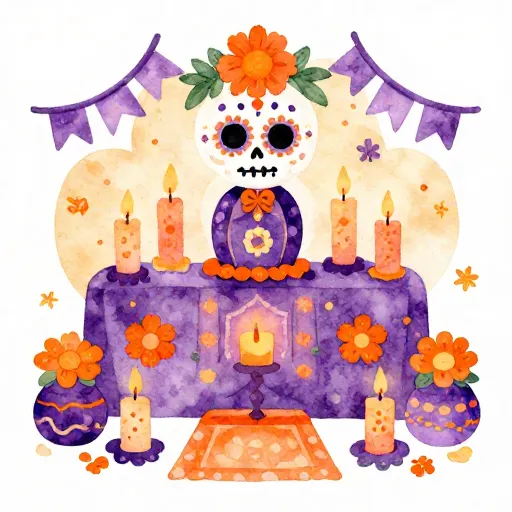
In Mexico, 'Día de los Muertos' (Day of the Dead) is a joyful holiday where families build altars with bright orange marigolds and sugar skulls to welcome the spirits of their ancestors back for a visit.
During the Victorian era in England, people wore black clothes for months or even years to show they were in mourning. They kept locks of hair or painted tiny portraits to keep their loved ones close.
These traditions show us that there is no one 'right' way to feel. History is full of people being sad, being curious, and being hopeful all at the same time.
Ways We Say Goodbye
The Cycle of Everything
One way to think about death without it feeling quite so heavy is to look at the world around us. Nature is the ultimate recycler, and nothing is ever truly wasted.
When a tree falls in the forest, it becomes 'nurse log.' It provides food and shelter for moss, beetles, and new saplings. The tree's old energy helps the new forest grow.
Finn says:
"So, parts of me might have been a T-Rex once? That's actually pretty cool. It makes me feel like I'm part of something much, much bigger than just myself."
This is known as the cycle of life. The atoms that make up our bodies have been many things before: they were once part of stars, then perhaps part of a dinosaur, and then part of the food we eat.
Death allows the Earth to keep changing and making space for new life. It is the reason that every moment we have right now feels so important and unique.
Everything that happens is as natural and familiar as the rose in spring and the fruit in summer.
Not Having All the Answers
It is okay to say, 'I don't know.' In fact, many of the smartest people in history spent their whole lives saying that exact phrase about death.
Sometimes, grown-ups feel like they have to have a perfect explanation to make everything feel okay. But the truth is that death is a mystery for everyone, no matter how old they are.
Try making a 'Memory Map.' Draw a picture of yourself in the middle, and then draw lines to things that remind you of someone you miss. It could be a song, a specific food, or even a funny word they used to say.
Being honest about the 'I don't know' is actually a very brave thing to do. It allows us to be curious together. We can wonder about the stars, or the soul, or the way memories stay with us like echoes.
We may not know where people go, but we know exactly where they stay: in the stories we tell and the way they changed us while they were here.
Something to Think About
If you could design a new tradition to remember someone, what would it look like?
Think about what makes you feel peaceful or happy. There are no wrong answers: some people might choose a quiet walk, while others might choose a big, noisy party.
Questions About Psychology
Will I die too?
Does it hurt to die?
Why do I feel okay one minute and then really sad the next?
The Continuing Story
Death is a big, heavy word, but it is also a part of the story of life. By talking about it, we aren't being morbid: we are being brave enough to look at the whole picture. Just like the stars are still there during the day even when we can't see them, the people we love stay part of our world through the ways they taught us to be.