
Have you ever felt like your feelings were a giant wave that might knock you over?
Understanding our emotions is like learning a secret language that our bodies use to talk to us. In this guide, we explore the subjective experience of being human and how thinkers throughout history have tried to build a holding environment for our biggest moods.
Imagine you are standing on a beach. Sometimes the water is so flat it looks like a mirror, and other times the waves are so tall they roar like lions.
Your feelings are exactly like that water. They are constantly moving, changing shape, and responding to the world around you.
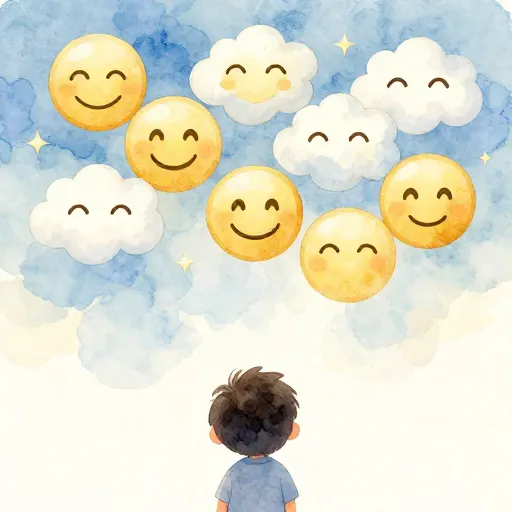
Imagine your mind is a wide, open sky. Feelings are like clouds. Some are fluffy and white, some are dark and heavy with rain. They might stay for an hour or a whole day, but eventually, they always drift past, leaving the sky just as it was before.
For a long time, people didn't really know what to do with these 'inner waves.' Some people thought they were distractions, and others thought they were clues from the gods.
But about 150 years ago, a scientist named Charles Darwin started looking at feelings differently. He realized that emotions aren't just things that happen to us: they are biological signals that help us survive.
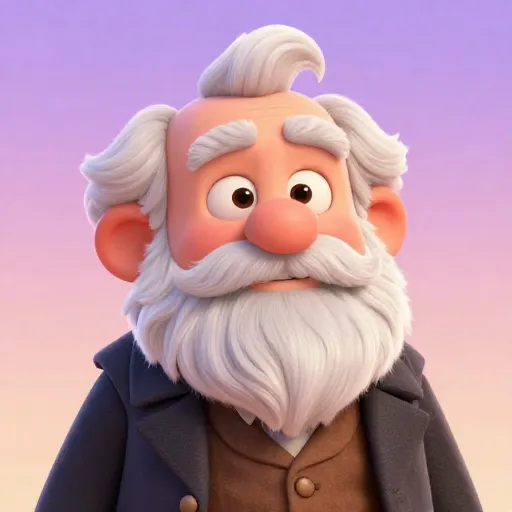
The young and the old of widely different races, both with man and animals, express the same state of mind by the same movements.
The Scientist of Smiles
Darwin noticed that when people are scared, their eyes get wide. This isn't just a random face we make: wide eyes actually help us see more of what is happening around us.
When we are disgusted, we wrinkle our noses. This helps keep bad smells or harmful things out of our bodies.

Finn says:
"So, when my heart beats fast because I'm scared, my body is actually trying to give me extra energy to run or help myself? That makes it feel a lot less like a 'bad' feeling and more like a superpower."
Darwin’s work showed us that feelings are like a toolkit. Every emotion has a job to do, even the ones that feel uncomfortable like anger or fear.
Later, in the 1960s, a researcher named Paul Ekman traveled across the world to see if everyone felt the same things. He visited people in cities and people in remote jungles who had never seen a television.
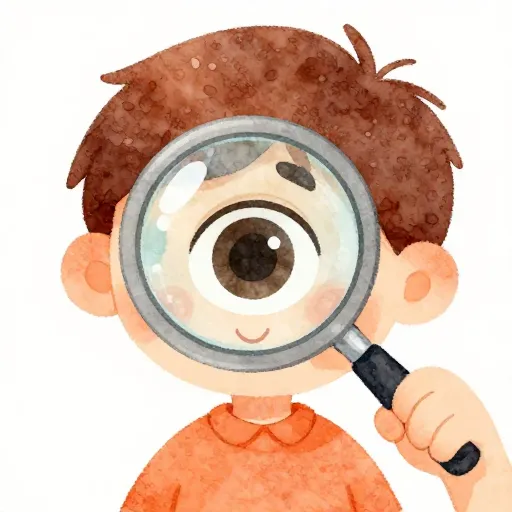
There are actually scientists who study 'micro-expressions.' These are tiny flashes of emotion that cross your face for only a fraction of a second: faster than you can even think about them! Your body often knows how you feel before your brain does.
He found that whether you live in New York or a tiny village in Papua New Guinea, a smile means joy and a frown means sadness. These are called primary emotions, and they are the basic colors on our internal paintbrush.
The Importance of Naming
If emotions are like colors, sometimes they get mixed together. Have you ever felt 'sad-happy' on the last day of school, or 'excited-nervous' before a big game?
Psychologists found that when we put a name to a feeling, it actually changes our brain. This is called affect labeling, and it works like a dimmer switch on a bright light.

The place where we are most likely to find the most important things about ourselves is in our own feelings.
When you say: 'I feel frustrated,' your brain moves the energy from the 'alarm center' to the 'thinking center.' It makes the feeling feel a little more manageable and a little less like a storm.
It is like turning on a flashlight in a dark room. The room hasn't changed, but now you can see where the furniture is so you don't trip over it.
Next time you feel a 'big' emotion, try to give it a physical description. Is it heavy or light? Is it hot like a fire or cold like an ice cube? Does it have a color? Sometimes describing the feeling makes it feel like a separate object you can look at, rather than something that is 'you.'
Creating a Safe Space
Sometimes, though, just naming the feeling isn't enough. Sometimes the feeling is so big it feels like it might burst out of us.
This is where a thinker named Donald Winnicott comes in. He was a doctor who spent a lot of time watching how parents and children talk to each other without using words.

Mira says:
"Winnicott's idea makes me feel better. It means when I'm having a total meltdown, the adults in my life are like the walls of a sturdy house. I can bounce off them, and they’ll still be standing there when I'm calm again."
Winnicott came up with a beautiful idea called the holding environment. He didn't mean a literal box or a physical hug, although hugs certainly help.
He meant a feeling of safety where a child can be exactly who they are: even if they are screaming, crying, or feeling very messy inside. He believed that to grow up, we need to know that our big feelings won't break the people who care for us.
When we feel bad, we should try to change our mood immediately by thinking happy thoughts or distracting ourselves.
When we feel bad, we should sit with the feeling and be curious about it, knowing that it will change on its own when it's ready.
Holding the Hard Stuff
Winnicott also talked about the 'good enough' parent. This is a very comforting idea because it means nobody has to be perfect.
In fact, he thought it was actually better if parents weren't perfect. When a parent doesn't understand a feeling right away, it gives the child a chance to figure it out for themselves.
A History of Feelings
This process of managing big feelings is called emotional regulation. It is like learning to ride a bike: at first, you need someone to hold the seat, but eventually, you find your own balance.
The Logic of Feelings
For a long time, people thought that 'being emotional' was the opposite of 'being logical.' They thought you had to choose one or the other.
But modern science shows us that we need both. Without feelings, we wouldn't know what is important to us or who we can trust.
The word 'emotion' comes from the Latin word 'emovere,' which means 'to move out.' Feelings are literally energy in motion, designed to move through us, not get stuck inside us.
Think of your emotions as a compass. They don't tell you exactly where to walk, but they tell you which way is North.
If you feel a sting of jealousy, it might be telling you that you really care about something a friend has. If you feel a wave of guilt, it might be telling you that you value being kind.
Sitting with Uncertainty
One of the hardest things about emotions is that they don't always have a quick fix. Sometimes we feel sad for a long time, and we don't know why.
A modern thinker named Adam Phillips suggests that we shouldn't be in such a hurry to 'fix' our feelings. He thinks that not knowing exactly how we feel is actually a very creative place to be.

We are often most ourselves when we are most uncertain.
He calls this ambivalence, which is when we have two different feelings about the same thing at the same time. It’s not a mistake: it’s just part of being a complicated, interesting human being.
Finn says:
"I used to think I was weird for being sad that summer was over but also excited for school. Now I know that 'ambivalence' is just a fancy word for having a really big heart that can hold a lot of things at once."
We are all learning how to live with our feelings every single day. Some days the weather is clear, and some days it’s foggy, and that is exactly how it is supposed to be.
Something to Think About
If your feelings could talk in a language only you understood, what do you think your 'sadness' would be trying to tell you right now?
There are no wrong answers to this. Your feelings are your own private language, and you are the only expert on what they mean.
Questions About Psychology
Why do some feelings hurt my stomach?
Is it okay to feel angry at someone I love?
How long do emotions usually last?
Being Your Own Best Friend
Learning about emotions isn't about becoming perfect at being happy. It's about becoming a good friend to yourself, even when you are having a hard time. Just like a good friend stays with you during a rainstorm, you can learn to stay with yourself through any kind of inner weather. Your feelings are a sign that you are alive, curious, and deeply connected to the world around you.
