Have you ever looked up at the stars and wondered where people go when they leave this world?
The idea of heaven is one of the oldest mysteries in human history. It is a way people try to understand the afterlife and find comfort when they lose someone they love. By looking at how different cultures have seen this mystery, we can learn how to hold our own big feelings with care.
When we talk about heaven, we are entering a world of stories, history, and deep feelings. It is a topic that is both very old and very personal. Every person you meet might have a slightly different picture in their head of what it looks like.
Some people see it as a beautiful garden where the sun never sets. Others think of it as a state of mind, like the feeling of being perfectly safe and loved. Throughout history, humans have used their best words and art to describe the place where the soul goes next.
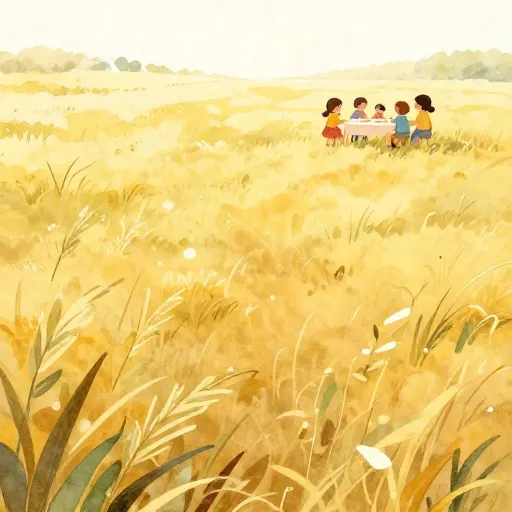
Imagine a giant, golden field where the grass feels like silk under your feet. Every person you have ever missed is there, sitting at a long table filled with your favorite foods. There is no such thing as 'being tired' or 'feeling sad' here. This is one way people have pictured a 'perfect' world.
The Very First Maps of the Afterlife
Long ago, in Ancient Egypt, people didn't just guess about heaven. They studied it like a map. They believed in a place called the Fields of Aaru, which was a perfect version of the life they already knew.
In this version of heaven, the crops grew taller than a person, and the river Nile was always blue and full of fish. To get there, a person’s heart had to be weighed against a feather. If their heart was light with kindness, they could enter this forever garden.

Finn says:
"So the Egyptians thought heaven was just a really, really good farm? I guess if you're hungry all the time, that sounds like a dream. But what if you don't like farming? Does heaven change for everyone?"
For the Egyptians, heaven wasn't a strange, alien place. It was home, but without the hard parts. It was a way of saying that the good things we do in this life truly matter after we are gone.
The soul is that which makes the body live.
Why Do We Look Up?
If you ask a child where heaven is, they usually point to the sky. But why do we look up instead of down or sideways? This idea comes from ancient times when the stars were the most mysterious things people could see.
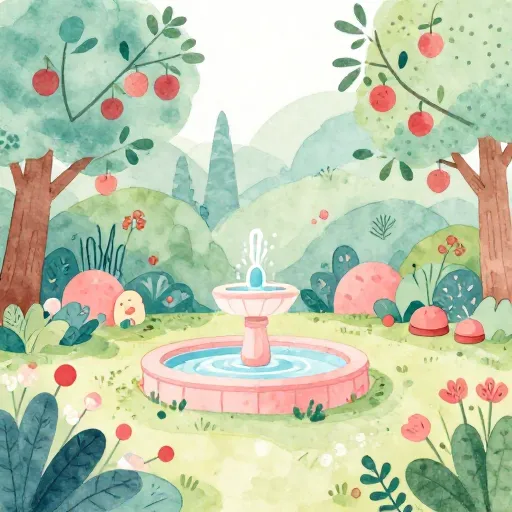
The word 'Paradise' actually comes from an ancient Persian word, 'pairidaeza,' which means a walled garden. In a world full of hot deserts and wild animals, a garden with a wall around it was the safest, most beautiful place anyone could imagine.
Ancient Greeks talked about Elysium, a place at the edge of the world. Later, many religions began to describe a kingdom above the clouds. Because the sky is huge and bright, it became the perfect metaphor for a place that is bigger than our daily worries.
But as we learned more about space, some people started to think about heaven differently. Instead of a physical place you could fly to in a rocket, they saw it as a different dimension. A dimension is like a layer of reality that is right here, even if we cannot touch it.

Mira says:
"I like the idea that heaven is a 'dimension.' It's like how music is in the room with you, but you can't grab it with your hands. You just feel it. Maybe heaven is a feeling that's always around us."
The Feeling of Containment
Sometimes, talking about heaven isn't about finding a location on a map. It is about a psychological need called containment. This is a way our minds hold onto difficult feelings like sadness or fear so they don't feel too big to handle.
Think of a parent holding a crying baby. The parent "contains" the baby's fear, making them feel safe again. For many people, the idea of heaven acts like those warm arms. It is a place where everything that feels broken in the world is finally made whole.
If you were going to design a 'Perfect Room' for someone you love, what would be in it? Would it have a window that looks out at the ocean, or a bookshelf that never ends? Thinking about what makes us feel safe and happy helps us understand why people find comfort in the idea of heaven.
This is why different cultures have such different versions of paradise. If you live in a hot, dry desert, heaven might be a place with cool, running water. If you live in a place that is often cold, heaven might be a warm, glowing hearth.
Out beyond ideas of wrongdoing and rightdoing, there is a field. I’ll meet you there.
A Journey Through Time
Humans have changed their minds about what happens next many times. These ideas often follow the way we live. When people lived in small tribes, they imagined joining their ancestors in the forest. When kings ruled the land, they imagined a Golden City.
A History of the Great Beyond
In the modern world, many people focus on the spiritual connection we have with those who have died. They might say that heaven is found in the memories we keep or the love that stays behind. This helps people feel that death is not the end of a relationship, just a change in how it looks.
Mira says:
"It's okay that we don't have a photo of heaven. Not knowing everything is what makes us explorers. We get to keep the people we love in our hearts while we search for our own answers."
Two Ways of Looking at the Mystery
It can be confusing when people believe different things. Some are very sure about what heaven looks like, while others say they have no idea. Both of these ways of thinking are okay. In fact, they help us understand the world better.
Heaven is a literal place with streets of gold and gates, where people live together in a new world.
Heaven is a metaphor for the love we feel and the way people live on through their influence on others.
When we don't have a perfect answer, it leaves room for our own imagination. We can think about what a "perfect place" would mean to us. Is it a place with all our old pets? Is it a place where we can finally understand all the secrets of the universe?
The feeling of mystery is the most beautiful thing we can experience.
The Science of the Soul
While science cannot prove heaven exists, it does tell us something interesting about energy. There is a rule in physics called the Law of Conservation of Energy. It says that energy cannot be destroyed: it can only change from one form to another.
Some people find comfort in this scientific fact. They think of the human spirit as a form of energy. Even if the body stops working, that energy has to go somewhere. It might become part of the wind, the trees, or something even more wonderful that we haven't discovered yet.
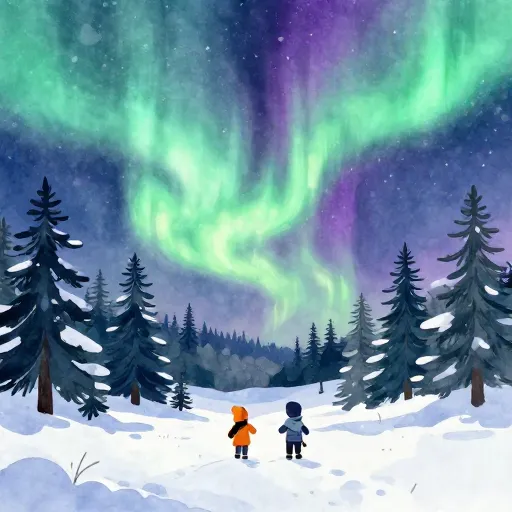
In many cultures, the northern lights (the Aurora Borealis) were once believed to be the spirits of the dead playing a game of soccer in the sky. It shows how people have always used the beauty of nature to explain the afterlife.
Talking about these things can feel heavy, like carrying a big backpack. But it can also feel like opening a window in a dark room. By looking at all the different ways humans have imagined heaven, we realize we aren't alone in our wondering.
Every culture, in every century, has sat where you are sitting now. They looked at the horizon, felt the mystery of life, and tried to build a bridge of hope to the other side. Whether that bridge is made of stories, faith, or memories, it helps us walk through life with a little more light.
Something to Think About
If you could ask a star one question about where we go next, what would it be?
There are no right or wrong answers to big questions like this. Sometimes the wondering is just as important as the answer.
Questions About Psychology
Is heaven a real place you can visit?
Do animals go to heaven?
Why do different religions have different heavens?
Holding the Mystery Together
Explaining heaven isn't about having a map with an 'X' marks the spot. It is about sharing a conversation that humans have been having for thousands of years. Whether we see it as a garden, a city, or a memory, the idea of heaven helps us carry our love forward. It reminds us that even when things change, the beauty we find in life is never truly lost.