Have you ever wondered how your brain turns a weird-looking squiggly line on a page into the sound of a word?
Learning is the process of cognition, which is just a fancy word for how we think, understand, and remember. It involves neuroplasticity, the incredible ability of your brain to change its shape and connections based on what you do and see.
Imagine you are standing in a vast, dark workshop. There are no tools here yet, and no finished products. Every time you notice something new, a tiny spark flickers in the corner.
This workshop is your mind. When you were born, you didn't have a manual for how to be a human. You had to build the manual while you were using it.
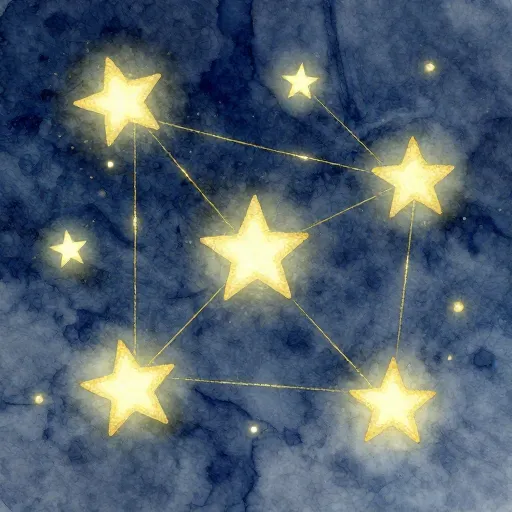
When you are born, you have almost all the neurons you will ever have. However, you have very few connections. Learning is the process of building those connections, not making more cells.
The Brain’s Secret Handshake
Deep inside your head, billions of tiny cells called neurons are trying to talk to each other. They don't touch directly. Instead, they send tiny chemical messages across gaps called synapses.
When you learn something new, like how to tie your shoes or play a video game, these neurons start shaking hands more often. The more you practice, the stronger that handshake becomes.

Finn says:
"Wait, if I learn something new while I'm playing a game, does my brain count that as 'school' or just 'fun'?"
Think of it like a path through a field of tall grass. The first time you walk it, it is hard to find your way. But the hundredth time you walk it, the grass is flattened and the path is clear.
This is why things that felt impossible last year now feel like they are on autopilot. Your brain has literally rewired its physical structure to make that task easier for you.
The Marketplace of Ideas
Long before we had brain scans, people in Ancient Greece were obsessed with how we know things. Imagine a hot, dusty marketplace in Athens about 2,400 years ago.
A man named Socrates would walk up to people and ask them questions until they realized they didn't know as much as they thought. He believed that learning wasn't about pouring info into a bucket.
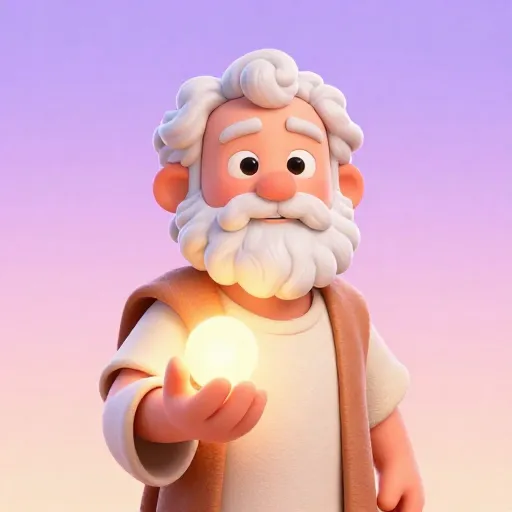
Knowledge which is acquired under compulsion obtains no hold on the mind.
Socrates' student, Plato, had an even wilder idea. He thought that we don't actually 'learn' new things at all. He believed our souls already know everything, but we 'forget' it when we are born.
To Plato, learning was just a process of recollection. By asking the right questions, we are simply remembering things we already knew in a different life.
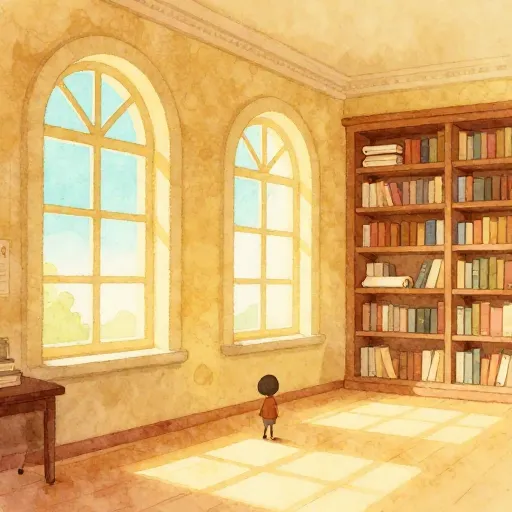
Imagine the 'House of Wisdom' in 9th-century Baghdad. Scholars from all over the world traveled there to translate books and argue about math and stars. They believed that by combining different languages, they could find a deeper truth about the world.
The Little Scientist
For a long time, adults thought children were just 'small adults' who needed to be filled with facts. Then came a Swiss man named Jean Piaget in the 1920s.
Piaget watched his own children play and realized something revolutionary. He saw that children aren't passive buckets. They are active researchers.

Mira says:
"It's like my brain is a giant map that keeps adding new roads every time I figure something out. Even the dead ends help me find the right way."
Piaget argued that we learn by building schemas. A schema is like a mental file folder. When you see a cat for the first time, you make a folder labeled 'Four-Legged Furry Thing.'
If you then see a dog, you might try to put it in the 'Cat' folder. But when it barks, your brain realizes it doesn't fit. You have to create a new folder or change the old one.
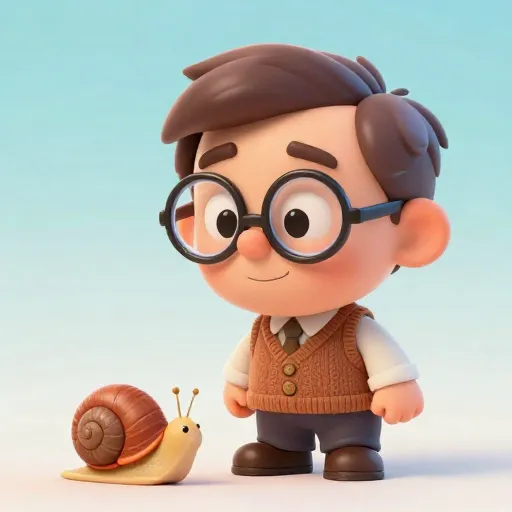
Each time one prematurely teaches a child something he could have discovered for himself, that child is kept from inventing it.
The Social Secret
While Piaget was watching kids play with blocks in Switzerland, a man named Lev Vygotsky was thinking about something else in Russia. He noticed that we rarely learn truly difficult things all by ourselves.
Vygotsky came up with a concept called the Zone of Proximal Development. This is the 'magic middle' between things that are too easy and things that are too hard.
Children learn best by exploring on their own, like scientists in a lab. Adults should just provide the tools and get out of the way.
Children learn best through social interaction and guidance. Without a 'more knowledgeable other' to help, there are some things a child can never reach.
It is the space where you can do something, but only with a little bit of help. Think about learning to ride a bike. There is a time when you can't do it alone, but you can do it if someone holds the seat.
Vygotsky called this helping hand scaffolding. Just like a building needs metal poles to hold it up while it's being built, our minds need help from others until we are strong enough to stand alone.
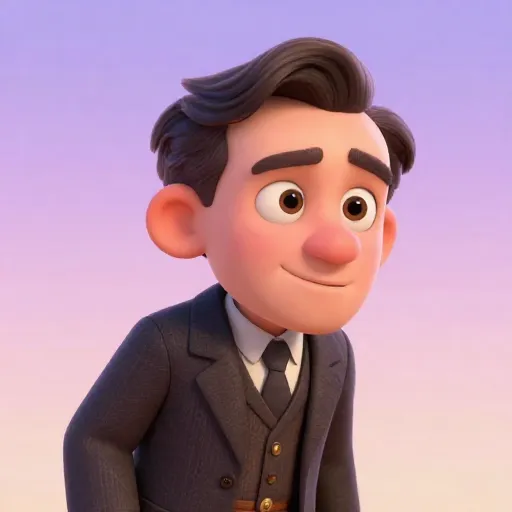
What a child can do in cooperation today, he can do alone tomorrow.
The Map of Time
Our understanding of learning has changed as human history has unfolded. We used to think it was about memory: now we think it is about connection.
Through the Ages
Today, we know that learning is a messy, beautiful process. It isn't a straight line from 'don't know' to 'know.' It is more like a spiral where you keep coming back to the same ideas, but with more understanding.
Finn says:
"What if we never stop being 'little scientists'? I think even my grandma is still making new folders in her head."
The Power of the Glitch
One of the biggest secrets about learning is that your brain actually loves mistakes. When you get something right, your brain stays relaxed. When you get something wrong, your brain gets a 'ping' of surprise.
This 'ping' tells your neurons to pay closer attention. In science, a mistake isn't a failure. It is a data point. It is your brain saying, 'Wait, that didn't work. Let's try the path to the left instead.'
The next time you make a mistake, say 'My brain just got a software update!' Write down what the mistake taught you that getting it right wouldn't have.
Scientists call this a growth mindset. It is the belief that your intelligence isn't a fixed number like your height. Instead, it is a capacity that expands every time you struggle with something difficult.
Think of the feeling of being 'confused' not as a bad sign, but as the feeling of your brain actually growing. It is the sound of the workshop tools clanging as they build a new wing of the building.
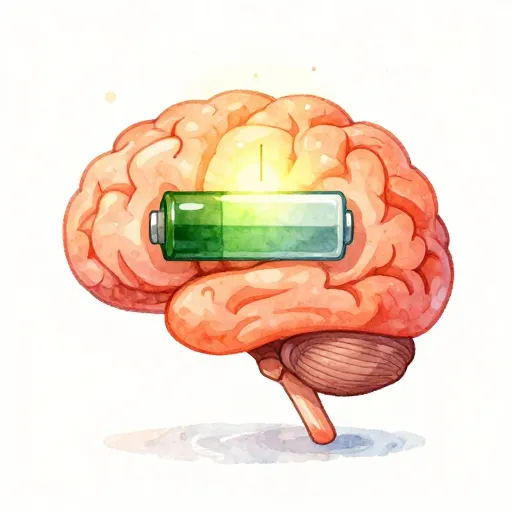
Your brain uses about 20% of your body's energy, even though it is only 2% of your weight. Learning something difficult is a physical workout, which is why you might feel hungry or tired after a long day of school!
Learning isn't just about school or grades. It is how you learn to understand your friend's feelings, how you learn to recognize the smell of rain, and how you learn who you want to be.
It is the most natural thing in the world. Even as you read these final words, your brain is busy making new handshakes, filing away new folders, and preparing for the next spark in the dark.
Something to Think About
If you could design a school for a planet where there are no books and no teachers, how would the children there learn about the world?
There is no right or wrong answer to this. Think about the tools, the people, and the sparks that make a brain wake up.
Questions About Psychology
Is it true that we only use 10% of our brains?
Why do some people learn faster than others?
Can adults still learn as well as kids?
The Workshop Never Closes
The most exciting thing about how we learn is that it doesn't stop when the school bell rings. Your mind is an architect that is always adding new rooms. Whether you are dreaming, playing, or just staring out a window, you are building the structure of who you are. Keep asking questions, keep making mistakes, and keep exploring the marketplace of ideas.
