If you judge a fish by its ability to climb a tree, it will spend its whole life believing it is stupid.
For a long time, people believed that intelligence was like a single tank of gas in your brain: you either had a lot of it, or you didn't. But a curious psychologist named Howard Gardner changed everything by suggesting that we don't have just one mind, but a collection of multiple intelligences that help us solve problems in different ways.
In the middle of the 20th century, a young boy named Howard Gardner sat at his piano in Scranton, Pennsylvania. The room was filled with the sounds of classical music, but Howard's mind was often wandering to his books and his sketches. He was good at school, but he noticed something strange about the way people talked about being smart.
He saw that some of his friends were incredible at fixing bike chains, while others could tell stories that made everyone laugh until their sides ached. Yet, when they went to school, only the kids who were good at math and spelling were called intelligent. Howard began to wonder if the adults were missing the big picture.
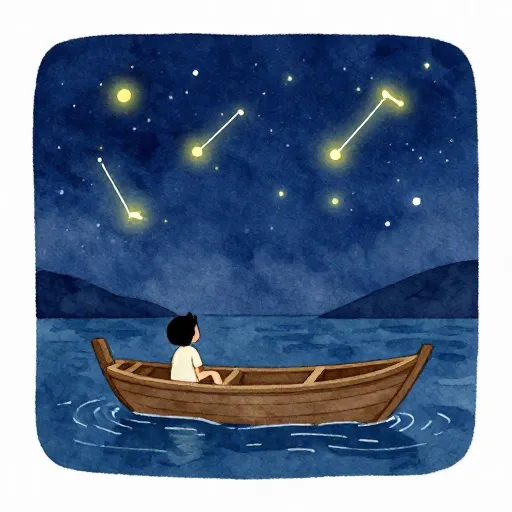
Imagine you are at a harbor in the South Pacific hundreds of years ago. A navigator is looking at the stars, feeling the temperature of the water, and watching the flight of a specific bird. He doesn't have a GPS or a written map, but he can guide a boat to a tiny island thousands of miles away. Is he smart? Howard Gardner says yes: he has incredible spatial and naturalist intelligence.
Howard eventually went to Harvard University, a place where people had been studying the human mind for a long time. In the 1960s and 70s, the common belief was that your Intelligence Quotient, or IQ, was a fixed number. This number was supposed to tell you exactly how successful you would be for the rest of your life.
Gardner didn't buy it. He spent his days watching how people with brain injuries could lose the ability to speak but still be able to compose beautiful music. If intelligence was just one thing, wouldn't it all disappear at once?

Finn says:
"If I'm really good at building Lego forts but I'm bad at spelling, does that mean my brain is just using a different map?"
He began to look at human history and how different cultures valued different skills. A sailor in the middle of the ocean needs a different kind of smart than a scientist in a lab or a dancer on a stage. This led him to write a book in 1983 called Frames of Mind, which shook the world of education.
Gardner argued that we should stop asking "How smart are you?" and start asking "How are you smart?" He identified eight distinct ways that humans process information, which he called the Multiple Intelligences.

The design of my theory is to provide a much wider range of what counts as 'intelligence' than has been traditionally done.
Let's look at the first two: Linguistic intelligence and Logical-Mathematical intelligence. These are the ones most schools focus on. If you love reading, writing stories, or learning new languages, you are using your linguistic smarts.
If you find yourself constantly looking for patterns, enjoy strategy games like chess, or love solving complex math problems, your logical-mathematical smarts are in the lead. These are important, but Gardner insisted they are just two rooms in a very large house.
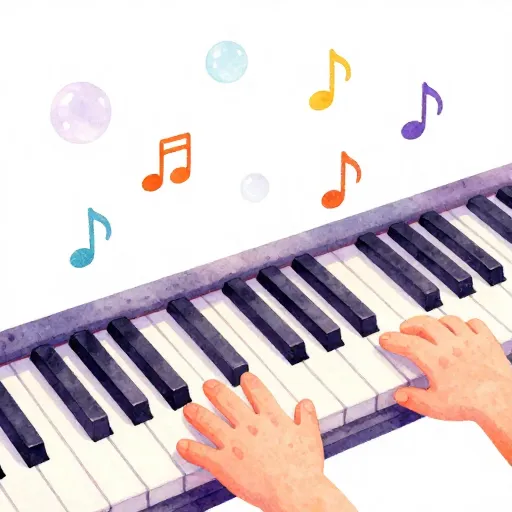
Howard Gardner was a very talented pianist! His love for music helped him realize that being 'musical' wasn't just a hobby: it was a complex way of thinking that was just as structured as doing a long division problem.
Then there is Musical intelligence. This isn't just about playing an instrument: it is about hearing the world in rhythms and tones. People with this strength might find themselves tapping their pencils in a specific beat or noticing the pitch of a bird's song while others just hear noise.
Closely related is Bodily-Kinesthetic intelligence. Think of a gymnast spinning on a high bar or a woodworker carving a delicate design. Their brains are communicating with their muscles in a highly sophisticated way, solving physical problems that a math genius might find impossible.

Mira says:
"It’s like how a forest needs all kinds of things: some trees grow tall for the sun, but the mushrooms on the ground are smart at recycling life back into the soil."
Next, Gardner looked at how we see the world and our place in it. Spatial intelligence is the ability to visualize things in your mind's eye. Architects, pilots, and even people who are really good at fitting all the luggage into a car trunk are using this specific type of smart.
Then there is Naturalist intelligence, which was added to the list a bit later. This is the ability to recognize and categorize plants, animals, and other parts of the natural world. It is the kind of smart that helped our ancestors survive by knowing which berries were safe to eat.
Take a look at your week. When do you feel most 'in the zone'? Is it when you are drawing (Spatial), playing tag (Kinesthetic), talking out a problem with a friend (Interpersonal), or sitting quietly by yourself (Intrapersonal)? Keep a 'Smart Journal' for three days to see which of Gardner's lenses you use the most.
One of Gardner's most famous ideas was that we are also smart in how we deal with people. Interpersonal intelligence is the ability to understand others: their moods, their feelings, and why they act the way they do. It is what makes someone a great leader or a kind friend.
On the flip side is Intrapersonal intelligence. This is about understanding yourself. People with this strength know their own goals, their fears, and how to manage their emotions. It might be the most quiet kind of intelligence, but it is incredibly powerful for living a happy life.

We are all able to know the world through language, logical-mathematical analysis, spatial representation, musical thinking, the use of the body to solve problems or to make things, an understanding of other individuals, and an understanding of ourselves.
Gardner also toyed with a ninth type: Existential intelligence. He sometimes called this "Big Picture Smart." It is the tendency to ask huge questions: Why are we here? What is the meaning of life? Why do people feel love?
Even if you are only ten years old, you might find yourself lying in the grass looking at the stars and wondering where the universe ends. Gardner thought this was a unique way the human brain tries to make sense of the world, even if there aren't easy answers.
Finn says:
"I wonder if there's a tenth intelligence we haven't discovered yet, like 'Computer Smart' or 'Space Travel Smart'?"
It is important to remember that these aren't just "talents" like being good at basketball. Gardner used strict scientific rules to decide what counts as an intelligence. For example, he looked for parts of the brain that were specifically dedicated to that skill and checked if the skill appeared in people across all different cultures.
This theory changed how many teachers run their classrooms. Instead of just lecturing, they might have students act out a history lesson, draw a map of a story, or write a song about the water cycle. It helps more students find the path that makes sense to their specific brain.
A History of Being Smart
However, not everyone agreed with Howard Gardner. Some scientists, called psychometricians, argued that there is still a "general intelligence" factor that links all these things together. They worry that by calling everything an intelligence, the word starts to lose its meaning.
Gardner welcomed this debate. He didn't want to create a perfect, unchanging law. He wanted to start a conversation about how we value human potential. He believed that the purpose of school shouldn't be to rank children, but to help them discover what they are naturally drawn to.

The goal of education should be to help people find where their talents lie.
Today, we live in a world that is beginning to see the value in diverse ways of thinking. We call this neurodiversity. It is the idea that different brains work in different ways, and that variety is actually a strength for our communities, not a problem to be fixed.
When we look at Gardner's work, we see a bridge between the old way of measuring people and a new way of understanding them. It reminds us that every person you meet is likely a genius in at least one way that you might not have noticed yet.
Testing is the best way to measure intelligence because it is fair and gives us clear data that we can compare across the whole world.
Tests only measure a tiny slice of what the brain can do. We should use portfolios and real-world projects to see how smart someone really is.
So, what does this mean for you? It means that if you struggle with one subject in school, it doesn't mean you aren't smart. It might just mean your brain is currently busy building a different kind of intelligence. The mind is a vast landscape, and there is plenty of room for all kinds of explorers.
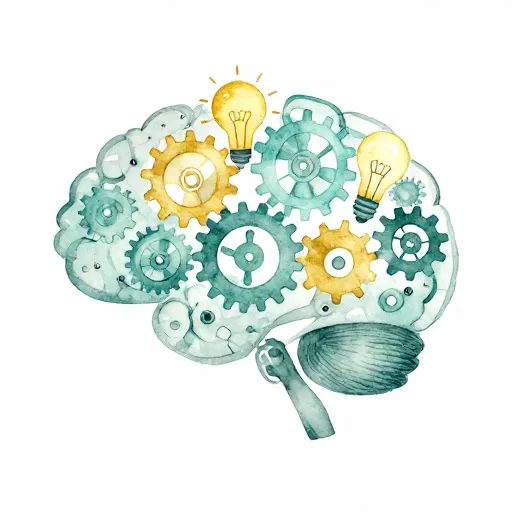
Even though Gardner’s theory is super popular in schools, many scientists who study 'General Intelligence' still disagree with him. They believe all these 'smarts' are actually connected by one main engine in the brain. The mystery of how our minds work is still being solved!
Something to Think About
If you could add a tenth intelligence to Howard Gardner's list, what would it be?
There are no wrong answers here. Think about a skill or a way of seeing the world that doesn't quite fit into the other categories. What would you name it?
Questions About Psychology
Can your intelligences change over time?
Is it better to have one very high intelligence or many medium ones?
Are 'Multiple Intelligences' the same as 'Learning Styles'?
The Ever-Changing Map of You
Learning about Howard Gardner is like being handed a map to a land you thought you already knew. It doesn't give you all the answers, but it gives you new paths to explore. Whether you are a poet, a programmer, a pitcher, or a philosopher, remember that your mind is a unique landscape. You don't have to fit into a single box to be brilliant: you just have to keep finding the ways that your specific light shines through the prism.