Think of the hardest thing you know how to do, like riding a bike, solving a long division problem, or playing a song on the piano.
Did you figure it out all by yourself in a quiet room, or did someone help you just a little bit at the start? Lev Vygotsky was a brilliant thinker who believed that our minds don't grow in isolation: they grow because of the people around us through Social Development.
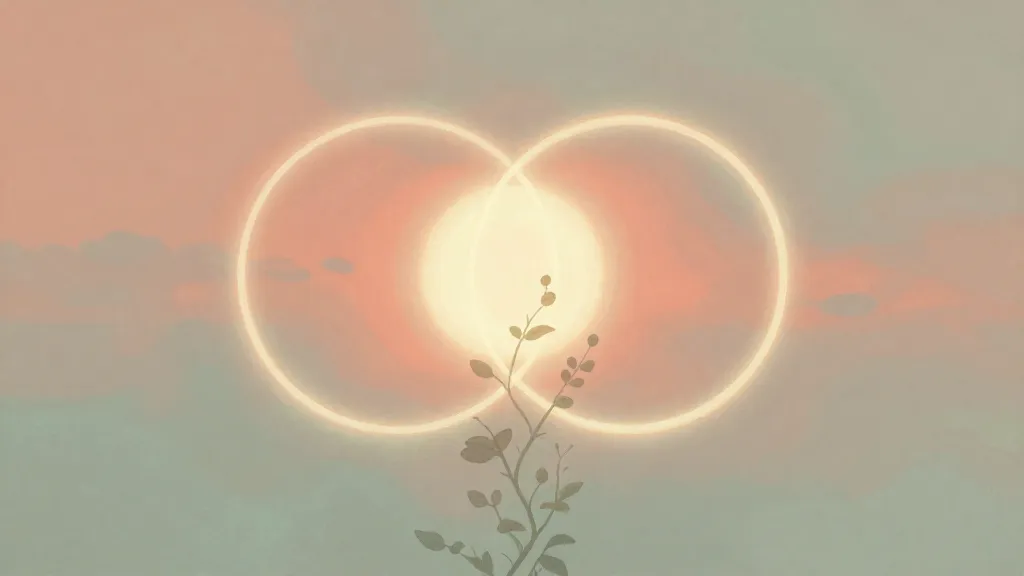
Imagine you are standing in front of a very high wall. You want to see what is on the other side, but you aren't tall enough to look over.
You could try to jump, but you might fall. You could stand there for years waiting to grow taller, but that takes a long time.
Think of a skill you learned recently, like a new skateboard trick or a video game level. Now, try to remember the exact moment you 'got it.' Was someone watching you? Did they give you a single tip that changed everything? That tip was your step up the wall!
Now, imagine a friend or a teacher comes over. They don't pick you up and throw you over the wall, because then you wouldn't learn how to climb.
Instead, they cup their hands together to give you a step up. With that tiny bit of help, you can reach the top, pull yourself up, and see the view.
The Boy Who Loved Books
To understand why Lev Vygotsky thought this way, we have to travel back over a hundred years. Lev was born in 1896 in a small town called Orsha, which was part of the Russian Empire.
He grew up in a house full of books and big conversations. His father was a banker and his mother was a teacher, and they loved to host "tea and talk" sessions.
Finn says:
"If Lev was called 'The Little Professor,' I wonder if he ever got into trouble for asking too many questions? I bet his tea parties were awesome."
Lev was so smart as a kid that his friends nicknamed him "The Little Professor." He didn't just want to know what people thought: he wanted to know how they thought.
He lived through a time of massive change in Russia, including the Russian Revolution. This made him think about how the world around us, our history and our culture, shapes the way our brains work.

What a child can do in cooperation today, he can do alone tomorrow.
The Magic Middle: The ZPD
Vygotsky’s most famous idea has a very fancy name: the Zone of Proximal Development, or ZPD for short. It sounds like a secret base in a sci-fi movie, doesn't it?
In reality, the ZPD is simply the "magic middle" between things that are too easy and things that are too hard. It is the space where real learning happens.
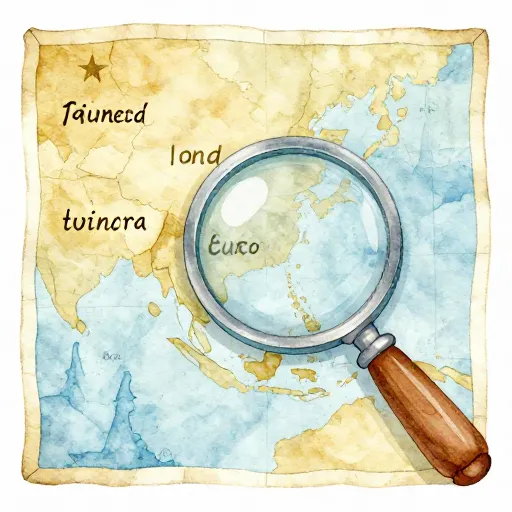
Imagine you are trying to learn a new language. If someone hands you a thick dictionary and leaves the room, you are in the 'Too Hard' zone. If they ask you to say 'Hello' over and over, you are in the 'Too Easy' zone. But if they play a game with you where you have to use three new words to find a hidden treasure? That's the ZPD!
Think of it like three circles, one inside the other. The smallest circle in the center is "Things I Can Do By Myself," like tieing your shoes or reading a comic book.
The giant circle on the outside is "Things I Can’t Do Yet," like flying a jet plane or performing brain surgery. You could try these for hours, but you'd just get frustrated.
Then there is the middle circle: the Zone of Proximal Development. These are the things you can do if someone helps you just a little bit.

Mira says:
"The ZPD makes so much sense. It's like that feeling when a puzzle is just hard enough to be fun, but not so hard that I want to throw it across the room!"
Helpers and Scaffolds
To get into that magic middle circle, Vygotsky said we usually need a More Knowledgeable Other. This is often a teacher or a parent, but it can also be a friend who is better at video games than you are.
An MKO provides something called Scaffolding. If you have ever seen a tall building being built, you’ve seen the metal poles and platforms on the outside that help the workers reach the high parts.
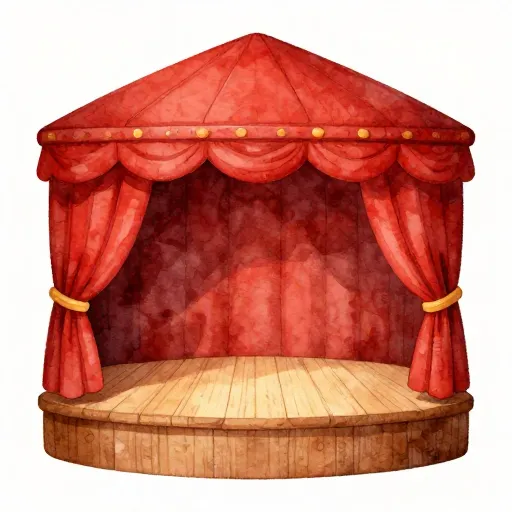
Vygotsky didn't just study children: he also loved the theater! He wrote a huge book about the psychology of art. He believed that looking at a painting or watching a play was a way of 'learning' feelings from the artist.
Once the building is strong enough to stand on its own, the workers take the poles away. That is exactly what a good teacher does with your brain.
They give you hints, ask you questions, or show you the first step. As you get better, they slowly pull the support away until you are doing the whole thing by yourself.
Through others, we become ourselves.
The Power of Talk
Have you ever caught yourself talking out loud while trying to solve a tricky puzzle? Or maybe you whisper the steps of a recipe to yourself while you are baking?
Vygotsky was fascinated by this. He called it Inner Speech. He believed that before we can think thoughts in our heads, we have to hear them out loud from other people.
Next time you are alone and doing something difficult, like a hard Lego set or a math problem, pay attention to your 'Inner Speech.' Do you talk to yourself? Do you use the same words your teacher or parents use? You are literally using their voices to help your own brain work!
First, a parent tells you, "Be careful, the stove is hot." Later, you say it out loud to yourself as you walk through the kitchen.
Finally, the words disappear and become a silent thought in your mind. For Vygotsky, language is the most powerful tool humans ever invented because it turns social interaction into personal intelligence.
Mira says:
"I never realized that my 'inside voice' actually started as an 'outside voice.' It's like my brain is full of echoes from all the people who have taught me things."
Vygotsky vs. Piaget: Two Ways of Seeing
Around the same time Vygotsky was working in Russia, another famous psychologist named Jean Piaget was working in Switzerland. They were like two explorers looking at the same map but seeing different paths.
Piaget believed children were like "little scientists" who explored the world all by themselves. He thought children had to reach a certain age before they were ready to learn certain things.
Children learn best by exploring the world like solo explorers. They grow through fixed stages as they get older, and you can't rush them.
Children learn best by interacting with others. Learning actually pulls development along, helping children reach higher than they could on their own.
Vygotsky disagreed. He thought that with the right help and the right tools, a child could grow much faster than if they were left alone.
He believed that Social Constructivism, the idea that we build our knowledge together, was the key to understanding why humans are so good at learning.
Through the Ages
A Short Life, A Long Legacy
Sadly, Lev Vygotsky died very young. He was only 37 years old when he passed away from an illness called tuberculosis.
Because he lived in the Soviet Union, some of his ideas were actually banned for a long time after he died. The government didn't always like the way he focused on individual thinking.
The word is a microcosm of human consciousness.
It took decades for his books to be translated into English and shared with the rest of the world. Today, teachers all over the planet use his ideas to design better classrooms.
When you work in a group at school, or when your teacher gives you a "hint" instead of the answer, you are experiencing Vygotsky's dream. He showed us that we are at our best when we are helping each other climb those high walls.
Something to Think About
If you could only learn things that you figured out 100% by yourself, what would your life look like today?
There isn't a right or wrong answer to this, but it's interesting to think about which parts of 'you' were actually gifts from the people who helped you.
Questions About Psychology
Is the Zone of Proximal Development the same for everyone?
Can a computer be a 'More Knowledgeable Other'?
Why was Vygotsky's work banned?
The Never-Ending Scaffold
The coolest thing about Vygotsky's big idea is that it never stops. Even as adults, we are always in someone else's ZPD, learning new things from friends, books, and even from you! Every time we talk and share an idea, we are building a scaffold for someone else to reach a little higher. Who will you help climb the wall today?