Have you ever wondered why a hug from a parent can make a bad day feel better, or why you feel so happy when your best friend walks into the room?
Love is one of the biggest words in the human language, but it is also one of the hardest to define. In psychology, it is often seen as a form of attachment that helps us survive, grow, and feel safe in a very big world.
Imagine you are standing in a busy marketplace in Ancient Greece, over 2,000 years ago. You see people laughing, friends arguing about politics, and parents holding their children’s hands.
The Greeks were obsessed with understanding how people feel. They realized that the word 'love' was too small to describe everything they were seeing.
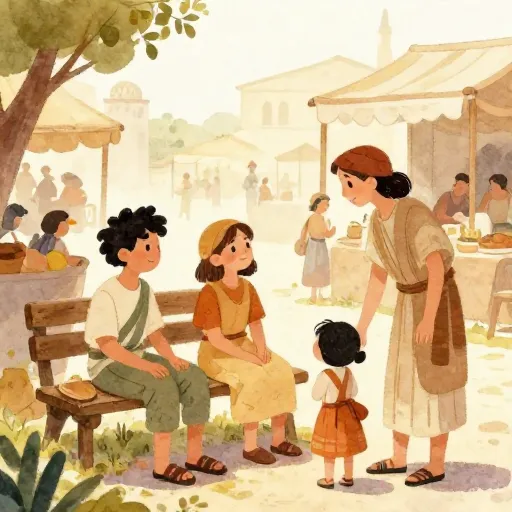
Imagine you are walking through the Agora, the central market of Athens. You see two philosophers sitting on a stone bench, sharing a loaf of bread and laughing about a joke. Nearby, a father is teaching his daughter how to count using small clay beads. The Greeks looked at these scenes and saw two completely different 'types' of love happening at the same time.
They didn’t just have one word for love: they had many. They realized that the love you feel for your goldfish is different from the love you feel for your grandmother or your favorite pizza.
One of their most important words was Philia. This was the love between friends who shared the same interests or values.

Mira says:
"If the Greeks had four words for love, I wonder if we need more today? Maybe there is a special word for the love you feel for a book you've read ten times."
Then there was Storge, which described the natural, protective love between family members. It is the kind of love that doesn’t require you to be 'cool' or 'smart' to deserve it.
But the Greeks also talked about Agape. This is a very special, big kind of love that means caring about all people, even people you have never met.

To love someone is not just a strong feeling: it is a decision, it is a judgment, it is a promise.
If you have ever felt sad seeing a stranger get hurt or felt happy when a whole community comes together to help someone, that is Agape. It is love as a way of living, rather than just a feeling you have for one person.
But why do we feel these things at all? For a long time, scientists thought babies only loved their parents because parents provided food and warmth.
For a long time, doctors thought picking up a crying baby too much would 'spoil' them. It wasn't until psychologists like Bowlby and Winnicott came along that we realized babies actually need that closeness to help their brains develop correctly!
In the 1950s, a psychologist named John Bowlby started to look at things differently. He noticed that love wasn’t just about getting what we need to survive.
He developed the idea of attachment theory, which suggests that humans are born with a biological need to be close to others. We aren't just looking for a meal: we are looking for a 'secure base.'

Finn says:
"So if love is like a lighthouse, does that mean even if I sail really far away, the light is still there? How far can the light actually reach?"
Think of a secure base like a lighthouse. When you feel safe and loved, you have the courage to go out and explore the wild, stormy ocean of the world.
You know that if you get tired or scared, you can always sail back to your lighthouse. That safety is what allows kids to learn, play, and eventually become independent.
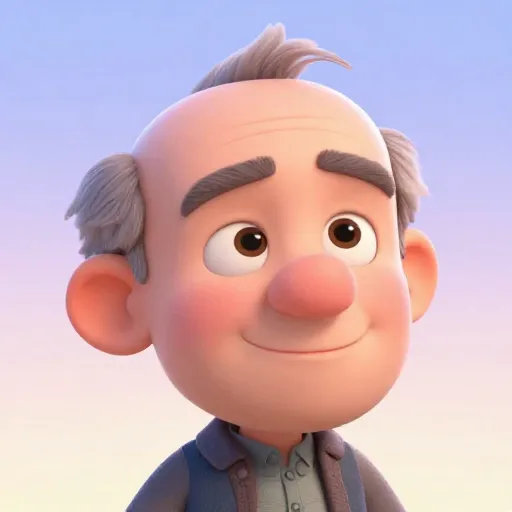
The foundations of health are laid down by the ordinary mother and father in their ordinary loving care of their own baby.
This 'holding' doesn’t always mean a physical hug. It can be a look, a word, or just knowing that someone is thinking about you when you aren't there.
Love also changes how our bodies work. When we are around people we love, our brains release a chemical called Oxytocin.
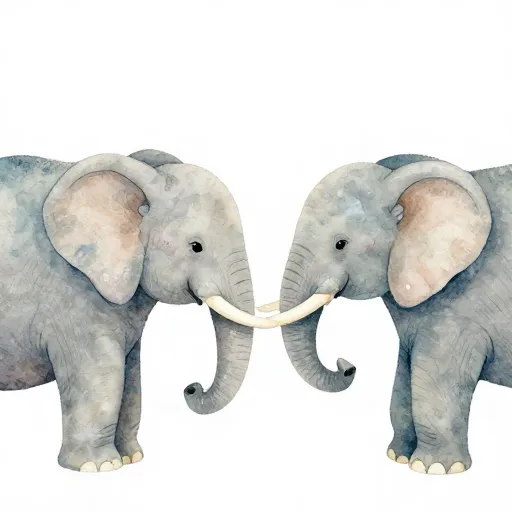
Humans aren't the only ones who feel love! Scientists have found that when elephants reunite with their family after being apart, their brains release chemicals very similar to the ones humans feel when they are happy and loved.
This chemical is sometimes called the 'cuddle hormone' because it makes us feel calm and connected. It actually lowers our stress levels and makes us feel more brave.
But love isn't just a chemical reaction that happens to us. Many thinkers believe that love is something we have to practice, almost like playing the piano or learning a sport.
Love is a feeling that hits us like a bolt of lightning. We can't control who we love or when it starts. It's an instinct that lives deep in our hearts.
Love is a decision we make every day. It is about how we treat people, even when we are tired or annoyed. We choose to be loving through our actions.
If love is a skill, that means we can get better at it. We can practice being more patient, being better listeners, or trying to understand how someone else feels, which is called Empathy.
Through the Ages: How We Thought About Love
One of the most famous stories about the 'work' of love comes from a book called The Little Prince. In the story, a fox explains to a young prince what it means to 'tame' someone.

It is the time you have wasted for your rose that makes your rose so important.
To the fox, taming someone means taking the time to build a unique bond. Out of all the millions of foxes in the world, that one fox becomes special because of the time they spent together.
Mira says:
"The fox is right. My favorite teddy bear isn't special because of how it looks, but because of all the secrets I've told it. That's a kind of love, too."
This tells us that love is often found in the small, repeated moments. It’s the way you always share your snacks, or the secret jokes you have with your siblings.
Sometimes, love can feel a bit scary because it means we care about something so much that we might lose it. Philosophers often say that love and vulnerability go hand in hand.
Try a 'Love Audit' for one day. Every time you see someone doing something kind for someone else: like a teacher holding a door or a friend sharing a pencil: count it. At the end of the day, you might be surprised by how much 'invisible love' is moving around your school or home!
You can’t have one without the other. But even though love can be messy and confusing, it is the thing that makes us most human.
Whether it is the Eros of a grand romance in a movie or the simple kindness of a neighbor, love is the way we tell the world that we are not alone.
Questions About Psychology
Can you love someone even if you are angry at them?
Is love just for people?
What if I don't feel 'lovey-dovey' all the time?
A World Held Together
Love is a big, messy, beautiful mystery that has puzzled the smartest people in history for thousands of years. We might not have all the answers yet, but we know one thing for sure: it is better to be part of the thread than to be a single, lonely dot. Keep exploring, keep caring, and keep asking questions about the invisible things that tie us together.
