
Have you ever wondered why some people seem to bounce back after a bad day, while others feel like the world is ending?
For a long time, doctors and scientists only studied what made people sad or sick. Martin Seligman changed everything by asking a different question: what makes people flourish? This shift in thinking created a whole new field called positive psychology.
Imagine it is the 1960s. The world of psychology is a bit like a hospital: everyone is focused on fixing what is broken. If you were sad, stressed, or angry, psychologists wanted to know why. But if you were happy, curious, or kind, they did not have much to say about it. They assumed that if you just stopped being sad, you would automatically be happy.
Martin Seligman, a young researcher in Pennsylvania, noticed something strange in his laboratory. He was studying how living things react when things go wrong. He found that after a few bad experiences that they could not control, many creatures simply gave up trying. They would sit still and accept their fate, even when a way out was right in front of them.
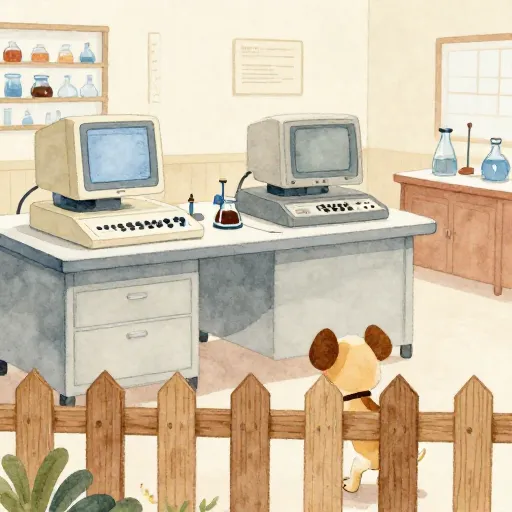
Imagine a scientist in a white coat, surrounded by spinning reels of tape and old-fashioned computers. He is watching a dog in a box. The dog could easily jump over a small wall to escape a tiny puff of air, but it just sits there with its head down. The scientist realizes the dog has 'learned' that it can't escape, even though the wall is now very low. This was the moment Seligman realized how powerful our beliefs are.
This was a heavy discovery. Seligman called this behavior learned helplessness. It was the idea that we can actually learn to believe that nothing we do matters. If you fail a math test three times, you might start to think, "I am just bad at math, so why bother studying?" That is learned helplessness in action, and it can make life feel very grey.
But as Seligman watched his subjects, he noticed something that would change his life: not everyone gave up. Some individuals kept trying to find a solution no matter how many times they failed. They seemed to have an invisible shield that protected them from feeling helpless. Seligman became obsessed with this shield. He wanted to know: if you can learn to be helpless, can you also learn to be hopeful?

It is not our failures that determine our future, but how we explain them to ourselves.
For the next thirty years, Seligman moved away from the grey world of helplessness. He began to look at the people who stayed strong. He realized that the way we talk to ourselves about our problems matters more than the problems themselves. He called this our explanatory style. It is the internal story we tell when we trip on the sidewalk or lose a game of soccer.

Finn says:
"If someone learns that they can't change things, does that mean they stop trying even when they could actually win? That's kind of scary. But I guess if you can learn the 'no,' you can probably learn the 'yes' too, right?"
In 1998, Seligman was elected president of the American Psychological Association. This was a huge deal: it was like being the captain of the world's psychology team. During his big speech, he told thousands of scientists that they were only doing half their job. He said they had spent fifty years figuring out how to heal mental illness, but they had forgotten to figure out how to build mental health.

Seligman's big 'aha!' moment actually came from his 5-year-old daughter, Nikki. She told him that she had decided to stop whining, and if she could stop whining, he could stop being such a grouch! This made him realize that we can choose to nurture our best selves instead of just fixing our worst parts.
He wanted to create a science of human strength. He didn't want to just help people get from "unhappy" to "okay." He wanted to help them get from "okay" to "awesome." This was the birth of positive psychology. It wasn't about being happy all the time, because that is impossible. Instead, it was about finding the tools to live a deep, meaningful life.
One of the biggest tools Seligman discovered was learned optimism. He found that optimists and pessimists look at the world through different lenses. When something bad happens, a person with pessimism might think it is their fault, it will last forever, and it ruins everything. But an optimist sees it differently. They see a bad event as a one-time thing that happened because of a specific reason, and they believe things will get better.

Mira says:
"It's like having a rainy day. A pessimist thinks the sun is gone forever and cancels the whole party. An optimist knows it's just a cloud passing by, so they just move the party inside and wait for the rainbow."
Seligman broke this down into three parts, often called the three P's. When a mistake happens, an optimist knows it is not always Personal (it's not just about them), it's not Pervasive (it doesn't ruin their whole life), and it's not Permanent (it won't last forever). By changing the way we think about mistakes, we can actually build resilience, which is the ability to bounce back like a rubber ball.
When they fail a test, they think: 'I'm stupid and I'll never pass this class.' They see the problem as Permanent and Personal.
When they fail a test, they think: 'That was a really hard test, and I didn't study enough this time. I'll try a different way next week.' They see it as Temporary and Specific.
As he got older, Seligman realized that happiness isn't just one thing. It's more like a recipe with five main ingredients. He created a map for this called the PERMA model. The 'P' stands for Positive Emotion, which is the feeling of joy or fun. It is important, but it is only the first step. You can't just eat dessert for every meal, and you can't just chase fun for a whole life.
The 'E' stands for Engagement. This is what happens when you get so focused on what you are doing that you lose track of time. Some people call this being in the flow. Maybe it happens when you are drawing, playing Minecraft, or practicing a soccer kick. In those moments, you aren't "thinking" about being happy: you are just fully alive in what you are doing.

The aim of Positive Psychology is to catalyze a change in the focus of psychology from preoccupation only with repairing the worst things in life to also building the best qualities in life.
Try a 'Gratitude Visit.' Think of someone who did something kind for you but whom you never properly thanked. Write them a letter explaining exactly what they did and how it made you feel. Then, if you can, read it to them out loud. Seligman found this is one of the fastest ways to boost your 'P' (Positive Emotion) and 'R' (Relationships) at the same time!
The 'R' in PERMA stands for Relationships. Seligman and his fellow researchers found that there is almost nothing more important for a good life than other people. Humans are social creatures. We need friends, family, and teammates to share our stories with. Kind acts and deep connections are like fuel for our brains. Even the most successful person in the world would feel empty without people to love.
The 'M' stands for Meaning. This is the feeling that you are part of something bigger than yourself. It might be helping your community, caring for animals, or even just feeling connected to nature. When you have meaning, you feel that your life matters to the world. It gives you a reason to get out of bed on the days when the 'P' (Positive Emotion) is missing.
Finn says:
"So 'meaning' is like being a tiny piece of a giant puzzle? Even if I'm just one small piece, the whole picture wouldn't be finished without me. I think I like that better than just having fun all the time."
Finally, the 'A' stands for Accomplishment. This is the satisfaction of setting a goal and working hard to reach it. It's the feeling you get when you finally finish a difficult puzzle or learn a new song on the piano. Seligman argued that we need to feel like we are getting better at things. Even small wins count, because they prove to us that we have the power to change our circumstances.
Beyond PERMA, Seligman also talked about signature strengths. He believed every person is born with a specific set of tools, like bravery, curiosity, or fairness. Instead of trying to fix our weaknesses all the time, he suggested we should spend more time using our strengths. If you are a naturally kind person, find ways to be kind every day. Using your strengths makes the PERMA ingredients taste even better.
Become a 'Strength Spotter.' For one day, watch your friends or family members. When you see someone being brave, or kind, or really good at organizing a game, tell them! 'I noticed you were really fair when you picked teams.' Seeing strengths in others helps you learn to see them in yourself too.
Seligman's ideas didn't just stay in books. They traveled into schools, where teachers started teaching kids how to be resilient. They traveled into the military, where soldiers learned how to stay mentally strong during tough times. They even traveled into hospitals to help people recover from physical injuries. His work turned psychology into a map for anyone wanting to build a better version of themselves.

When we build our strengths and our virtues, we build a buffer against misfortune.
Looking back, we can see how the way we think about the mind has changed over thousands of years. We used to think of the mind as a mystery, then a machine that needed fixing, and finally, thanks to people like Seligman, as a garden that can be tended and grown. It is a journey that is still happening today, and you are a part of it.
The Journey of Happiness
Today, Martin Seligman is still teaching and writing at the University of Pennsylvania. He remains curious about why some people thrive and how we can all find more light in our lives. He doesn't claim to have all the answers, but he has given us a very good set of questions. And perhaps the most important thing he taught us is that even when things feel heavy, hope is something we can practice.
Something to Think About
If you were to add a sixth letter to the PERMA model, what would it be?
Think about your own life. Is there something that makes you feel strong or happy that isn't covered by Positive Emotion, Engagement, Relationships, Meaning, or Accomplishment? There is no right answer, only your own discovery.
Questions About Psychology
Is positive psychology just about being happy all the time?
Can you really 'learn' to be an optimist?
What is the most important part of the PERMA model?
Your Inner Garden
Martin Seligman showed us that our minds are not just machines that break, but gardens that we can tend. By choosing where we put our attention, practicing optimism, and using our signature strengths, we don't just survive: we flourish. The next time you face a challenge, remember that the story you tell yourself is the most powerful tool you have. What kind of story will you tell today?