
Have you ever wondered why, when you are playing at a park, you occasionally look back to make sure your grown-up is still there?
This simple glance is part of a deep human mystery called attachment. In the 1960s, a psychologist named Mary Ainsworth transformed how we understand the invisible strings of love and safety that connect us to the people who care for us.
The Girl Who Loved to Observe
Long before she was a world-famous scientist, Mary Ainsworth was a curious girl named Mary Dinsmore Salter. She was born in 1913 in a small town in Ohio, but her family soon moved to Toronto, Canada. Mary was the kind of child who noticed everything, from how the wind moved through the trees to how people looked at each other when they spoke.
When she was only fifteen, she picked up a book about psychology and realized that the human mind was the most interesting puzzle in the world. She didn't just want to know what people did: she wanted to know why they did it. This curiosity led her to study the ways we connect with others, a field that would eventually be called attachment theory.
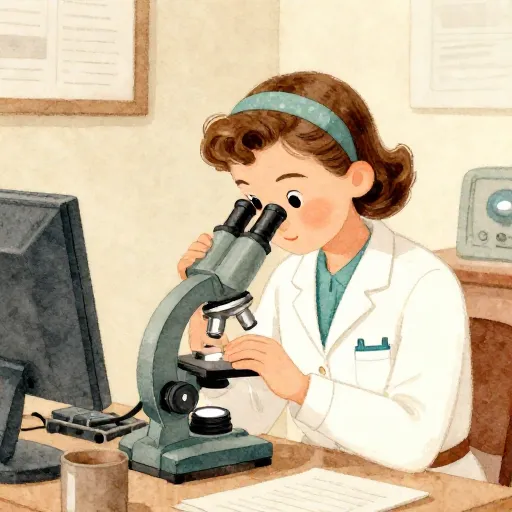
Mary Ainsworth was a trailblazer for women in science. In the 1940s and 50s, very few women were allowed to lead major research projects, but Mary’s brilliant mind and determination made people stop and listen.
A Meeting of Minds in London
After finishing her studies and serving in the Canadian Women’s Army Corps during World War II, Mary moved to London. It was there, in 1950, that she took a job working with another famous psychologist named John Bowlby. Bowlby had a theory that children needed a strong emotional bond with their parents to grow up healthy and happy.
At the time, this was actually a radical idea. Many experts back then thought that babies only loved their mothers because they provided food. Mary and Bowlby believed it was something much deeper: a biological need for closeness and safety. Mary became the person who would prove this theory with real-world evidence.

A 'secure base' is provided by a parent or other caregiver who is available and responsive when needed.
The Great Journey to Uganda
In 1954, Mary’s husband got a job in Kampala, Uganda, and Mary went with him. Instead of staying in an office, she decided to visit families in their own homes. She spent months watching Ganda women and their babies, taking careful notes on how they interacted throughout the day.
She noticed that the babies who were the most confident were the ones whose mothers were quick to respond when the baby cried or reached out. These mothers were practiced in attunement, which means they could 'read' what their baby was feeling just by looking at them. Mary realized that being a good parent wasn't about being perfect: it was about being sensitive to a child’s needs.

Mira says:
"I love how Mary went all the way to Uganda to learn. It reminds me that we can learn so much about ourselves by watching how other families show love, even if their lives look different from ours."
The Discovery of the Secure Base
While in Uganda, Mary noticed something that changed psychology forever. She saw that when a baby felt safe and close to their mother, they were actually more likely to go off and explore the room. If the mother left or if the baby got scared, they would immediately return to her side to 'recharge' their courage.
Mary called the parent a secure base. Think of it like a climber using a safety rope. The rope doesn't stop you from climbing higher: it actually gives you the confidence to climb further because you know you won't fall. This was the start of Mary's most famous work.
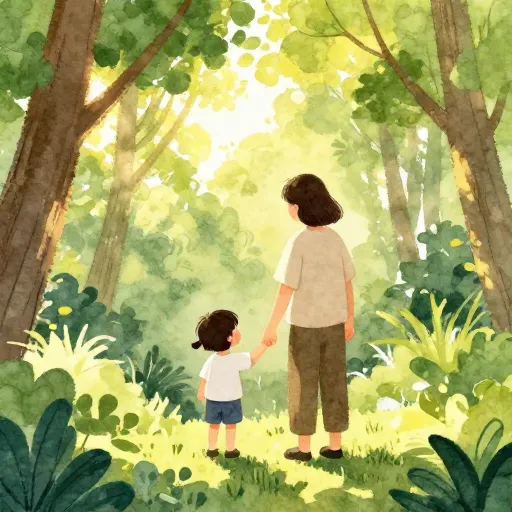
Imagine you are at the edge of a deep, dark forest. If you are all alone, you might be too scared to even step inside. But if you are holding the hand of someone you trust completely, that forest doesn't look like a threat anymore: it looks like an adventure. That trust is what Mary called attachment.
The Laboratory of Feelings
When Mary returned to the United States and began teaching at Johns Hopkins University in Baltimore, she wanted to measure this 'secure base' in a controlled way. She designed a research study that is now legendary among psychologists. She called it the Strange Situation.
It wasn't 'strange' because it was weird, but because it took place in a room the child had never seen before. Mary wanted to see how children between twelve and eighteen months old would react to a series of small, stressful moments. She watched through a one-way mirror, recording every look, cry, and reaching hand.

Finn says:
"The 'Strange Situation' sounds a little bit scary for the babies. I hope they got lots of extra cuddles after the experiment was over! It’s hard being the one who has to wait for a grown-up to come back."
The Eight Steps of the Strange Situation
The experiment followed a very specific sequence of events. Each step lasted about three minutes, designed to slowly increase the child's need for their parent. It went like this:
- The parent and child are alone in a room full of toys.
- The child explores the toys while the parent sits nearby.
- A stranger enters, talks to the parent, and approaches the child.
- The parent quietly leaves the room, leaving the child with the stranger.
- The parent returns to comfort the child, and the stranger leaves.
- The parent leaves again, leaving the child entirely alone.
- The stranger enters and tries to comfort the child.
- The parent returns for a final reunion.
Some people in Mary's time believed that if you picked up a crying baby too often, you would 'spoil' them and make them weak or clingy.
Mary proved the opposite: babies whose cries were answered quickly grew up to be more independent and confident explorers later in life.
The Secret Language of Reunion
Most people thought the most important part of the experiment was when the parent left. They thought that if a child cried, it meant they were 'too sensitive.' But Mary realized the most important part was actually the reunion: what happened when the parent came back into the room?
By watching hundreds of these reunions, Mary discovered that children have different 'maps' for how they handle difficult feelings. She called these maps an internal working model. Depending on how their parents had treated them at home, children developed one of three main styles of connection.

The sensitive mother is able to see things from her baby's point of view.
Three Ways of Connecting
The first style Mary identified was secure attachment. These children were upset when their parent left, but when the parent returned, they went straight to them for a hug. They were easily calmed down and soon went back to playing with the toys. They trusted that their 'base' was solid.
The second style was avoidant attachment. These children didn't seem to care when the parent left, and when the parent returned, they ignored them or kept playing. Mary realized these children weren't actually 'brave' or 'independent.' They were often just as stressed as the others on the inside, but they had learned to hide their feelings because they didn't expect to be comforted.
Mira says:
"Mary's work makes me think about how we all have an 'invisible map' in our heads. If we know where the safe spots are, we can go on much bigger adventures without feeling lost."
The Third Path: Ambivalence
The third style was ambivalent attachment, which is sometimes called resistant. These children became extremely upset when the parent left, but when the parent returned, they were hard to soothe. They might reach for a hug but then push the parent away or kick their legs in frustration.
It was as if they were saying, 'I need you, but I’m not sure I can trust you to stay.' Mary found that this often happened when a parent’s care was inconsistent: sometimes they were very helpful, and other times they were distracted or unavailable. The child's 'map' was confusing because the 'base' kept moving.
Think about the people in your life who make you feel like you have a 'secure base.' Who are the people you want to tell first when something good happens? Who do you go to when you are sad? You can even draw a 'Base Map' with yourself in the center and your secure bases as golden anchors around you.
Why Sensitivity Matters Most
Mary Ainsworth didn't want to judge parents. She wanted to help them. She found that the key to a secure bond was sensitivity. This doesn't mean being 'soft' or 'weak.' It means being a good detective who can figure out what a child is trying to say through their behavior.
She taught us that when a child seeks proximity seeking behavior (trying to get close), they aren't being 'clingsy' or 'annoying.' They are doing something very smart: they are looking for their safe haven. By responding to these signals, parents help children build a map that says, 'The world is safe, and I am worth caring for.'

What is believed to be essential for mental health is that the infant and young child should experience a warm, intimate, and continuous relationship with his mother.
The Science of Seeing
Mary’s work changed everything from how hospitals are run to how daycare centers are designed. Before Mary, parents were often kept away from their children in hospital wards because doctors thought it would 'spoil' them. Mary’s research showed that having a parent nearby wasn't a luxury: it was a biological necessity for healing.
She spent her whole life refining her scales of attunement. She believed that if we could just see children more clearly, we could help them grow into adults who are capable of deep, trusting relationships. She proved that the way we are held as babies shapes the way we hold others as we grow up.
Mary's Journey Through Time
A Legacy of Holding
Today, psychologists all over the world use Mary Ainsworth’s ideas. We now know that our attachment styles aren't set in stone. Even if we start with a 'shaky' map, we can learn to build more secure connections with friends, teachers, and eventually, our own children.
Mary Ainsworth taught us that the most important thing we can do for each other is to be a 'secure base.' To be the person who stays, the person who listens, and the person who creates a space where it is safe to be small, to be scared, and to be exactly who we are.
Something to Think About
If you were feeling very small and very unsure, what is the first thing you would look for to feel safe?
There are no right or wrong answers here. Every person has a different 'map' for safety, and noticing yours is the first step toward understanding your own heart.
Questions About Psychology
Can your attachment style change as you get older?
Why was the experiment called 'The Strange Situation'?
Is there such a thing as a 'bad' attachment style?
The Invisible String
Mary Ainsworth spent her life looking at the invisible strings that hold us together. She showed us that we are not islands: we are more like trees whose roots are intertwined. When we feel safe and 'held' in the minds of others, we have the strength to grow as tall as the sky. The next time you feel brave enough to try something new, take a moment to thank your secure base - the people who make your adventures possible.