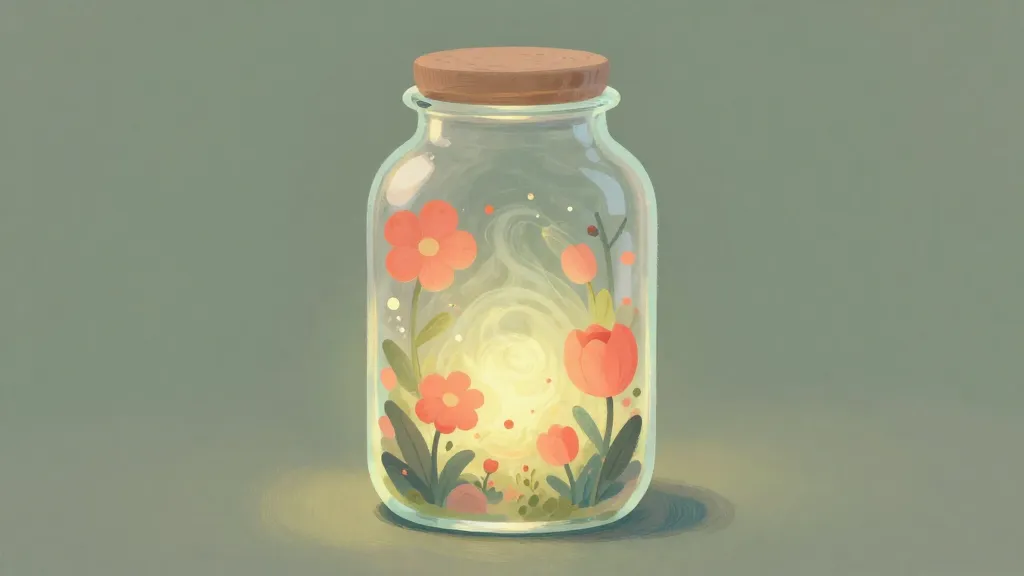
Have you ever noticed how a simple plastic dinosaur can suddenly become a hero, a villain, or a lonely explorer just because you decided it was so?
In the early 1900s, a woman named Melanie Klein realized that children were doing something much deeper than just 'having fun' when they played. She discovered that our inner world is filled with secret stories, fears, and hopes that we express through the things we do and the objects we love.
Imagine walking into a room in London about eighty years ago. The air is a bit chilly, and the sound of distant traffic hums outside the window.
Inside the room, there is a small table, a few chairs, and a sink with running water. But the most important thing is a wooden chest filled with tiny toys: little cars, wooden people, and small animals.
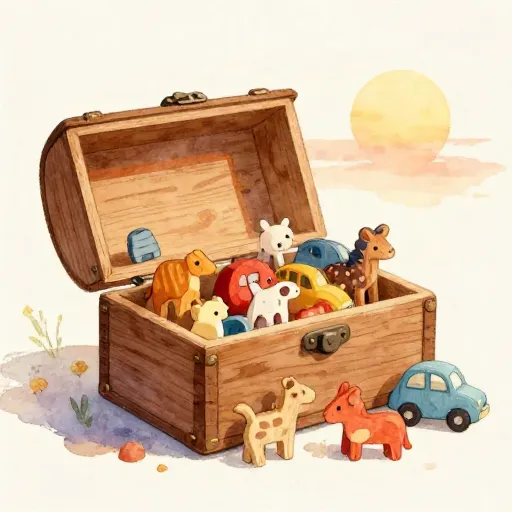
Imagine a tiny toy drawer that belongs just to you. No one else can touch it, and every time you visit Melanie, you find your toys exactly where you left them. This drawer represents your own private mind: a space where you are the boss of your own story.
Melanie Klein sat in this room, watching children play. She was a pioneer who moved from Vienna to Berlin, and eventually to England, looking for a way to understand what was happening inside a child's head.
At the time, many grown-ups thought that children were just 'empty vessels' waiting to be filled with knowledge. Melanie knew better: she saw that children were already full of complex ideas.
Finn says:
"If Melanie was watching me play with my LEGOs, would she think I'm building a castle, or would she think I'm building a safe place for my worries to hide?"
The Language of Play
Melanie's biggest breakthrough was something we now call the play technique. Before her, doctors tried to help people by having them talk about their feelings for hours.
But Melanie noticed that children don't always have the words for big feelings like 'overwhelmed' or 'anxious.' Instead, they show those feelings through their toys.

The child's play... is the equivalent of the adult's free associations.
If a child made two toy cars crash into each other, Melanie didn't just see a crash. She saw a way for the child to express a conflict or a 'crash' of feelings they might be having inside.
She treated the play as a kind of secret code. By watching how a child handled a doll or built a tower, she could begin to understand their unconscious thoughts.
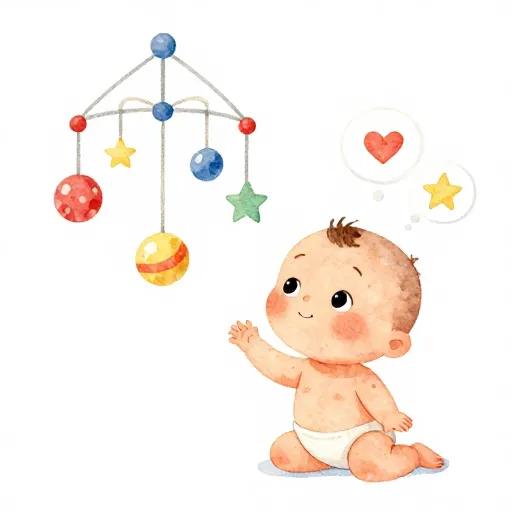
Melanie Klein was one of the first people to say that babies are actually very busy thinkers! Before her, many people thought babies didn't really have a personality until they could talk.
The World of Phantasy
Melanie used a special word to describe the stories we tell ourselves: phantasy. She spelled it with a 'ph' to show it was different from just imagining you are a wizard or a space captain.
For Melanie, a phantasy is something that happens in the back of your mind all the time. It is how you make sense of the world around you, even when you aren't thinking about it.

Mira says:
"I think I get the 'ph' in phantasy. It's like the background music in a movie: you don't always notice it, but it changes how the whole scene feels."
Think about when you are hungry. You might feel a little bit grumpy or 'hangry.' Melanie believed that, deep down, your mind creates a story about that hunger.
Maybe the hunger feels like a 'bad' thing attacking you from the inside. When you finally eat, it feels like a 'good' thing is looking after you.
Next time you feel a very strong emotion: like being super happy or super annoyed: try to imagine that feeling as a character. What would they look like? What would they say? This is a way of looking at your own 'inner world' just like Melanie did.
Splitting: The Good and the Bad
One of Melanie's most famous ideas is called splitting. She noticed that when we are very young, the world feels very extreme: things are either perfectly good or totally bad.
Have you ever been really mad at someone you usually love, like a parent or a best friend? In that moment, it feels like they are a completely different, 'bad' person.

There is no such thing as a baby... there is only a mother and a baby together.
This happens because it is hard for our brains to hold two opposite feelings at once. It is easier to 'split' the person into two: the 'Good Friend' and the 'Mean Friend.'
Melanie believed that growing up means learning how to put those two pieces back together. We start to realize that the person we are mad at is the same person we love.
The world is divided into Good and Bad. It is simple, clear, and helps us know who to run to and who to hide from.
The world is 'Whole.' People we love can sometimes be mean, and people we don't like can sometimes be kind. It is more confusing, but more real.
Putting the Pieces Together
When we realize that the person we were angry with is also the person who cares for us, we feel a new kind of emotion. Melanie called this the depressive position, but don't let the name fool you: it is actually a very brave thing.
It is the moment we realize that people are complicated. We start to feel ambivalence, which is just a fancy way of saying we can feel two opposite things at the same time.
Finn says:
"So, when I'm mad at my brother but also want to share my snack with him later, I'm doing that 'ambivalence' thing? That's a lot of work for one brain!"
Once we realize we might have been a bit mean to someone we love, we want to fix it. Melanie called this reparation. It is the urge to 'repair' or make things better.
Think about making a card for someone after an argument, or giving them a hug. That is your mind working to keep your world whole and connected.
One of the many interesting things about the human mind is that it is never still.
The Great Debate
Melanie wasn't the only person thinking about these things. There was another famous woman named Anna Freud (the daughter of Sigmund Freud) who had different ideas.
Anna believed that children needed to be taught how to behave before they could look at their deep feelings. Melanie disagreed: she thought children were ready to explore their inner worlds right away.
The 'Controversial Discussions' lasted for years! Even though the analysts disagreed about how the mind worked, they kept meeting to talk about it because they all agreed that helping children was the most important job in the world.
This led to some very famous meetings in London called 'The Controversial Discussions.' Imagine a group of the smartest people in the world arguing politely in a library while bombs were falling on London during World War II.
They were trying to decide the best way to help children stay brave and healthy during scary times. Melanie's ideas helped create the way doctors help children today.
The Journey of Melanie's Ideas
Why Melanie Matters Today
Melanie Klein taught us that childhood is a time of great emotional adventure. She showed us that even small children have a rich inner world that deserves respect and attention.
By understanding our 'internal objects' (the versions of people we carry in our hearts), we can understand why we react to things the way we do.
She believed that being human means constantly moving between feeling 'split' and feeling 'whole.' It is a journey that starts in the nursery and lasts our entire lives.
Something to Think About
If you had a 'secret code' for your feelings, what would it be?
There are no right or wrong answers here. Maybe your code is drawing, or building, or even the way you organize your books. Everyone expresses their inner world differently.
Questions About Psychology
Did Melanie Klein only work with sick children?
Why did she use toys instead of just talking?
What is the 'Depressive Position' in simple terms?
The Explorer of the Inside
Melanie Klein was like an explorer who didn't need a ship or a map. She stayed in one room and discovered an entire universe inside the minds of children. By learning about her, we can start to be explorers of our own minds, too. What will you discover in your inner world today?
