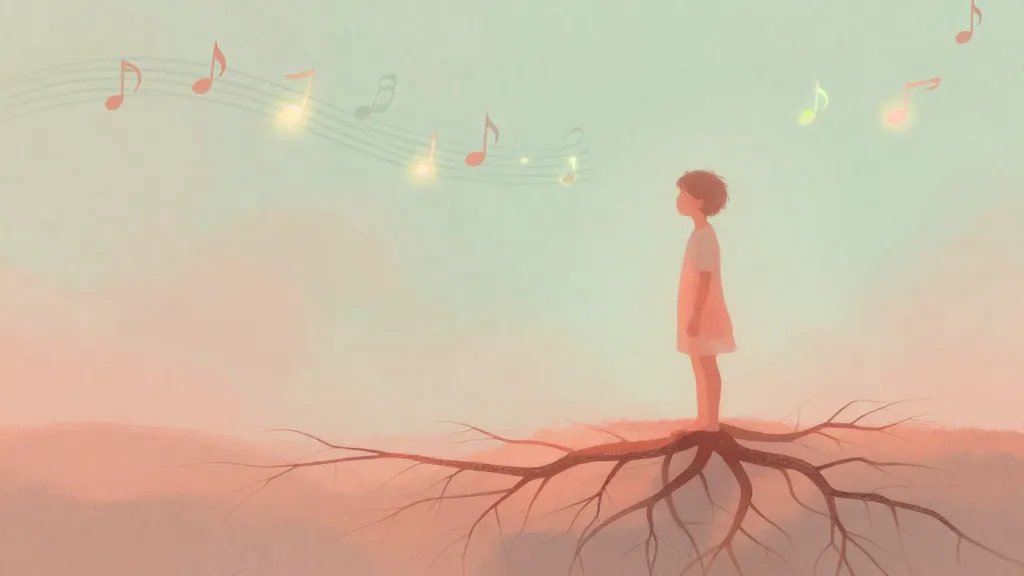
If you had a twin who grew up on the other side of the world, would they still laugh at your jokes?
This is one of the biggest questions in psychology, known as Nature vs Nurture. It is the study of how much of our personality comes from our biology and how much comes from our upbringing.
Imagine you are holding a tiny, hard sunflower seed in your hand. Inside that seed is a secret instruction manual telling the plant how tall to grow and what color its petals should be.
But if you drop that seed on a dry sidewalk instead of rich, brown soil, it might never grow at all. This is the heart of a mystery that has puzzled thinkers for hundreds of years.
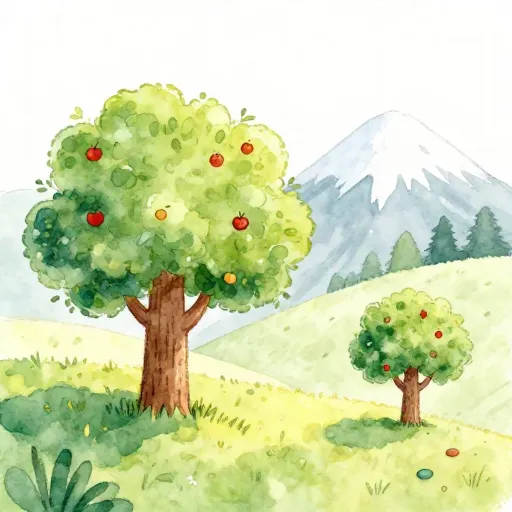
Imagine two identical apple seeds. One is planted in a sunny valley with plenty of rain. The other is planted on a cold, windy mountain top. Even though they have the exact same instructions inside them, the two trees will look completely different when they grow up.
We call this mystery Nature vs Nurture. It is a way of asking what makes you, well, you.
Is it the "nature" you were born with, like the color of your eyes or your natural height? Or is it the "nurture" you received from your family, your school, and the books you read?

Finn says:
"Wait, so if I’m really good at video games, is that because my dad is good at them, or because I’ve been playing them every Saturday for three years?"
The Room of the Blank Slate
To find the beginning of this debate, we have to travel back to the year 1690. We are in England, in a room filled with the smell of old paper and beeswax candles.
A man named John Locke is sitting at a wooden desk, dipping a quill pen into a bottle of black ink. Locke was a philosopher who was very curious about how babies learn to think.
At that time, many people believed that humans were born already knowing certain things. They thought some ideas were simply "built-in" to our brains from the moment we arrived.
Locke disagreed with this. He looked at a newborn baby and saw something different, something quiet and full of potential.
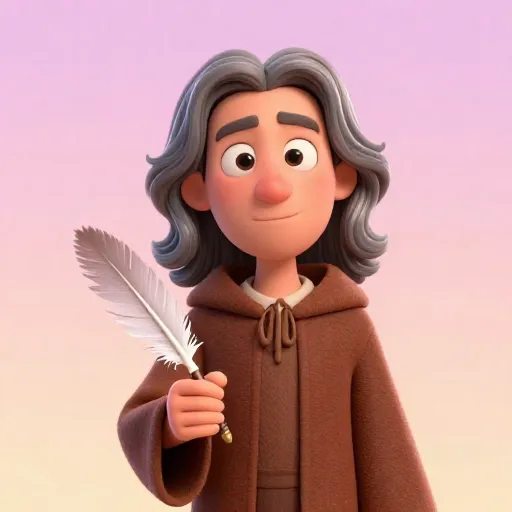
Let us then suppose the mind to be, as we say, white paper, void of all characters, without any ideas.
Locke called the mind a blank slate, or tabula rasa in Latin. He believed that when we are born, our minds are like a fresh notebook with no writing in it.
According to Locke, every single thing you know comes from your five senses. You learn what "cold" is by touching ice, and you learn what "kindness" is by watching your parents.
You are born with a set of instructions like a recipe. This decides your height, your eye color, and even parts of your personality like being brave or shy.
You are shaped by the world around you. Your parents, your friends, and the things you learn are like a chef who decides how the recipe turns out.
The Man Who Coined the Phrase
For a long time, Locke’s idea of the blank slate was very popular. But as the 1800s arrived, scientists began to notice that some things seemed to be passed down through families.
In Victorian London, a scientist named Francis Galton became obsessed with this. Galton was a cousin of Charles Darwin, the famous man who studied how animals change over time.
Galton noticed that many successful people had successful parents. He wondered if being smart or talented was something you inherited, like a family heirloom.
In 1869, he wrote a book where he officially used the phrase "Nature versus Nurture." He wanted to see if he could measure which one was stronger.
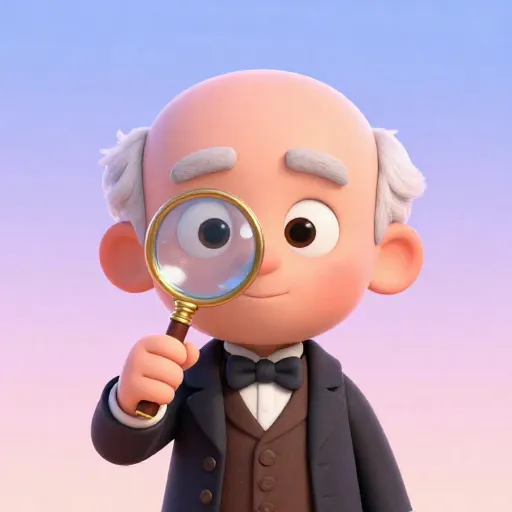
Nature is all that a man brings with himself into the world; nurture is every influence from without that affects him after his birth.
Galton believed that nature was the most important factor. He thought your future was mostly decided by your heredity, which is the passing of traits from parents to children.
He even began studying sets of identical twins to see how similar they stayed as they grew up. This was the start of a whole new way of looking at the human mind.
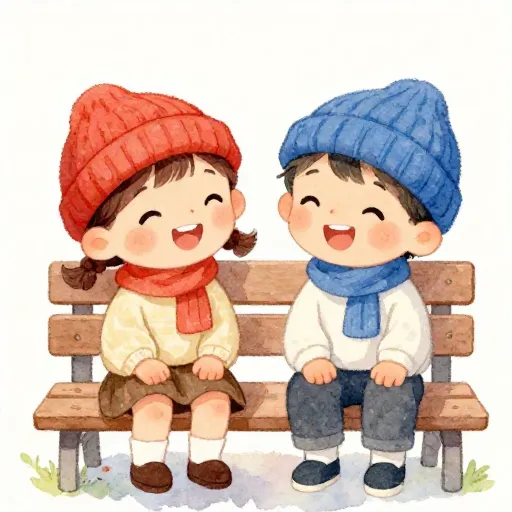
Identical twins have the exact same DNA! Scientists love studying them because if one twin loves broccoli and the other hates it, we know that difference must come from 'nurture' rather than 'nature.'
The Secret Code: DNA
In the middle of the 1900s, the debate took a massive turn. Scientists discovered something called DNA, the tiny chemical instructions found inside every cell of your body.
These genes are like the "nature" part of the argument made visible under a microscope. They carry the code for your hair color, your blood type, and even some parts of your temperament.
Through the Ages
Suddenly, it seemed like Galton might be right. If we have a physical code inside us, doesn't that mean our lives are already planned out?
However, the more scientists looked at DNA, the more they realized it wasn't a rigid blueprint. It was more like a musical score that needs an orchestra to play it.
Mira says:
"I think it's like a garden. The genes are the seeds, but the weather and the gardener are the nurture. You need both to get a flower."
The Dance of the Light Switches
Today, we have a new word that helps bridge the gap: epigenetics. This is the study of how your environment can actually change how your genes work.
Think of your genes as a row of light switches in a house. You are born with all the switches, but the world around you decides which ones get flipped "on" or "off."
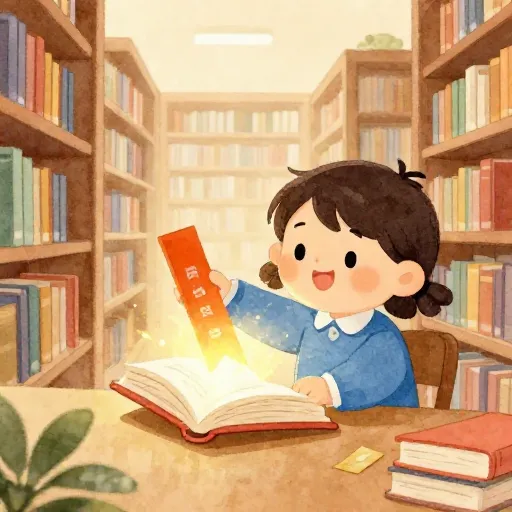
Imagine your DNA is a massive library of books. Epigenetics is like a librarian who goes through and puts 'Do Not Read' stickers on some books and 'Must Read!' bookmarks in others based on what is happening in your life.
For example, you might have a gene that makes you very tall. But if you don't get enough healthy food to eat while you are growing, that gene might never be fully activated.
This means that nature and nurture aren't actually fighting each other. Instead, they are partners in a lifelong dance, constantly reacting to one another.
The Holding Environment
A famous psychologist named Donald Winnicott had a beautiful way of thinking about this. He spent much of his time watching how mothers and babies interacted.
Winnicott realized that a child has a natural spark, but that spark needs a safe place to glow. He called this the "holding environment."
The individual's potential for development is inherent, but it requires a 'good-enough' environment to become a reality.
Winnicott believed that the "nurture" part of life isn't just about teaching kids facts or rules. It is about providing a space where a child feels safe enough to discover their own "nature."
If you feel safe and loved, your natural talents have the room they need to grow. Without that support, those talents might stay hidden away like a seed in a dark closet.
Why the Answer is a Moving Target
You might be wondering: "So, which is it? Is it nature or is it nurture?" The truth is that even the smartest scientists in the world don't have a simple percentage.
Some things, like your eye color, are almost 100% nature. Other things, like which language you speak or which sports team you like, are almost 100% nurture.
Make a 'Me Map.' Draw a circle for yourself in the middle. On the left, list 3 things you think you got from Nature (like curly hair). On the right, list 3 things you think you got from Nurture (like your favorite hobby). Which list was harder to make?
But most things, like how well you play the piano or how easily you make friends, are a messy mix of both. You might be born with a natural rhythm, but you still have to practice for hours to become a musician.
This is what makes being human so interesting. We are not just computers following a program, and we are not just pieces of clay being molded by others.
Finn says:
"If my genes are the switches, I wonder if I can learn how to flip them myself? That would be like having a superpower over my own brain."
You are a unique combination of history and choice. Your genes give you a starting point, and your environment gives you the tools, but you are the one living the story.
As you grow, you will find that you can seek out environments that suit your nature. And you will find that you can use your nature to change the world around you.
Something to Think About
If you could choose one 'nature' trait to change, and one 'nurture' experience to add to your life, what would they be?
There are no right or wrong answers here. Thinking about this helps you see how both sides work together to make you who you are today.
Questions About Psychology
Can I change my personality if I don't like it?
Are identical twins exactly the same person?
Which one is more important, nature or nurture?
The Never-Ending Story
The next time you look in the mirror or notice a habit you have, take a moment to wonder. Is that a gift from your ancestors, or a gift from the world around you? The answer is usually a bit of both, and that is what makes your story so incredible to tell.