
Have you ever caught yourself thinking about your own thoughts?
This curious ability is at the heart of psychology, the scientific study of the mind and how it influences our behavior. It is the story of how humans try to understand the invisible world inside our heads.
Imagine you are standing in a laboratory in Germany in the year 1879. The room is filled with ticking clocks, brass instruments, and researchers holding stopwatches. This is the birthplace of modern psychology.

Imagine a room smelling of old paper and ozone. Scholars in long coats sit perfectly still, listening for the 'click' of a metal telegraph key. They aren't sending messages: they are measuring how many milliseconds it takes for a human soul to react to a sound.
Before this moment, people studied the mind by mostly sitting and thinking about it. But a man named Wilhelm Wundt wanted to measure it. He believed that even our most private thoughts followed certain rules that we could discover if we looked closely enough.
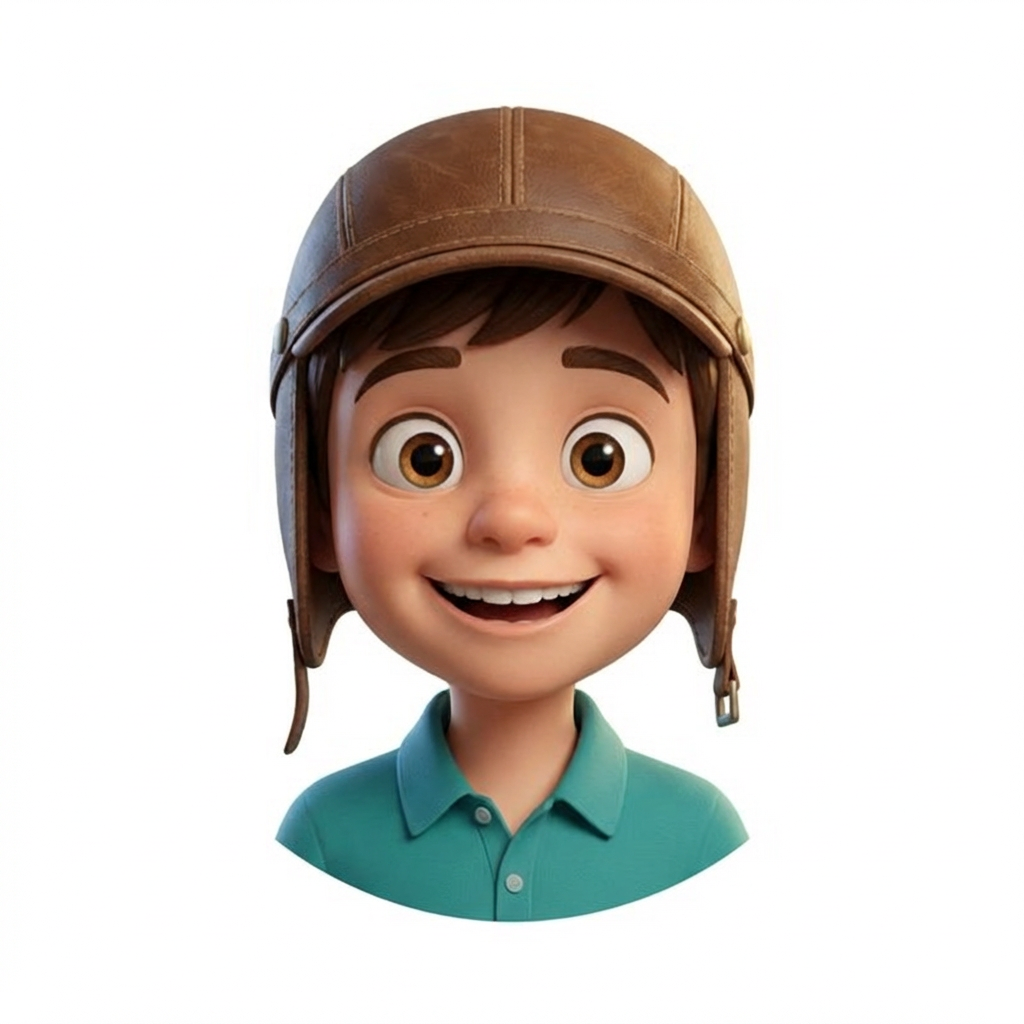
Finn says:
"If Wundt could measure a thought with a stopwatch, I wonder how much a heavy thought actually weighs?"
The Invisible World
Psychology is a word made from two Greek parts: psyche, meaning soul or spirit, and logos, meaning study. For a long time, people thought the mind was a ghost-like thing that lived in the body but followed no rules.
Today, we know the mind is deeply connected to the brain. However, they are not exactly the same thing. If the brain is the physical engine of a car, the mind is the feeling of the wind in your hair as you drive down the road.

The faculty of voluntarily bringing back a wandering attention, over and over again, is the very root of judgment, character, and will.
William James, who wrote the first great American book on this subject, compared our thoughts to a river. He called it the stream of consciousness. Just like a river, your thoughts never stop moving, and no two moments are ever exactly the same.
Close your eyes for thirty seconds and try to think of absolutely nothing. No trees, no toys, no homework. Did a thought sneak in? Most people find it impossible because the mind is designed to constantly produce 'river' of thoughts.
Deep Beneath the Surface
About a hundred years ago, a doctor in Vienna named Sigmund Freud started to wonder about the thoughts we don’t even know we're having. He suggested that our minds are like giant icebergs floating in the ocean.
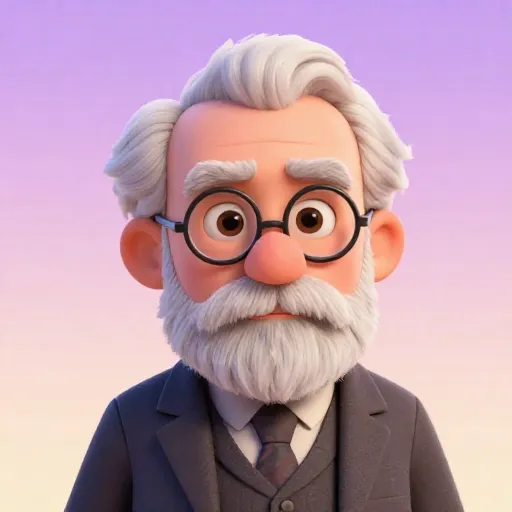
The mind is like an iceberg, it floats with one-seventh of its bulk above water.
Freud believed the small part of the iceberg above the water is our conscious mind, the things we are aware of right now. The huge part hidden beneath the surface is the unconscious. This is where our hidden fears, deep wishes, and forgotten memories live.

Mira says:
"The unconscious mind feels like the background music in a movie. You don't always notice it, but it changes how the whole story feels."
This idea changed everything because it meant we don't always know why we do what we do. Sometimes, we might feel grumpy or excited without a clear reason. Psychology helps us dive beneath the surface to explore those hidden depths.
How We Become Ourselves
As you grow, your mind doesn't just get bigger like your feet: it actually changes the way it works. This is called developmental psychology. Thinkers like Jean Piaget spent years watching children play to understand this process.
You are born with your personality already inside you, like a seed that already knows it will become an oak tree.
Your mind is a blank slate at birth, and every experience you have writes a new line on that slate.
Piaget noticed that children aren't just "miniature adults." They think in entirely different ways. For example, a very young child might believe that the moon is following them personally, while an older child understands how distance and perspective work.
Through the Ages
This growth is a mix of two powerful forces: nature and nurture. Nature is the map you were born with, like the color of your eyes or your natural energy. Nurture is everything that happens to you, like the books you read or the way your family hugs you.
The Mirror of Other People
Psychology isn't just about what happens inside one head. It is also about what happens when two or more heads get together. This is called social psychology.
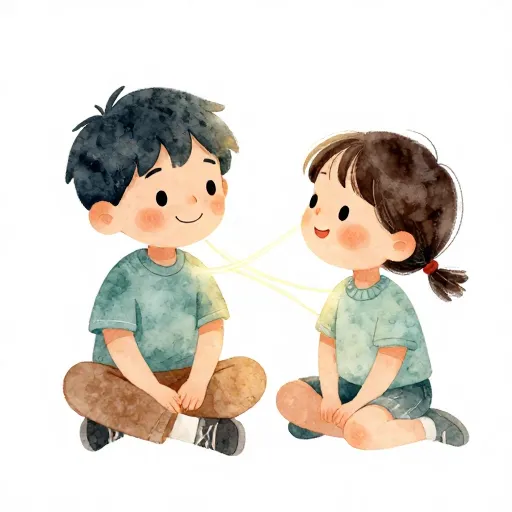
Humans have special 'mirror neurons' in their brains. When you see someone trip and fall, these neurons fire in your own brain as if you were the one who tripped. It's your brain's way of feeling what others feel.
We are social creatures, which means our brains are specifically designed to read other people's faces and feelings. Have you ever noticed that if you see someone yawn, you feel like yawning too? Or if a friend is very sad, you might start to feel a little heavy in your own chest?
Finn says:
"It’s weird to think that my brain is constantly trying to guess what your brain is thinking. It’s like a never-ending game of pretend that everyone is playing at once."
This is part of empathy, the mind's ability to imagine what it is like to be someone else. It is one of the most important tools a human can have. It allows us to build friendships, work in teams, and take care of people we've never even met.
The Joy of the Unknown
One of the most famous psychologists, Donald Winnicott, spent his life looking at the space between people. He was particularly interested in how babies start to realize they are separate individuals from their parents.

It is a joy to be hidden, but a disaster not to be found.
Winnicott believed that playing is the most important thing a person can do. When you play, you are practicing being yourself. You are creating a world where you can test out ideas without anything bad happening.
Think of a 'transitional object' you had when you were little: a blanket, a teddy bear, or a toy. Winnicott believed these items are the first step in psychology. They help children bridge the gap between their own inner world and the real world outside.
Psychology teaches us that being a person is a complicated, wonderful, and sometimes messy business. There is no such thing as a "perfect" mind. Instead, there is just your mind, which is a unique landscape that has never existed before and will never exist again.
Something to Think About
If you could record a movie of your own thoughts for one hour, would you want to watch it?
Think about whether your thoughts would look like a story, a series of pictures, or something else entirely. There is no right answer, because no one else can see inside your mind but you.
Questions About Psychology
Is psychology the same as being a doctor?
Can psychologists read my mind?
Why do we have bad thoughts sometimes?
The Adventure Continues
The study of the mind is one of the youngest sciences in history. We have mapped the surface of Mars and the bottom of the ocean, but the territory inside your own head is still full of unexplored corners. Every time you ask yourself 'Why did I do that?' or 'How does my friend feel?', you are acting as a psychologist. Keep exploring, keep questioning, and remember that being 'you' is the most interesting project you will ever work on.
