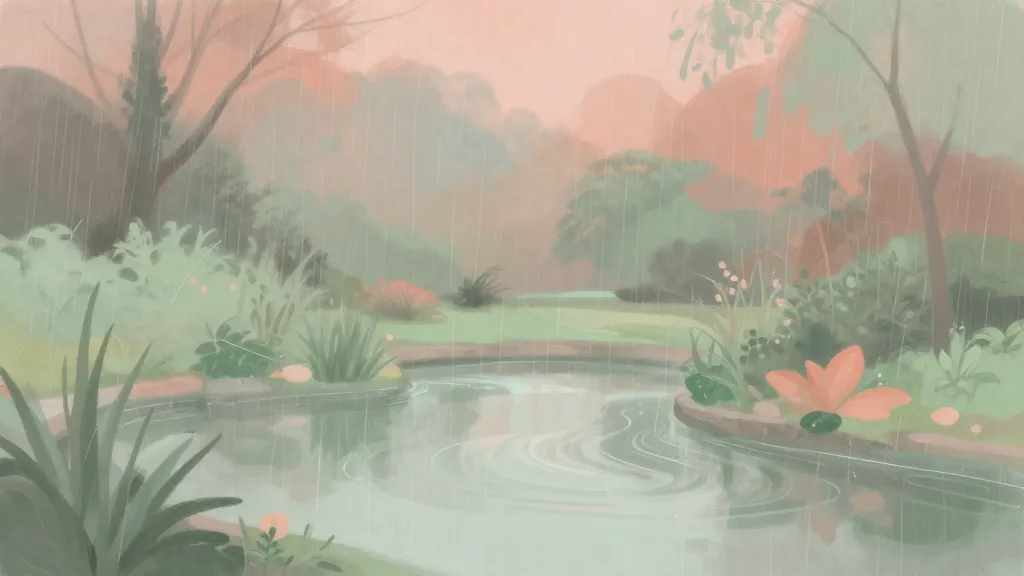
Have you ever noticed how sadness feels slower than other feelings?
While anger is hot and fast, sadness is often cool and quiet. It is a deep part of our psychology that helps us slow down and process the world when things change or when we lose something we love. Learning to live with this feeling is one of the most important parts of growing up.
Imagine you are standing on a beach in Ancient Greece, over two thousand years ago. The sun is setting, and the air is turning chilly. You see a group of doctors and thinkers sitting on the white marble steps of a temple, talking about why humans feel the way they do.
They didn't have brain scans or microscopes back then. Instead, they looked at nature to understand the human mind. They believed that everything in the world was made of four elements: earth, air, fire, and water.
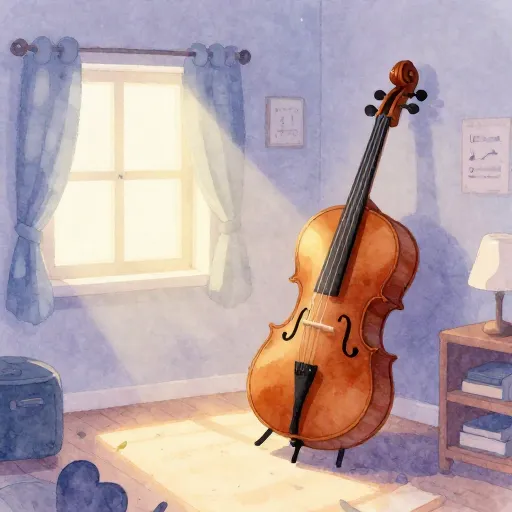
Imagine your emotions are like a grand orchestra. Joy is the bright trumpets, and anger is the loud drums. Sadness is the cello: deep, slow, and low. Without the cello, the music wouldn't have any weight or richness. Every instrument is needed to play the full song of your life.
These ancient thinkers believed that our bodies were filled with four liquids called humors. They thought that when you felt a heavy, sinking feeling in your chest, it was because you had too much of a liquid called black bile. They called this feeling melancholy.
To them, melancholy wasn't a mistake or a bug in the system. It was a sign that a person was thoughtful and sensitive. They noticed that many of the greatest poets and builders were people who felt sadness very deeply.

Those who have become eminent in philosophy, politics, poetry, or the arts have all had tendencies toward melancholy.
The Purpose of the Slow-Down
If you have ever felt sad, you might have noticed that you don't want to run around or play loud games. You might want to curl up in a blanket or just sit quietly. This is actually your brain's way of protecting you.
Scientists today think that sadness is a built-in pause button. When something goes wrong, like losing a toy or saying goodbye to a friend, your brain needs time to update its map of the world.

Finn says:
"Sometimes I feel sad for no reason at all, and that feels really confusing. Is it okay to just be quiet for a while?"
This slowing down helps you save energy while you figure out how to handle a new situation. It is a form of resilience, which is the ability to bounce back after a hard time. But you can't bounce back if you don't first allow yourself to land.
Sadness is also a very loud signal to the people around you. When we look sad, our faces change: our eyebrows turn up, our shoulders slump, and sometimes we cry. This tells our family and friends that we need a little extra care.
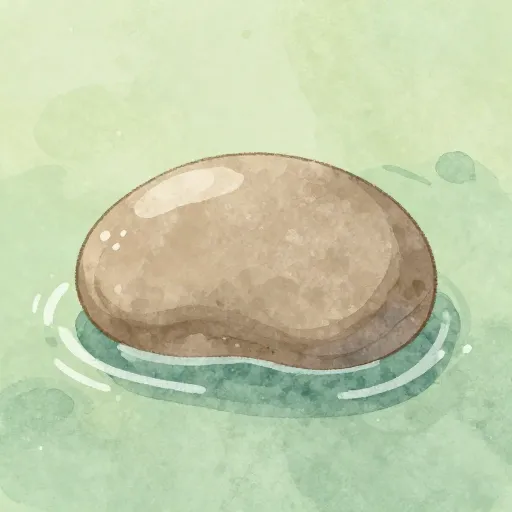
The word 'sad' didn't always mean unhappy. Hundreds of years ago in Old English, the word 'saed' meant 'sated' or 'full.' If you were sad, it meant you were full of experience or very serious. It was a word for someone who was steady and solid, like a heavy stone.
The Science of Tears
Did you know that humans are the only animals that cry emotional tears? While many animals have watery eyes to clean out dust, we are the only ones who produce tears because of how we feel.
When we are sad, our bodies release special chemicals into our tears. Some scientists believe that crying is like a biological drainage system. It literally flushes stress hormones out of your body so you can start to feel calm again.
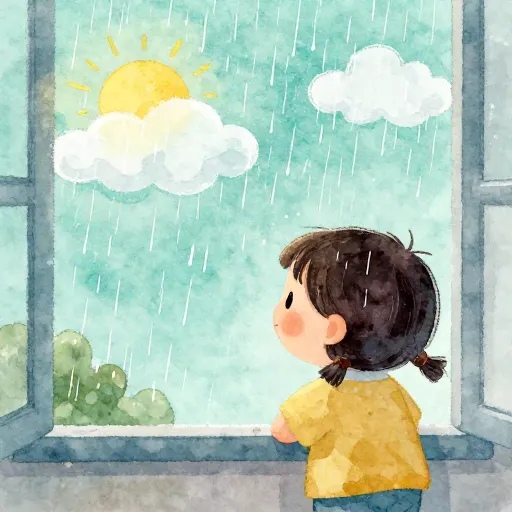
The next time you feel a bit sad, try the 'Weather Report.' Close your eyes and ask yourself: If my sadness was weather, what would it be? Is it a drizzly afternoon? A heavy fog? A quiet winter snow? Sometimes naming the 'weather' helps you realize that just like the weather, it will eventually change.
Crying is a way of communicating without words. It says: I am overwhelmed, and I need help. In the history of humans, this was a very useful tool. It helped people stay connected and look after each other when life got difficult.

Mira says:
"Finn, I think your brain is just taking a little rest. When I feel sad, I try to imagine my feelings are like a soft fog that will eventually lift when the sun comes out."
The Holding Environment
In the 20th century, a famous doctor named Donald Winnicott looked at sadness in a new way. He spent a lot of time watching how parents and children interacted. He realized that children don't need to be happy all the time to be healthy.
Winnicott talked about something called the holding environment. This isn't just a physical hug, though hugs are great. It is the feeling that someone is with you, keeping you safe, while you feel your big, messy feelings.

The capacity to feel depressed is the hallmark of emotional development.
He believed that if a child feels safe, they can develop a capacity for concern. This means they start to understand that other people have feelings too. Sadness is the bridge that helps us feel empathy for others.
When we feel our own sadness, we start to recognize it in our friends. We realize that everyone has a quiet, heavy room inside them sometimes. This realization makes us kinder and more patient with the people we meet.
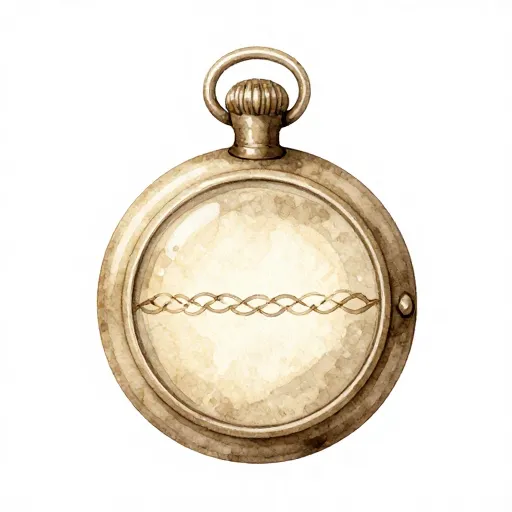
In the 1800s, people in the Victorian era thought sadness was very important. They had strict rules for 'mourning' to show they were sad. They wore black clothes and even made jewelry out of the hair of people they missed. They believed that showing your sadness was a way of showing your love.
Growing Through the Rain
As you grow older, you might find that sadness becomes more complicated. It isn't always about a broken toy. Sometimes it is about a change in how you feel about yourself, which we call introversion.
Sadness Through the Ages
Modern thinkers like Adam Phillips believe that we shouldn't try to get rid of sadness too quickly. He suggests that sadness is a way of mourning the things we thought would happen but didn't. It is a process of integration, where we fit new, hard truths into our lives.

Sadness is a way of keeping the person you are losing with you.
If we try to hide our sadness or pretend it isn't there, it usually just stays under the surface, like a ball held underwater. It takes a lot of energy to keep it down. When we let it float to the top, it can finally drift away on its own.
Mira says:
"It's interesting that we can't have the big, happy moments without the quiet, sad ones. They seem to work together to help us understand who we are."
Two Sides of the Same Coin
It is helpful to remember that sadness and joy are often connected. We only feel sad about things because we care about them. If you didn't love your pet, you wouldn't feel sad when they were gone.
Some people think we should always try to 'cheer up' or find a silver lining as fast as possible to stay positive.
Others believe it is better to sit with the sadness and let it finish its work, even if it feels uncomfortable for a while.
This means that sadness is a map of what you value. It shows you what matters to your heart. Instead of thinking of it as a dark cloud, you can think of it as a shadow. You only have a shadow when there is a bright light nearby.
In many cultures, sadness is seen as a beautiful part of life. In Japan, there is a phrase called mono no aware. It describes a gentle sadness about how things don't last forever, like cherry blossoms falling from a tree. It reminds us to appreciate things while they are here.
Something to Think About
If sadness was a friend who came to visit, what do you think it would be trying to tell you about what you care about?
There are no right or wrong answers here. Every person's sadness speaks a different language.
Questions About Psychology
Why can I feel sad even when nothing bad has happened?
Is sadness the same as depression?
How can I help a friend who is sad?
A Place for the Heavy Heart
Sadness is not a mountain you have to climb over, but a valley you walk through. It is a quiet place where you learn about what matters, how to care for others, and how to be kind to yourself. When you are ready to keep walking, you will find that the things you learned in the quiet valley make the sun feel even warmer on the other side.
