
Have you ever had a dream so strange that you woke up wondering where on earth it came from?
Long ago, people thought dreams were just nonsense or messages from the stars. But a doctor in Vienna named Sigmund Freud had a different idea: he believed our minds have a hidden basement called the unconscious mind. He spent his life trying to understand the psychoanalysis of why we think, feel, and act the way we do.
Imagine you are walking through the city of Vienna in the year 1890. The streets are paved with bumpy cobblestones and the air smells of roasting coffee and horse-drawn carriages. Men wear tall silk hats and women wear long, heavy dresses that sweep the ground. This was a world that loved rules, manners, and keeping everything looking perfect on the outside.
In a quiet apartment at Berggasse 19, a man with a neatly trimmed beard and round glasses sat in a room filled with ancient statues and old books. This was Sigmund Freud. While other doctors were busy looking at broken bones or sore throats, Freud was interested in something you couldn't see: the human spirit.
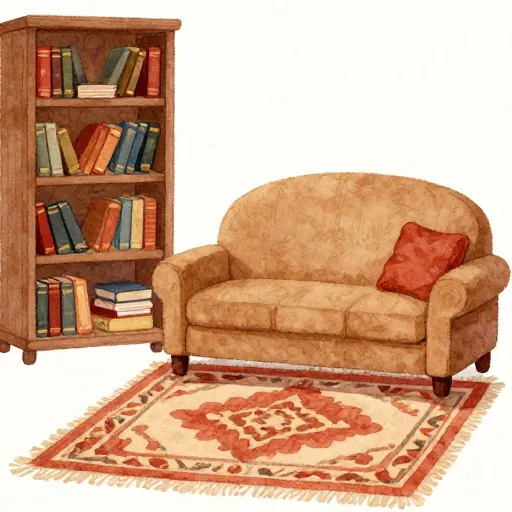
Imagine a room filled with the smell of old paper and cigar smoke. There are rugs from Persia on the walls and hundreds of tiny stone statues of ancient Greek gods on the desk. This was Freud's office, a place designed to make people feel like they were stepping out of time so they could finally look inside themselves.
Freud noticed that many of his patients felt worried or sad, but they didn't know why. It was as if a part of their brain was keeping secrets from the rest of them. He began to wonder if the human mind was like a giant house where some of the doors were locked.
He realized that what we think about every day is only a tiny part of who we are. To explain this, he used a famous comparison that we still use in psychology today. He said the mind is like an iceberg floating in the freezing ocean.

Mira says:
"If my mind is like an iceberg, I wonder if the part underwater is where all my forgotten birthday parties and lost socks are hidden."
When you see an iceberg, you only see the tip sticking out of the water. This represents your conscious mind, the things you are thinking about right now, like the taste of your lunch or the sound of this sentence. But underneath the waves is a massive mountain of ice that you cannot see.
Freud called this hidden part the unconscious. He believed this was where we keep our deepest wishes, our scariest memories, and the feelings we don't even know we have. It is always there, pushing us and changing how we act, even when we aren't looking at it.
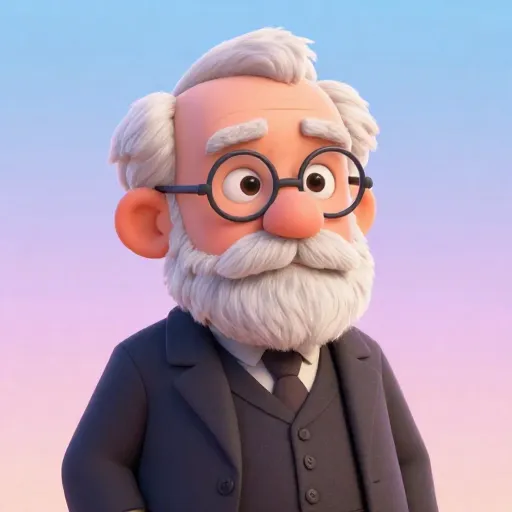
Dreams are the royal road to a knowledge of the unconscious mind.
If the unconscious is a secret basement, how do we ever find out what is inside it? Freud believed there were clues everywhere. He looked at small mistakes people made, like calling a teacher 'Mom' by accident, which we now call a Freudian slip.
But his favorite way to explore the basement was through dreams. He believed that when we sleep, the 'guard' at the door of our conscious mind goes to sleep too. This allows our hidden thoughts to come out and play, though they usually wear disguises.
Start a 'Dream Decoder' notebook. Keep it by your bed. As soon as you wake up, write down one thing you remember from your dream. Don't worry if it's weird! Later, look at it and ask: 'If this dream was a message from a secret friend, what would they be trying to tell me?'
Think about a dream where you are flying or perhaps a dream where you are being chased by a giant marshmallow. Freud wouldn't think these were just random. He would ask: what does the marshmallow represent? Are you worried about something 'soft' or 'sweet' in your life that feels too big to handle?
He called this work interpretation. He believed that by decoding these symbols, we could learn the truth about our own hearts. It was like being a detective where the 'crime scene' was your own imagination.

Finn says:
"Wait, so if a giant marshmallow in my dream is actually a symbol for a big test at school, does that mean my brain is a professional code-breaker?"
As Freud kept digging, he realized the mind isn't just one thing. He decided it was more like a team of three different characters who are constantly arguing with each other. He gave them famous names: the Id, the Ego, and the Superego.
First, there is the Id. Imagine a tiny, hungry toddler living inside your brain. The Id doesn't care about rules or waiting. It wants what it wants, and it wants it right now! If the Id sees a cake, it doesn't ask if it belongs to someone else. It just wants to eat.
The Id is the most important part because it represents our natural energy, our creativity, and our survival instincts. Without it, we wouldn't want anything at all!
The Superego is the most important part because it allows us to live together in a society. Without it, the world would be chaotic and no one would ever be kind or follow the rules.
Then, there is the Superego. This is like a very strict teacher or a royal guard living in your head. The Superego knows all the rules and wants you to be perfect. It is the voice that tells you to share your toys and finish your homework. It can be very loud and sometimes makes you feel guilty.
Finally, there is the Ego. The Ego is the person in the middle, trying to keep everyone happy. It is the part of you that deals with the real world. The Ego says: 'Okay, Id, you can't eat the whole cake right now because that would be rude, but we can have a small slice after dinner if the Superego agrees.'

The ego is not master in its own house.
Freud believed that much of our unhappiness comes from these three characters not getting along. If your Superego is too strong, you might feel worried all the time that you are doing something wrong. If your Id is too strong, you might get into trouble because you can't stop yourself from doing whatever you want.
To help people balance these three parts, Freud invented a method called the talking cure. Instead of giving medicine, he simply asked his patients to lie down on a soft, patterned couch and talk about whatever came into their heads. This is called free association.

Freud's famous patient couch was actually a gift from a grateful patient. It was covered in a very expensive, heavy Persian rug. Freud believed that if a patient lay down and relaxed their body, their mind would relax too, making it easier for the 'secret' thoughts to come out.
He would sit out of sight, behind the patient, and listen very carefully. He noticed that as people talked, they would eventually start talking about things they had forgotten or hidden away. By bringing these 'ghosts' out into the light, the patients often started to feel better.
This was a brand new idea. Before Freud, most people thought that if you had a problem with your mind, you were just 'broken' or 'weak.' Freud showed that our minds have a history, just like a country does, and that our childhood experiences shape who we become as adults.
Mira says:
"It's like my brain is a group project where the toddler, the teacher, and the negotiator all have to agree on what to do for the weekend!"
Freud’s ideas were very controversial. Many people in Vienna were shocked by his theories about how much our early childhood matters. They didn't like the idea that they weren't fully in control of their own thoughts. But Freud didn't mind the disagreement; he felt he was a scientist of the soul.
His work didn't just stay in a doctor's office. It leaked out into the whole world. Writers started writing books about the 'inner lives' of characters. Artists like Salvador Dalí started painting melting clocks and strange landscapes that looked like dreams. Even the movies we watch today, like Disney’s Inside Out, owe a lot to Freud's map of the mind.
Through the Ages: The Story of the Mind
As he grew older, Freud had to face very difficult times. Because he was Jewish, he had to flee his home in Vienna when the Nazi party took over in 1938. He moved to London with his daughter, Anna Freud, who became a famous psychologist herself. Even in his final days, he remained curious about the mysteries of the human brain.
Today, many psychologists disagree with Freud's specific theories. They think he focused too much on certain things or that some of his ideas can't be proven by modern science. However, almost everyone agrees on one thing: he changed the way we look at ourselves forever.
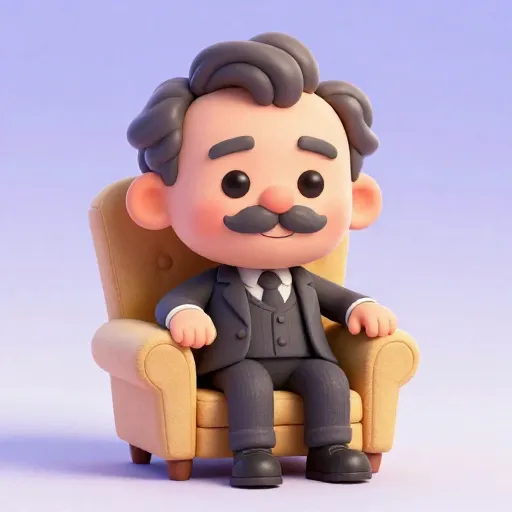
Words have a magical power. They can bring either the greatest happiness or deepest despair.
We now live in a world where it is normal to talk about our feelings. We understand that our past affects our present, and we know that there is more to us than meets the eye. Freud taught us that being human is a deep, complicated, and wonderful mystery that is worth exploring every single day.
Freud loved dogs! In his later years, he often had his Chow Chow dog, Jofi, sit in the room during his therapy sessions. He believed that dogs could sense if a person was truly calm or anxious better than most humans could.
So, the next time you have a strange dream or feel an emotion you can't quite name, remember the doctor from Vienna. You are the owner of a vast, secret landscape. You are a detective, and your own mind is the greatest mystery you will ever solve.
Something to Think About
If you could open a door to the 'secret basement' of your mind for just five minutes, what is one thing you hope you would find there?
There are no right or wrong answers here. Your mind is yours alone, and every discovery is just another piece of the puzzle.
Questions About Psychology
Did Freud really think all dreams had a secret meaning?
Why did Freud's patients lie on a couch instead of sitting in a chair?
Is everything Freud said still believed by doctors today?
The Explorer of the Inward
Sigmund Freud was like a cartographer who tried to map a land no one had ever seen. He didn't get every mountain or river in the right place, but he was the first person to show us that the land was there at all. By looking inward, he taught us that we are all much deeper and more interesting than we look on the outside.