If you could travel back in time five hundred years, you might notice something very strange about the children: they didn't really exist, at least not in the way we think of them today.
For most of human history, people didn't see childhood as a special series of development stages. Instead, as soon as you could walk and talk, you were often treated like a tiny adult in training. It took centuries of psychology and observation for us to realize that growing up is a complex journey with its own unique milestones and ways of seeing the world.
Imagine walking into a village in the year 1400. You wouldn't see many toy stores or playgrounds. You might see a seven year old helping a blacksmith or a ten year old minding a herd of sheep.
In those days, people believed that children were basically adults who just hadn't finished growing yet. They wore the same style of clothes as their parents, only smaller. They were expected to work, listen to the same stories, and understand the world in the same way.
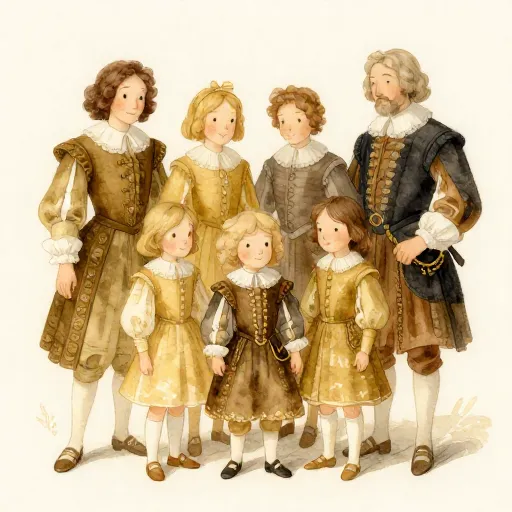
Imagine a painting from the year 1650. You see a family standing together. The children aren't wearing bright colors or soft fabrics. Instead, the little boy is wearing a velvet coat and a sword, just like his father. The little girl is in a stiff corset and a heavy silk dress. They look like tiny statues because, at the time, people didn't think children needed their own style of clothes.
This idea started to change during a time called the Enlightenment. Thinkers began to wonder if children were actually different from adults. They started to see childhood as a protected bubble, a time for wonder and learning rather than just work.
One of the first people to shout about this was a man named Jean-Jacques Rousseau. He lived in the 1700s and believed that children were born naturally good and should be allowed to explore nature freely.
Nature wants children to be children before being men.
Rousseau's ideas were radical for his time. He argued that instead of stuffing children's heads with facts, we should let them learn through their own experiences. This was the beginning of the idea that childhood has its own special value.
Finn says:
"If kids used to be treated like adults, does that mean they never got to play? I can't imagine a world without LEGO or tag!"
As time moved forward, scientists began to study the mind more closely. They wanted to know exactly how a baby becomes a toddler, and how a toddler becomes a teenager. This led to the birth of developmental psychology.
One Swiss scientist, Jean Piaget, spent his whole life watching children play. He realized that children don't just know less than adults: they actually think in a completely different way.
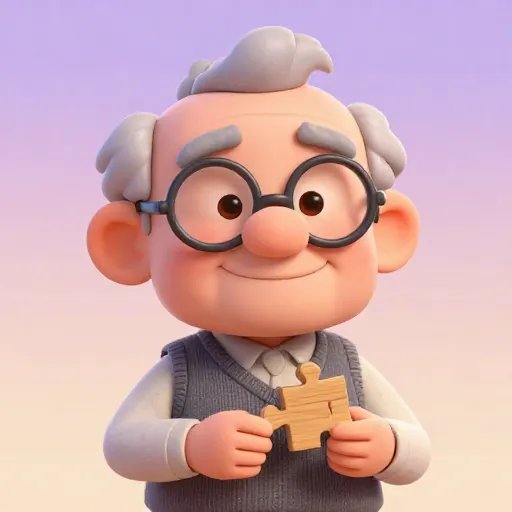
Children have real understanding only of that which they invent themselves.
Piaget noticed that his own children made the same kinds of "mistakes" at the same ages. He realized these weren't mistakes at all. They were actually signs of the brain working through a specific stage of growth.
If you have a younger sibling or cousin (around age 4 or 5), try this famous Piaget experiment: Show them two identical crackers. Ask if they are the same. They will say yes. Then, break one cracker into four small pieces. Ask again: 'Which has more?' Often, the younger child will point to the broken pieces and say that one has more, because their brain sees 'more' objects and hasn't learned the logic of 'mass' yet.
Piaget divided childhood into four main stages. The first is the sensorimotor stage, which happens from birth to age two. During this time, babies learn about the world through their senses: touching, tasting, and looking.
A big moment in this stage is discovering object permanence. This is the realization that things still exist even when you can't see them. Before this, if you hid a ball under a blanket, the baby thought the ball had literally vanished into thin air.
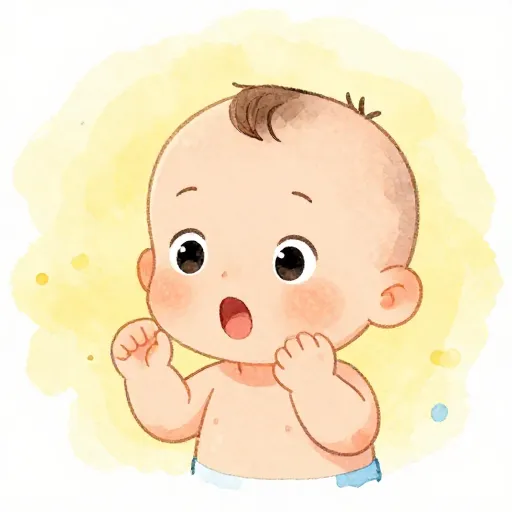
For a baby, a game of 'Peek-a-boo' is actually a high-stakes thriller! Because they haven't mastered object permanence, when you hide your face behind your hands, they genuinely think you have ceased to exist. When you reappear, it is a miracle every single time.
The second stage is the preoperational stage, from ages two to seven. This is the age of symbols and pretend play. A cardboard box becomes a spaceship, and a stick becomes a magic wand.
During this stage, children are often very egocentric. This doesn't mean they are selfish: it just means they can't yet imagine that someone else might see things differently than they do. If they are happy, they assume everyone in the room is happy too.
Mira says:
"It's funny to think that my brain used to be 'tricked' by a tall glass of water. I wonder what my brain is being tricked by right now without me knowing?"
You are likely in the third stage right now, which Piaget called the concrete operational stage. This usually lasts from age seven to eleven. This is when your brain starts to work like a logical machine, but it still needs real, "concrete" things to think about.
You can now understand that if you pour water from a short, fat glass into a tall, thin glass, the amount of water stays the same. To a five year old, it looks like more water. To you, it is just common sense.
Through the Ages: How We Saw Kids
Finally, as you head toward your teenage years, you enter the formal operational stage. This is when you start to think about abstract ideas like justice, love, or the future. You can imagine things that don't exist yet and wonder "what if?"
While Piaget was looking at how we think, another thinker named Erik Erikson was looking at how we feel. He believed that every stage of life is defined by a big question or a challenge we have to solve.
Stages happen because the brain is physically growing. You can't teach a two year old algebra because the parts of the brain needed for abstract math haven't 'plugged in' yet.
Stages happen because of how our world is set up. We have 'middle childhood' because we have schools that group kids by age. In a different culture, these stages might look totally different.
For a young child, the big challenge is building autonomy, which is the feeling that you can do things yourself. For a teenager, the challenge is finding your identity. You start to ask, "Who am I really, apart from my family or my school?"
This shift into adolescence is one of the biggest transformations humans go through. Your brain actually goes through a massive renovation, especially in the part that handles planning and emotions.
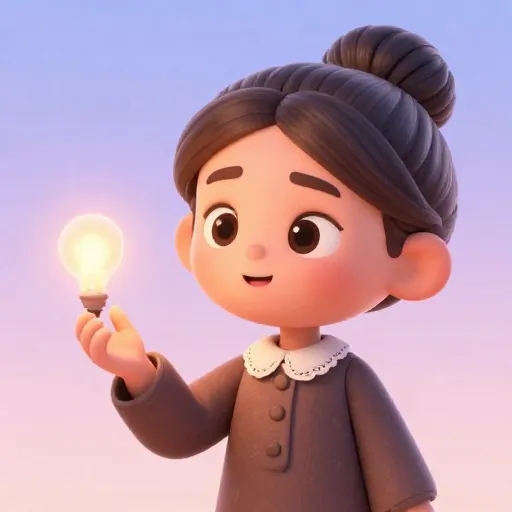
The child is both a hope and a promise for mankind.
In the past, there wasn't really a word for "teenager." You were a child, and then you were an adult. The idea of the teenager only became popular about 100 years ago. It gave people a name for that strange, exciting middle ground where you are no longer a little kid but not quite ready for the adult world.
Mira says:
"So growing up isn't just getting taller, it's like my mind is getting more 'resolution' like a high-definition screen."
Today, we know that these stages aren't like steps on a ladder that you finish and leave behind. Instead, they are like layers of an onion. Even when you are eighty years old, you still have that curious baby and that imaginative seven year old living inside you.
The word 'infant' comes from the Latin word 'infans,' which literally means 'unable to speak.' For a long time, the biggest stage marker was simply whether or not you could talk yet!
Knowing about these stages helps us be kinder to ourselves. If you are struggling to understand a big idea, it might just be because your brain is currently busy building the tools it needs for the next stage.
Something to Think About
What is one thing you can do or understand now that your five-year-old self would think was a superpower?
There is no right answer here. Think about how your 'map' of the world has grown bigger since you were small.
Questions About Psychology
Do all kids go through these stages at the same time?
Why do I feel like a kid some days and a teenager other days?
When does childhood actually end?
The Ever-Changing You
The next time you look at a younger child and think their games are silly, remember that your brain once worked exactly like theirs. And the next time you look at an adult and wonder why they are so serious, remember that they still have a child inside them, wondering about the world just like you do. Growing up is the greatest mystery we all share.