Have you ever found a smooth, perfect pebble on a beach and felt a sudden, quiet surge of happiness?
That feeling is more than just liking a rock: it is the beginning of gratitude. While we often think of it as a polite 'thank you,' psychologists and philosophers see it as a powerful way of using our attention to map out the good things in our lives.
Imagine you are standing in a crowded, noisy street in Ancient Rome two thousand years ago. Dust hangs in the air, and the smell of roasting meat mixes with the sound of horses clopping on stone. In a quiet corner of a grand villa, a man named Seneca is dipping a reed pen into dark ink.
Seneca was a teacher and an advisor to emperors, but he spent a lot of time thinking about how to be a good human. He believed that gratitude was not just a nice thing to do, it was a necessary virtue that kept society from falling apart.
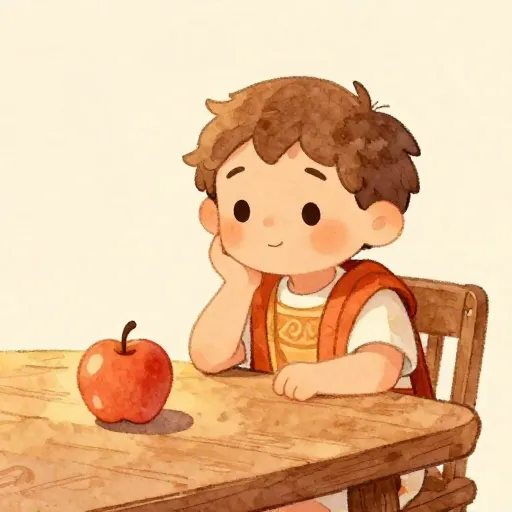
Imagine Seneca sitting at his desk. Outside, the Roman Empire is full of noise and chaos. He looks at a single piece of fruit on his table and thinks about the sun that grew it, the rain that watered it, and the farmer who picked it. Suddenly, he isn't just eating a snack: he is part of a giant story.
At its heart, gratitude is the act of noticing that something good has come from outside ourselves. It is a way of acknowledging that we are not alone in the world and that we rely on others: and even on nature itself: to thrive.
Seneca lived during a time of great uncertainty and danger, yet he insisted that noticing what we have is the only way to find peace. He taught a philosophy called Stoicism, which encourages people to focus on what they can control: their own thoughts and reactions.
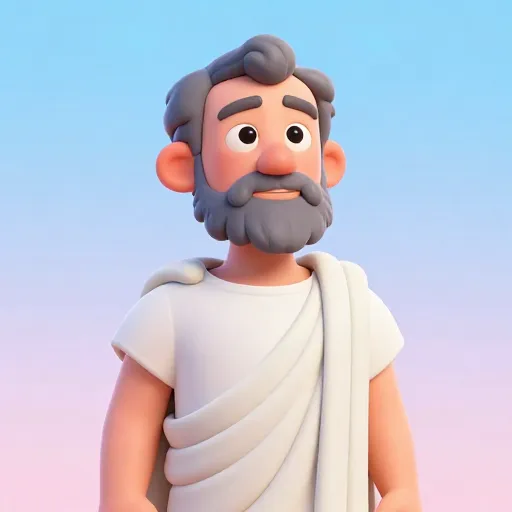
No duty is more urgent than that of returning thanks.
The Invisible Thread of Reciprocity
To understand why people have talked about gratitude for thousands of years, we have to look at how we live together. Think about the last time a friend shared their lunch with you or a teacher stayed late to help you understand a tricky math problem.
In that moment, a connection was made. Sociologists call this reciprocity, which is a big word for the way humans trade kindness and help.

Mira says:
"It’s like gratitude is a zoom lens for your eyes. It doesn't change the world, it just changes how much of the good stuff you can actually see."
When we feel grateful, it acts like a social glue. It makes us want to do something kind in return, which creates a loop of goodness. Without this loop, it would be very hard for humans to build cities, schools, or even simple friendships.
Historically, many cultures used festivals and rituals to practice this social glue on a massive scale.
- Harvest festivals thanked the earth for food.
- Winter festivals thanked the community for warmth and safety.
- Religious ceremonies often began with prayers of thanks before asking for anything new.
The word 'gratitude' comes from the Latin word 'gratus,' which means 'pleasing.' It is also the root of words like 'grace,' 'gratuity' (a tip), and even 'congratulations!' All these words are about the joy of something extra being given.
Changing the Brain: The Science of 'Notice'
For a long time, gratitude was mostly discussed by philosophers and religious leaders. But in the late 1990s, a group of scientists started a movement called Positive Psychology. They wanted to know why some people seemed more resilient: better at bouncing back from hard times: than others.
One of the leaders of this movement was a psychologist named Martin Seligman. He discovered that our brains have a natural 'negativity bias.' This means we are evolved to notice threats and problems much more quickly than we notice things that are going well.
Gratitude is a feeling that just happens to you when something good occurs. You can't force it.
Gratitude is a choice and a practice. You can decide to look for things to be thankful for even on hard days.
Seligman and his team found that we can actually 'retrain' our brains to look for the good. They developed a famous exercise called 'Three Good Things.' By writing down three things that went well each day, people began to physically change the pathways in their brains.
This process is called neuroplasticity. When you practice gratitude, your brain becomes more efficient at releasing dopamine and serotonin: the chemicals that make you feel peaceful and rewarded.

Gratitude can amplify the good in your life, making the memories of the past shine brighter.
Is Gratitude Always Easy?
It is important to remember that gratitude is not about pretending that everything is perfect. Sometimes, things are genuinely hard, sad, or unfair. Being told to 'just be grateful' when you are hurting can feel like someone is ignoring your feelings.
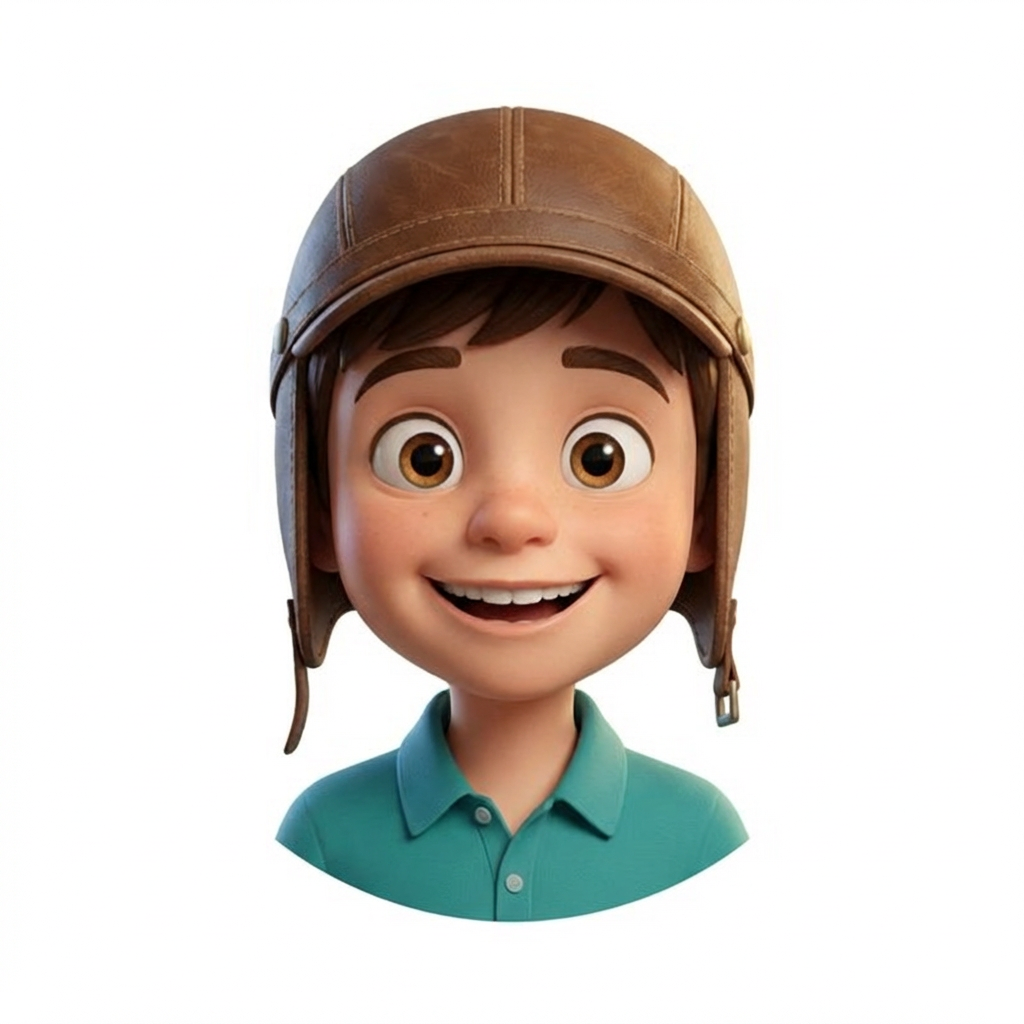
Finn says:
"But wait, if I have a really bad day where I drop my ice cream and stub my toe, do I still have to find something to be grateful for? Does that make the bad stuff go away?"
True gratitude is actually quite brave. It means being able to hold two different feelings at the same time: acknowledging that something is difficult, while also noticing a small bit of light. It is like looking at a stormy sky and still being able to appreciate the way the wind feels on your face.
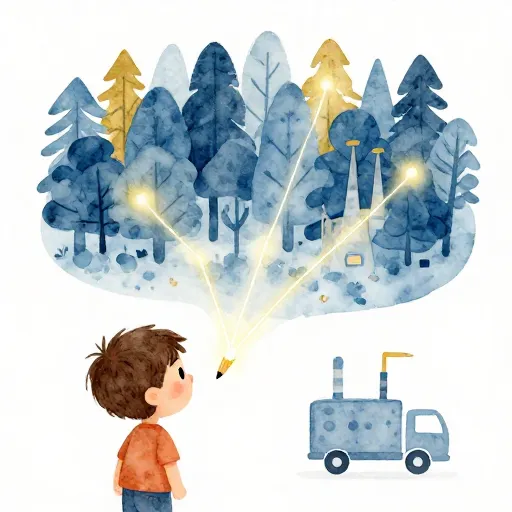
Try the 'Not-Just-A-Pencil' game. Pick any object near you. Now, try to list five people who helped it get to you. (The person who cut the wood, the person who made the yellow paint, the driver who delivered it...). Does the object feel different now?
Philosophers like Marcus Aurelius, another famous Stoic, used gratitude as a tool for survival. He was a Roman Emperor who dealt with wars and plagues. He didn't use gratitude to hide from his problems, but to give himself the strength to face them.
He believed that every morning, we should remind ourselves how lucky we are to simply be alive and breathing. This shift in perspective doesn't change the world outside, but it changes the person who is looking at it.
Gratitude Through the Ages
The Anatomy of a Gift
To really feel gratitude, we have to recognize that someone went out of their way for us. This is what distinguishes gratitude from just being 'happy.' If you find five dollars on the sidewalk, you feel lucky. If your sibling gives you five dollars they saved from their chores, you feel grateful.
There are three parts to this feeling:
- Recognizing the Intent: Realizing that someone wanted to help you.
- Recognizing the Cost: Understanding that the person gave up their time or effort.
- Recognizing the Value: Seeing how much the help actually mattered to you.
Mira says:
"I think the best part is that the person you're grateful to doesn't even have to be there. You can be grateful to the person who built your house a hundred years ago!"
When we see these three things, our 'gratitude muscle' flexes. It moves us from thinking only about ourselves to thinking about our place in a much larger web of people and events.
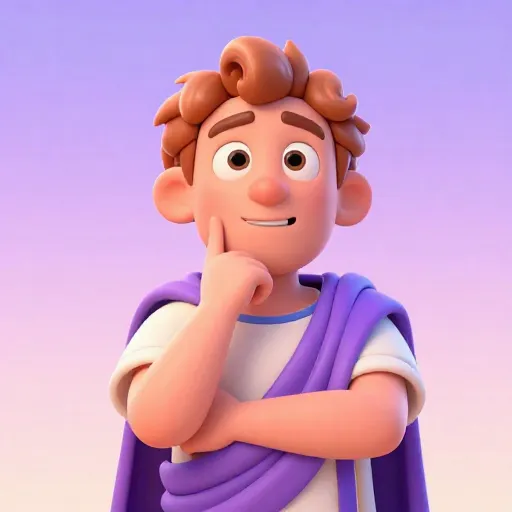
Gratitude is not only the greatest of virtues, but the parent of all others.
Building the Habit
Like playing the piano or kicking a soccer ball, noticing the good is a skill that gets easier the more you do it. It doesn't require big grand gestures. In fact, some of the most powerful moments of gratitude are the smallest ones.
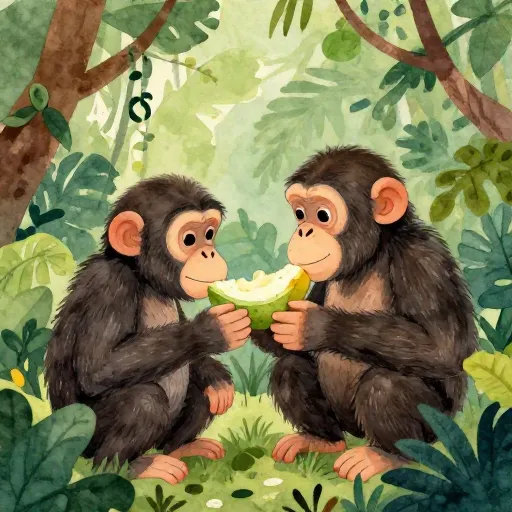
Scientists have observed 'gratitude-like' behavior in animals! Chimpanzees are more likely to share their food with another chimp who groomed them earlier in the day. It seems like the 'invisible thread' of memory and thanks goes back millions of years.
You might notice the way the sun hits a glass of water, or the sound of a cat purring, or the fact that your favorite socks are clean. These small 'pockets of goodness' are always there, waiting to be noticed.
Gratitude is essentially a form of mindfulness. It is the art of being present in the moment and saying, 'I see this, and it is enough.' It turns what we have into more than enough.
Something to Think About
If you could send a 'thank you' back in time to someone you’ve never met, who would it be?
There are no wrong answers here. You might think of an inventor, an artist, or even someone who planted a tree you like to sit under today.
Questions About Psychology
What if I don't feel grateful for anything today?
Is gratitude the same thing as being polite?
Why does my brain notice bad things more easily?
The Never-Ending Map
Gratitude is a way of mapping out the world. Every time you notice something good, you are adding a new landmark to your map, making your world feel a little larger and a little friendlier. It is a journey of discovery that never really has to end, because there is always something new to notice.