
Have you ever felt like your brain was a snow globe that someone just shook up?
When your thoughts are swirling and your feelings feel loud, it can be hard to see clearly. This is where mindfulness comes in: an ancient tool used to help us find a sense of containment and quiet even when the world feels busy.
Imagine you are standing in a lush, green forest in Northern India about 2,500 years ago. The air is heavy with the scent of damp earth and jasmine.
In this forest, a man named Siddhartha Gautama, who would later be known as the Buddha, sat quietly under a sprawling fig tree. He wasn't trying to solve a math problem or plan his next meal.

Imagine a snow globe that has just been shaken. The glitter is everywhere, and you can't see the little house inside. Now, imagine setting the globe down on a table. You don't have to do anything to 'fix' the glitter. You just wait. Slowly, it all settles to the bottom, and the water becomes clear again. That is what mindfulness does for your mind.
He was simply practicing attention. He was noticing the way the wind felt on his skin and the rhythm of his own breathing.
He called this practice Sati, which is a word from the ancient Pali language. While we often translate it as mindfulness today, its original meaning was more like "remembering" to stay in the present moment.

Finn says:
"So, if I'm practicing this 'Sati' thing, and I get bored after thirty seconds, am I doing it wrong? My brain is already asking when lunch is."
Sati wasn't about clearing the mind so it was empty like a blank piece of paper. Instead, it was about being a curious observer of whatever was happening right then.
If a bird chirped, he noticed the sound. If his leg felt itchy, he noticed the itch without immediately rushing to scratch it.

Mindfulness means paying attention in a particular way: on purpose, in the present moment, and non-judgmentally.
This idea of being a witness to your own life began to spread from those Indian forests across the high mountains of the Himalayas and into the busy cities of China and Japan.
For centuries, people used these techniques to understand how the human mind works. They realized that our brains are naturally very busy, often jumping from one thought to another like a restless monkey swinging through trees.
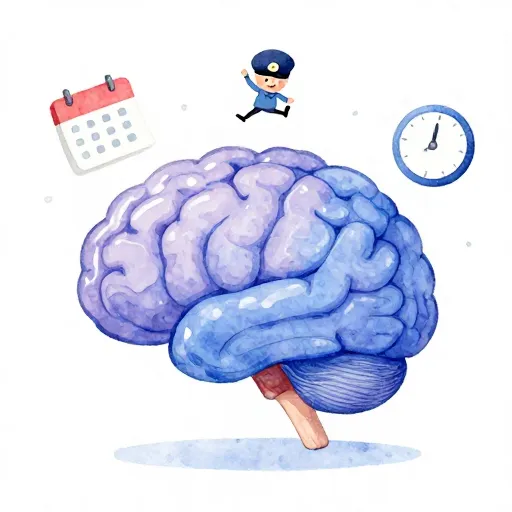
Scientists have found that the human brain spends about 47 percent of its time 'mind-wandering.' That means for almost half of your life, you aren't actually thinking about what you are doing right now! Your brain is like a time traveler, constantly visiting the past or the future.
When we practice meditation, we aren't trying to kill the monkey or make it stop swinging. We are simply sitting at the bottom of the tree and watching it work.
This simple act of observation changes how we feel about our thoughts. It helps us realize that just because we have a thought, it doesn't mean that thought is the absolute truth.

Mira says:
"It's like being a scientist in a lab, Finn. You're just recording the data: 'Subject feels bored at 12:01 PM.' You don't have to change it, you just have to notice it."
In the 1970s, a scientist named Jon Kabat-Zinn began to wonder if these ancient forest secrets could help people in modern hospitals.
He saw people who were in pain or very stressed, and he realized that their brains were often making their suffering worse by worrying about the future or regretting the past.
The next time you feel overwhelmed, try the 5-4-3-2-1 technique. It's a way to use your senses to get back into the present moment. Find: 5 things you can see, 4 things you can touch, 3 things you can hear, 2 things you can smell, and 1 thing you can taste (even if it's just the inside of your mouth!).
He developed a program called Mindfulness-Based Stress Reduction. He stripped away the religious parts of the practice and focused on the biological side of how our brains respond to the world.
He taught people to use their awareness like a spotlight. You can shine that spotlight on your toes, your breath, or even the sound of a ticking clock.

Smile, breathe and go slowly.
Scientists have since discovered that mindfulness actually changes the physical structure of your brain. This is a concept called neuroplasticity.
When you practice noticing your feelings without reacting to them, you are strengthening the part of your brain called the Prefrontal Cortex. This is the "wise leader" part of your brain that helps you make good decisions.
The goal is to become perfectly calm and relaxed so that nothing bothers you anymore.
The goal is to be aware of whatever is happening, even if it is stressful or loud, without running away from it.
At the same time, you are helping to calm down the Amygdala. Think of the amygdala as your brain's internal alarm system or a tiny guard dog that barks at any sign of trouble.
For many of us, that guard dog barks all day long: at a hard homework assignment, a loud noise, or a disagreement with a friend. Mindfulness tells the guard dog: "It's okay, I see what's happening, we aren't in danger."
Through the Ages
But what does this actually feel like when you are eight, ten, or twelve years old? It usually doesn't feel like sitting on a golden cloud in perfect peace.
Sometimes, it feels like being bored. Other times, it feels like noticing that you are actually a little bit sad or frustrated, and that can be uncomfortable.
Finn says:
"Sometimes when I try to be quiet, my brain feels even louder than before. It’s like all my thoughts were waiting for a turn to shout."
Donald Winnicott, a famous thinker who studied how children grow, believed that we all need a "holding environment." This is a safe space where we can feel whatever we need to feel without falling apart.
Mindfulness allows you to create that safe space inside yourself. You become the container for your own feelings, whether they are big and messy or small and quiet.

You are the sky. Everything else - it's just the weather.
Instead of being swept away by a wave of anger, you might think: "Oh, look at that. There is a very big wave of anger passing through me right now."
You are still you, and the anger is just something that is happening near you. It is the difference between being the person drowning in the ocean and being the person standing safely on the shore watching the tide come in.

Mindfulness isn't just for humans. Many animals naturally exist in a state of mindfulness. A cat watching a bird isn't worrying about what it ate for breakfast or thinking about its chores. It is 100 percent focused on the bird. We are the only animals that get 'lost' in our own thoughts so often!
This practice helps us handle what philosophers call the "un-certainty" of life. We don't always know what will happen tomorrow, and we can't change what happened yesterday.
But we can always come back to the breath. The breath is like an anchor for a boat: it doesn't stop the waves from moving, but it keeps the boat from drifting away into the storm.
Something to Think About
If you were a scientist observing your own thoughts for five minutes, what would the 'weather' in your mind look like right now?
There are no right or wrong answers. Your mind might be a thunderstorm, a sunny day, or a very foggy morning. All of them are okay.
Questions About Psychology
How long do I have to sit still to be mindful?
Is mindfulness a religion?
What if I can't stop my thoughts?
A Lifetime of Noticing
Mindfulness isn't a destination you reach or a trophy you win. It is a way of traveling through the world. By simply noticing the 'here and now,' you are building a home inside yourself that is sturdy enough to handle any kind of weather the world sends your way.