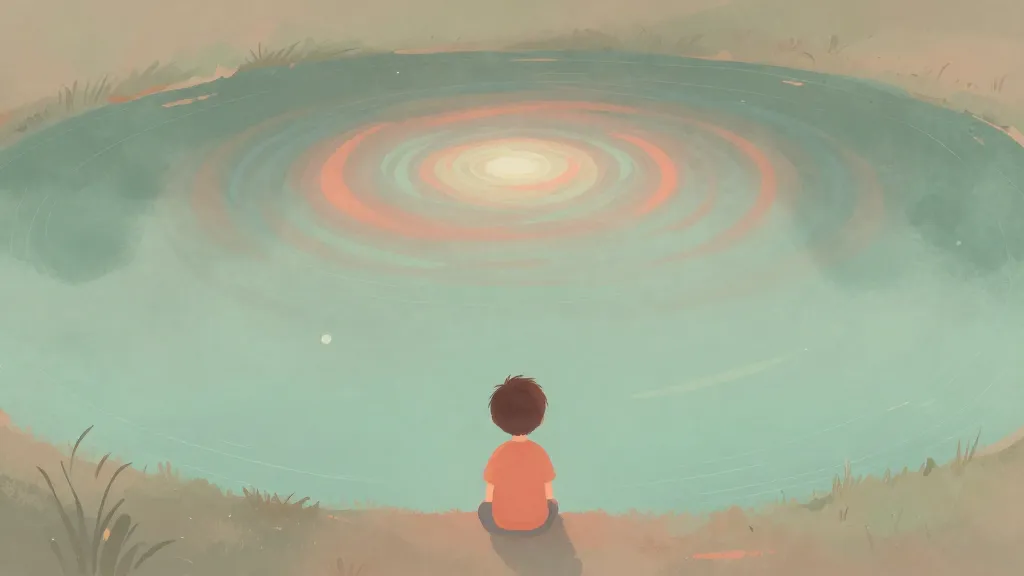
If you replaced every single piece of your favorite toy, would it still be the same toy?
This question gets to the heart of the self, the invisible 'you' that stays the same even as your body grows and your thoughts change. In psychology and philosophy, understanding our identity means figuring out what makes us who we are across time.
Imagine you are standing in front of a mirror. You see your hair, your eyes, and maybe a smudge of toothpaste on your chin. You know that the person looking back at you is 'you.'
But what does that actually mean? If you cut your hair, you are still you. If you grow six inches taller, you are still you. Even if you forgot your own name, something inside would still feel like 'me.'
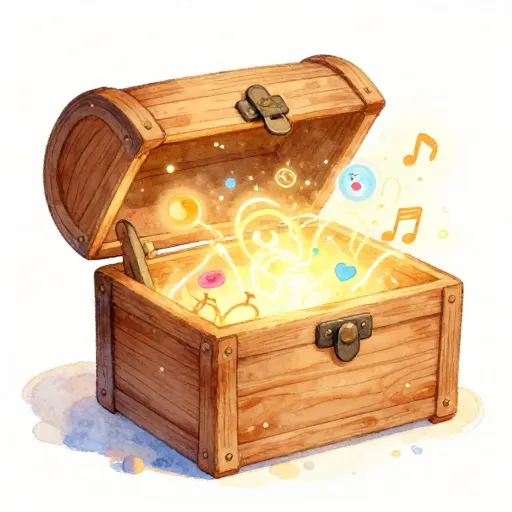
Imagine you have a magic box. Inside the box is everything that makes you 'you': your favorite jokes, the way your knees feel when you run, your secret dreams, and your memory of your first pet. If you gave that box to someone else, would they become you, or would they just be someone holding your stuff?
This mystery is what thinkers call The Self. It is one of the oldest puzzles in human history. It is the feeling of being an 'I' who lives inside your body and experiences the world.
The Ancient Quest
Thousands of years ago, people were already obsessed with this. In Ancient Greece, there was a famous building called the Temple of Apollo at Delphi. People traveled for weeks from all over the Mediterranean to ask the priests for advice.
Finn says:
"If the message says 'Know Thyself,' does that mean there's a secret version of me I haven't met yet? I wonder if I'm hiding from myself without knowing it."
Before they could even enter the temple, they saw a message carved into the stone. It said: 'Know Thyself.' The Greeks believed that before you could understand the stars or the government, you had to understand who you were first.
The unexamined life is not worth living.
Socrates, one of the most famous philosophers in history, spent his whole life trying to follow that rule. He realized that most people think they know who they are, but they haven't actually looked closely. He thought the 'self' was something you had to examine like a scientist.
The Problem of Change
Think back to when you were a tiny baby. You couldn't talk, you couldn't walk, and you liked different foods. You don't even remember being that baby, yet everyone agrees that the baby was you.
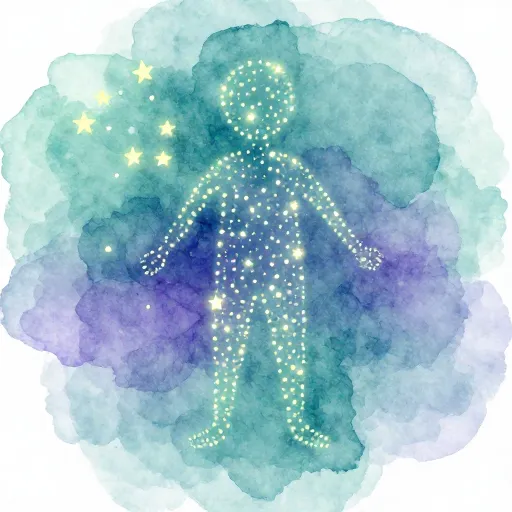
Every seven to ten years, almost every cell in your body is replaced with a new one. This means your current heart, skin, and lungs are not the same ones you were born with! Physically, you are a completely different person than you were as a toddler.
How is that possible? If your body has changed and your mind has changed, what stayed the same? This is called the problem of continuity. It is the idea that there is a thread connecting the 'you' of yesterday to the 'you' of today.
Some thinkers, like John Locke, had a very specific idea about this. He believed that what makes you 'you' is your memory. Because you can remember being that five-year-old on a bicycle, you are the same person.
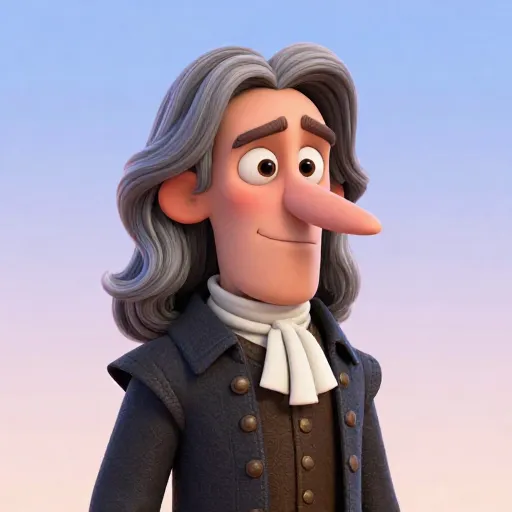
Whatever has the consciousness of present and past actions is the same person to whom they both belong.
But there is a catch. What happens if you forget something? If you forget what you had for breakfast three years ago, does that part of you disappear?

Mira says:
"I like the idea that memory holds us together. Even if I'm different now, I can still feel the 'me' from that old photo because I remember the sun feeling warm that day."
The Story in Your Head
Many modern psychologists believe the self is like a book that is still being written. This is called Narrative Identity. Instead of being one solid 'thing' like a rock, your self is a story you tell about your life.
Every day, you pick which parts of your day are important. You decide that 'I am someone who likes art' or 'I am someone who is kind to animals.' These choices build your self-concept, which is the collection of beliefs you have about yourself.
Grab a piece of paper and write 'I AM...' at the top. List ten things. Are they mostly things you do (like 'I am a soccer player'), things you feel (like 'I am happy'), or your relationships (like 'I am a brother')? This list is a map of your current self-concept.
This story is very powerful. It helps you make decisions. If your story says 'I am a brave person,' you might try a scary climbing wall. If your story says 'I am a quiet person,' you might choose a book over a loud party.
However, we aren't the only ones writing the story. Other people help write it too. When a teacher says you are good at math, or a friend says you are funny, you often add those lines to your own book.
The True and False Self
Have you ever felt like you were acting differently because of who you were with? Maybe you are loud and silly with your family, but quiet and serious at a new friend’s house. This can feel confusing.
The self is a permanent soul or spark that never changes, even after the body dies.
The self is just a product of the brain: a collection of neurons firing together to create a sense of 'I'.
Donald Winnicott, a famous child psychologist, thought about this a lot. He said we all have a True Self and a False Self. The False Self is like a polite mask we wear to get along with others and follow rules.
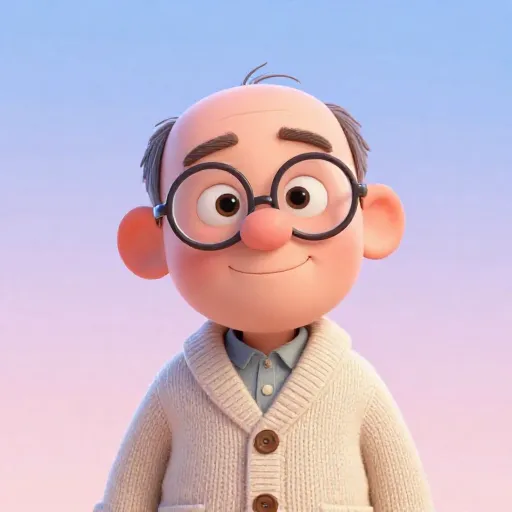
It is a joy to be hidden, and a disaster not to be found.
Winnicott didn't think the False Self was bad. In fact, it helps us stay safe and be polite. But he believed the True Self is where our real creativity and feelings live. The True Self is the part of you that feels 'real' when you are playing or dreaming.
Is the Self even Real?
While some people look for the self inside them, others have suggested that the self might be an illusion. In some Eastern traditions, like Buddhism, they talk about Anatta, which means 'no-self.'
They argue that if you look for the 'self,' you won't find it. It's like looking for a 'forest.' You find trees, leaves, and dirt, but the 'forest' is just the name we give to all those things together.
The Self Through the Ages
If the self is just a collection of thoughts, feelings, and body parts, it means you aren't stuck being one way forever. You are more like a flowing river than a solid statue. A river is always changing its water, but we still call it the same river.
Finn says:
"If I'm like a river, does that mean I can choose to flow in a different direction tomorrow? Maybe I don't have to be the same Finn I was yesterday."
The Self as a Mirror
We also learn who we are by looking at other people. Think about how a baby looks at their parent's face. If the parent smiles, the baby feels like they are someone who makes people happy.
Psychologists call this mirroring. We use the reactions of people around us to build a picture of ourselves. If you are surrounded by people who listen to you, you learn that your voice is important.
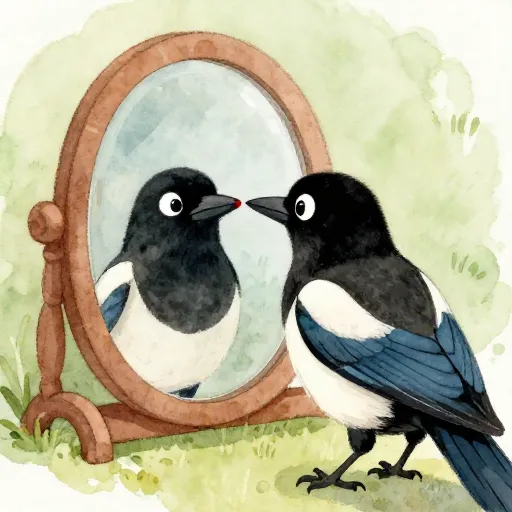
Scientists use the 'Mirror Test' to see which animals have a sense of self. They put a small dot of paint on an animal where it can't see it without a mirror. If the animal looks in the mirror and tries to touch the dot on its own body, it knows the reflection is 'me.' Dolphins, elephants, and magpies pass the test, but most dogs do not!
This is why it's so important to be around people who see your True Self. When people see the real you, it makes it easier for you to see it too. It's like having a clear mirror instead of a foggy one.
The Endless Discovery
The most exciting thing about the self is that it isn't a puzzle you solve once and then finish. You are a mystery that unfolds your whole life. You will discover new parts of yourself when you travel, when you fail, and when you fall in love with a new hobby.
Something to Think About
If you could change one thing about your personality tomorrow, would you still be the same person?
There is no right answer to this. Some people think our personality is our 'core,' while others think our core is the person who *decides* to change.
Questions About Psychology
When do babies realize they are a 'self'?
Can your 'self' change?
Why is it so hard to describe who I am?
The Explorer of You
You are the only person who will be with you every second of your entire life. You are the explorer, and you are also the land being explored. As you go through your day, keep asking: 'Which part of this feels like the real me?' The answer might surprise you tomorrow.
