If you look at a forest in the autumn, you see the leaves turning gold and falling to the ground.
This is part of the natural cycle of biology, but for humans, the end of life feels much bigger and more mysterious. We use philosophy and history to help us understand what it means when a life stops, and how we can hold onto the memories of those we love.
It is one of the oldest questions in the world. Since the very first humans looked up at the stars, they have wondered where we go when our bodies stop working.
This is a heavy thing to think about. It can feel like a cold wind or a quiet room. But humans are very good at finding ways to stay warm and fill the quiet with stories and ideas.
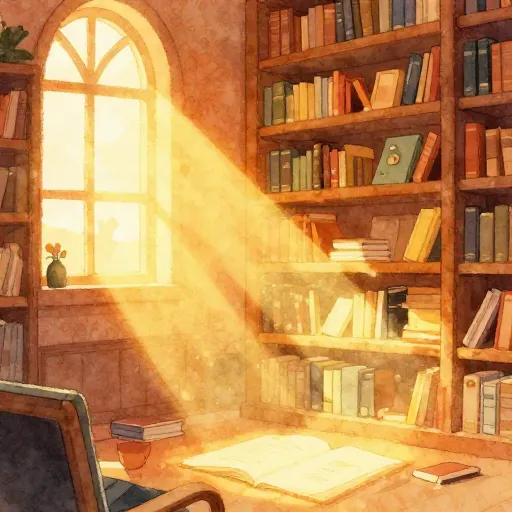
Imagine you are standing in a huge library. Every book is a person's life. When a book is finished, the story doesn't disappear: it stays on the shelf for others to read, learn from, and remember forever.
When we talk about death, we are really talking about two different things. We are talking about the body, which we can see, and we are talking about the consciousness, the part of you that thinks, dreams, and feels like "you."
Historians have found that even 50,000 years ago, people were thinking about this. They buried their friends with flowers and beads, which tells us they believed that even if the body had stopped, something important remained.
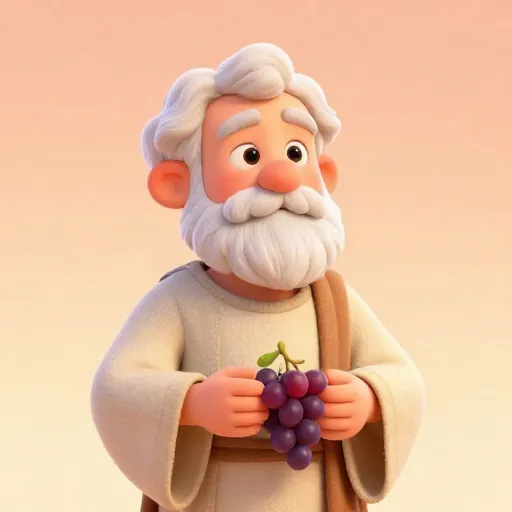
Death is nothing to us. When we exist, death is not; and when death exists, we are not.
The Science of Matter
One way to look at this is through the lens of materialism. This is the idea that everything in the universe is made of matter, and when a living thing dies, its matter simply changes form.
Your body is made of atoms that have been around since the beginning of the universe. When a person dies, those atoms don't disappear: they go back into the earth to become part of the grass, the trees, and eventually, other living things.
Finn says:
"So, wait... if I'm made of atoms from stars, does that mean I'm technically billions of years old already? That makes the 'ending' part feel a little less lonely."
In science, there is something called the Law of Conservation of Energy. It says that energy cannot be created or destroyed: it can only change from one form to another.
Think of a candle. When the flame goes out, the heat and light don't just vanish into nothing: they spread out into the air around the room.
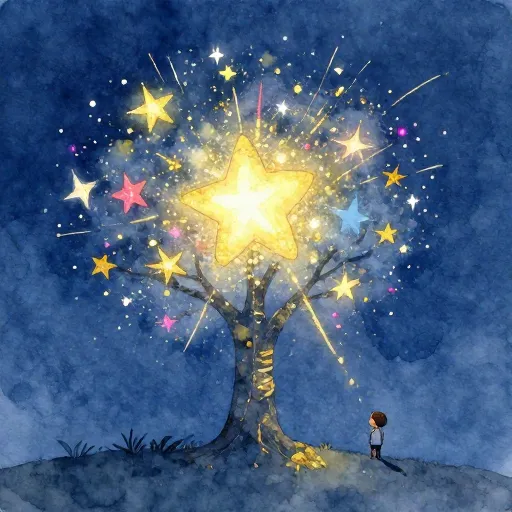
Every atom in your body was once inside a star that exploded billions of years ago. You are literally made of stardust, and that stardust has been recycled through plants, dinosaurs, and oceans before it became you.
The Idea of the Soul
Many people throughout history have felt that there is more to a person than just atoms. They believe in the soul, a part of us that is not made of matter and might continue on after the body is gone.
This idea is called dualism. It suggests that the mind and the body are two different things, like a driver and a car. When the car stops working, the driver might just step out and go somewhere else.
Mira says:
"I like the idea that we're more than just our bodies. Like how a song isn't just the speakers it's coming out of: the music is something else entirely."
In Ancient Greece, a philosopher named Plato spent a lot of time thinking about this. He believed that the soul was immortal, meaning it could never die.
He thought that the soul came from a place of perfect ideas and would eventually return there. For Plato, death wasn't an end, but a transition to a different way of being.
The soul takes nothing with her to the next world but her education and her culture.
How Cultures Have Imagined the Journey
Because nobody knows for sure what happens, different cultures have created beautiful and sometimes scary stories to explain the journey. These stories are part of their religion and their history.
In Ancient Egypt, people believed the heart would be weighed against a feather. If the heart was light because the person had been kind and honest, they would enter a wonderful world called the Field of Reeds.
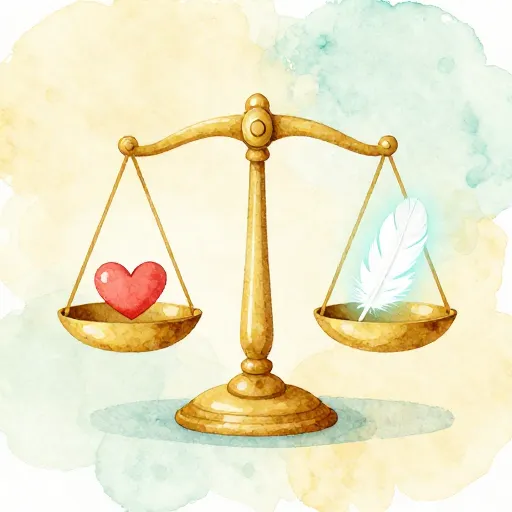
In Ancient Egypt, people believed the goddess Ma'at would weigh your heart against a 'feather of truth.' If you had lived a life of kindness, your heart would be as light as the feather.
In many parts of the world, people believe in reincarnation. This is the idea that the soul is born again into a new body, over and over, like a student moving through different grades in school.
Each life is a chance to learn something new. This idea is a big part of Hinduism and Buddhism, and it helps people feel that life is a long, continuous journey.
The belief that we are made only of physical matter. When we die, our atoms return to the earth to build new things like trees or flowers.
The belief that we have a soul or mind that is separate from our body. When the body stops, the soul continues its journey elsewhere.
The Power of Memory and Legacy
Even if we don't know where the "you" goes, we know exactly where your legacy stays. A legacy is the mark you leave on the world and the people who knew you.
When someone dies, they stay alive in the stories we tell about them. They stay alive in the way they taught us to tie our shoes, the jokes they told, or the kindness they showed to a neighbor.
Ways We Have Thought About Death
Some people find comfort in the idea of a heaven, a place of peace and reunion. Others find comfort in the idea that death is like a deep, dreamless sleep where nothing can hurt you ever again.
Psychologists say that it is normal to feel many different things at once: sadness, curiosity, or even a bit of fear. Talking about it helps make the big, empty space feel a little more like a shared room.
The nitrogen in our DNA, the calcium in our teeth, the iron in our blood... we are made of starstuff.
Holding the Uncertainty
It is okay to say "I don't know." In fact, that is the most honest answer anyone can give. The world is full of mysteries, like how deep the ocean goes or where the universe ends.
Not knowing doesn't mean something is bad. It just means it is bigger than our current understanding. We can hold that uncertainty together, like holding hands in the dark until our eyes adjust.
Finn says:
"Sometimes I just want a clear answer, you know? But I guess if we knew everything, there wouldn't be any room left for wonder."
When we look at history, we see that every person who has ever lived has faced this same mystery. It is the one thing that connects every human being who has ever walked the earth.
By learning how others have thought about death, we learn more about how we want to live. We learn that every day is a gift and that being kind to others is a way to build a legacy that never truly fades.
Think of one thing a person has taught you, even if they aren't around anymore. Maybe it's how to whistle or a way to be brave. When you do that thing, you are carrying a piece of them with you. That is a living memory.
Something to Think About
If you could design a beautiful place for stories to go after they are finished, what would it look like?
There are no wrong answers here. Some people imagine a quiet garden, others imagine a great library, and some imagine becoming part of the wind. What feels peaceful to you?
Questions About Psychology
Why do people have to die?
Does it hurt to die?
Where do people go?
The Mystery is a Shared Journey
Talking about death is one of the bravest things a person can do. It doesn't mean we have to have all the answers. It just means we are willing to look at the big questions with an open heart. As you go through your day, remember that you are part of a story that has been going on for billions of years, and your chapter is being written right now.