Have you ever felt like you were outgrowing your own skin, or that your favorite toys suddenly look like they belong to a stranger?
This strange, exciting, and sometimes confusing time is called adolescence. It is more than just growing taller: it is a deep psychology shift where your brain and heart begin to build the person you will be for the rest of your life.
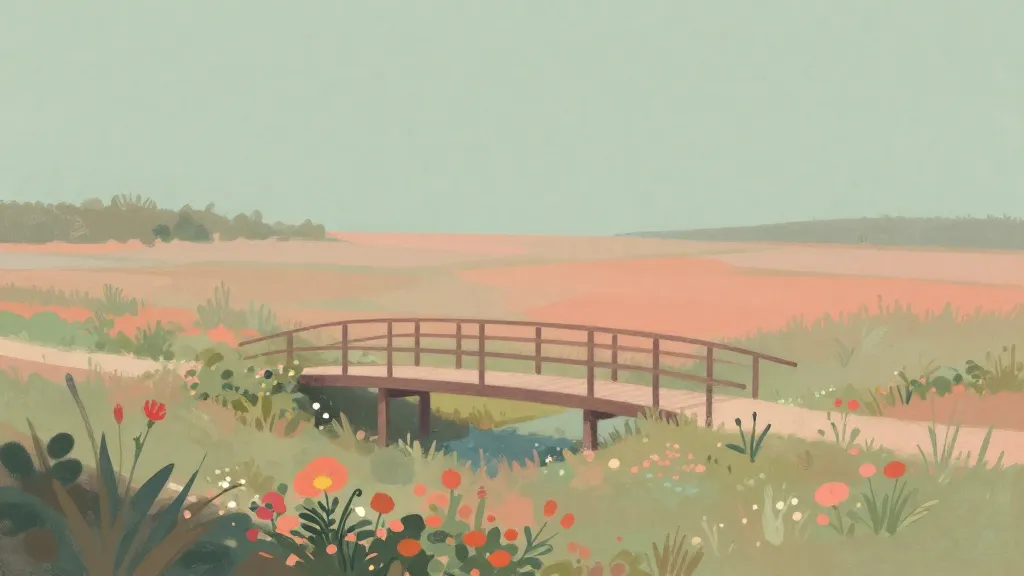
Imagine you are standing on a bridge. Behind you is the sunny land of childhood, where rules were simpler and play was your full-time job. In front of you is the vast, mysterious territory of adulthood.
You aren't in either place yet. You are on the bridge itself. For a long time in history, people didn't think this bridge existed. You were a child, and then you were an adult, and the change happened almost overnight.
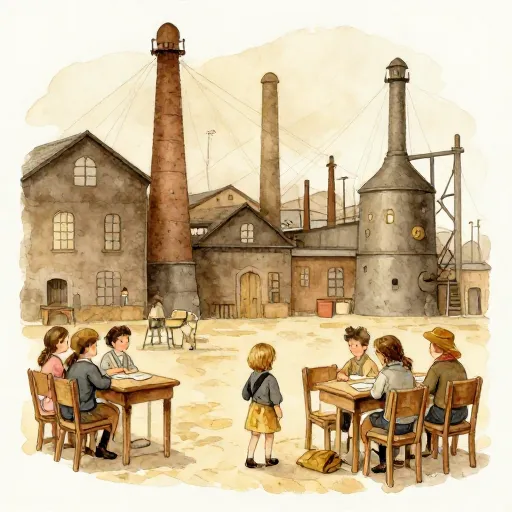
Imagine a factory in the year 1850. Instead of sitting in a classroom, ten-year-olds are standing by loud, heavy machines for twelve hours a day. They didn't have time for hobbies or hanging out with friends because they were treated like tiny employees.
Before the late 1800s, most children didn't have a middle stage. Once they were strong enough, they went to work in fields or factories. There was no word for the years between ten and twenty because society didn't see them as a special time.
Then, the world started to change. Machines took over the hard labor in factories, and more kids started going to school instead of work. Suddenly, there was a gap: a period where you were too old to be a toddler but too young to have a job and a family of your own.
The Birth of a New Idea
In 1904, a man named G. Stanley Hall changed everything. He was a scientist who studied the human mind, and he published a massive book with a title that was new to almost everyone: Adolescence.
Hall believed that this stage was like a second birth. He argued that kids during these years weren't just smaller adults. They were experiencing something unique and intense.

Adolescence is a new birth, for the higher and more completely human traits are now born.
Hall used a very famous phrase to describe this time: "storm and stress." He thought that because your body and brain are changing so fast, it is natural to feel like you are in the middle of a thunderstorm.

Finn says:
"If G. Stanley Hall was right about the storm, does that mean we should all carry umbrellas, or should we learn how to dance in the rain?"
He noticed that young people started to care deeply about what was right and wrong. They became more interested in their friends' opinions than their parents' advice. This was the first time psychology really looked at the "middle years" as a vital part of being human.
The Biological Engine
While G. Stanley Hall was looking at how kids felt, other scientists were looking at what was happening inside. They discovered that a biological process called puberty was the engine driving these changes.
Puberty is the physical part of growing up. It is when your body starts producing new chemicals that tell your bones to grow and your voice to change. But adolescence is the mental and emotional part that happens at the same time.
Some scientists believe that the feelings of adolescence are mostly caused by 'Nature' : the chemicals and brain changes that happen to everyone.
Others argue that it is mostly about 'Nurture' : how your family, school, and country expect you to act as you grow up.
Your brain during this time is like a house being remodeled. The basic structure is there, but the wiring is being completely replaced. The part of the brain that handles big emotions and social connections develops very quickly.
However, the part of the brain that helps with planning and thinking about consequences takes a bit longer to catch up. This is why you might feel things very deeply, or why you might want to try something risky and exciting without thinking about what happens next.
Is it the Same Everywhere?
For a while, people thought that the "storm and stress" Hall described was just a part of being human. They thought every kid in every country felt the same way. But a woman named Margaret Mead wasn't so sure.
Mead was an anthropologist, which is a scientist who studies different cultures. In the 1920s, she traveled to the islands of Samoa in the South Pacific to see if kids there had the same difficult time growing up.

We must realize that the way people behave is largely determined by their culture.
She found something surprising. In Samoa, the transition from child to adult seemed much smoother and calmer. There wasn't as much "storm and stress" as there was in the United States or Europe.

Mira says:
"I wonder if our culture today makes adolescence harder than it was in Samoa. We have so many screens and tests to worry about!"
This led to a big debate in the world of ideas. Is adolescence mostly about your biological nature, or is it shaped by the culture you live in? Mead's work showed us that how we treat young people matters just as much as what is happening in their bodies.
The Search for Identity
As the years went by, thinkers started to focus on a new concept: identity. This is the answer to the question, "Who am I?" A psychologist named Erik Erikson argued that the main job of adolescence is to solve this puzzle.
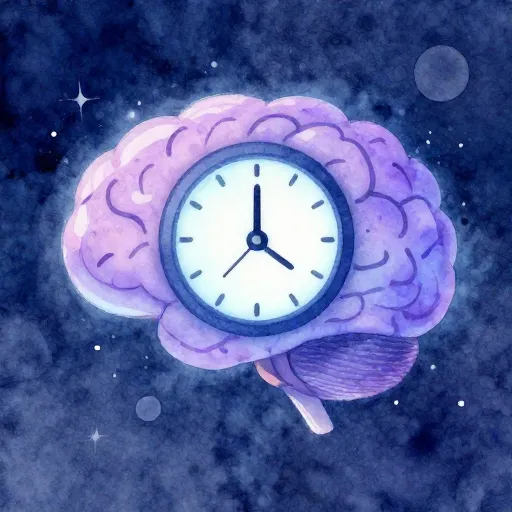
During adolescence, your brain's internal clock actually shifts. This is why many teenagers find it very hard to wake up early for school but feel wide awake and creative late at night!
In childhood, your identity is often given to you by your family. You might be "the soccer player" or "the quiet one." But during adolescence, you start to experiment with different versions of yourself.
You might change how you dress, what music you like, or what you believe in. This is called seeking autonomy, which is a fancy word for wanting to make your own choices and be your own person.
Through the Ages: Growing Up
It is like trying on different outfits in a giant dressing room. Some things you try on won't fit at all, and that's okay. The goal isn't to find the perfect answer immediately, but to learn how to choose for yourself.
The Importance of Not Knowing
A very wise doctor named Donald Winnicott had a different way of looking at this time. He thought it was actually very important for adolescents to feel a bit lost or even a bit messy.
Winnicott believed that the "bridge" shouldn't be crossed too quickly. He felt that young people needed a safe space where they could be "unintegrated," which means not having everything figured out yet.

The only thing is to survive, to survive in a state of health and with the capacity to live.
He argued that if adults try to force kids to grow up too fast, those kids might lose their sense of wonder. To Winnicott, the wild ideas and the deep questions of youth weren't problems to be fixed. They were signs that a person was truly coming alive.
Finn says:
"I like Winnicott's idea that being 'messy' is okay. Sometimes I feel like a jigsaw puzzle that's halfway finished."
This perspective tells us that it is okay to feel uncertain. In fact, being unsure is a sign that you are doing the hard work of growing. It is the time when you learn that your thoughts are your own, and that's a very powerful discovery.
The Growing Brain
Today, we have technology like MRI machines that let us look inside the brain while it's working. We now know that the adolescent brain is one of the most flexible and creative things in the known universe.
It has a high level of plasticity, which means it is incredibly good at learning new skills and making new connections. This is why many of the world's greatest athletes, musicians, and activists start their journeys during these years.
Take a piece of paper and draw a map of 'Your World.' Put yourself in the center. Who are the most important people? What are your favorite things to do? If you did this every year, you would see your map expanding and changing as you grow!
You are more than just a "teenager" in training. You are a person experiencing a unique peak of energy and curiosity. The world looks different to you because you are looking at it with fresh eyes.
The word 'adolescence' comes from the Latin word 'adolescere,' which means 'to grow up' or 'to ripen.' Just like a piece of fruit, ripening takes time and cannot be rushed!
Your sense of selfhood is expanding. You are starting to see how you fit into the bigger story of the world. Even when it feels difficult, remember that the bridge is where the view is the most interesting.
Something to Think About
If you could design a world that was perfectly suited for 'the bridge' of adolescence, what would it look like?
There are no wrong answers here. Would there be more schools, more nature, or more time to just sit and think? Your idea of a perfect world says a lot about who you are becoming.
Questions About Psychology
When does adolescence actually start?
Why is it sometimes called a 'difficult' age?
Do animals have adolescence?
Enjoy the View
Adolescence isn't a problem to be solved: it is an experience to be lived. It is the time when you move from being a passenger in your life to being the one with your hands on the wheel. Even when the road feels bumpy, remember that you are building something remarkable: yourself.