
Have you ever tried to say one thing, but your tongue decided to say something completely different?
Maybe you called your teacher 'Mom' or tripped on a flat sidewalk. We often think of a mistake as a broken piece of our day, but psychologists and historians see them as windows into how our subconscious works and how we achieve serendipity.
Imagine a cold morning in London in the year 1928. A scientist named Alexander Fleming walks into his laboratory after a long vacation.
The room is a bit of a mess: stacks of glass dishes are piled up in the corner. Some of them have started to grow fuzzy, green mold because he forgot to clean them before he left.

Imagine a room filled with glass dishes, bubbling tubes, and the smell of old coffee. Dust motes dance in the light from a London window. It looks like a mess, but it is actually a factory of ideas.
Most people would have seen this as a big mistake. A messy lab is usually a bad thing for a scientist.
But as Fleming looked at the ruined dishes, he noticed something strange. Around one patch of mold, the bacteria he was studying had disappeared.

Mira says:
"It's like the mold was a guest who showed up uninvited but ended up bringing the best present to the party!"
This 'mistake' ended up being one of the most important moments in history. That fuzzy mold was the beginning of penicillin, a medicine that has saved millions of lives.
If Fleming had been perfectly tidy, or if he had thrown the 'ruined' dishes away without looking, we might not have modern medicine today.
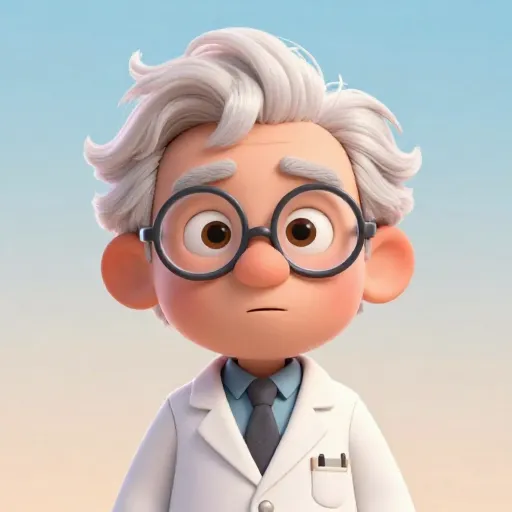
One sometimes finds what one is not looking for.
The Brain's Secret Language
Long before Fleming's messy lab, people thought mistakes were just signs that someone was lazy or not paying attention. But then came a doctor in Vienna named Sigmund Freud.
Freud lived in a world of velvet curtains and heavy books. He spent his days listening to people talk about their dreams and their daily lives.

Sigmund Freud loved collecting old statues. He had hundreds of them on his desk! He felt that digging through the mind was a lot like being an archaeologist digging for buried treasure.
He noticed that when people made a slip of the tongue, it usually wasn't random. He called this a parapraxis, though today we often call it a 'Freudian slip.'
Freud believed that our minds have a hidden basement called the subconscious. This is the part of our brain that stores feelings and thoughts we aren't currently thinking about.
Finn says:
"Wait, so if I say 'I love you' to my pizza, does that mean my subconscious is having a secret meeting about pepperoni?"
When we make a mistake, Freud thought the basement door had accidentally swung open. The mistake was a tiny peek at what we were actually feeling deep down.
If you accidentally call a boring game 'school,' Freud might say your brain is telling you that the game feels like work. It wasn't a broken thought: it was a very honest one.
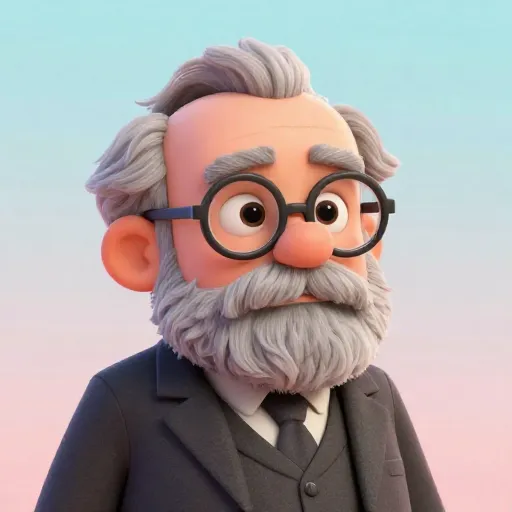
A man should not strive to eliminate his complexes but to get into accord with them.
The Architecture of Error
To understand why we keep tripping over things or forgetting our homework, we have to look at how the brain is built. Your brain is a master of shortcuts.
Because the world is full of so much information, your brain uses cognitive bias to make quick decisions. It tries to predict what will happen next based on what happened before.
A mistake is a sign of failure. It means you weren't prepared or you didn't work hard enough. It should be corrected and forgotten as soon as possible.
A mistake is a piece of data. It is the most honest feedback the world can give you. It is a necessary step toward making something truly original.
Sometimes, the brain predicts wrong. It sees a pattern that isn't there, or it ignores a detail because it's in a hurry.
This is where trial and error comes in. Every time you miss a goal in soccer or hit a wrong note on the piano, your brain is actually collecting data.
Mira says:
"Think of it like a GPS. Every time you take a wrong turn, the brain says 'recalculating' and finds a more interesting way to the destination."
This process is called neuroplasticity. Every mistake sends a signal to your neurons saying, 'Wait, that didn't work, let's try a different path next time.'
Without mistakes, your brain would never have a reason to change or grow. A brain that never makes a mistake is a brain that is standing still.
Through the Ages: The History of the 'Whoops'
The Pressure to be Perfect
In our modern world, we are often told that mistakes are things to be avoided at all costs. This can lead to something called perfectionism.
Perfectionism is the feeling that if we aren't 100 percent right, we have failed. But a famous child expert named Donald Winnicott had a different idea.
Create a 'Reverse To-Do List' for one day. Instead of writing what you need to do, write down three mistakes you made. Next to each one, write one interesting thing that happened because of that mistake.
Winnicott worked with parents and children, and he noticed that 'perfect' parents actually made things harder for their kids. He coined the term good enough.
He believed that being 'good enough' was actually better than being perfect. When a parent or a teacher makes a small mistake, it gives the child a chance to solve a problem on their own.
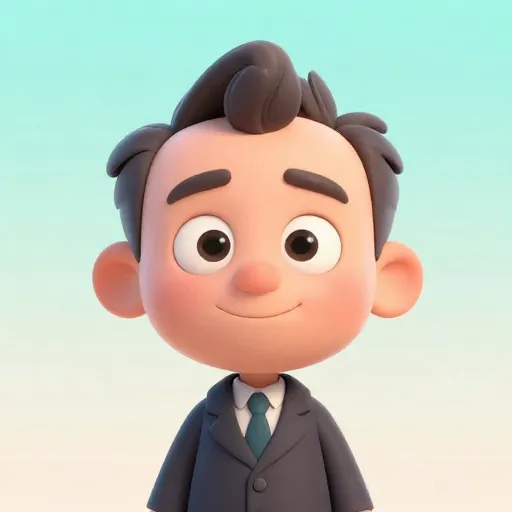
An expert is a person who has made all the mistakes that can be made in a very narrow field.
These small 'failures' are like training wheels for life. They teach us resilience, which is the ability to bounce back when things go sideways.
If everything went perfectly every day, you would never learn how to fix a leaking tent, how to apologize, or how to laugh at yourself.
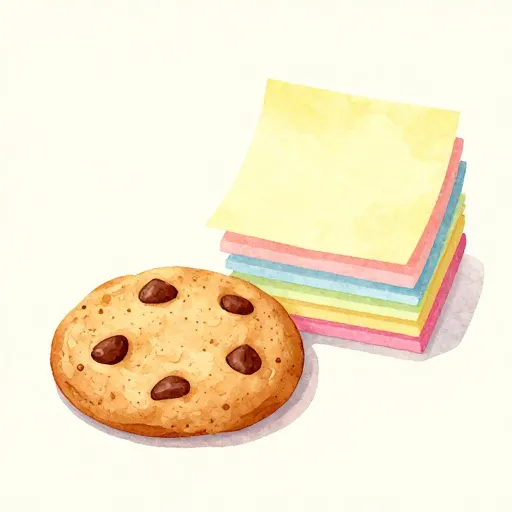
Some of your favorite things were mistakes! The Chocolate Chip Cookie happened when a baker thought chocolate chunks would melt into the dough (they didn't). Post-it Notes were made from a glue that was 'too weak' to work for planes.
The Science of 'Whoops'
Scientists now know that mistakes are actually a sign of a growth mindset. This is the belief that your intelligence can grow with effort.
When people with this mindset make a mistake, their brains actually show more activity. They are leaning into the error to see what they can learn from it.
Something to Think About
If you could live in a world where you never made a single mistake, would you choose to stay there?
There isn't a right or wrong answer to this. Some people find the idea of a perfect world relaxing, while others think it might be a little bit boring. What would you miss the most?
Rather than seeing a mistake as a stop sign, they see it as a detour. It might take longer to get where you're going, but you'll see a lot more of the world along the way.
So, the next time you spill the milk or forget a line in the school play, remember Fleming's mold. Your 'whoops' might just be the start of something you never expected.
Questions About Psychology
Why do I feel embarrassed when I make a mistake?
How can I stop making the same mistake twice?
Are some mistakes just bad?
The Beauty of the Wobble
Life isn't a straight line: it is a series of wobbles. From the messy lab of Alexander Fleming to the secret basements of the mind Freud explored, we see that mistakes are the threads that make the tapestry of history interesting. Keep wobbling, keep wondering, and keep making those magnificent messes.