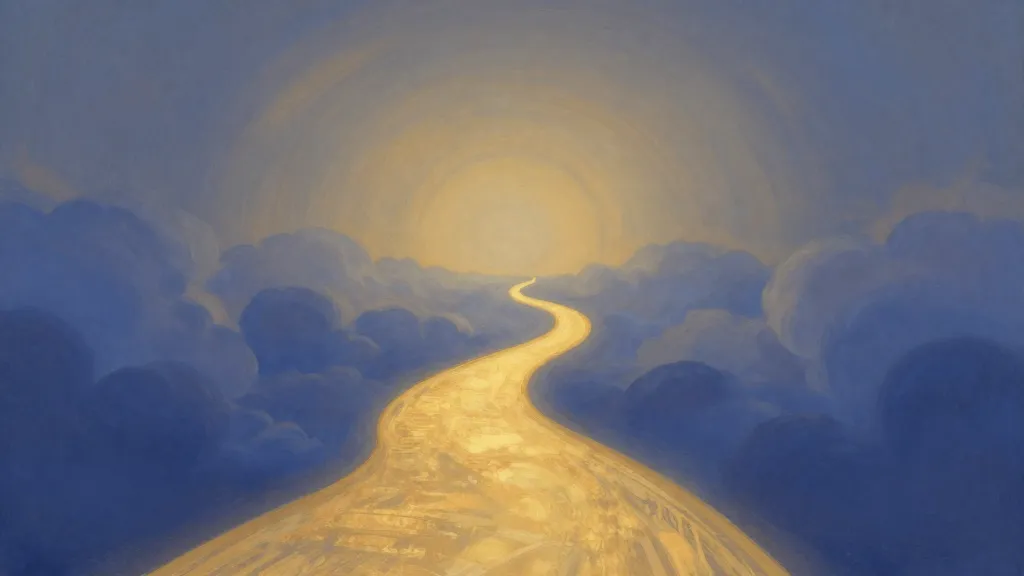
Have you ever looked at the stars and wondered where people go when their time on Earth is finished?
The idea of an afterlife is one of the oldest and biggest questions in human history. It describes the belief that a person’s consciousness or spirit continues to exist in some form even after their physical body stops working.
Every culture in history has had its own way of telling this story. Some people find the idea of an afterlife very comforting, like a warm blanket. For others, it is a mystery that feels a bit heavy or confusing to think about.
Thinking about what happens next is a way of honoring how much we value life right now. It is okay to have many different feelings about it at once. We are going to look at how humans have tried to map out this unknown territory for thousands of years.
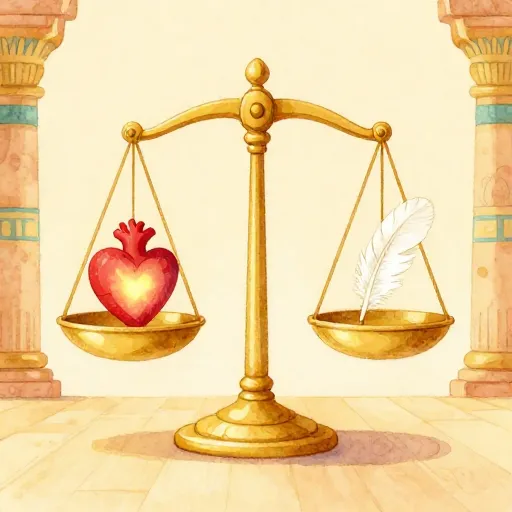
Imagine standing in a room where the walls are covered in bright paintings of gardens and gods. In the center, a giant set of scales waits. The room is quiet, and the air smells like incense. This is how the Egyptians pictured the most important moment of a person's life.
The Golden Scales of Ancient Egypt
If you could travel back 4,000 years to the banks of the Nile River, you would find a civilization obsessed with the next world. The Ancient Egyptians believed that death was not an end, but a difficult journey. They called the afterlife the Field of Reeds, which they imagined as a perfect version of Egypt.
Before a person could reach this paradise, they had to pass a famous test. This was the Weighing of the Heart ceremony. A god named Anubis would lead the person into a great hall.

Mira says:
"The Egyptians really valued the idea of a 'light heart.' It makes me think about how we feel when we've been kind to someone, like our chest feels a little lighter and warmer."
In this hall, the person’s heart was placed on one side of a golden scale. On the other side sat the Feather of Truth, belonging to the goddess Ma’at. If the heart was lighter than the feather, it meant the person had lived a kind, honest life.

The soul is like a butterfly which has been for a long time a caterpillar.
The Rivers of the Greek Underworld
Across the sea in Ancient Greece, people imagined a different kind of map. They believed everyone traveled to the Underworld, a vast kingdom ruled by the god Hades. This was not necessarily a place of punishment, but a place where the "shades" or spirits of the dead lived on.
To get there, a spirit had to cross the River Styx. A ferryman named Charon would row them across in a small boat. Greeks often placed a coin in the mouth of the deceased to pay for this journey.
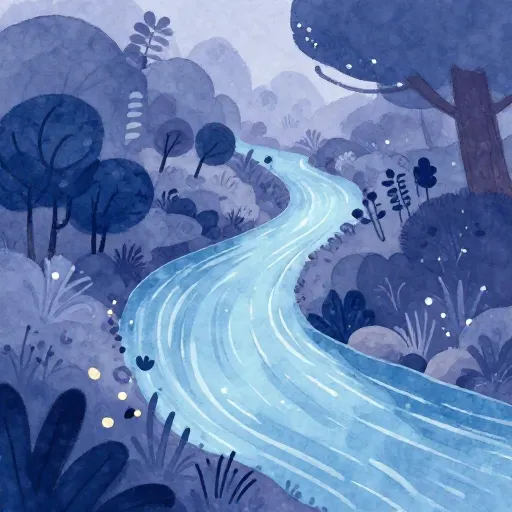
In Ancient Greece, some people believed that before a soul was reborn, it had to drink from the River Lethe. This magical water would make them forget their past life so they could start their new one with a completely clean slate.
Once inside, spirits were sent to different areas based on how they lived. Heroes went to the beautiful Elysian Fields. People who were neither very good nor very bad went to the Asphodel Meadows, which were a bit like a giant, quiet waiting room.
This tells us that even the Greeks wanted to believe that our choices in life matter. They felt that how we treat others creates a map for where we go next. It was their way of making sense of fairness in a complicated world.
Two Different Ways of Seeing Time
When we look at world religions today, we see two main ways of thinking about the journey of the soul. Some people see life as a straight line, while others see it as a beautiful, repeating circle.
The afterlife is a final destination where we go to find peace and stay forever after our journey on Earth is done.
The afterlife is a transition point where our soul rests before coming back to Earth in a new life to learn more lessons.
In many Western traditions, such as Christianity, Islam, and Judaism, life is often seen as a one-time journey. After death, the soul moves toward a permanent home, often called Heaven or Paradise. This is usually described as a place of perfect peace and closeness to the Divine.

Finn says:
"It’s a bit overwhelming that there are so many different maps for the afterlife. I guess it’s okay if I don’t know which one I believe in yet, or if I change my mind later."
In many Eastern traditions, like Hinduism and Buddhism, the idea is quite different. They believe in reincarnation, which means the soul is born again into a new body. They see life, death, and rebirth like the changing of the seasons or the rising and setting of the sun.
Death is a great adventure.
The Science of Staying Connected
Some people prefer to look at the afterlife through the lens of science and nature rather than religion. While science cannot prove what happens to our thoughts or feelings, it tells us something amazing about our bodies. There is a rule in physics called the Conservation of Energy.
This rule says that energy can never be truly destroyed, it only changes form. The heat in our bodies and the atoms that make us up eventually go back into the Earth. They might become part of a flower, a tree, or even a star in a distant galaxy.
Light a small candle with an adult. Watch the flame dance. When you blow it out, the light is gone, but the heat remains in the air and the smoke curls up into the room. The energy didn't vanish: it just spread out and changed into something you can't see as easily.
Leaving a Legacy
There is also a type of afterlife that we can see right here on Earth. Philosophers often call this a legacy. It is the way a person "lives on" through the things they created and the people they loved. Think of a favorite book or a building designed by someone who lived a hundred years ago.
When we remember someone, we are keeping their story alive. This is why many cultures have holidays like the Day of the Dead or Qingming Festival. They are special times to talk to our ancestors and share their stories so they are never truly gone.
Mira says:
"I like the idea that we leave bits of ourselves behind in the people we love. Like a laugh or a favorite joke that keeps going even when we aren't there to tell it."
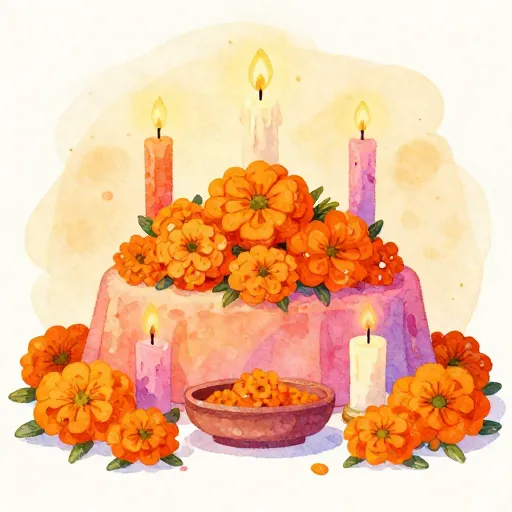
In Mexico, during 'Día de los Muertos,' families build colorful altars called 'ofrendas.' They fill them with bright orange flowers, sugar skulls, and the favorite foods of people who have died. They believe the spirits come back for one night to enjoy the party with them!
Why We Tell These Stories
Ultimately, talking about the afterlife is a way of talking about what makes us human. It is about our deep hope that love and connection do not just vanish. Whether people believe in a golden hall, a new life, or a return to the stars, these ideas help us feel safe in a world that is full of changes.
Mapping the Beyond Through Time
Humans have always been storytellers. We use stories to build a bridge across the things we cannot see. While nobody has a final answer that everyone agrees on, the search for that answer has inspired some of the greatest art and music in history.

Nothing is lost, nothing is created, everything is transformed.
Thinking about the afterlife often leads us back to the present moment. It reminds us that every day is a chance to be kind, to be curious, and to add something good to the world. We may not know exactly what is around the corner, but we can choose how we walk the path we are on right now.
Something to Think About
If you were to imagine a 'perfect' place where people go to find peace, what would it look like?
There are no wrong answers here. Some people imagine a library with every book ever written, others imagine a giant playground, and some imagine a quiet forest. Your imagination is the only limit.
Questions About Religion
Does everyone believe in an afterlife?
What is the difference between a soul and a ghost?
Is it okay to feel scared when thinking about this?
Holding the Mystery
The idea of the afterlife is like a giant puzzle that humanity is still putting together. We might never see the whole picture, but looking at the pieces helps us understand how much we care about life. It reminds us that every person's story is important, and that love is a force that people have always believed can reach across any distance.
