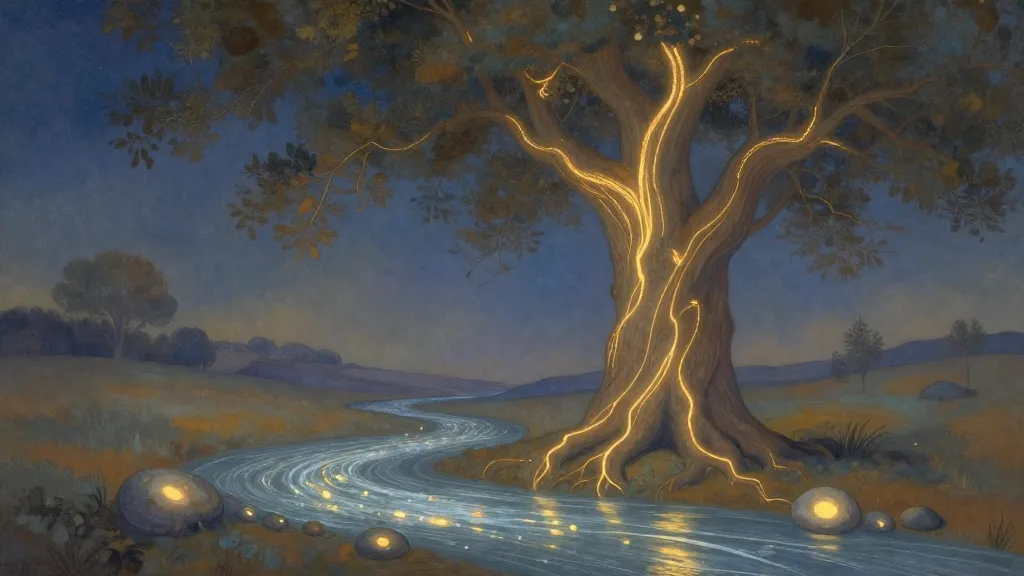
Have you ever looked at an old, gnarled tree and felt like it was watching you, or whispered a quick 'thank you' to a lucky stone you found on the beach?
This feeling that the world is full of life and personality is called Animism. It is one of the oldest ways humans have ever tried to understand their place in the cosmos.
Imagine walking through a forest forty thousand years ago. To you, the rustle of the leaves isn't just the wind: it is the forest breathing. The mountain isn't just a pile of rock: it is a powerful ancestor standing guard over the valley.
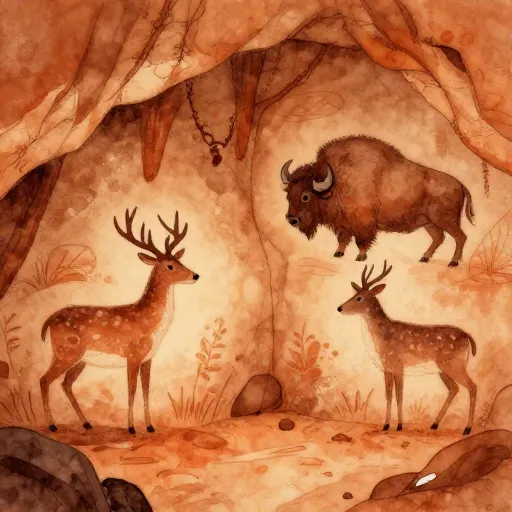
Imagine you are standing inside the Lascaux cave in France. By the flickering light of a torch, you see massive bulls and horses painted on the walls. For the people who painted these 17,000 years ago, these weren't just decorations. They were likely a way to honor the spirit of the animals they lived alongside.
This is the heart of Animism. It is the belief that almost everything: animals, plants, rivers, rocks, and even weather patterns: possesses a spirit or a soul. In this worldview, humans are not the only ones with feelings, memories, or intentions.

Finn says:
"If the mountain is watching us, does it think we look like tiny, scurrying ants? I wonder if it likes the sound of us laughing or if it prefers when we're quiet."
The Oldest Story in the World
Historians and archaeologists believe that animism is likely the oldest belief system on Earth. Long before there were great temples, holy books, or organized religions, early humans lived in deep kinship with their surroundings.
They didn't see themselves as 'owners' of the land. Instead, they saw themselves as members of a massive, diverse family that included the bears, the cedar trees, and the thunder.

Animism is the sense that the world is a community of living persons, only some of whom are human.
Because everything was considered alive, life was a constant conversation. People would offer gifts to a river before crossing it or ask a tree for permission before cutting a branch. This wasn't because they were afraid, but because they were being polite to a neighbor.

The word 'Animism' comes from the Latin word 'Anima,' which means 'breath' or 'soul.' It’s the same root word we use for 'animation!' When we animate a movie, we are literally 'giving life' to drawings.
What Makes a Person?
In our modern world, we usually think a 'person' has to be a human. But for someone who follows an animist worldview, the definition of a person is much wider. They might speak of 'four-legged persons' (wolves), 'swimming persons' (salmon), or even 'rock persons.'
- Agency: The idea that an object can make its own choices.
- Relationality: The idea that we are defined by how we treat others.
- Reciprocity: The cycle of giving and receiving back from nature.

Mira says:
"This reminds me of my favorite old teddy bear. Even though he's made of stuffing, I always feel like he's listening. Maybe animism is just about giving our love to things until they feel alive."
If a rock is a person, you treat it differently. You don't just kick it out of the way: you notice its shape, its history, and the way it sits in the dirt. This creates a world where nothing is truly 'trash' or 'useless.'
Did you know? In many Indigenous languages, the word for 'nature' doesn't even exist. This is because people saw themselves as so much a part of the world that they didn't need a separate word for it.
Looking Through a Shinto Lens
One of the most famous versions of animism still practiced today is Shinto in Japan. In Shinto, the world is filled with Kami. These are spirits or holy powers that live in things like waterfalls, ancient trees, or even the wind.
Next time you go outside, pick a 'thing' that doesn't usually move: a boulder, a mailbox, or a bush. Give it a name and spend two minutes thinking about what its life is like. Does it like the rain? How many people does it see every day? Does it feel different now that you've given it a name?
When you visit a Shinto shrine, you might see a thick straw rope called a shimenawa wrapped around a massive tree. This tells everyone that a powerful Kami lives there. It is a sign of respect and a reminder to stop and wonder.

The wind has a voice, and the stones have spirits. We must learn to listen with more than just our ears.
Shinto teaches that we should live with a 'bright and pure heart.' This means being grateful for the world around us and keeping our surroundings clean, not just for ourselves, but for the spirits that live there too.
The world is a collection of resources like timber, water, and minerals. We should use them wisely and efficiently to help humans survive and grow.
The world is a web of relationships. We should only take what we need and always give something back, because the earth is our family, not our grocery store.
The Science of Connection
For a long time, some scientists thought animism was just a 'fantasy' for kids or ancient people. But recently, science has started to find that the world is much more 'alive' and connected than we ever imagined.
Biologists have discovered the Wood Wide Web, a massive underground network of fungi that allows trees to talk to each other. They share food, warn each other about bugs, and even look after their 'children' (the saplings).
Finn says:
"Wait, if the trees are talking through fungi, does that mean the forest is basically one giant brain? That's way cooler than just a bunch of wood!"
If trees can communicate and care for one another, the idea that they have a 'spirit' or a 'personality' doesn't seem so strange anymore. We are finding that 'things' have much more agency than we used to think.
Through the Ages
A World of Relations
Today, animism is having a bit of a comeback. People are realizing that when we treat the world like a collection of dead objects, we tend to use it up and break it. But when we treat it like a family, we take better care of it.
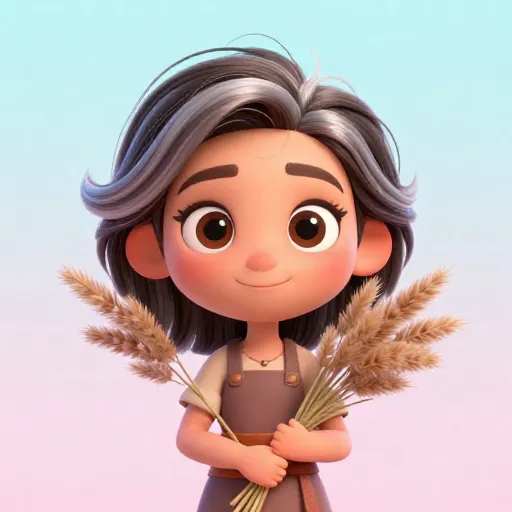
In the animist worldview, the world is made of subjects, not objects. It is a world of 'thou,' not 'it.'
In some parts of the world, like New Zealand and Ecuador, people have even passed laws saying that rivers and forests have 'legal personhood.' This means a river has the same rights as a human to not be harmed or polluted.
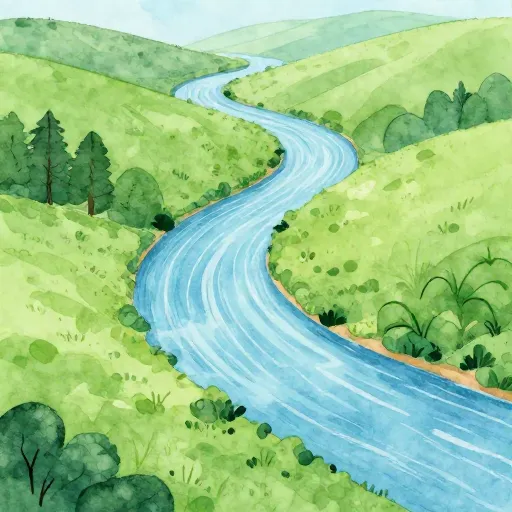
In 2017, the Whanganui River in New Zealand was officially declared a legal person. It has its own lawyers who represent the river's interests in court. If someone pollutes the river, it is treated like they harmed a human being.
Living with an animist heart doesn't mean you have to believe in ghosts or magic. It can simply mean being a 'good guest' on the planet. It means noticing that the bird on your windowsill has a life just as busy and important as yours.
Something to Think About
If you knew for certain that the world was listening, what would you say to it today?
There isn't a right or wrong way to feel about this. Some people find comfort in the idea of a living world, while others find it a bit spooky or strange. Both feelings are interesting places to start a conversation.
Questions About Religion
Is animism a religion?
Do animists think my phone or car has a soul?
How is animism different from science?
A More Meaningful Walk
The next time you step out your front door, try to imagine the world as a crowded room full of personalities. The wind might be a traveler passing through, and the pavement might be a silent witness to every step you take. When we stop seeing the world as 'dead stuff,' we find that we are never truly alone. The world is awake, and it is waiting for us to say hello.
