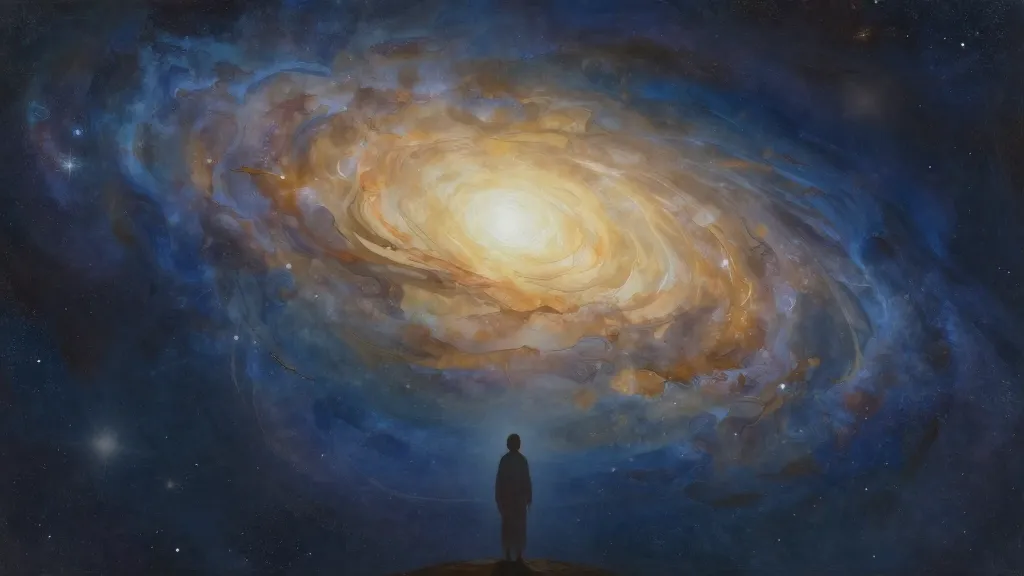
Have you ever looked up at the night sky and wondered where it all came from?
For thousands of years, people have used stories of gods to explain the mysteries of the world. But some people, called Atheists, believe that we can understand the universe without needing a Deity or a supernatural creator. This way of thinking, known as Atheism, is a journey into the unknown that relies on Evidence and the wonder of the natural world.
Imagine you are standing in a vast forest. You see the tall trees, the scurrying squirrels, and the way the sunlight filters through the leaves. For many people, this beauty is proof that a powerful being created everything. They feel a sense of connection to a creator who watches over the world.
But some people look at that same forest and feel a different kind of wonder. They see the result of millions of years of growth, change, and nature working together. They do not see a creator, and they find that the forest is just as amazing without one. This is the starting point for atheism.
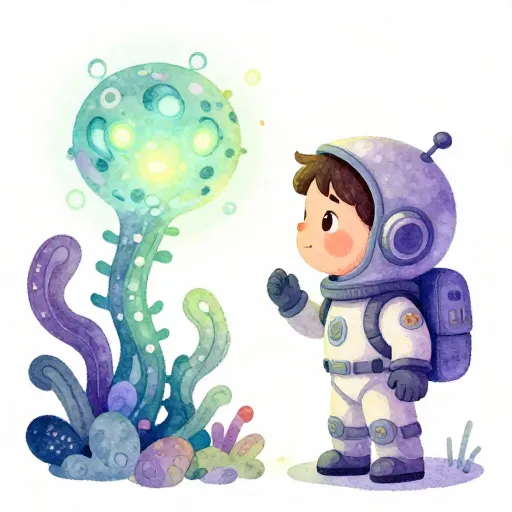
Imagine you are an explorer on a brand-new planet. You see strange plants and colorful mountains. Would you assume a giant invisible gardener built it all, or would you start studying the soil and the air to see how it grew on its own?
The Ancient Seekers
Atheism is not a new idea invented by modern scientists. People have been asking these big questions for as long as we have been human. In ancient India, about 2,600 years ago, a group called the Carvaka thinkers argued that we should only believe in things we can see or touch. They thought the world was made of matter, not magic.
Around the same time in Ancient Greece, thinkers were beginning to look for natural explanations for things like lightning and earthquakes. Before this, most people thought Zeus was throwing bolts from the sky. These early philosophers weren't always sure there were no gods, but they were very sure that humans could figure things out on their own.
Is God willing to prevent evil, but not able? Then he is not all-powerful. Is he able, but not willing? Then he is malevolent.

Finn says:
"If the ancient Greeks thought lightning was from Zeus, but then we found out it was electricity, what other things are we guessing about today?"
In those ancient times, the word "atheist" was actually used as a bit of an insult. It meant someone who didn't respect the gods of the city. Ironically, the early Christians were sometimes called atheists by the Romans because they didn't believe in the Roman gods! It took a long time for the word to mean what it does today: someone who simply doesn't believe in any gods at all.
Seeing is Believing
Many atheists describe themselves as having a Skepticism toward claims that cannot be proven. They like to look for Evidence, which is information that helps show if an idea is true or false. If someone says there is an invisible, silent dragon living in their garage, a skeptic would ask for proof.

The 'Invisible Dragon' test: If I told you a dragon lived in my garage, but you couldn't see it, hear it, or feel it, would you believe me? Atheists apply this same test to gods: if there is no evidence that something exists, they find it more logical to act as if it doesn't.
This focus on proof is a big part of why many atheists love science. Science is a way of asking the universe questions and waiting for the universe to answer with facts. When we use science, we don't have to guess why things happen: we can observe, measure, and test our ideas to see if they hold up.
The Age of Reason
For a long period in history, especially in Europe, it was very dangerous to say you didn't believe in God. People who questioned the church could be punished or even lose their lives. Because of this, many people kept their doubts hidden in their journals or shared them only with very close friends.
Everything began to change during a time called the Enlightenment, or the Age of Reason. Thinkers across the world started to argue that Reason, our ability to think clearly and logically, should be our primary guide. They believed that humans could improve the world through education and science rather than just following ancient traditions.
Believing in a creator can make people feel safe and loved, like someone is always watching over them and has a plan for their life.
Not believing in a creator can make people feel free and responsible, like they are the authors of their own story and their choices really matter.
The Wonder of Not Knowing
Some people worry that if there is no god, the world might feel empty or cold. But for many atheists, the opposite is true. They find that knowing this is our one life makes every moment more precious. They find beauty in the fact that we are made of "star stuff": the same atoms that were forged in the hearts of dying stars billions of years ago.

For me, it is far better to grasp the Universe as it really is than to persist in delusion, however satisfying and reassuring.

Mira says:
"I think it’s like being a detective. You don’t start with the answer; you follow the clues wherever they lead, even if the clues lead to a bigger mystery."
This sense of connection to the universe is sometimes called Secular wonder. "Secular" just means things that aren't related to religion. You don't need a temple or a holy book to feel small and amazed when you look at a photograph of a galaxy millions of light-years away. For an atheist, the mystery of the universe is an invitation to learn, not a secret that only a god knows.
Rules Without Religion
If someone doesn't believe in a god who gives out rules, how do they know how to be a good person? This is a question kids often ask. Most atheists follow a philosophy called Humanism. Humanists believe that we should be kind, fair, and honest because it helps other people and makes the world a better place to live.

There are many 'flavors' of atheism! Some call themselves Agnostics (who say 'we can't know for sure'), while others are Humanists (who focus on being good to people). It's a very big tent with lots of different ways to think.
Our sense of right and wrong, or Morality, often comes from Empathy. This is our ability to understand how another person feels. We don't need a command from the sky to know that hitting someone hurts or that sharing makes a friend happy. We do good things because we care about the people around us right now.
Through the Ages
Finding Your Own Path
The world is full of different ideas about the big "Why." Some people find comfort in faith, and others find clarity in atheism. What matters most is that we remain curious and respectful of each other's journeys. Atheism is simply one way of saying, "I don't have all the answers, but I'm excited to keep looking."

Isn't it enough to see that a garden is beautiful without having to believe that there are fairies at the bottom of it too?
Finn says:
"Does being an atheist mean I have to be sure there's no god, or just that I haven't seen any proof yet? One feels like a closed door, the other feels like an open window."
It is okay to sit with the uncertainty of life. We don't always have to fill the gaps in our knowledge with a story. Sometimes, the most honest thing we can say is "I don't know." And in that "I don't know," there is a lot of room for discovery, for questions, and for the kind of quiet wonder that makes being human so interesting.
The word 'atheist' comes from the Greek word 'atheos'. 'A' means 'without' and 'theos' means 'god'. So it literally just means 'without a god.'
Something to Think About
If you were the only person in the world, what would make you feel most connected to the universe?
There are no right or wrong answers here. Some might say the stars, some might say the ocean, and some might say their own thoughts. What feels true to you?
Questions About Religion
Do atheists celebrate holidays like Christmas?
Are atheists and agnostics the same thing?
Can you be an atheist and still be spiritual?
The Adventure of Thinking
Atheism is not about having all the answers or closing your mind to mystery. It is about a different kind of curiosity: one that looks at the world exactly as it is and finds it beautiful enough. Whether you believe in a god or not, the most important thing is to keep asking questions, keep looking for evidence, and never stop wondering at the incredible fact that you are here.
