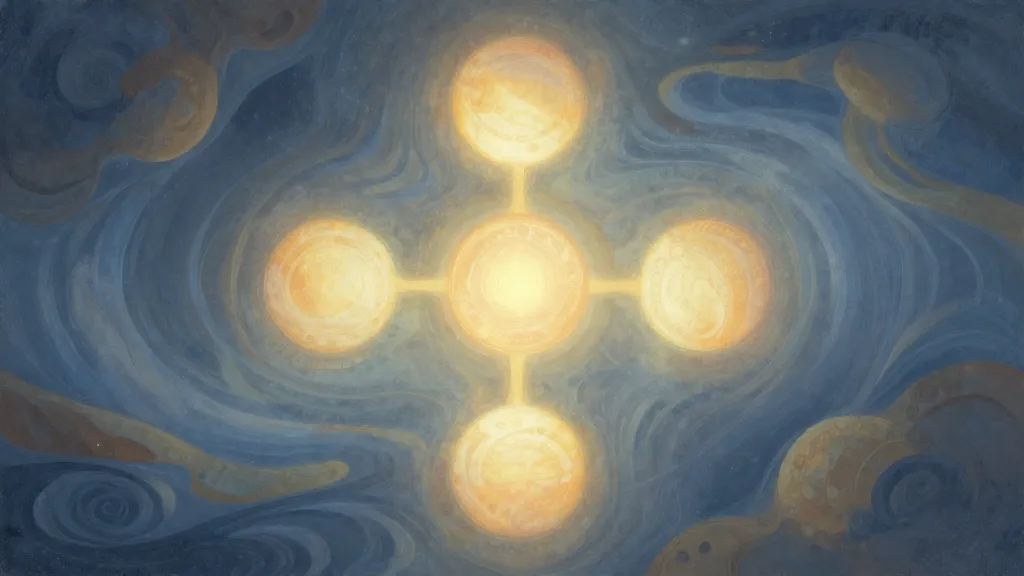
What if the world you live in today is just one chapter in a much longer story of endings and beginnings?
Around seven hundred years ago, in the high valley of Mexico, a people called the Mexica built a civilization based on a deep sense of wonder and duty. We often call them the Aztecs, and their stories tell of a universe that is alive, moving, and constantly balancing on the edge of a great Teotl, or life force.
Imagine standing on the shore of a massive, shimmering lake surrounded by high, purple mountains. In the center of the lake sits a city of white stone that seems to float on the water like a dream. This was Tenochtitlan, the heart of the Aztec world. The people who lived there did not see themselves as separate from nature. They believed every plant, every drop of rain, and every person was part of a giant, shifting energy.
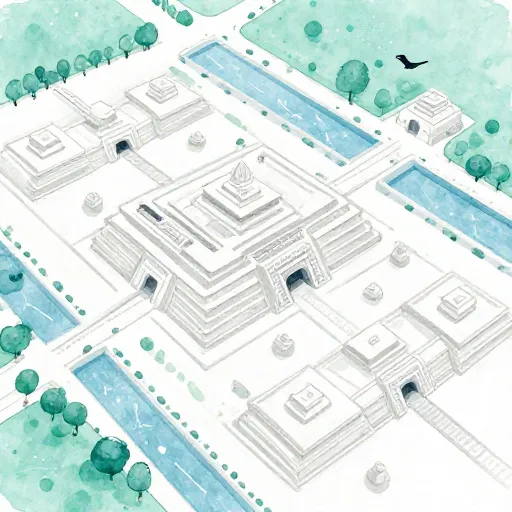
Imagine a city with no roads, only canals! People in Tenochtitlan traveled by canoe to get to school or the market. Huge temples painted in bright red and blue towered over the water, and every house had a garden. It was one of the cleanest and most beautiful cities in the world at that time.
To understand the Aztecs, we have to look at the world through their eyes. They did not think of gods as people with human problems, like the Greeks often did. Instead, they saw gods as forces of nature. A god was the wind, the heat of the sun, or the sudden crack of lightning. They used the word Nahuatl, their beautiful and poetic language, to describe how everything in the universe was connected.

Finn says:
"So the gods weren't just 'people' in the sky? They were actually the rain itself? That makes the world feel much more alive, like every storm is a giant waking up."
At the very beginning of everything was a mystery called Ometeotl. This was not just one god, but a pair: a Mother and Father of all things. They lived in the highest part of the heavens. They represented the idea of duality, which is the belief that everything has two sides: light and dark, male and female, life and death. You cannot have one without the other, and the Aztecs believed the tension between these two sides is what keeps the world moving.
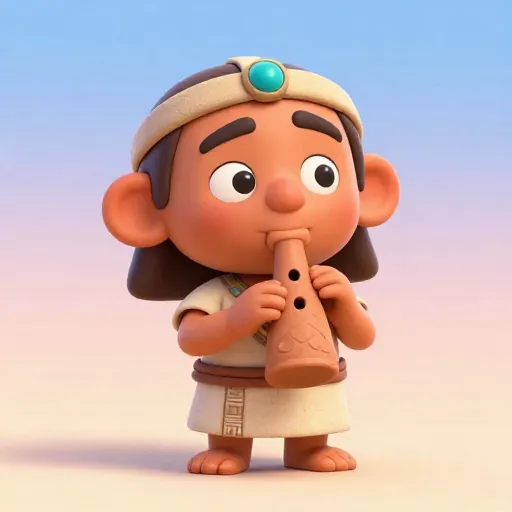
We only come to dream. It is not true, it is not true, that we come to live on the earth.
The Story of the Five Suns
The Aztecs believed that we are currently living in the fifth version of the world. They called these eras the Five Suns. Each of the four worlds before ours ended in a great disaster because the balance of the universe was lost. The first world was destroyed by jaguars, the second by great winds, the third by a rain of fire, and the fourth by a massive flood.
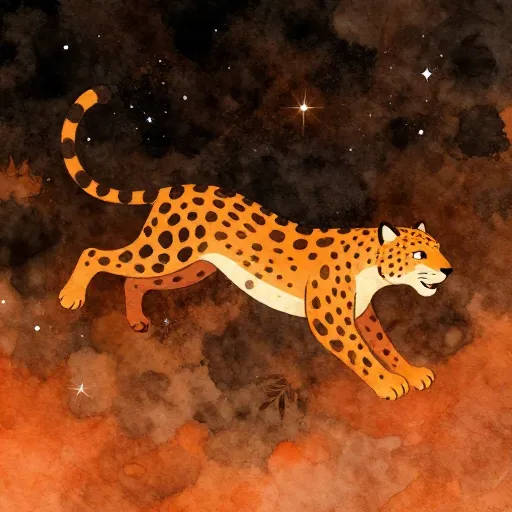
The Aztecs believed the first world was destroyed because humans were too small and the jaguars were too hungry! In each story, the world ends because the humans or the gods forgot to keep things in balance.
Each time a world ended, the gods had to gather and figure out how to start over. This tells us something important about how the Aztecs viewed the world. They did not see time as a straight line with a beginning and an end. Instead, they saw it as a circle. If something ends, it means something new is about to be born. It is a bit like how a forest fire, while scary, clears the way for new seeds to sprout.

Mira says:
"I like the idea of the world ending and starting over. It's like how we recycle things today, taking what's old and making it into something completely new."
Our current world is called the Fifth Sun, or the Sun of Movement. The gods created it at a place called Teotihuacan, the City of the Gods. But there was a problem: the sun would not move across the sky. It sat still, burning the earth with its heat. The gods realized that for the sun to move, they had to give something of themselves. They had to sacrifice their own energy to keep the cycle of life spinning.
Think about the 'energy' you use every day. To keep your body moving, you eat food. To keep a friendship going, you give your time and kindness. The Aztecs thought of sacrifice as a way to 'feed' the universe. What is one thing you can 'give' to your environment today to keep it healthy and balanced?
The Feathered Serpent and the Smoking Mirror
Two of the most famous figures in these stories are Quetzalcoatl and Tezcatlipoca. Quetzalcoatl, the Feathered Serpent, represented wisdom, the wind, and the breath of life. He was often shown as a mix of a bird and a snake: a creature that could touch both the sky and the earth. He was the one who traveled to the underworld to find the bones of the people from the previous worlds so he could create humans for the Fifth Sun.

The gods created the world with their own sacrifice. We are the 'macehualtin', those deserved by their blood.
Tezcatlipoca, whose name means Smoking Mirror, was Quetzalcoatl’s opposite. He represented the night sky, fate, and the things we cannot see. He carried a mirror made of obsidian, a black volcanic glass, which he used to see into the hearts of humans. While Quetzalcoatl was a creator, Tezcatlipoca was a challenger. They were like two brothers who were always competing, and their constant tug-of-war is what created the wind and the seasons.
He believed in teaching humans how to grow corn, write books, and find wisdom. He is the light and the morning star.
He believed life was a test and that challenges make people stronger. He is the shadow, the night, and the magic mirror.
Living in the Fifth Sun
For an Aztec child, mythology was not just a story in a book: it was a way of living every day. They used a special calendar called the Tonalpohualli, which tracked the different energies of the days. Every day had a name, like 1-Rabbit or 7-Flint, and each name told you what kind of mood the universe was in. It helped people decide when to plant corn, when to start a journey, or even what a new baby’s personality might be like.
Finn says:
"Imagine if your birthday gave you a 'mood' for the whole year based on a calendar of animals and stones! I hope I'd be a 1-Jaguar day."
The Aztecs also practiced Sacrifice, which is a word that can sound very scary today. We often think of it as something violent, but to the Aztecs, it was more like a debt. They believed the gods had given their lives to create the sun and the rain. If the humans did not give something back: flowers, songs, incense, or even blood: the gods would run out of energy and the world would stop. It was their way of saying thank you for the gift of life.
Is it true that one lives with roots on earth? Not forever on earth, only a little while here.
They even built gardens that floated on the water, called Chinampas. They were master engineers who turned a swampy lake into a paradise of flowers and vegetables. To them, farming was a holy act. When a farmer put a seed into the earth, he was participating in the great cycle of the Five Suns. He was helping the earth bring forth life, just as the gods had done at the beginning of time.
The word 'Chocolate' comes from the Nahuatl word 'xocoatl'. The Aztecs believed cacao beans were a gift from the god Quetzalcoatl. They didn't eat it as a bar, they drank it as a spicy, frothy, bitter drink mixed with chili peppers!
Journey to the Underworld
What happened after life ended? The Aztecs believed in a place called Mictlan, a land of the dead that was not scary, but simply quiet and cold. It was ruled by Mictlantecuhtli, the Lord of the Dead, who wore a mask made of a skull. To get there, a soul had to travel for four years through nine difficult levels, crossing deep rivers and mountains that crashed together.
The Journey of the Mexica People
The journey was long, but you didn't have to do it alone. The Aztecs believed a special dog, the Xoloitzcuintli, would help guide you across the first river. This is why many families today in Mexico still celebrate Dia de los Muertos, or Day of the Dead. It is a tradition that comes directly from these ancient beliefs, showing that death is not a disappearance, but a journey to another part of the circle.
Something to Think About
If you were a god creating the Sixth Sun, what part of our world today would you want to keep, and what would you change to make it more balanced?
There are no right or wrong answers here. The Aztecs believed the world is always changing, and every new beginning is a chance to learn from the past.
Even though the Aztec Empire ended hundreds of years ago, their ideas about balance and the energy of the earth are still with us. When we look at the stars or wonder why the seasons change, we are asking the same questions the people of Tenochtitlan asked. They reminds us that we are all caretakers of our world, and it is our job to keep the Sun of Movement shining for the next generation.
Questions About Religion
Did the Aztecs really think the world was going to end?
Why are there so many snakes in Aztec art?
Who was the most important Aztec god?
The Circle Continues
The stories of the Aztecs remind us that the world is a giant, moving puzzle where every piece matters. Whether it's a floating garden or a poem about a dream, their culture was built on the idea that we are all connected to the earth and the stars. Next time you see the sun rise, think of it as the Fifth Sun, still moving across the sky because of the stories we tell and the way we care for our world.