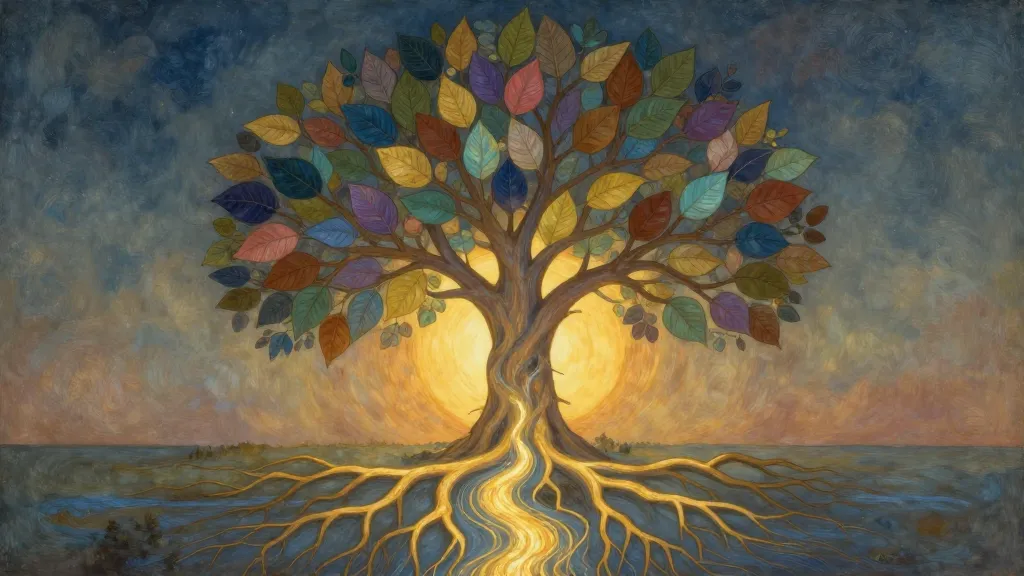
Imagine a world where every person, no matter where they are from or what they look like, is considered part of the exact same family.
The Baháʼí Faith is one of the world's youngest independent religions, born in the mid-1800s with a bold vision: that all people are equal and all religions are part of one single story. It teaches the importance of unity, the search for truth, and the idea that our differences make the world more beautiful rather than more divided.
A Message in the Dust of Persia
Our story begins in the year 1844 in a country then called Persia, which we now know as Iran. At that time, the world felt very large and disconnected: news traveled by horse, and most people never met anyone from another culture.
In the city of Shiraz, a young man known as The Báb began to share a startling message. He told people that a great change was coming to humanity and that a new messenger from God would soon appear to unite the world.
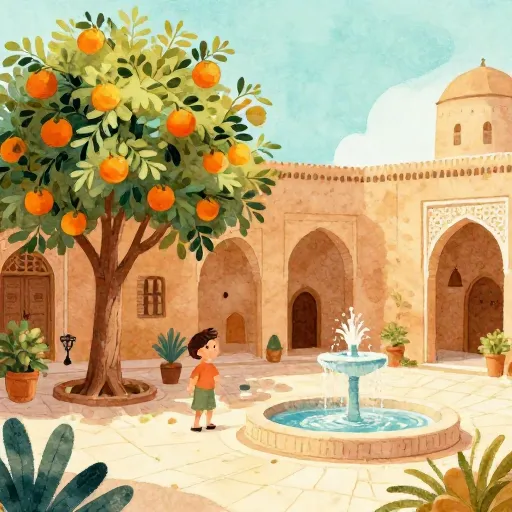
Imagine the narrow, dusty streets of Shiraz in 1844. The air smells of orange blossoms and spice. In a small, beautiful house with a courtyard, the Báb is talking to a guest. He isn't talking about war or money: he is talking about a future where every human is connected like pearls on a single string.
This message was like a spark in a dry forest. Thousands of people became excited by his words, but the leaders of the time were frightened by these new ideas.
They didn't want things to change, and they especially didn't like the idea that everyone should be treated as equals. This led to a very difficult time for the early followers of this new path.

Finn says:
"What if the leaders hadn't been afraid? I wonder how much faster the world would have changed if everyone had just listened to the Báb's idea about being one family."
The Glory of God
Among those who listened to the Báb was a nobleman named Mírzá Husayn-`Alí. He came from a wealthy family, but he chose to spend his life helping the poor and defending the Báb's teachings.
Eventually, he became known as Bahá'u'lláh, a title that means the Glory of God. While he was being held in a dark, underground prison for his beliefs, he had a profound experience that changed everything.
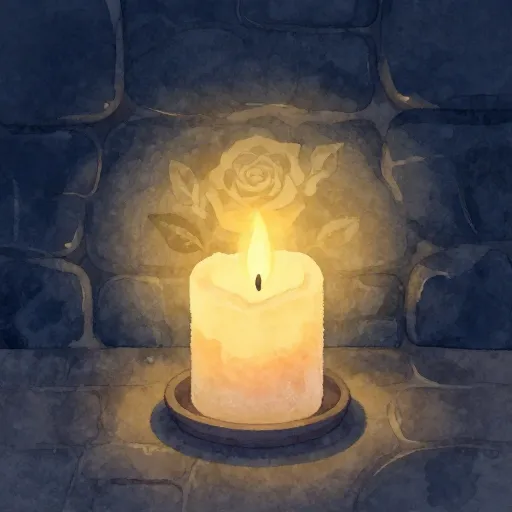
Bahá'u'lláh was kept in a prison called the 'Siyah-Chal,' or the Black Pit. It was a cold, dark, underground dungeon. Even though he was in the darkest place imaginable, he wrote that he felt a great light and a sense of peace that eventually led to his message for the whole world.
In that dark place, Bahá'u'lláh realized that he was the messenger the Báb had promised. He spent the rest of his life writing thousands of letters and books about how humanity could finally live in peace.
He didn't speak of just one country or one group of people. He spoke about the entire planet as a single home.
The earth is but one country, and mankind its citizens.
One Garden, Many Flowers
One of the most important big ideas in the Baháʼí Faith is Unity in Diversity. Think about a garden for a moment: if every single flower was the exact same shade of brown and the exact same height, it might be a bit dull.
Baháʼís believe that our differences in language, skin color, and culture are like the different flowers in a garden. The variety is what makes the garden beautiful and strong.

Mira says:
"The garden idea makes so much sense. In my art class, we use a 'clashing' color to make the whole painting pop. Maybe humans are just like different colors on a giant canvas."
Instead of trying to make everyone the same, this idea suggests we should celebrate what makes us unique. When people from different backgrounds work together, they bring different tools and ideas to the table.
This makes it easier to solve big problems, like how to take care of the environment or how to make sure everyone has enough to eat. It is the idea that we are many parts of one single human body.
Next time you are in a group: like your classroom or a sports team: look around. Try to find three things that make each person different. Then, try to find three things that everyone has in common. How do the differences make the group better at what they are doing?
The Great School of Religion
Have you ever wondered why there are so many different religions if they all talk about being good and kind? The Baháʼí Faith explains this using a concept called Progressive Revelation.
Imagine that humanity is like a student in a giant, worldwide school. Thousands of years ago, we were in kindergarten, and a teacher came to teach us the basics: kindness and honesty.
Some people believe that religions are all completely different and that only one can be 'right.'
Baháʼís believe that religions are like chapters in the same book: they all come from the same source to help us learn.
As the student grows up, they move to second grade, then fifth grade, and eventually high school. Each time they move up, a new teacher arrives to give them more complex lessons that fit their age.
Baháʼís believe that figures like Abraham, Moses, Buddha, Krishna, Jesus, and Muhammad were all teachers in this same school. Each one brought the perfect message for the time and place they lived in.
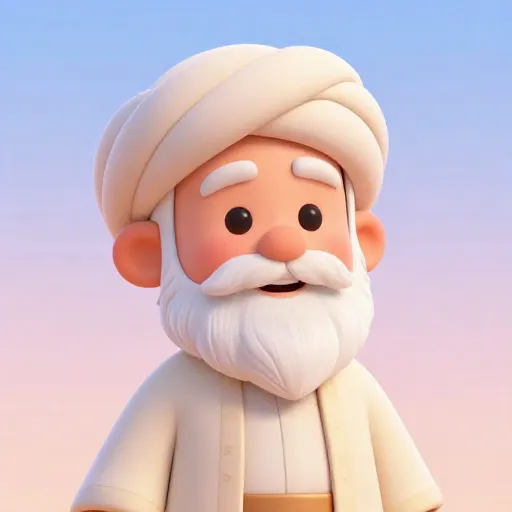
Consider the flowers of a garden... Diversity of hues, forms and shapes, enricheth and adorneth the garden.
The Search for Truth
Another big idea is the Independent Investigation of Truth. This means that every person has the responsibility to look for the truth themselves rather than just believing what they are told.
In many traditions, people follow a religion simply because their parents did or because their neighbors do. But Bahá'u'lláh taught that every child, as they grow up, should use their own mind to decide what they believe is true.
Finn says:
"I like the idea of being a 'truth detective.' It means I don't have to just agree with everything I hear. I can ask 'why' and find out for myself."
This search for truth isn't just about religion: it's also about science. The Baháʼí Faith teaches that Science and Religion are like two wings of a bird.
If the bird only has the wing of science, it can become cold and lose its sense of wonder. If it only has the wing of religion, it can become stuck in old superstitions. To fly high and understand the world, we need both.
A Journey Toward Unity
Living the Idea
So, what does a Baháʼí life actually look like? It isn't just about sitting in a building and praying. In fact, Baháʼís believe that work done in the spirit of service is a form of worship.
Whether you are a doctor, a gardener, or a student, if you are doing your work to help others, you are practicing your faith. This is why you will often find Baháʼís hosting classes for children or groups for teenagers in their neighborhoods.
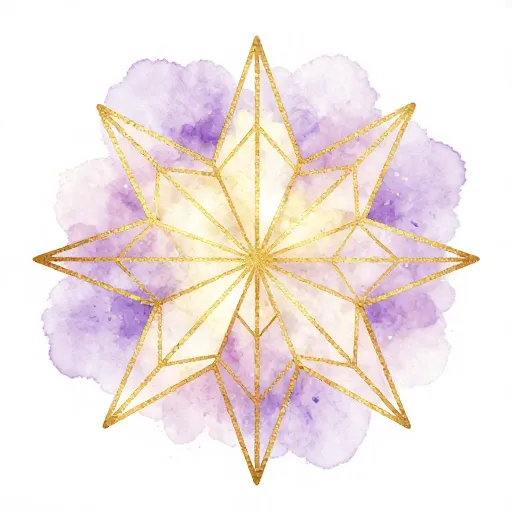
The number 9 is very special in the Baháʼí Faith. Because it is the highest single digit, it is seen as a symbol of 'completion' and 'unity.' This is why Baháʼí temples always have nine sides and often feature a nine-pointed star.
They also place a huge emphasis on the Equality of Men and Women. They believe that until women have the same opportunities as men, the world will be like a bird trying to fly with one wing tied behind its back.
This focus on equality and service is meant to build a world where prejudice: whether it's about race, money, or gender: simply fades away because we finally see each other as family.
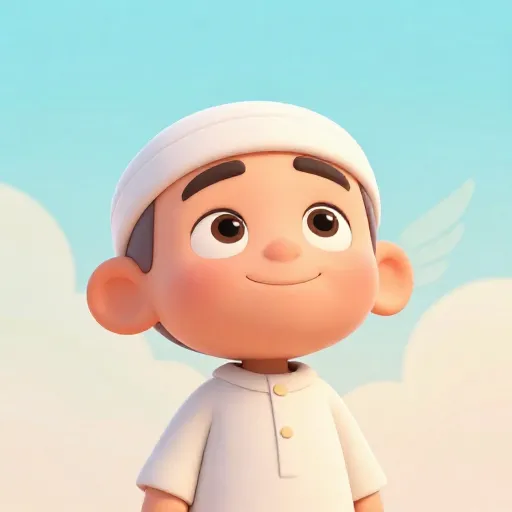
Religion and science are the two wings upon which man's intelligence can soar into the heights.
A World Without Walls
Today, the Baháʼí Faith has spread to almost every corner of the globe. You can find Baháʼís in snowy villages in Alaska and in busy cities in South Africa.
They don't have priests or ministers. Instead, they elect groups of people to help organize their communities, which is their way of practicing democracy and making sure everyone has a voice.
When people gather to pray, they often do so in Houses of Worship. These buildings always have nine sides and nine doors, which symbolize that people from all directions and all backgrounds are welcome to enter and sit together in peace.
Something to Think About
If the whole world really is one single country, how would we change the way we treat people who live far away from us?
There isn't a simple answer to this, and that is what makes it interesting. You might think about travel, how we share food, or even how we talk to each other online.
Questions About Religion
Do Baháʼís have a holy book?
Where is the center of the Baháʼí Faith?
Can anyone become a Baháʼí?
The Unfinished Story
The idea that humanity is one family is still a very new concept in the long history of our world. It is a vision that requires a lot of work, patience, and curiosity. Whether or not you are a member of the Baháʼí Faith, the question of how we can all live together on this one small planet is one of the biggest and most exciting puzzles we get to solve together.