
What if everything the world told you about success was completely backward?
Around two thousand years ago, a teacher named Jesus sat on a grassy hillside and gave a speech that changed history. Known as the Beatitudes, these eight short statements describe a radical, upside-down kingdom where the humble are powerful and the gentle inherit the earth.
Imagine standing on a breezy, green hill overlooking a sparkling blue lake. This is the Sea of Galilee, located in a region that was once part of the Roman Empire. The air is warm, the grass is thick, and hundreds of people are sitting around you, leaning in to hear a young man speak.
They aren't the wealthy or the powerful leaders of the day. They are regular people: fishermen, farmers, and families who feel like they don't quite fit in. They are looking for hope in a world that often feels harsh and unfair.

Imagine the crowd: there are old men with sun-baked skin, mothers holding toddlers, and teenagers who have spent all day working in the fields. There are no microphones or speakers. The only sounds are the wind, the occasional lap of the water against the shore, and the steady voice of the teacher. Everyone is leaning forward because they've never heard anyone talk like this before.
When the teacher begins to speak, he doesn't talk about how to get rich or how to defeat the Roman soldiers. Instead, he begins a series of sentences that start with the word blessed. To our modern ears, that might sound like a religious way of saying lucky, but it meant something much deeper back then.
In the original Greek language of the time, the word used was Makarios. It describes a kind of deep, unshakeable joy that doesn't depend on whether things are going well or badly.

The word 'blessed' comes from the Greek word 'Makarios.' In ancient legends, this was the word used to describe how the gods lived: a life totally free from the worries and 'stuff' of the world. By using this word for regular people, Jesus was saying they could have a 'god-like' joy right where they were.
The Great Reversal
The Beatitudes are the opening lines of a much longer talk called the Sermon on the Mount. Think of them like the "manifesto" or the core values of a new way of living. They are surprising because they celebrate the exact opposite of what most people value.
Usually, we think that the winners are the ones who are the strongest, the loudest, or the ones with the most toys. The Beatitudes suggest that God's kingdom works on a different set of rules entirely. It is a place where the "last" are actually "first."

Finn says:
"If the poor and the sad are the lucky ones, does that mean the people who have everything are actually missing out on something?"
This idea is often called the Great Reversal. It is the belief that the things the world ignores are the things that matter most to the Divine. It suggests that our weaknesses might actually be our greatest strengths.
Let's look at the first few statements. They are about how we feel on the inside when we realize we can't do everything on our own.
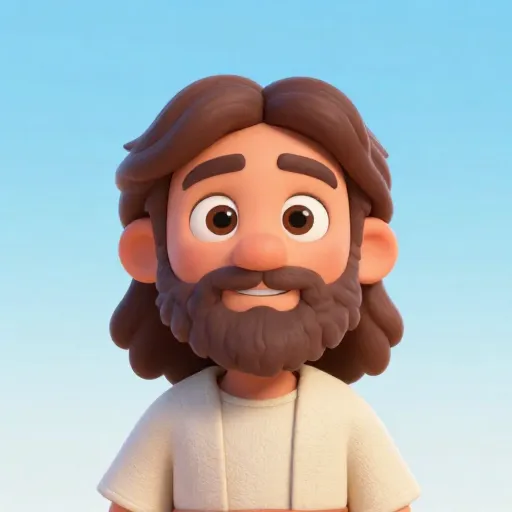
Blessed are the poor in spirit, for theirs is the kingdom of heaven.
Finding Strength in Softness
The first Beatitude says, "Blessed are the poor in spirit." This doesn't mean being poor in money, though many of Jesus' listeners were. It means being humble enough to know that you don't have all the answers.
It is the feeling you get when you look at the stars and realize how small you are. It is the opposite of being a "know-it-all." In this kingdom, the person who asks for help is the one who is actually rich.
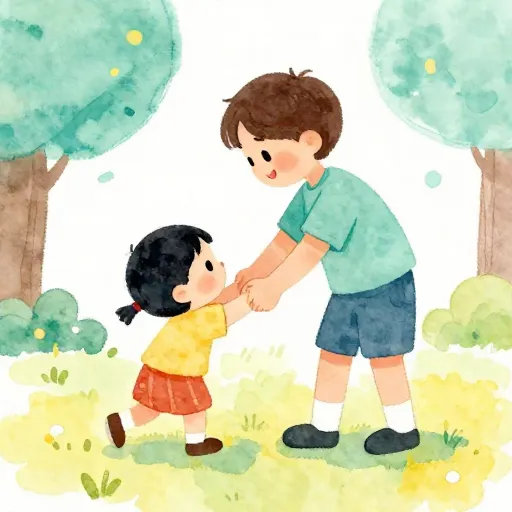
Try the 'Upside-Down Day.' For one afternoon, see if you can act the opposite of how people expect. If someone takes your spot in line, let them have it with a smile. If you win a game, talk about how well the other person played instead of cheering for yourself. How does it feel to put the 'rules' of the world aside for a bit?
The next part is even stranger: "Blessed are those who mourn." Usually, we think of mourning as a time of great sadness, which it is. But here, it means having a heart that is soft enough to care about the pain of others.
If you see someone being bullied and it makes you feel sad, that is a kind of mourning. It means your heart is awake and alive. The promise here is that those who care enough to be sad will eventually find comfort.
The Power of the Quiet
Then comes a word that is often misunderstood: meekness. "Blessed are the meek," the teacher says, "for they will inherit the earth." For a long time, people thought being meek meant being weak or being a doormat.
But in the ancient world, the word for meekness was used to describe a powerful warhorse that had been trained. It means having great strength, but keeping it under control. It is the power of a person who chooses to be gentle even when they could be loud and bossy.

Mira says:
"I saw a documentary about how wolves are actually very gentle with their own families. They have all that power, but they use it to keep each other safe. Is that like being meek?"
Think about a leader who listens more than they talk. Or a big kid who uses their strength to protect someone smaller instead of showing off. That is what it means to be meek: using your power to help rather than to hurt.
When you are meek, you don't have to fight for your place in the world. You already know you belong. This leads naturally to the next idea: a deep, aching desire for things to be made right.
A Different Kind of Hunger
Have you ever been so hungry that you could think of nothing but food? The Beatitudes speak of people who "hunger and thirst for righteousness." This is a big word that basically means "justice" or "fairness."
It describes people who want the world to be fair just as much as they want their next meal. They can't stand to see people treated poorly. They don't just want a snack: they want a world where everyone has enough to eat and everyone is safe.
A peacemaker's job is to keep everyone happy and avoid any arguments or loud noises. If someone is being mean, just ignore it so there isn't a fight.
A peacemaker's job is to fix the problem, even if it means having a difficult conversation. It's about making sure things are fair, even if it's uncomfortable for a while.
This kind of hunger is what drives people to change the world. It is the feeling that something is wrong and the determination to help fix it. The promise is that these people will be "filled," meaning their work for justice is never a waste of time.
It takes a lot of energy to care that much. The next Beatitudes show us how to keep our hearts healthy while we are busy trying to make things better.
The Clear Heart and the Open Hand
Next, the teacher talks about mercy. "Blessed are the merciful," he says. Mercy is what happens when you have the chance to be mean to someone who was mean to you, but you choose to be kind instead.
It is about giving people a second chance. It is the understanding that everyone makes mistakes, including us. When we show mercy, we create a world where people can grow and change rather than just being punished.
Finn says:
"Wait, if I'm merciful to someone who was mean to me, does that make them want to be nice next time? Or am I just letting them win?"
Then there is the "pure in heart." This doesn't mean being perfect or never making a mistake. It means having a heart that isn't divided. It is about being sincere and honest about who you really are.
A person with a pure heart doesn't have a "hidden agenda." They aren't trying to trick anyone. They are the same person on the inside that they are on the outside, and because of that, they can see the beauty and truth in the world more clearly.
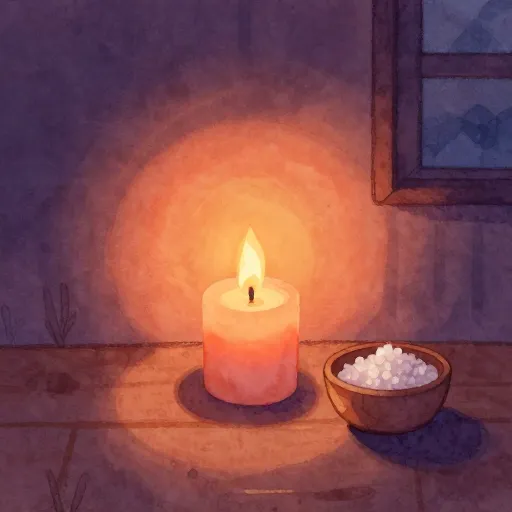
Immediately after the Beatitudes, Jesus told his followers they were the 'salt of the earth' and the 'light of the world.' In the ancient world, salt was used to keep food from going bad. He was saying that by living these eight rules, they would help keep the whole world from becoming 'rotten' or dark.
The Hard Work of Peace
Perhaps the most famous Beatitude is "Blessed are the peacemakers." Notice it doesn't say "peace-lovers." Lots of people love peace, but peacemakers are the ones who actually go out and build it.
Building peace is hard work. It often means standing in the middle of a fight and helping both sides listen to each other. It means saying sorry first, even when you aren't the only one at fault. Peacemakers are called the "children of God" because they are doing the work of bringing people back together.

True peace is not merely the absence of tension: it is the presence of justice.
Finally, the teacher warns that living this way might be difficult. He says that people who stand up for what is right might get picked on or treated badly. This is called persecution.
It seems like a strange thing to be "blessed" for. But the point is that if people are upset with you for being kind, fair, and honest, you are probably doing something very right. You are standing in the company of the greatest heroes of history.
The Beatitudes Through History
Through the Ages
The Beatitudes didn't stay on that hillside. They traveled across oceans and through centuries, inspiring people to look at the world differently. They have been a survival guide for people facing hard times and a compass for those trying to do good.
In the Middle Ages, people like Francis of Assisi took the call to be "poor in spirit" literally. He gave away all his gold and fine clothes to live simply among the poor and the animals. He found that by having nothing, he felt like he possessed the whole world.
Later, during the 1800s, the writer Leo Tolstoy read the Beatitudes and decided that if we really believed them, we could never go to war again. His ideas about non-violence traveled all the way to India, where they inspired leaders like Gandhi.

The only way to find out what is true is to live it.
Living the Upside-Down Life
So, what do the Beatitudes look like today? They don't require you to move to a mountain or wear a robe. They are about the small choices you make in the hallway at school or at the dinner table with your family.
You are living the Beatitudes when you include the kid who is sitting alone. You are living them when you admit you were wrong, even though it's embarrassing. You are living them when you choose to be gentle with your words when you are angry.
It is a way of seeing the world where the most important things aren't the things you can buy or the trophies you win. Instead, the most important things are the connections you make and the kindness you share.
It isn't an easy way to live. Sometimes it feels like you are swimming against the current. But the Beatitudes promise that this is where the real life is: in the quiet, the kind, and the brave.
Something to Think About
Which of the eight Beatitudes feels the most 'upside-down' to you today?
There is no right or wrong answer. Think about which one surprised you the most, or which one feels the hardest to do in your own life.
Questions About Religion
Does 'blessed' mean I will get everything I want?
Why are there exactly eight Beatitudes?
Do I have to be religious to follow the Beatitudes?
The Adventure of the Hillside
The Beatitudes aren't just a list of rules to memorize: they are an invitation to see the world with new eyes. They remind us that the quietest person in the room might be the strongest, and that a soft heart is more powerful than a loud voice. As you go about your day, keep an eye out for the 'upside-down' moments where a little bit of mercy or a quiet act of peace might change everything.