
Have you ever noticed how everything around you is always moving, shifting, or changing into something else?
About 2,500 years ago, a young man in ancient India began to wonder why life felt so bumpy and how we might find a sense of lasting peace. This curiosity grew into Buddhism, a way of living and thinking that has helped millions of people understand the mystery of their own minds through mindfulness and kindness.
Imagine you are standing at the edge of a wide, dusty road in northern India. The air smells like jasmine flowers and woodsmoke. It is a time long ago, before cars, electricity, or even paper books.
In a kingdom near the mountains, a prince named Siddhartha Gautama lived in a magnificent palace. His father, the king, wanted him to be perfectly happy, so he filled the palace with music, gardens, and beautiful things.
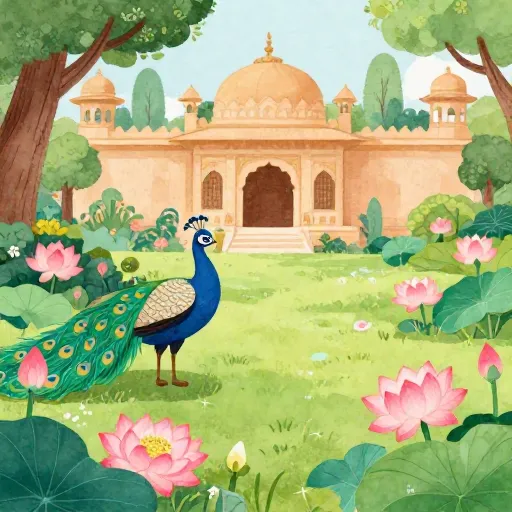
Imagine a garden filled with peacocks and fountains. The walls are so high you can't see the city outside. The prince's father even ordered the gardeners to pick every dead leaf and dying flower so Siddhartha would never see anything grow old or change. Can you imagine a world where nothing ever looks old?
Siddhartha had everything a person could want, yet he felt a strange tug in his heart. He began to wonder what existed outside the high palace walls. One day, he went out to see the world for himself and what he saw changed him forever.
He saw people who were sick, people who were very old, and people who had died. He realized that life was not just one long party: it included sadness, change, and ending.

Finn says:
"If the prince was already a king's son and had everything, why would he ever want to leave? What if the outside world was too scary for him?"
Siddhartha decided he had to find a way to help people deal with the "bumpiness" of life. He left his royal life behind and became a traveler, searching for a secret to true happiness that does not depend on having fancy things.
Searching for the Middle Way
For several years, Siddhartha tried living in extreme ways. First, he had lived as a rich prince with too much of everything. Then, he tried living with almost nothing at all, eating only a single grain of rice a day.
Neither of these extremes felt right. Having too much made him feel distracted, and having too little made him too weak to think clearly. He realized that the best path was actually right in the center.
Better than a thousand hollow words, is one word that brings peace.
He called this idea the Middle Way. It is like tuning a guitar string: if it is too tight, it will snap, but if it is too loose, it will not make music. Siddhartha wanted to find that perfect, resonant middle.
He decided to sit down under a large fig tree, now called the Bodhi Tree, and stay there until he understood the truth about life. He sat very still and watched his own thoughts like they were clouds passing in the sky.
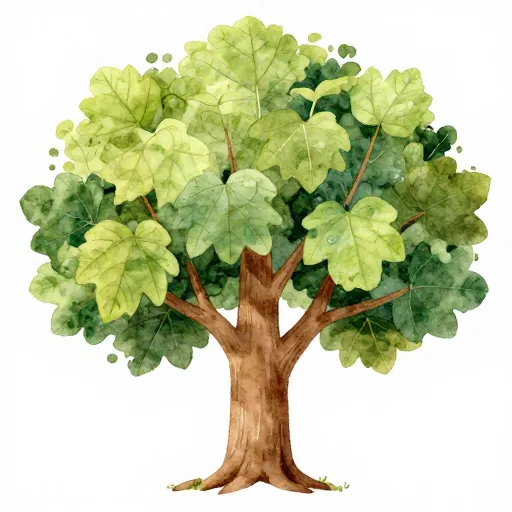
The Bodhi tree was a type of sacred fig tree. Today, many people visit a tree in India that is believed to be a direct 'grandchild' of the original tree where the Buddha sat. People treat it with immense respect, almost like a living person.
As the morning star rose in the sky, he finally understood. He felt a sense of peace that was so deep and bright it changed his entire being. From that moment on, people called him the Buddha, which means the "Awakened One."
The Four Big Truths
What did the Buddha wake up to? He discovered that humans often feel a sense of "not-quite-rightness" called Dukkha. Sometimes this is big sadness, but often it is just a tiny feeling that we want things to be different than they are.

Mira says:
"This reminds me of when I try to hold a beautiful bubble in my hand. The moment I try to keep it forever, it pops. Maybe happiness is more about watching the bubble than owning it."
He taught that we feel this way because we try to hold on to things that are naturally meant to change. It is like trying to catch a river in a bucket; the water is only the river when it is flowing.
To help people find their way out of this feeling, he shared the Eightfold Path. This is not a list of rules to follow to be "good," but a set of guides for how to speak, act, and think in ways that do not cause harm.
No one saves us but ourselves. No one can and no one may. We ourselves must walk the path.
The Power of Being Here
One of the most important tools the Buddha shared was meditation. This is the practice of sitting quietly and noticing what is happening right now, without trying to change it or judge it.
When we meditate, we might notice the feeling of air moving in our noses or the sound of a bird outside. This helps us develop mindfulness, which is the ability to be fully present in our own lives.
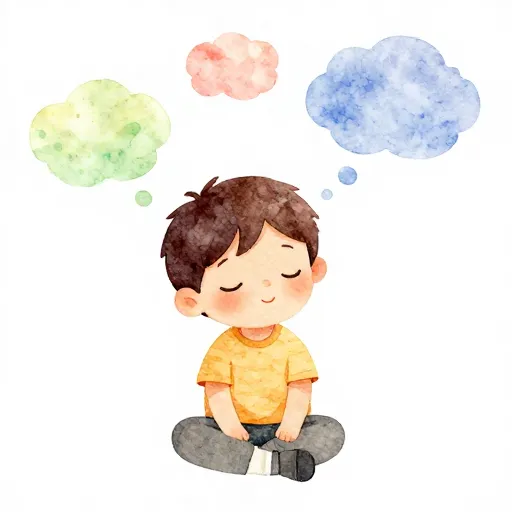
Close your eyes for just thirty seconds. Don't try to stop your thoughts. Instead, imagine your thoughts are like cars driving past your house. You can see them go by, but you don't have to jump inside and go for a ride. Just watch them pass. How many 'cars' drove by in thirty seconds?
Buddhism also teaches that every living thing is connected. Because we are all part of the same big story, Buddhists practice compassion, which means feeling a deep kindness for others and wanting to help when they are hurting.
If you see a bug struggling on its back, compassion is the feeling that makes you want to gently flip it over. It is the understanding that the bug wants to be happy and safe just as much as you do.
Buddhism Through the Ages
Many Ways to Wake Up
As the Buddha's ideas traveled to different countries, they changed and grew, much like a language develops new accents. Today, there are many different ways people practice Buddhism.
In some places, like Japan, people practice Zen, which focuses on finding wisdom in simple, everyday moments like drinking tea or gardening. In Tibet, practices often involve colorful art and chanting.
Mira says:
"I like how the ideas changed as they moved to different countries. It's like the same light shining through different colored pieces of glass."
Even though the styles look different, the heart of the idea remains the same. It is about waking up to the beauty of the world and finding a way to be kind, even when things are difficult.

Peace comes from within. Do not seek it without.
Some people see Buddhism as a religion because it has temples and monks. Others see it as a philosophy or a way of training the brain. The Buddha himself often said that people should test his ideas for themselves to see if they work.
Many people see Buddhism as a religion because it has sacred texts, beautiful temples, and groups of monks and nuns who dedicate their lives to its teachings.
Others see it as a way of training the mind, like a science of the brain. They focus on the logic of the ideas rather than the traditions or rituals.
In some Buddhist traditions, monks create incredibly detailed 'sand mandalas.' They spend days or even weeks using colored sand to make a perfect circle of art, only to sweep it all away as soon as it is finished. This is to show that everything, even something beautiful, eventually changes.
Living with a "Buddhist heart" does not mean you never get angry or sad. It means that when those big feelings arrive, you have a quiet place inside where you can sit and wait for the storm to pass.
It is about realizing that while we cannot control everything that happens to us, we can choose how we respond. We can choose to be the person who brings a little more peace and a little more wonder into the room.
Something to Think About
If you could sit under a tree and find the answer to just one big question about the world, what would you ask?
There are no right or wrong questions here. Sometimes, the most interesting part of a question is how it makes you feel while you're asking it.
Questions About Religion
Do Buddhists believe in a God?
Why are there so many statues of the Buddha?
Do you have to be a monk to be a Buddhist?
The Journey Continues
Buddhism is less about having all the answers and more about learning how to live well with the questions. Whether you are noticing your breath or helping a friend, you are practicing the same wonder the Buddha felt under his tree.