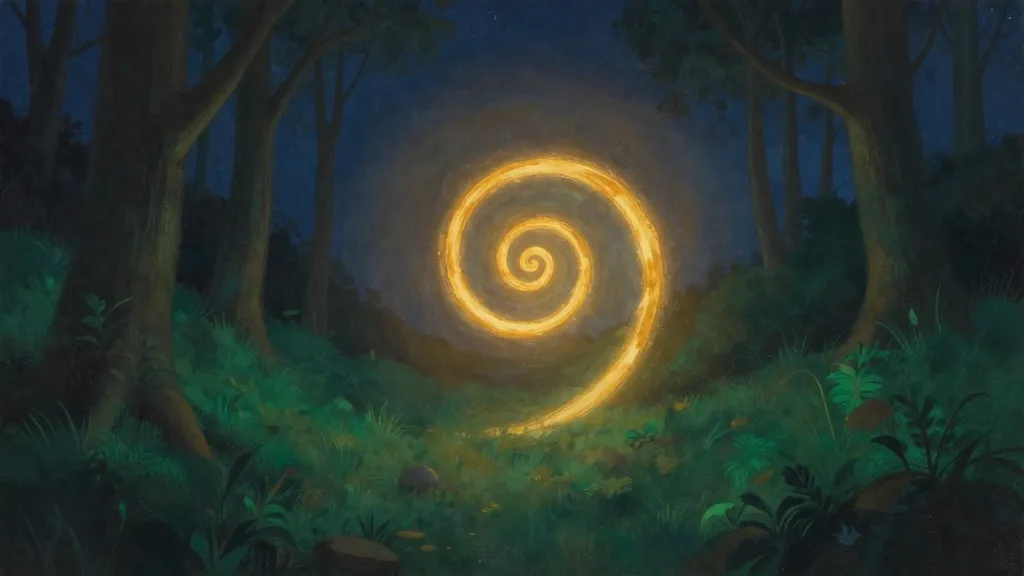
Have you ever looked at a thick bank of morning mist and felt like something was hiding just behind it?
For the ancient Celts, the world was never just one thing. They believed that the everyday world of grass and stone lived right alongside a magical Otherworld that was usually invisible but always there.
To understand these stories, we have to travel back over two thousand years. The people we call the Celts lived across a huge part of Europe, from the rolling green hills of Ireland and Scotland to the rugged coasts of France and even parts of Turkey. They were not one single country: instead, they were many different tribes who shared a similar language and a deep love for the natural world.
They didn't write their stories down in books at first. Instead, they used an Oral Tradition, which means they passed their history and myths from person to person through poems and songs. Imagine sitting around a roaring fire in a roundhouse, listening to a storyteller describe heroes who could fight giants and gods who could turn into swans.
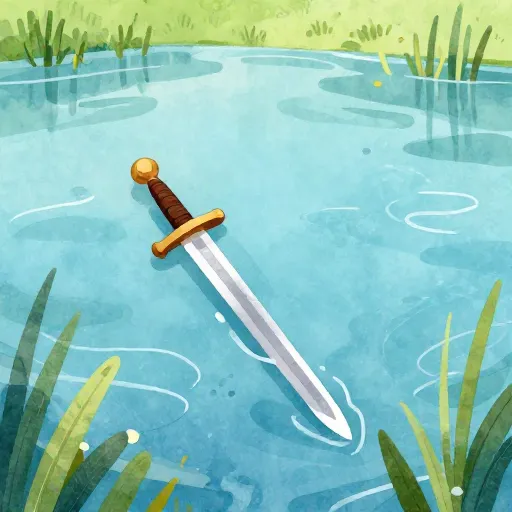
The ancient Celts didn't have temples like the Greeks. Instead, they considered nature itself to be sacred. They often left offerings like swords or jewelry in lakes and rivers to honor the spirits of the water.
Because these stories were spoken rather than written, they changed slightly every time they were told. This creates a wonderful sense of uncertainty. We don't have one single version of a Celtic myth: we have a thousand different echoes of them. This makes the mythology feel alive, like a conversation that never quite ends.
Finn says:
"If the stories were never written down, does that mean they are still growing? Like a tree that looks different every time you visit it?"
The People of the Goddess
In Irish mythology, which is where many of our best-preserved Celtic stories come from, the gods were known as the Tuatha Dé Danann. This name means the People of the Goddess Danu. They weren't just powerful beings who lived in the sky: they were seen as an ancient race of people who were masters of magic, art, and science.
When a new group of humans arrived in Ireland, the Tuatha Dé Danann didn't just disappear. Legend says they used their magic to become invisible and retreated into the hills and mounds of the earth. These places are called Sidhe (pronounced 'shee'). Even today, some people in Ireland and Scotland are careful not to disturb certain mounds of earth, just in case.
The gods have not passed away forever: they have only grown distant and quiet.
These gods were complicated. They weren't always 'good' or 'bad' in the way we think of superheroes today. They could be jealous, funny, wise, or even grumpy. The Dagda, for example, was a powerful father-god who owned a magic club that could kill nine men with one end and bring them back to life with the other. He also had a giant cauldron that never ran out of food.
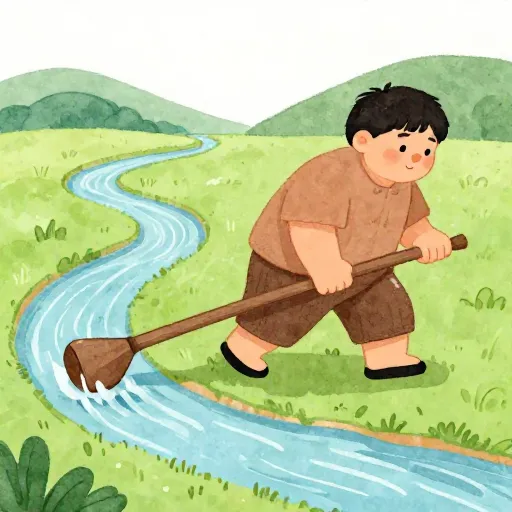
Imagine a giant with a massive wooden club dragging behind him, leaving a deep furrow in the earth that becomes a new river. He wears a rough tunic and has a beard as thick as a forest. This is the Dagda: he is clumsy and powerful, a god of the earth who loves life and food.
The Magic of Three
If you look at ancient Celtic jewelry or stone carvings, you will notice a shape that appears over and over again: the Triskelion. This is a design with three interlocking spirals. For the Celts, the number three was incredibly important. It represented balance and the way different parts of life are connected.
They saw the world in threes: land, sea, and sky. They also saw time in threes: past, present, and future. Many of their gods even had three different faces or appeared as three different people at once. This shows us that they didn't think things were simple or one-sided. They believed that for anything to be complete, it needed several different parts working together.

Mira says:
"I like the idea of the Triskelion. It reminds me that I'm not just one thing. I'm a student, a sister, and a dreamer all at the same time."
Many Celtic heroes had to navigate these triple layers of reality. They might have a physical quest, like finding a lost sword, but they also had a spiritual quest, like learning how to be brave. The world was full of symbols, and everything from a white stag to a rowan tree could be a message from the Otherworld.
Look around your room or your garden. Can you find three things that go together to make a whole? Maybe it is the roots, trunk, and leaves of a tree, or the beginning, middle, and end of your favorite song. The Celts would say that noticing these patterns helps you understand the rhythm of the world.
Heroes, Giants, and Knowledge
Celtic myths are full of heroes who are larger than life. One of the most famous is Finn MacCool, a leader of a band of warriors called the Fianna. Finn wasn't just strong: he was incredibly wise. He gained his wisdom by accident when he was a boy, while cooking a magical fish called the Salmon of Knowledge.
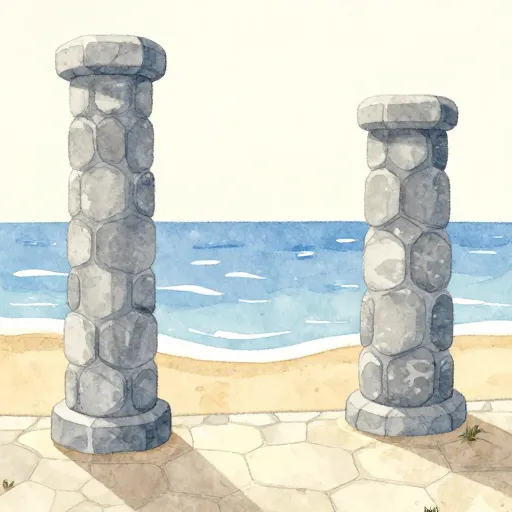
The Giant's Causeway in Northern Ireland is made of 40,000 interlocking basalt columns. Science tells us it was formed by volcanoes, but the legend says Finn MacCool built it as a bridge to Scotland so he could challenge another giant!
Finn's stories are often about protecting the land, but they are also about the cleverness of humans. In one famous story, Finn has to face a Scottish giant named Benandonner. Instead of using his sword, Finn and his wife Oonagh use their wits to trick the giant into thinking Finn is much bigger and stronger than he actually is.
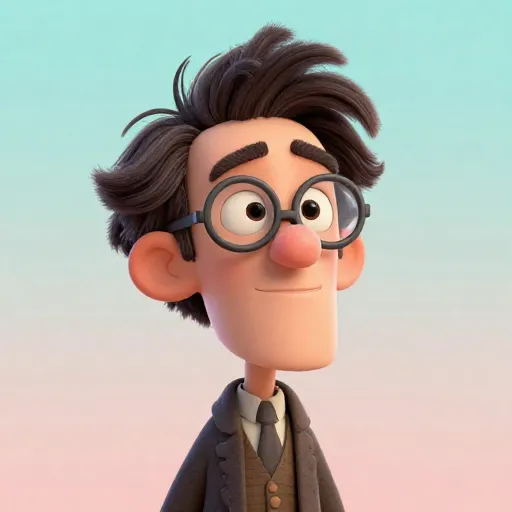
The world is full of magical things, patiently waiting for our senses to grow sharper.
This tells us something important about how the Celts viewed the world. While strength mattered, intelligence and creativity were often more powerful. A hero wasn't just someone who could swing a sword: they were someone who could see through a trick or tell a story that changed how people felt.
The Otherworld and Thin Places
Perhaps the most beautiful idea in Celtic mythology is the concept of the Otherworld. Unlike some religions where the world of the spirits is far away in the sky or deep underground, the Celtic Otherworld was right here. It was just slightly out of reach, separated by a thin veil.
Mira says:
"I felt that 'thinness' once when I was hiking in the fog. It didn't feel scary: it just felt like the world was holding its breath."
There were certain times of the year and certain places where this veil became very thin. These are often called Thin Places. A misty lake at dawn, a dark cave, or a forest where the trees grow in a perfect circle might be a gateway. The festival of Samhain (which eventually became Halloween) was the time of year when the veil was thinnest of all.
The changing of the seasons is a battle between the Queen of Winter and the King of Summer. The mist is a gateway to another world.
The seasons are caused by the Earth's tilt as it orbits the sun. Mist is just water vapor hanging in the air near the ground.
During Samhain, the Celts believed that the spirits of the ancestors and the people of the Sidhe could walk among us. This wasn't necessarily scary for them: it was a time to remember that we are part of a much bigger story that includes people who lived long ago and mysteries we can't fully explain.
Through the Ages
The Journey of Celtic Myths
Over the centuries, the way we look at these stories has changed. When the Romans arrived, they tried to rename the Celtic gods to match their own. Later, when Christian monks began to write down the oral stories, they sometimes changed the gods into kings and queens of old to make them fit into new religious ideas.
But the magic of the stories survived. In the 1800s, there was a huge 'Celtic Revival' where artists and writers like W.B. Yeats started looking back at these myths to find inspiration. They felt that modern life was becoming too loud and mechanical, and they wanted to find the quiet, magical wonder of the ancient woods again.
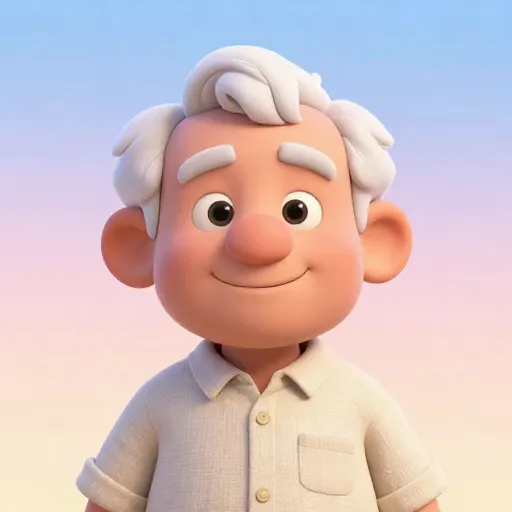
Myths are public dreams: dreams are private myths.
Today, you can see the influence of Celtic mythology everywhere. From the 'elves' in J.R.R. Tolkien’s books to the magic systems in video games, the idea of a hidden, magical world living alongside our own continues to capture our imagination. These myths remind us to look closer at the world around us.
Something to Think About
If you could visit the Otherworld for just one day, what is the one question you would ask the people who live there?
There is no right or wrong answer. Sometimes the most interesting part of a mystery is the questions it makes us ask.
Questions About Religion
Were the Celts real people?
Is Celtic mythology the same as Irish mythology?
Do people still believe in these gods today?
Keep Looking for the Thin Places
Celtic mythology reminds us that the world is much bigger than what we can see with our eyes. Whether you are looking at a strangely shaped stone or a swirling pattern in a stream, there is always a story waiting to be discovered. You don't need a map to find the Otherworld: you just need a little bit of wonder.
