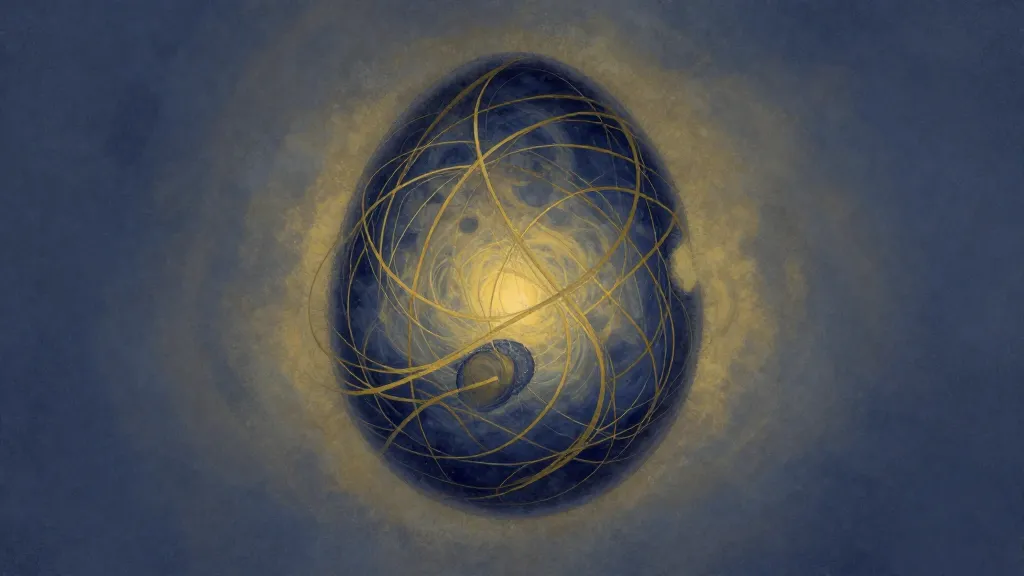
Imagine the entire universe tucked inside the shell of a single, giant egg.
For thousands of years, people living along the great rivers of China used stories called Shenhua to explain how the world works. These tales of gods, dragons, and clever monkeys aren't just entertainment: they are a way of understanding the balance between heaven, earth, and the human heart.
Long ago, in the vast lands we now call China, people looked at the towering mountains and the rushing Yellow River and asked the same questions you might ask today. Where did we come from? Why does the moon change shape? Who is in charge of the rain?
To answer these questions, they built a world of stories that stretched from the highest clouds to the deepest oceans. These stories weren't kept in a single book, but were passed down through songs, paintings, and the whisperings of grandparents.
The Great Hatching
Before there was a sun or a moon, there was only a thick, swirling mist. This mist gathered together into a Cosmic Egg that sat in the darkness for eighteen thousand years. Inside the egg, a giant named Pangu was growing, waiting for the moment he would finally wake up.
When Pangu eventually burst out of the shell, the lighter parts of the egg floated upward to become the sky. The heavier, darker parts sank down to become the earth. This was the first moment of balance between the heavens and the ground beneath our feet.
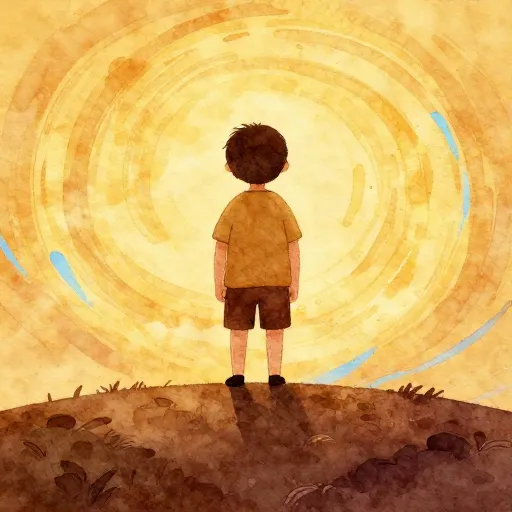
Close your eyes and imagine Pangu standing in the center of the world. As he grows, his head touches the clouds and his feet sink into the mud. The world is a giant construction project, and he is the only worker, slowly pushing the roof of the world away from the floor.
Pangu stood between the two, holding the sky up with his hands while his feet pressed firmly into the earth. Every day he grew taller, and every day the sky moved further away. He stayed like this for another eighteen thousand years until he was sure the sky would never fall back down.
When Pangu finally grew tired and laid down to rest, his body began to transform into the world we know. His breath became the wind, his voice became the thunder, and his left eye became the sun. His right eye became the moon, and his blood flowed out to form the great rivers.
Finn says:
"If Pangu's sweat became the rain and his lice became the animals, I wonder what his daydreams became?"
The Mud and the Stars
Even with the mountains and rivers in place, the world felt a little bit quiet. A goddess named Nuwa, who had the upper body of a woman and the tail of a dragon, walked along the banks of the Yellow River. She loved the beauty of the world, but she felt lonely and wanted someone to talk to.
She knelt by the riverbank and began to shape small figures out of the yellow clay. As soon as she set them on the ground, they came to life, dancing and shouting with joy. These were the first humans, created from the very earth of China itself.
The heart of compassion is the seed of humanity.
Nuwa realized that making every single person by hand would take a very long time. She took a long vine, dipped it into the mud, and flicked it into the air. Each drop of mud that landed on the ground turned into a person, filling the world with life and laughter.
Nuwa didn't just create people: she also saved them. When the pillars holding up the sky broke during a great battle between gods, she melted five colored stones together to patch the hole in the heavens. She is a reminder that the world is fragile, but it can always be mended with care.
Some say Nuwa made humans because she was lonely and wanted the world to have the sound of voices and laughter.
Others believe the world needed humans to be the caretakers of the earth, acting as a bridge between the gods and the animals.
The Celestial Office
If you walked into a busy school or a government building, you would see people with specific jobs to do. Ancient Chinese storytellers imagined that heaven worked in exactly the same way. This system is often called the Celestial Bureaucracy, where every god has a title and a list of responsibilities.
At the very top of this heavenly office sits the Jade Emperor. He isn't a god who created the universe, but rather a wise ruler who earned his position through kindness and study. He keeps track of everything that happens on earth, from the biggest wars to the smallest acts of honesty.
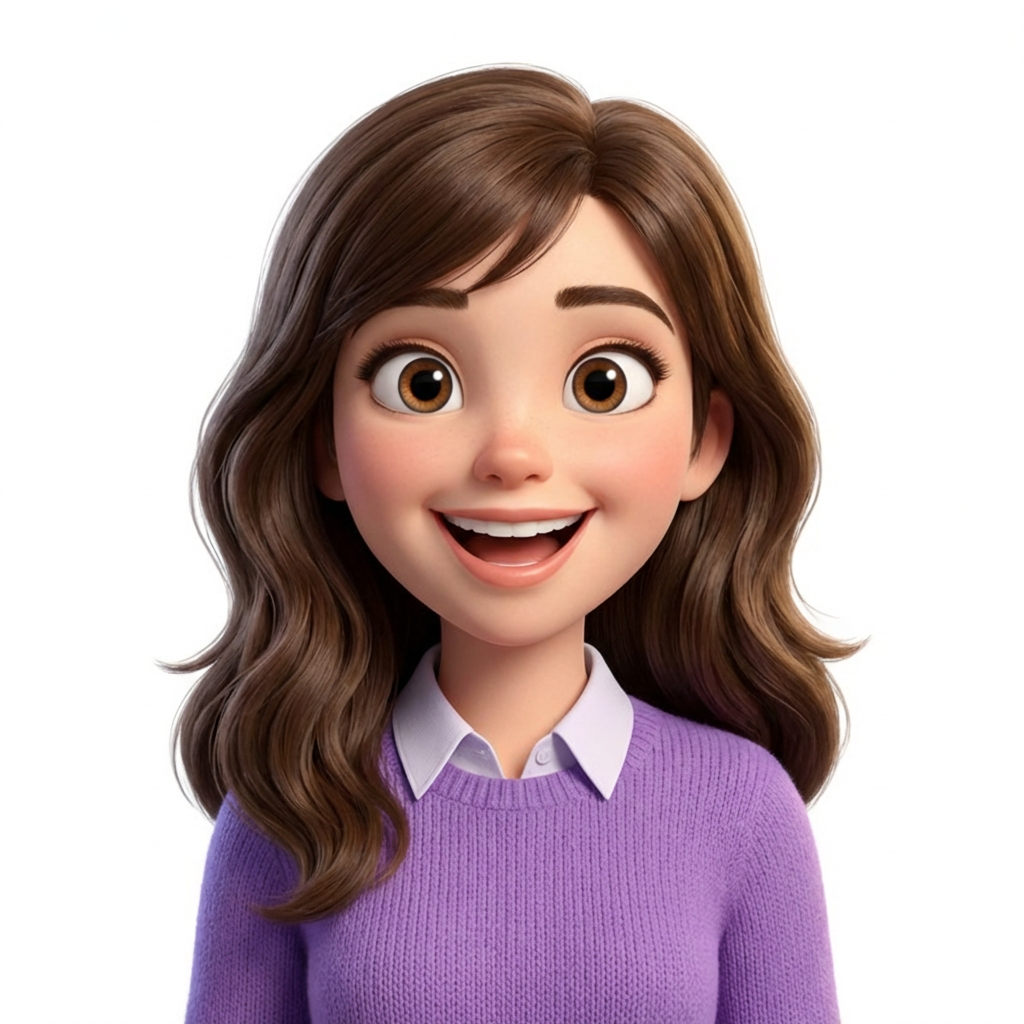
Mira says:
"It is funny to think of heaven as a giant office. I wonder if the Jade Emperor ever gets bored of all the paperwork!"
Below the Jade Emperor are gods for almost everything you can imagine. There is a God of Wealth, a Goddess of the Sea, and even a Kitchen God who lives in your house. The Kitchen God watches how the family behaves all year and then travels to heaven to give a report to the Jade Emperor.
This idea of a heavenly government reflected the way Chinese society was organized for centuries. It suggests that the universe isn't just a chaotic accident. Instead, it is an orderly place where everyone, from a god to a child, has a part to play in keeping things running smoothly.
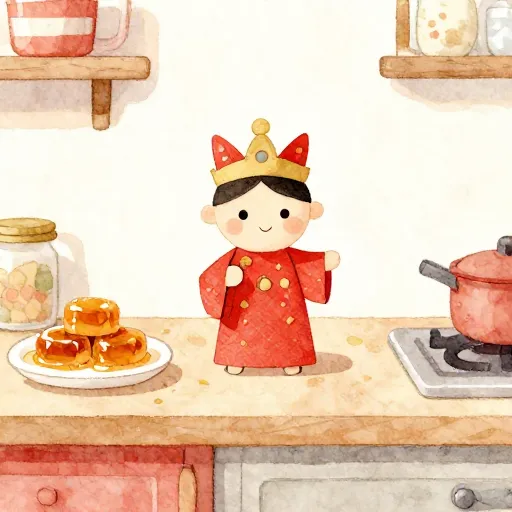
The Kitchen God is said to love sweet things. Every year before he goes to heaven to report on the family, people often smear honey or sticky rice on the lips of his paper statue. The hope is that his words will be sweet, or that his teeth will be too stuck together to say anything bad!
The Great Rebellion
Not every character in Chinese mythology likes to follow the rules of the bureaucracy. The most famous of these rebels is Sun Wukong, better known as the Monkey King. Born from a stone, he learned how to shapeshift, fly on clouds, and fight with a magical staff that could change its size.
Monkey was incredibly clever, but he was also very proud and a bit of a troublemaker. He even tried to take over heaven, telling the Jade Emperor that he should be the one in charge. This led to a famous series of adventures told in the book Journey to the West.
Myth is the secret opening through which the inexhaustible energies of the cosmos pour into human culture.
Eventually, Monkey had to learn that power isn't the same thing as wisdom. He was tasked with protecting a monk on a dangerous journey to find sacred scrolls. Through this journey, he learned about loyalty and how to use his strength for others rather than just for himself.
His story is one of the most beloved in the world because he is so human. He makes mistakes, gets angry, and loves to play tricks, but he also has the potential to become something great. He represents the restless energy that exists inside all of us.
The Monkey King can change into 72 different forms, including a temple, a tree, or even a tiny insect. If you could transform into anything to solve a problem today, what would it be? Draw yourself as that object and think about what special power that form would give you.
Dragons and the Breath of Water
In many Western stories, dragons are scary monsters that live in caves and breathe fire. In Chinese mythology, the dragon is a creature of wonder, wisdom, and water. They don't have wings, yet they move through the air like silk ribbons floating on the wind.
Dragons are the rulers of the oceans, the lakes, and the rain. When you see a heavy storm cloud, a storyteller might tell you that a dragon is stretching its scales. They represent the power of nature: sometimes gentle like a spring rain, and sometimes fierce like a summer flood.
Finn says:
"I like that the dragons are the rain. It makes a thunderstorm feel like a visit from a giant, flying friend instead of just bad weather."
For a long time, the dragon was the symbol of the Chinese Emperor. It was believed that a truly great leader ruled with the Mandate of Heaven, meaning they had the blessing of the gods. If an Emperor was unfair or cruel, the people believed the dragons would withhold the rain as a sign that it was time for a change.
This connection between nature and leadership is a big part of Chinese thought. It teaches that humans are not separate from the world around them. If we want our lives to be balanced, we have to respect the rivers, the mountains, and the creatures that live there.
Through the Ages
Living with the Myths
You might think these stories are just ancient history, but they are still very much alive. Every year, millions of people celebrate the Lunar New Year. They might perform a dragon dance to bring good luck or set off fireworks to scare away a legendary beast called the Nian.
Even the way we think about time in the Chinese Zodiac comes from mythology. Legend says the Jade Emperor held a great race for all the animals. The order in which they finished determined which year would be named after them, which is why we have the Year of the Rat, the Tiger, and the Dragon.
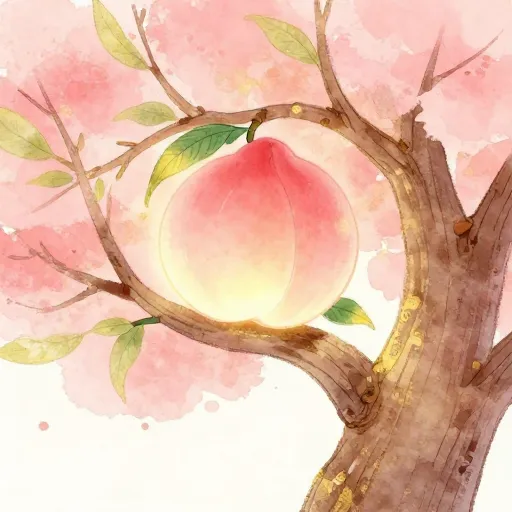
In many Chinese myths, people don't just die: they can become 'immortals.' This often happens by eating a magical Peach of Immortality from the garden of the Queen Mother of the West. These peaches only ripen once every three thousand years, making them the rarest snack in the universe.
Chinese mythology doesn't ask you to believe in magic as a series of facts. Instead, it invites you to see the world as a place filled with hidden connections. It uses the idea of Yin and Yang to show that opposites like light and dark, or noise and silence, need each other to exist.
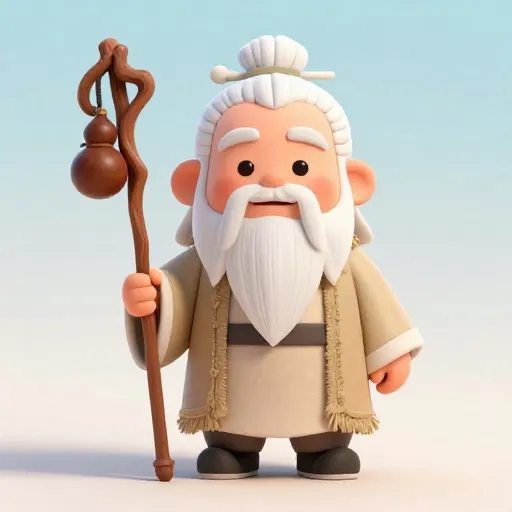
The Tao that can be told is not the eternal Tao.
When we read about Pangu’s sacrifice or the Monkey King’s journey, we are looking into a mirror. These stories help us think about who we want to be and how we fit into the giant, swirling egg of the universe. They remind us that while the world is big, our curiosity is even bigger.
Something to Think About
If you were asked to write a report to the Jade Emperor about how the world is doing today, what would you say?
There are no wrong answers here. You might talk about the beautiful things you have seen, the things that need fixing, or the questions you still have about how everything fits together.
Questions About Religion
Is Chinese mythology a religion?
Why are Chinese dragons different from European dragons?
Did the Monkey King really exist?
The Never-Ending Story
Chinese mythology reminds us that the world is more than just what we can see. It is a place of constant change, where giants become mountains and monkeys can challenge the heavens. As you look at the stars tonight, remember Pangu's eyes and wonder what other stories are waiting to be told.
