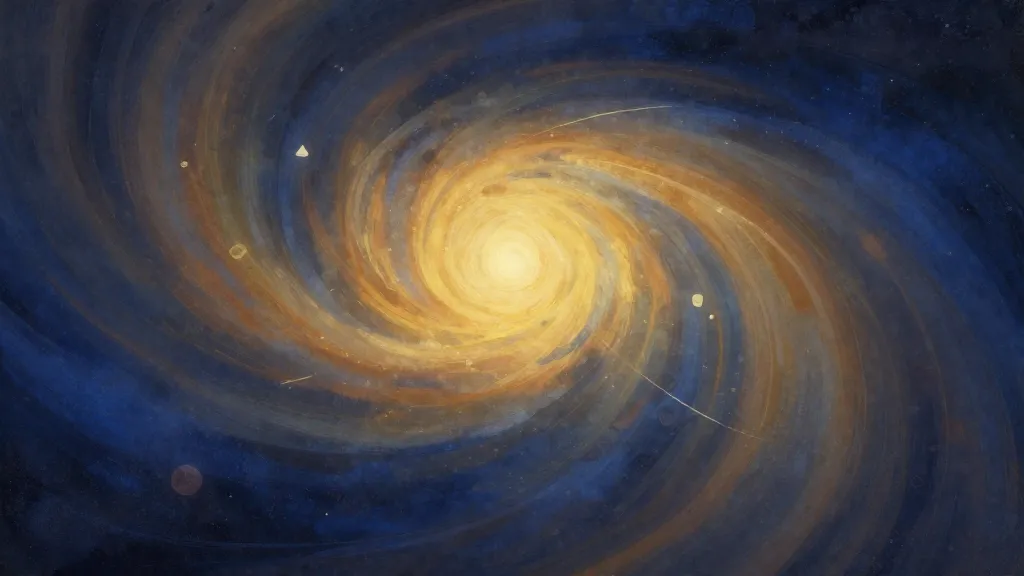
If you could travel back in time to the very first second of the universe, what do you think you would see?
For thousands of years, humans have looked at the stars and asked the same big question: How did all of this get here? This search for answers led to the birth of creation myths, or cosmogonies, which are stories that explain how the world, the sky, and even people first began.
Imagine standing on the edge of a great, dark ocean before the sun had ever risen. There are no trees, no birds, and no sounds except for the movement of water.
This is how many ancient people imagined the start of everything. They did not have telescopes or satellites, so they used the most powerful tool they had: their imagination.
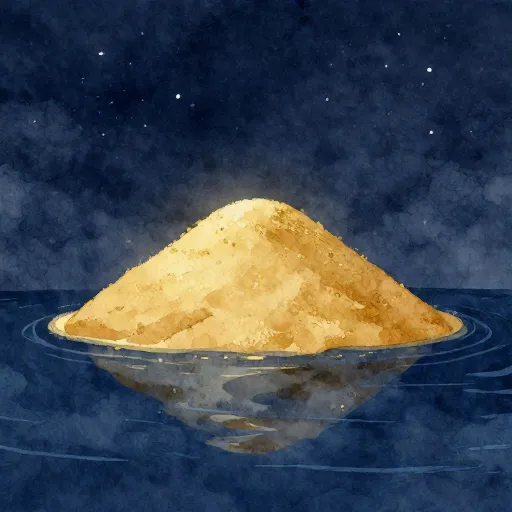
Imagine you are standing in Ancient Egypt beside the Nile River. The sun is setting, and the desert air is turning cool. You look at the dark water and imagine it stretching on forever, with no end and no beginning, until suddenly, a single point of light appears on a mound of sand.
In Ancient Egypt, people believed that in the beginning, there was only a watery void called Nun. Out of these swirling, dark waters, a golden hill rose up, and on that hill stood the first god, Atum.
Atum was lonely in the silence, so he created the air and the moisture, who then created the earth and the sky. To the Egyptians, the world was a living thing born out of the stillness of the deep.
Finn says:
"If the whole world came out of a watery void, does that mean the ocean is like a giant leftover soup from the beginning of time?"
The Great Egg and the Giant
Halfway across the world, in ancient China, the story felt very different. Instead of a dark ocean, people imagined a giant, cosmic egg.
Inside this egg, the forces of chaos were all mixed together. For 18,000 years, a giant named Pangu slept inside that egg, growing larger and stronger every single day.
When Pangu finally woke up, he cracked the egg open with a mighty swing of his axe. The light, clear parts of the egg rose up to become the sky, while the heavy, dark parts sank down to become the earth.
Mythology is not a lie, mythology is poetry, it is metaphorical.
Pangu spent the next 18,000 years holding the sky and earth apart so they would never mix again. When he finally grew tired and passed away, his body transformed into the world we know today.
His breath became the wind, his voice became the thunder, and his eyes became the sun and the moon. This story taught people that they were literally part of the world around them.
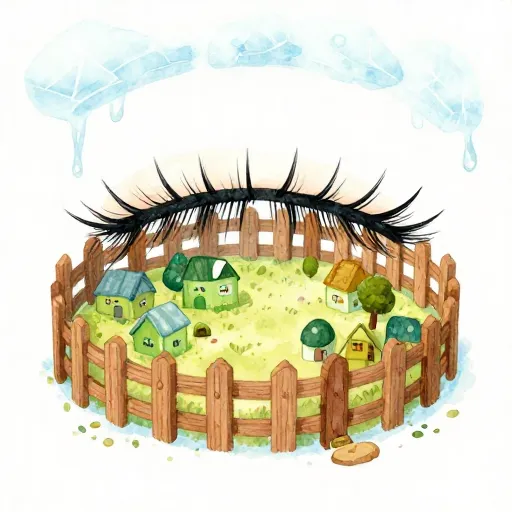
In Norse mythology, the world was created from the body of a frost giant named Ymir. His skull became the sky, his blood became the ocean, and his eyelashes were used to build a fence around the part of the world where humans live!
Diving for Earth
Some cultures imagine the world was built by animals rather than giants or gods. These are often called "Earth-Diver" stories, and they are common among many Indigenous nations in North America.
In these stories, the world starts as a vast ocean where animals swim, but there is no dry land to rest on. The animals decide they need to find mud at the bottom of the deep sea.
Many big, strong animals try to dive down but fail because the water is too deep. Finally, a small animal, like a muskrat or a turtle, tries.
Mira says:
"I like that a small turtle could carry the whole world. It makes me think that every person is like a tiny island carrying their own stories."
It stays under for a long time, and everyone thinks it is lost. But then, it floats to the surface with a tiny bit of mud in its paw or on its shell.
That tiny bit of mud grows and grows until it becomes the entire continent. These stories remind us that even the smallest creature can change the whole world if they are brave enough.
Many people believe that science gives us the only 'real' answer to how the world began through data and physics.
Others believe that creation stories provide a different kind of 'truth' by helping us understand our purpose and values.
Patterns in the Mystery
When we look at these stories together, we start to see archetypes, which are patterns or symbols that show up over and over again.
Water is a very common archetype because it represents a mystery that we cannot see through. Eggs are another common symbol because they hold the potential for life inside a shell.
The myth is a true history of what came to pass at the beginning of Time.
Historians and philosophers call these stories oral traditions because they were spoken out loud for centuries before they were ever written down.
Parents would tell them to children around a fire, and those children would tell them to their own children later on. Each time the story was told, it helped the community feel like they belonged to a specific place and time.
Through the Ages
The Power of the Void
In many stories, the world begins with "Ex Nihilo," which is Latin for "out of nothing." This is the idea that the universe didn't come from an egg or a giant, but from a thought or a word.
In the Hebrew Bible, the story begins with a dark, formless world where a voice says, "Let there be light." In the Mayan Popol Vuh, the creators sat in the darkness and thought the world into existence together.
Close your eyes and imagine you are in a room where nothing exists yet. There is no floor, no light, and no sound. What is the very first thing you would create to make this space feel like home? A sound? A color? A single blade of grass?
This kind of story focuses on the power of the mind and the importance of planning. It suggests that the world isn't an accident, but a deliberate choice made by powerful deities.
Whether it is a word or a seed, these stories share a common feeling: that the universe is full of purpose. Even when things feel messy, these myths suggest there is an underlying order.
Finn says:
"What if the universe is still being created right now, and we just haven't noticed because it's happening so slowly?"
Modern Wonders
Today, we have science to help us understand the beginning of the universe. We talk about the Big Bang and the expansion of space over billions of years.
Does this mean the old stories are no longer important? Most philosophers would say no. Science tells us how things happened, but stories tell us how those things feel.
The cosmos is within us. We are made of star-stuff.
Ancient stories use symbolism to talk about things that are hard to put into numbers. They help us explore our relationship with nature, with each other, and with the unknown.
When you look at a photo of a galaxy from a space telescope, you might feel the same sense of wonder that an ancient Egyptian felt looking at the Nile. We are all still trying to solve the same beautiful puzzle.
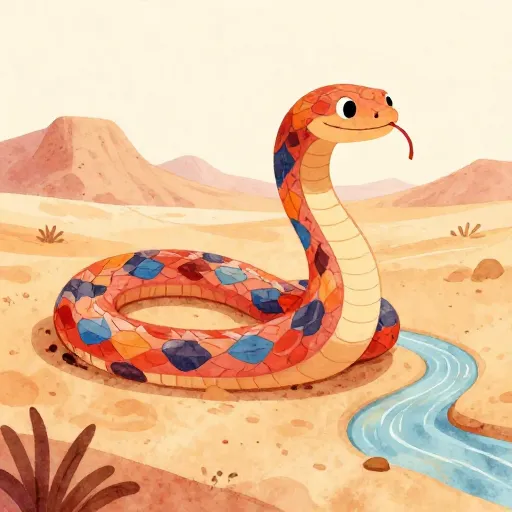
The Australian Aboriginal people speak of 'The Dreaming' or 'Dreamtime.' It is a time that is both in the past and in the present, where great spirits like the Rainbow Serpent traveled across the land, carving out rivers and mountains as they moved.
Something to Think About
If you had to tell a story about how the world began using only things you can see in your own backyard, what would that story be?
There are no right or wrong answers here. Your story could involve a magical acorn, a very old rock, or even the wind blowing through the laundry on the line.
Questions About Religion
Are creation stories true?
Why do so many stories involve water?
Why are there so many different versions?
The Never-Ending Story
Creation myths remind us that humans have always been curious. Whether we imagine giants, eggs, or tiny muskrats, we are all trying to make sense of the same beautiful mystery. The next time you look at the moon or a mountain, remember that you are part of a story that has been being told for thousands of years.