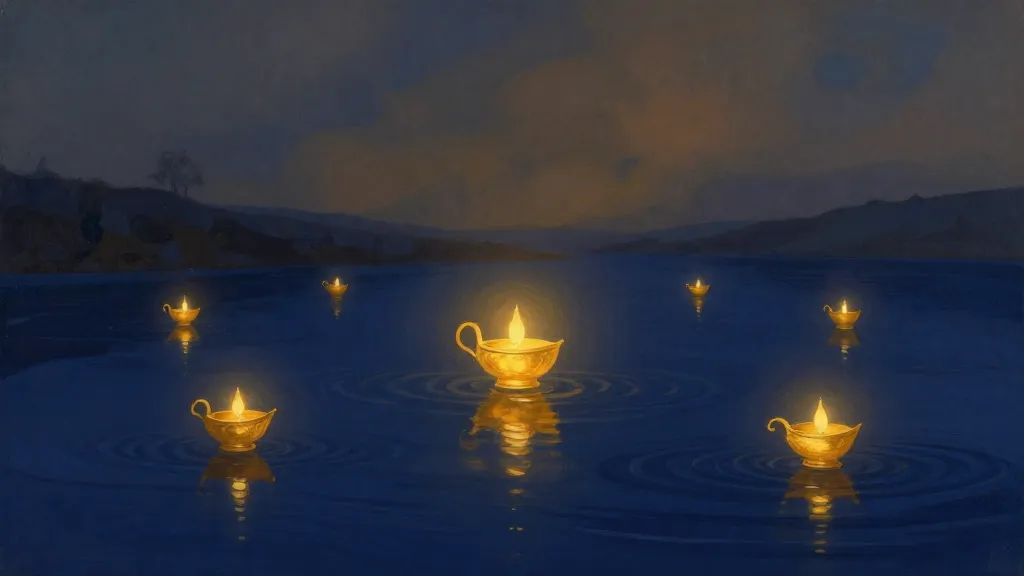
Have you ever noticed how a single candle can make a dark room feel safe?
This is the core mystery of Diwali, a festival celebrated by over a billion people. It is a time when people use light to tell a story about goodness, knowledge, and the courage to start again.
Imagine a night where the moon has disappeared completely. In the ancient calendar used in India, this darkest night of the month is when the celebration begins. This festival is known as Diwali, or Deepavali, which literally means a row of lights.
For thousands of years, people across South Asia have used this time to mark the end of the harvest. It was a moment to pause, look at the storehouses full of grain, and say thank you. But as time passed, the festival grew into something much deeper than just a harvest party.
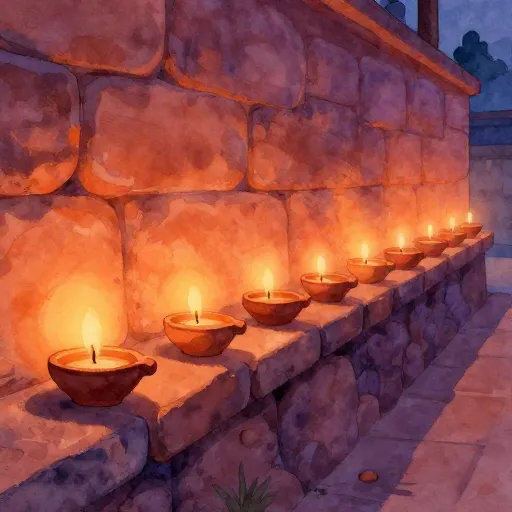
The word Diwali comes from the Sanskrit word 'Deepavali.' 'Deepa' means light or lamp, and 'avali' means row. So, when you celebrate Diwali, you are literally making a 'row of lights' to push back the dark.
The Hero’s Journey Home
Many people celebrate Diwali to remember a very old story called the Ramayana. It tells of a prince named Rama who was sent away from his kingdom for fourteen long years. He had to face many challenges, including a battle against a powerful demon king with ten heads.
When Rama finally won and returned to his home city of Ayodhya, the night was pitch black. The people of the city wanted to guide him home safely through the darkness. They didn't have flashlights or streetlamps, so they used what they had: small clay lamps.

Mira says:
"It's like how we use lanterns when we go camping. The dark isn't as scary when you have a circle of light that moves with you. I wonder if Rama felt that circle of light as he walked home?"
These lamps are called Diyas, and they are the heartbeat of the festival. By lining their windows and doorsteps with these tiny flames, the citizens of Ayodhya turned the dark night into a glowing path. They were showing that even after a long struggle, goodness can find its way back home.
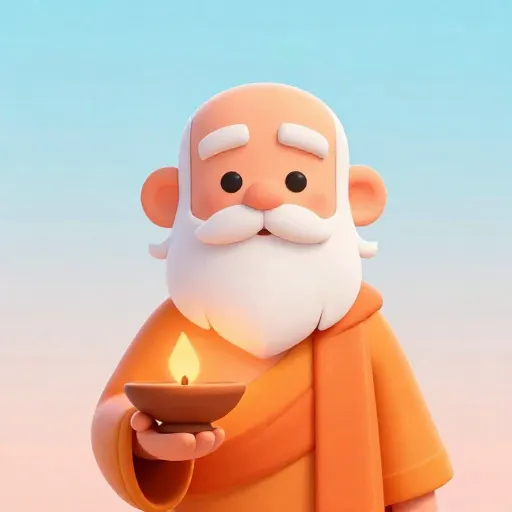
Lead me from the unreal to the real. Lead me from darkness to light. Lead me from death to immortality.
More Than One Story
One of the most interesting things about Diwali is that it doesn't belong to just one group of people. If you ask ten different families why they are lighting lamps, you might get three or four different answers. For Hindus, it might be about Rama's return or the goddess of wealth, Lakshmi.
The light represents the physical return of a hero (Rama) to his kingdom after a long, dark exile. It is about a journey through the world.
The light represents the 'Atman' or the soul. It is an inner journey toward wisdom and understanding. It is about the light inside yourself.
For Jains, Diwali marks the moment a great teacher named Mahavira reached a state of perfect peace called Nirvana. They believe his soul became a light that would never go out. It is a day to celebrate the light of knowledge over the darkness of not knowing.
Sikhs celebrate a special event called Bandi Chhor Divas during this time. It honors Guru Hargobind, who was a prisoner in a great fort but refused to leave unless 52 other kings were freed with him. To Sikhs, the lights represent the freedom of the human spirit and the importance of standing up for others.

Finn says:
"Wait, so the same festival can be about a prince, a teacher, and a prisoner all at once? That’s cool. It’s like they all found different ways to be brave, but they used the same symbol to talk about it."
The Guest of Honor
During the festival, many families invite a special guest into their homes: the goddess Lakshmi. She represents prosperity, which isn't just about having a lot of money. It is about having enough of everything: food, health, friends, and even happy thoughts.
People clean their houses from top to bottom to get ready for her arrival. They believe that Lakshmi loves order and beauty, so they decorate their floors with Rangoli. These are colorful patterns made from sand, flower petals, or rice flour, usually placed right at the entrance of the house.
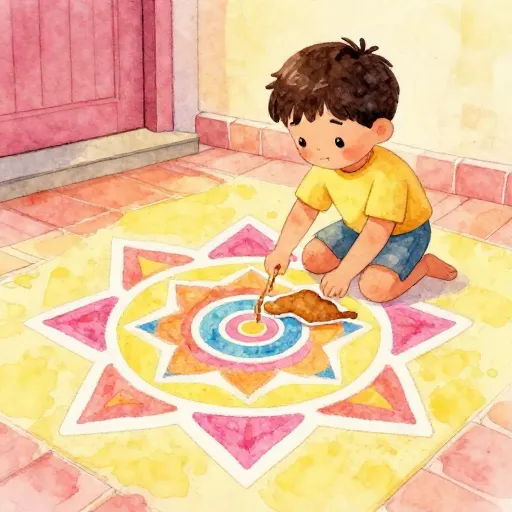
Imagine standing at a front door. On the ground is a giant, intricate circle of bright pink, yellow, and green powder. It looks like a kaleidoscope frozen in time. This is Rangoli. It is meant to be walked around, not on, and it only lasts for a few days before the wind or footsteps wash it away. Does its temporary nature make it more beautiful?
Think of a Rangoli as a colorful "welcome mat" for the universe. It is a way of saying that this home is a place of peace and beauty. By creating something beautiful on the ground, people are practicing a form of Puja, which means showing respect or devotion to the divine.
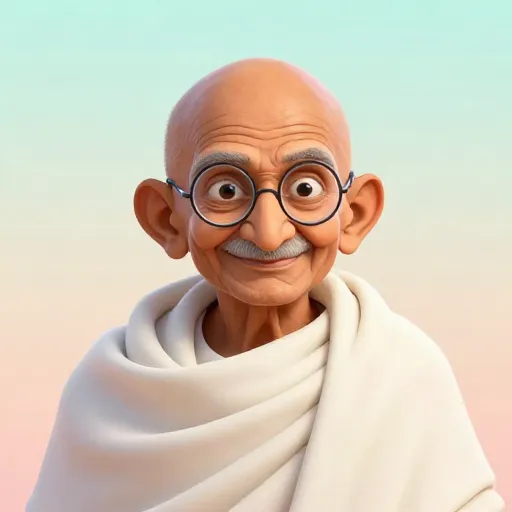
The message of the Diwali is that the light of truth always triumphs over the darkness of ignorance.
The Light Inside
While the fireworks and lamps are beautiful to look at, the "Big Idea" behind Diwali is actually hidden. Philosophers in India have talked for centuries about a concept called the Atman. This is the idea that every single person has a spark of light inside them that can never be put out.
Sometimes we feel "dark" inside, perhaps when we are sad, angry, or confused. We might feel like we aren't good enough or that things will never get better. Diwali reminds us that these feelings are like clouds passing over the sun: the light is still there, even if we can't see it right now.
Find a dark room and light a single small candle (with an adult's help!). Watch the flame. Notice how even though the room is large and the flame is tiny, your eyes are pulled toward the light. Think of one 'bright' thing you can do for someone else tomorrow. Does that feel like lighting a candle?
In many traditions, the goal of life is to wake up to that inner light. This is why people share Mithai, or traditional sweets, during the festival. It is a physical way to share the sweetness and joy that comes from realizing that we are all connected by that same inner spark.
Mira says:
"If everyone has an 'inner light,' then being kind to someone is like helping their light glow a bit brighter. Maybe that's why people give so many gifts during Diwali."
Through the Ages
How did a local harvest festival become a global celebration? It happened slowly, traveling along trade routes and in the hearts of people moving to new lands. Each generation added its own layer to the festival, making it richer and more complex.
Through the Ages
Today, you can see Diwali lights in London, New York, Sydney, and Singapore. The tools have changed: some people use electric fairy lights instead of oil lamps. But the reason for the light remains exactly the same as it was thousands of years ago in ancient India.
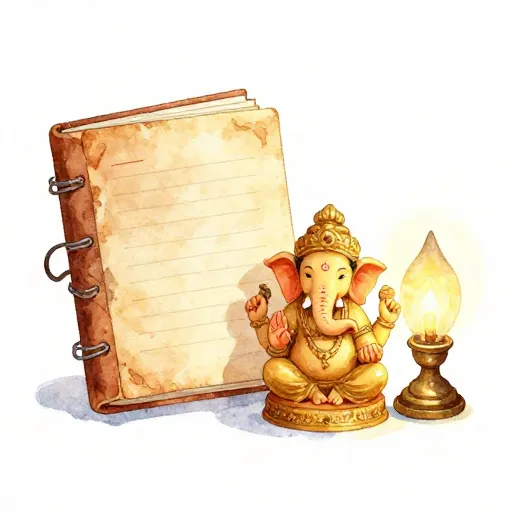
In some parts of the world, Diwali is also the start of a new financial year for business owners. They open new account books and pray for success. It’s a time to 'clear the decks' and start fresh, both in your heart and in your work.
The Balance of Shadows
It is tempting to think that the goal of Diwali is to get rid of the dark entirely. But if you look closely at a diya, you will see that the flame actually creates a shadow. You cannot have one without the other, and perhaps that is part of the beauty.

The stars are not afraid of appearing like fireflies.
Shadows help us see where the light is coming from. In our own lives, the difficult times (the shadows) help us appreciate the happy times (the light). Diwali isn't about pretending that darkness doesn't exist, but about choosing where we focus our attention.
When we light a lamp, we are making a choice. We are saying that even though the night is huge and the flame is small, the flame is what matters most. It is a quiet, confident way of being brave in a world that can sometimes feel very big and very dark.
Something to Think About
If you were to light a lamp for something you hope will 'come home' or get better this year, what would it be?
There are no right or wrong answers here. Sometimes we light lamps for big things, like world peace, and sometimes for small things, like finally understanding a tricky math problem. Both are important.
Questions About Religion
Why does the date of Diwali change every year?
Is Diwali only for Hindus?
What is the most important food during Diwali?
Keeping the Flame Lit
Diwali eventually ends. The diyas burn out, the Rangoli is swept away, and the sweets are all eaten. But the idea is that the festival gives you enough 'inner light' to last until next year. It’s a reminder that no matter how dark the world might seem, we all have the power to strike a match and start a new story.