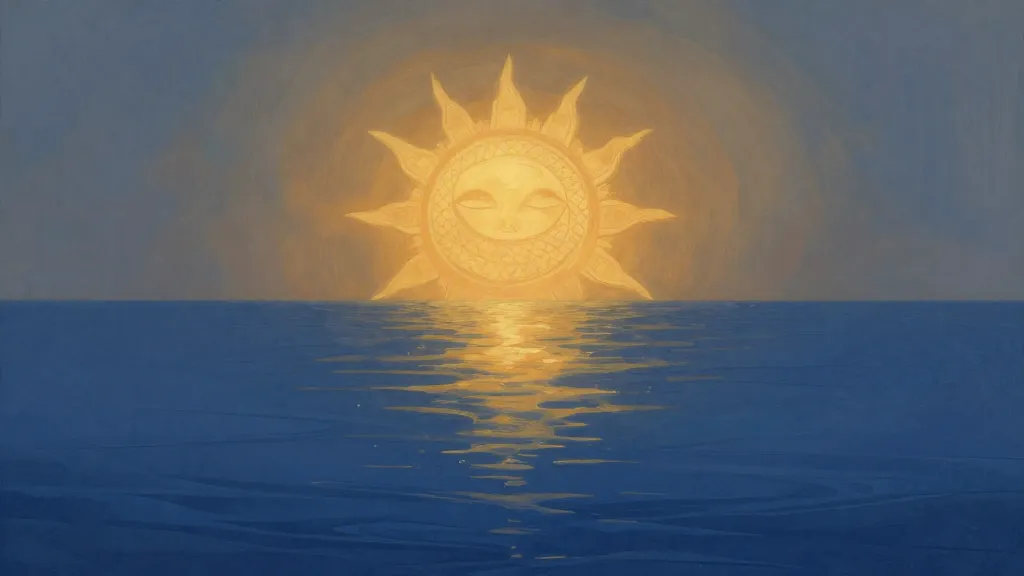
What if the sun wasn't just a ball of fire, but a king on a journey?
For the people of Ancient Egypt, the world was alive with invisible forces. They didn't just see a river or a sky: they saw a grand story of balance called Polytheism, where every part of nature had its own voice and character.
Imagine you are standing on the banks of the Nile River three thousand years ago. The air is hot and smells like damp earth and blooming lotus flowers. To your left, the desert sands are glowing red: the 'Red Land' where nothing grows. To your right, the soil is black and rich: the 'Black Land' where the water brings life. This contrast between life and death, wet and dry, was the stage for the most complex family of gods the world has ever known.
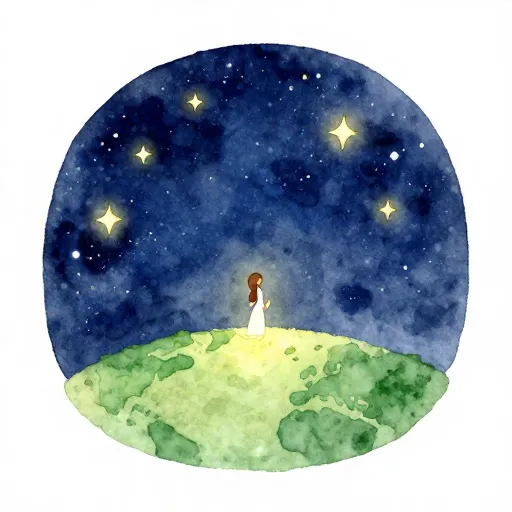
Imagine the sky is a giant woman named Nut, her body arched over the earth. Her hands touch one horizon and her feet touch the other. Her skin is covered in stars, and every evening she swallows the sun, only to give birth to it again the next morning. In this world, everything you see is part of a giant, living body.
To the Egyptians, the gods were not distant kings living in a faraway cloud. They were the 'netjeru', a word that roughly means 'divine powers'. A god was the force that made a seed sprout, the anger in a desert storm, or the cleverness in a writer's hand. They didn't just 'rule' the world: they were the world.
The Great Balance: Ma’at
Before we meet the famous gods like Ra or Isis, we have to understand the most important idea in the Egyptian mind: Ma'at. This wasn't a person you could easily talk to, but a concept of truth, balance, and order. If the sun rose every morning and the river flooded every year, it was because Ma'at was working.

Mira says:
"Ma'at sounds like the ultimate 'fairness' rule. It is like the universe has a heartbeat, and everyone has to stay in sync with it."
Think of your own life. When your room is tidy, your homework is done, and you feel kind toward your friends, you are in a state of balance. The Egyptians believed the whole universe needed to feel that way. When the gods fought or when the Nile didn't flood, they believed Ma'at had been broken, and it was their job to help fix it.
The gods are many, but they are also one. They are the diverse faces of a single mystery.
- Ma'at was often shown as a goddess with a single ostrich feather on her head.
- This feather was the ultimate test: your heart had to be as light as that feather to enter the afterlife.
- Without Ma'at, the Egyptians believed the world would simply dissolve back into the chaotic, dark waters of the beginning.
The Sun King and the Changing Sky
The most famous of all the gods was Ra, the sun god. But Ra was more than just a light in the sky. He was a symbol of the cycle of life. Every morning he was born in the east, and every night he 'died' in the west, traveling through a scary underworld to be reborn again.
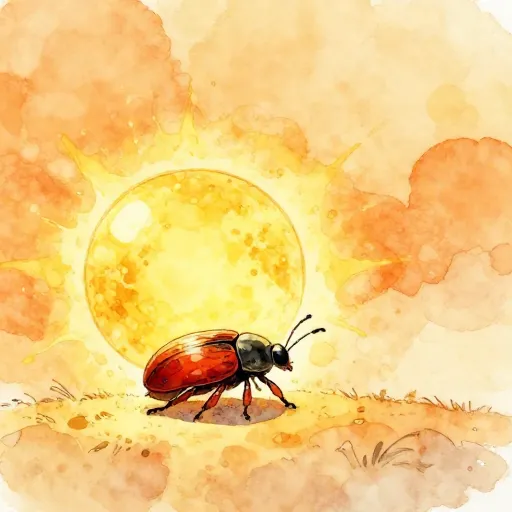
The sun had three different names depending on the time of day! In the morning, it was Khepri (the dung beetle), rolling the sun across the horizon. At noon, it was Ra (the hawk) at full power. In the evening, it was Atum (the old man), tired from a long day's work.
Ra shows us something very cool about how the Egyptians thought. They used Anthropomorphism, which is a fancy word for giving human or animal traits to things that aren't human. Ra could have the head of a hawk, representing how the sun soars high above us, but he could also merge with other gods.
When he merged with the king of the gods, Amun, he became Amun-Ra. This is called Syncretism. It is like how you might be 'The Student' at school, but 'The Gamer' at home, and 'The Big Brother' in your family. You are the same person, but you have different names and 'powers' depending on where you are.
Why Do They Have Animal Heads?
If you look at ancient Papyrus scrolls or temple walls, you will see gods with the heads of crocodiles, cats, ibises, and jackals. This wasn't because the Egyptians thought the gods actually looked like that. Instead, it was a type of shorthand or a secret code.
Finn says:
"What if having an animal head meant you could see the world through their eyes? Imagine seeing like a hawk during the day and a cat at night!"
- Anubis had the head of a jackal because jackals were always seen hanging around cemeteries: he became the guardian of the dead.
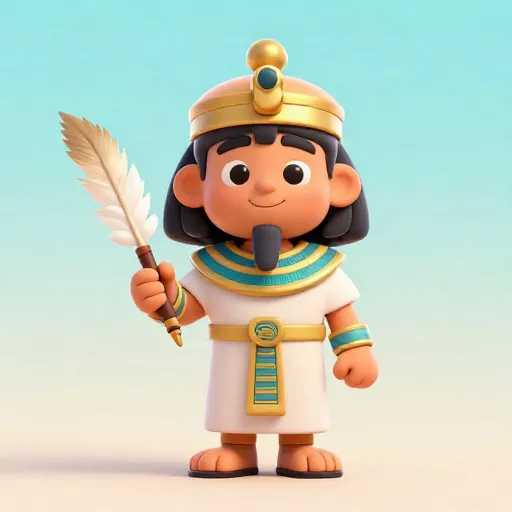
- Thoth had the head of an ibis (a bird with a long beak) because the beak looked like a pen: he was the god of writing and wisdom.
- Sekhmet had the head of a lioness because she represented the fierce, burning heat of the sun.
The gods were literal beings who lived in temples, ate the spirits of food offerings, and got angry if you forgot them.
The gods were metaphors, like a language used to describe things that are hard to explain, like why we feel love or why the wind blows.
The Story of Osiris and the First Mummy
One of the most important stories involves Osiris, the god of the earth, and his sister-wife Isis. Legend says Osiris was a great king who was tricked and murdered by his jealous brother, Set. Set was the god of storms and chaos, the 'wild' parts of the world that don't follow rules.
Hail to thee, O Nile! Who manifestest thyself over this land, and comest to give life to Egypt!
Isis used her powerful magic to find the pieces of Osiris and bring him back to life just long enough to have a son, Horus. This story explains why the Egyptians began the practice of Mummification. They wanted to preserve their bodies just like Osiris, so they could live forever in the 'Fields of Reeds', a perfect version of Egypt that existed after death.
Living with the Gods
For a child in Ancient Egypt, the gods were part of daily chores. You might wear an amulet of Bes, a dwarf god who protected children and scared away nightmares. You might watch your mother leave a small bowl of milk for a house cobra, representing the goddess Renenutet, who protected the grain from mice.
Take a piece of paper and draw two columns. In one, write down all the things that make your life feel 'balanced' (like kindness, sleep, and honesty). In the other, write down the 'chaos' (like being late, messy rooms, or fighting). This is your own personal map of Ma'at and Set!
- The Pharaoh was seen as a bridge between the people and the gods.
- People wrote letters to the dead, asking for help from their ancestors.
- Hieroglyphs, the Egyptian writing system, were called 'the words of the gods'.
Mira says:
"It is interesting that their 'chaos' god, Set, wasn't just evil. He was necessary. You can't have a calm river without knowing what a storm feels like."
A Changing World
Religion in Egypt didn't stay the same for 3,000 years. As new people moved into the land and new kings took the throne, the gods changed too. When the Greeks conquered Egypt under Alexander the Great, they didn't get rid of the Egyptian gods. Instead, they mixed them with their own!
Through the Ages: The Journey of the Gods
Today, we don't build temples to Ra or Osiris in the same way, but their ideas are still with us. We still wonder about what happens after we die. We still feel the 'magic' of a beautiful sunset. We still try to find Ma'at: that perfect balance between being ourselves and helping the world stay in order.
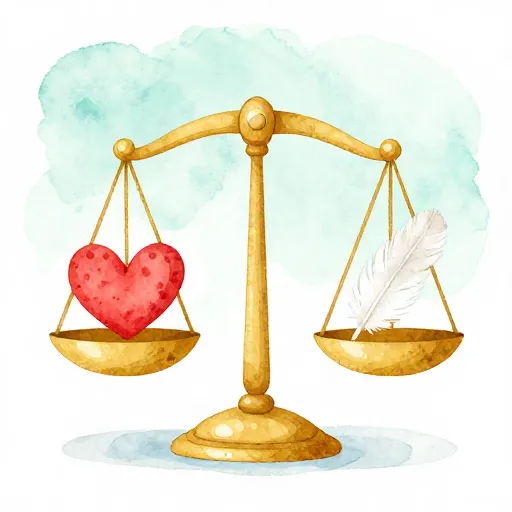
The Egyptians were the first people to think that your 'conscience' or your 'heart' was what mattered most. When you died, they believed the god Anubis would weigh your heart against a feather. If you were a mean person, your heart would be heavy and a monster named Ammit (part crocodile, part lion, part hippo) would eat it!
The ancient Egyptians were not obsessed with death: they were obsessed with life, and making it last forever.
Something to Think About
If you had to design a 'Netjer' or a divine power for something in our modern world, what would it look like?
Think about the forces that shape your life today: maybe the Internet, the power of music, or the way cities grow. There is no right or wrong answer: just an opportunity to see the world as a place full of hidden energy.
Questions About Religion
Did the Egyptians actually think their gods had animal heads?
Who was the most powerful Egyptian god?
How many Egyptian gods were there?
The Stars Above and the Heart Within
The Egyptian gods remind us that the world is more than just objects and facts. It is a place of deep rhythms and constant change. Whether we see the sun as a ball of gas or a king in a golden boat, the sense of wonder we feel when we look at the sky is exactly what the people of the Nile felt thousands of years ago. Keep looking for the balance in your own world.