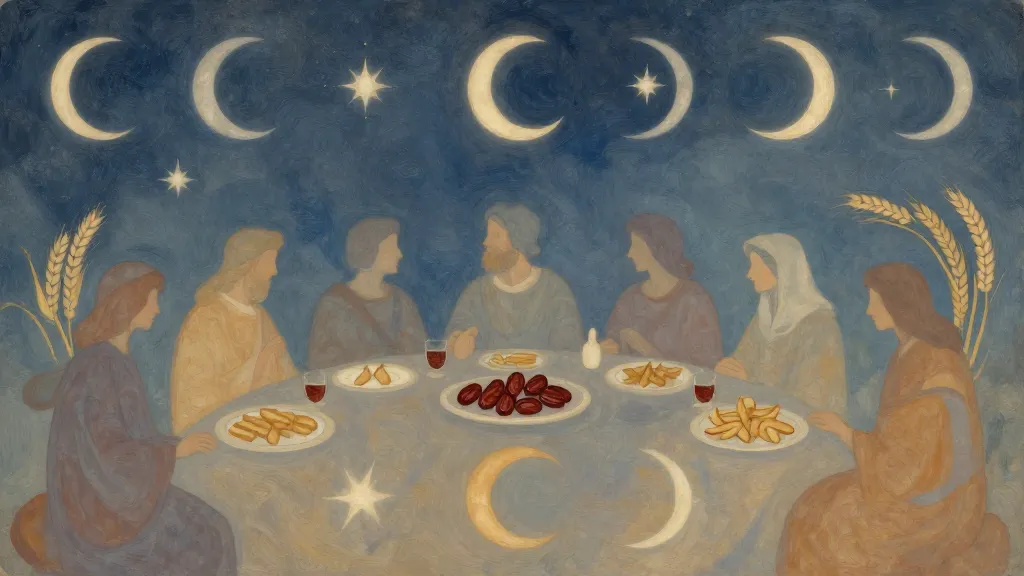
Have you ever waited for a secret to be revealed by the night sky?
For billions of people, the sight of a tiny silver sliver of the moon signals the start of Eid, a time of profound joy and community. This celebration is more than just a party: it is a deep reflection on gratitude, the history of faith, and the importance of looking after one another.
Imagine standing on a flat rooftop in a bustling city like Cairo or a quiet village in Indonesia. The sun has just dipped below the horizon, leaving behind a smudge of orange and violet.
You are not looking at the sunset, but just above it, searching for the Hilal. This is the thin, fingernail-shaped crescent of the new moon that tells the world a new month has begun.
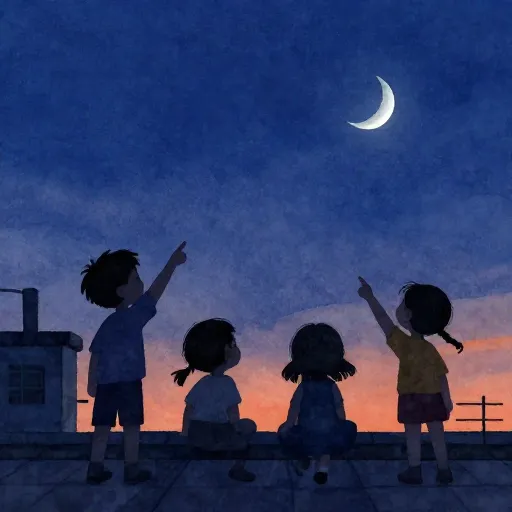
Imagine a world before electric lights and phone apps. Families would climb to the highest hills or minarets, squinting into the twilight. The first person to see the moon would shout for joy, and soon, fires would be lit on hilltops to pass the news from one village to the next like a relay race of light.
When that silver sliver is finally spotted, a wave of excitement ripples across the globe. Phone calls are made, messages are sent, and kitchens begin to hum with the smell of spices and sweets.
This marks the beginning of Eid al-Fitr, one of the two major festivals in the Islamic tradition. While it feels like a holiday, it is also a bridge between the past and the present, connecting people to a story that began over a thousand years ago.

Mira says:
"It's interesting how a whole global event waits for one tiny moon. It makes the sky feel like a giant clock that belongs to everyone at once."
The First Eid: A Story of Medina
To understand where Eid comes from, we have to travel back to the year 624 CE. The Prophet Muhammad and his followers had recently moved to the city of Medina, a place of palm groves and desert heat.
Before they arrived, the people of Medina had two specific days of the year where they held carnivals and played games. Muhammad suggested that these two days be replaced with something that had a deeper meaning: two days of gratitude and prayer.
God has given you two days better than those: the Day of Fitr and the Day of Adha.
These became the two Eids we know today. The first was the celebration after the long month of fasting during Ramadan, and the second was a time to remember the story of the Prophet Ibrahim and his family.
From that moment in the 7th century, the idea of Eid began to travel. It moved along silk roads with merchants and across oceans with sailors, changing its flavors and colors as it went.
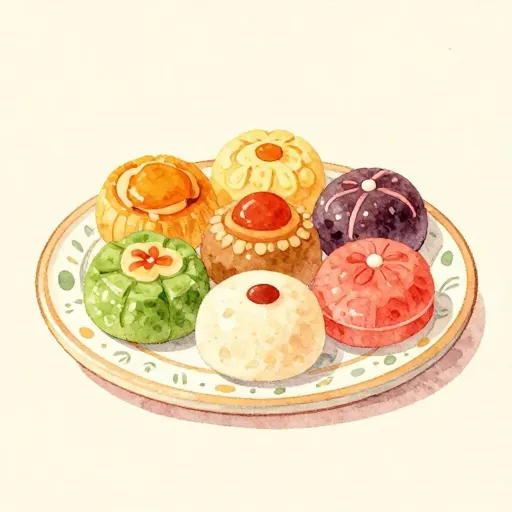
In many countries, Eid al-Fitr has sweet nicknames. In Turkey, it is called 'Seker Bayrami' (the Sugar Feast), and in Indonesia, it is 'Lebaran.' Each place has its own special treat, from date-filled cookies called Ma'amoul in the Middle East to spicy layered cakes in Southeast Asia.
The Reward: Eid al-Fitr
The name Eid al-Fitr translates roughly to the "Festival of Breaking the Fast." It happens right after Ramadan, a month where adults spend their daylight hours practicing Sabr, which means patience or endurance.
After thirty days of thinking about others and practicing self-control, Eid arrives like a long-awaited exhale. It is a time when the world feels fresh again, and the simple act of eating breakfast in the morning feels like a miracle.

Finn says:
"Wait, if people don't eat for a whole month, does the first bite of a date on Eid morning taste like the best thing in the whole world?"
One of the most important parts of this day happens before anyone even sits down to eat. Every family is expected to give a specific gift of food or money called Zakat al-Fitr.
This isn't just a nice thing to do: it is a rule of the festival. The idea is that no one should be hungry on Eid, and no one should be left out of the celebration because they are poor.
Fasting is a time for the 'inner self.' It is about quiet reflection, resisting cravings, and feeling what it is like to be hungry so you can empathize with the poor.
Feasting is a time for the 'outer self.' It is about community, loud laughter, sharing abundance, and showing that life is meant to be enjoyed together.
The Sacrifice: Eid al-Adha
About two months after the first Eid, a second celebration arrives called Eid al-Adha, the "Festival of Sacrifice." This one is often considered the "Greater Eid" because it connects to the history of three major world religions.
It honors the story of Ibrahim (Abraham) and his willingness to follow a difficult command from God. In the story, at the very last moment, a ram is provided so that Ibrahim does not have to sacrifice his son.
Let the beauty of what you love be what you do.
This story is about more than just a historical event: it is about trust and the idea that we must be willing to give up something we value to help others. Today, families who can afford it share meat with those who cannot.
It is common to divide the festive meal into three parts: one third for the family, one third for friends and relatives, and one third for people in the community who are in need. This ensures the "we" is always bigger than the "me."
Even if you aren't celebrating Eid, you can try the 'Thirds Rule.' The next time you have a special treat or a favorite meal, try dividing it into three: one for you, one for a friend, and one for someone you don't know well. Notice how it changes the way the food tastes to you.
A Calendar Guided by the Stars
You might notice that Eid doesn't happen on the same day every year on your school calendar. This is because the Islamic calendar, or the Hijri calendar, is lunar.
A solar year follows the sun and lasts 365 days, but a lunar year follows the moon and is about 11 days shorter. This means that Eid rotates through the seasons, moving backward through the year over time.
Mira says:
"Since the calendar moves, my grandmother says she's had Eids that felt like cozy blankets and Eids that felt like ice cream melting in the sun."
Sometimes Eid falls in the middle of a snowy winter, where the festive lights reflect off the ice. Other times, it falls in the height of summer, where the days are long and the celebration lasts well into the warm night.
This shifting schedule means that over a lifetime, a person will experience Eid in every season. It serves as a reminder that life is always changing, and that there is beauty to be found in every stage of the year.
Through the Ages
The Geometry of Joy
During the morning of Eid, people gather in large open spaces or mosques for a special prayer. They recite the Takbir, a rhythmic chanting that praises the greatness of the Divine.
After the prayer, the atmosphere shifts into one of pure social connection. In many cultures, children receive Eidi, which is a gift of money or small toys from their elders.
Festivals are the markers of our collective memory.
Thinkers like Ibn Khaldun, who lived in the 14th century, noticed how these celebrations acted like a "social glue." He believed that for a civilization to be strong, people needed moments where they felt completely united in their purpose and their joy.
Eid provides that glue. It is a day where the boundaries between rich and poor, or young and old, are supposed to disappear. Everyone wears their best clothes, often brand new, to show that today is a day for a fresh start.
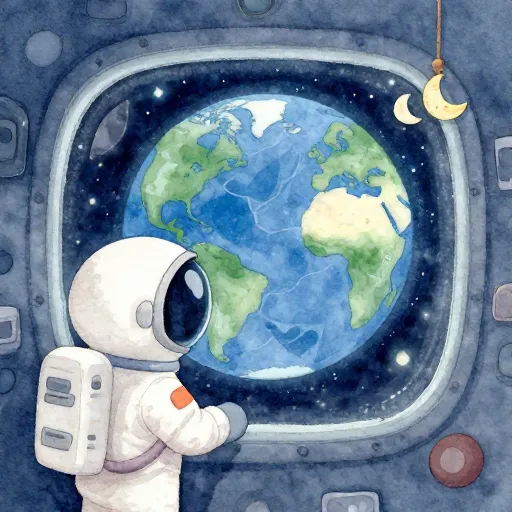
Eid has even been celebrated in space! In 2007, Sheikh Muszaphar Shukor was on the International Space Station during Ramadan and Eid. Since the station orbits the Earth 16 times a day, he had to follow the time of the city he launched from to know when to celebrate!
The Inner Eid
While the food and the gifts are exciting, philosophers often talk about the "inner Eid." They suggest that the real celebration happens inside a person's heart when they feel at peace with themselves and their neighbors.
The 11th-century thinker Al-Ghazali wrote about how every day where a person does not do something harmful to others is a day of Eid. This turns the festival into a way of living, rather than just a date on a calendar.
It asks us to consider: What does it mean to be truly generous? Can we hold onto the patience of Ramadan even when the month is over? How can we make the spirit of the open table last all year long?
Something to Think About
If you were in charge of a worldwide festival, what one thing would you ask every person to share with a stranger?
Questions About Religion
Why do the dates of Eid change every year?
What is the proper way to greet someone on Eid?
Why is the moon so important in Islamic culture?
The Circle of the Year
Eid reminds us that life is a series of cycles: waiting and receiving, fasting and feasting, giving and getting. Whether it is the sighting of a new moon or the sharing of a meal, these moments invite us to stop, look up, and realize that we are part of a much larger story. The table is always open, and the next crescent moon is always just around the corner.