Have you ever tried to walk across a balance beam?
If you lean too far to the left, you tumble. If you lean too far to the right, you fall. Over 2,500 years ago, a teacher in India called the Buddha suggested that life is much like that beam: he called his guide the Eightfold Path, a way to find the Middle Way between the extremes of life.
Imagine you are standing in a dusty deer park in Sarnath, India. It is late afternoon, and the air is thick with the scent of jasmine and the sound of cicadas. A man named Siddhartha Gautama, who people have begun calling the Buddha, is sitting with five friends. He isn't claiming to be a god, and he isn't casting spells. Instead, he is talking about a way to be happy that doesn't depend on how many toys you have or how lucky you are.
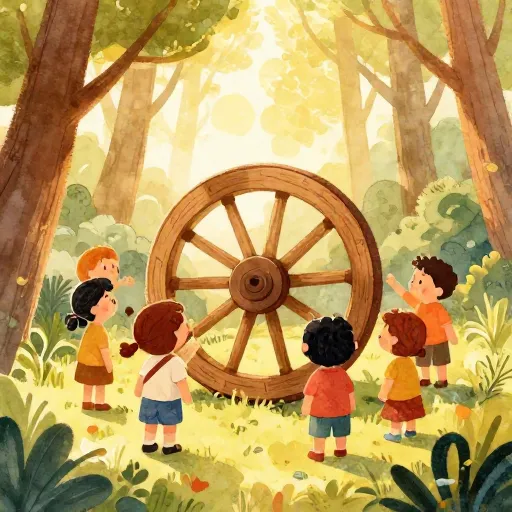
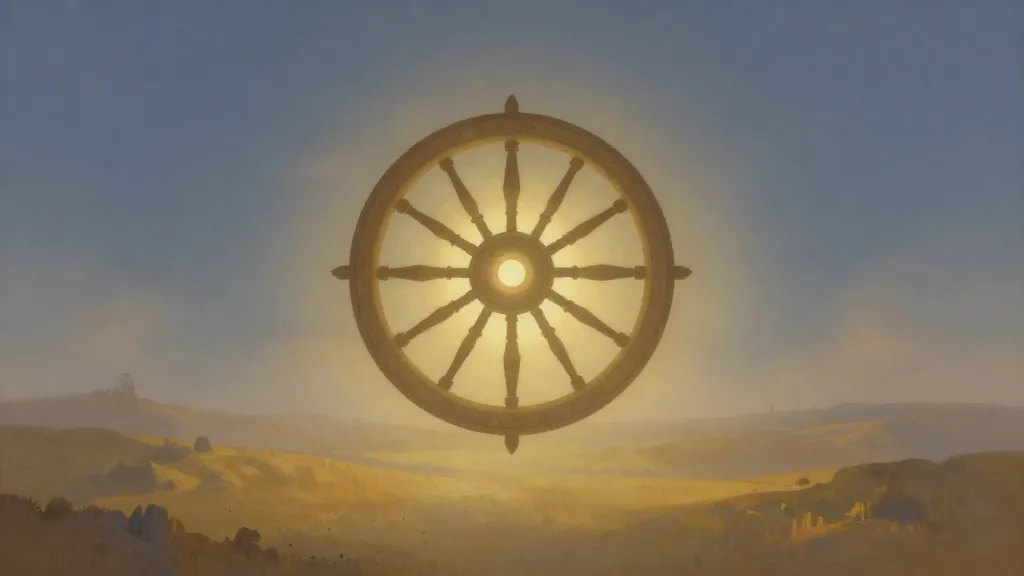
Imagine a wheel with eight spokes. If one spoke is missing or broken, the whole wheel wobbles. The Buddha used the wheel symbol because it shows that all eight parts of the path work together. You can't really have Right Action without Right Intention, can you?
He tells them that everyone experiences sadness or frustration, a feeling he calls dukkha. It is like a wheel that is slightly off-center, making every turn a bit bumpy. The Eightfold Path is his design for a better wheel: one that rolls smoothly over the rocky ground of life. It is not a list of rules to be followed perfectly, but a set of eight habits to practice.
The Wisdom Spokes: Seeing Clearly
The first part of the path is about how we use our minds. This starts with Right View. In this context, "right" doesn't mean the opposite of wrong, like a math problem. It means "complete" or "skillful." Right View is about seeing the world as it really is, rather than how we wish it were.

Finn says:
"If 'Right View' means seeing things change, does that mean I shouldn't get too attached to my favorite Lego set? That sounds kind of hard."
Think about a sunset. If you are sad because the sun is going away, you aren't seeing the whole picture. Right View helps you see that the sun must set for the stars to come out, and that everything in life changes. When we understand that things don't last forever, we don't get as upset when things change. We start to see that our actions have consequences, like a pebble making ripples in a pond.
By avoiding these two extremes, the Middle Path leads to peace, to direct knowledge, to enlightenment.
The second spoke is Right Intention. This is the "why" behind what we do. You might share a snack because you want to be kind, or you might share it because you want someone to like you. The action is the same, but the intention is different. The Buddha suggested that if we train our hearts to want kindness, even when we are frustrated, the rest of our lives will become much easier.
The path is like a staircase. You start at step one (Right View) and climb up until you reach the top (Concentration). Each step prepares you for the next one.
The path is like a medicine. You take all the ingredients at once to get better. You practice speech, action, and mindfulness all in the same day.
The Ethical Spokes: How We Treat the World
Once we have our vision and our heart in the right place, the path moves to our actions. This begins with Right Speech. Have you ever noticed how a single mean word can ruin a whole afternoon? Or how a kind word can make someone feel brave? Right Speech means speaking in a way that is truthful, helpful, and kind.
It also means knowing when to stay silent. The Buddha suggested that before we speak, we should ask if it is true, if it is necessary, and if it is the right time. It is about realizing that words are like seeds: once you plant them in someone else's mind, they grow. We want to grow gardens, not weeds.

Mira says:
"I think of Right Speech like a text message you can't unsend. Once it's out there, it's part of the world. It makes me want to pause before I hit 'send' in real life."
Next is Right Action. This is the part of the path where we use our bodies. It means not hurting living things, not taking what isn't ours, and being self-controlled. It sounds simple, but it is actually a very big idea. It means living in a way that makes the world a safer place for everyone, including animals and the environment.
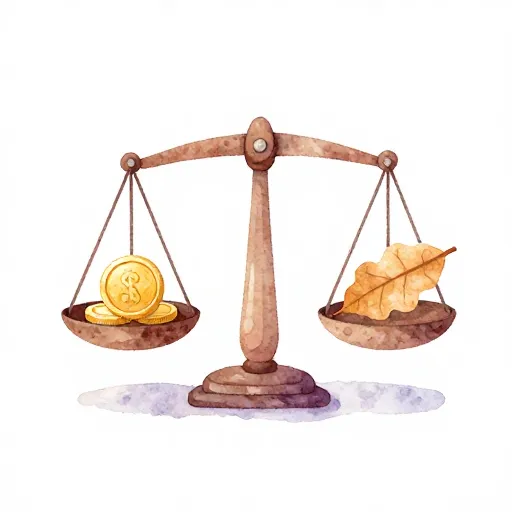
The Eightfold Path is sometimes called the 'Middle Way' because the Buddha had tried living two different ways first. He had lived as a rich prince with everything he wanted, and he had lived as a starving wanderer with nothing at all. He realized that neither of those extremes made him truly happy.
The third spoke in this group is Right Livelihood. For adults, this means choosing a job that doesn't hurt others. For a child, it might mean thinking about how you spend your time and energy. Are you doing things that help your community or your family? Right Livelihood is about making sure your "work" in the world matches your values.
The Mental Spokes: Training the Mind
The last three spokes are about the inside of your head. The Buddha knew that even if we try to be kind, our minds can be like "monkey minds," jumping from one branch to another. Right Effort is the practice of gently steering your thoughts. When a grumpy thought pops up, you don't fight it, but you don't let it take over either. You practice planting happy thoughts instead.
The secret of health for both mind and body is not to mourn for the past, nor to worry about the future, but to live the present moment wisely.
Then comes Right Mindfulness. This is a word you might have heard in school. It means being fully present in the moment you are in. If you are eating an apple, you are really tasting the apple, not thinking about a video game you want to play later. When we are mindful, we notice our feelings before they turn into big explosions of anger or sadness.
Try 'Right Mindfulness' for just one minute. Sit still and pick one sense, like hearing. Try to hear every single sound in the room: the hum of the fridge, a bird outside, your own breath. When your mind starts to think about lunch or a movie, gently bring it back to the sounds. That is the path in action!
Finally, there is Right Concentration. This is a deeper kind of focus, often practiced through meditation. It is like taking a magnifying glass and focusing the sunlight into a single, bright point. When the mind is still and concentrated, it becomes like a clear lake. You can see all the way to the bottom, where the truth sits quietly.
Finn says:
"What if my 'monkey mind' is just really busy? Does having a lot of thoughts mean I'm doing the path wrong, or is the path just the act of noticing the monkeys?"
The Path Through History
This idea didn't stay in that deer park in India. It began to roll across the world like the wheel it is named after. It traveled over snowy mountains and across vast oceans, changing slightly in every new place it arrived. It influenced kings, artists, and even modern scientists who study how our brains work.
Through the Ages
In ancient times, a great King named Ashoka used the Eightfold Path to change how he ruled. After a terrible war, he felt deep regret. He decided to follow the Buddha's teachings and built hospitals for people and animals, and carved the rules of the path onto giant stone pillars across India. He wanted everyone to remember that peace is more powerful than winning.
My religion is very simple. My religion is kindness.
As the path moved to places like China and Japan, it blended with local traditions. In Japan, it became part of Zen, which focuses a lot on Right Mindfulness in everyday tasks, like making tea or gardening. Today, people all over the world use these eight steps, even if they aren't Buddhists. They use them to find a sense of balance in a world that often feels very fast and very loud.
The symbol for the Eightfold Path, the Dharma Wheel, is on the national flag of India! It’s called the Ashoka Chakra, and it has 24 spokes (representing different parts of the day and Buddhist concepts), but it grew directly out of the original eight-spoked wheel of the Buddha.
When we look at the Eightfold Path, we see that it isn't a destination. You don't "finish" it and get a trophy. It is more like a musical instrument that you have to tune every single day. Some days your speech might be a little sharp, or your mindfulness might be a little blurry. The beauty of the path is that it is always there, waiting for you to step back onto the balance beam.
Something to Think About
Which of the eight spokes feels the most important for your life right now?
There is no right or wrong answer here. Some people find that focusing on their words changes everything, while others feel that training their 'monkey mind' is the biggest challenge. What does your inner compass say?
Questions About Religion
Do you have to be Buddhist to follow the Eightfold Path?
Is the path supposed to be followed in a specific order?
Why is it called 'Right' speech or 'Right' action?
A Path That Never Ends
The Eightfold Path is a very old idea, but it feels very new every time you try it. Whether you are in a quiet temple or a busy playground, the spokes of the wheel are always there to help you find your balance. The next time you feel a bit 'wobbly,' remember the Middle Way: it's not about being perfect, it's about staying curious and moving forward.
