Imagine you are building a house that needs to stand for a thousand years, even in the middle of a desert windstorm.
To keep it steady, you would need deep, strong foundations. For over a billion people around the world, the Five Pillars of Islam serve as that foundation, providing a framework for how to live, how to treat others, and how to connect with the divine through the teachings of the Prophet Muhammad.
Imagine standing in the middle of a vast, quiet desert 1,400 years ago. The stars are so bright they feel like they are whispering to the sand. This is where our story begins, in the Arabian Peninsula, specifically in the city of Mecca.
At that time, life was lived in cycles of travel, trade, and community. In the year 610 CE, a man named Muhammad began sharing messages that he believed were from God, or Allah. These messages were eventually gathered into a holy book called the Quran.
The word 'Islam' comes from an Arabic word meaning 'peace' and 'submission.' It describes the feeling of being at peace by following a path that feels right.
As the community of Muslims grew, they needed a way to keep their faith strong in their daily lives. They didn't just want ideas: they wanted actions. These actions became known as the Five Pillars, or the Arkan al-Islam.
Think of these pillars not as a checklist of chores, but as a rhythm. Just as your heart has a beat and the tide has a pull, these pillars create a rhythm for a person's day, year, and entire life.

Mira says:
"I like the word 'pillar.' It makes me think of the huge marble columns in old buildings. If you took one away, would the whole roof start to shake?"
The First Pillar: Shahada (The Declaration)
The first pillar is the Shahada, which is the foundational belief of the whole faith. It is a simple sentence: "There is no god but God, and Muhammad is the messenger of God."
In many ways, this is the most important pillar because it is the "why" behind everything else. It is about the idea of oneness, or Tawhid. This means that everything in the universe: the stars, the ants, the oceans, and the people: are all connected to one single source.
The best of you are those who are best to their families.
When a person says the Shahada, they are making a promise to stay focused on what matters most. In a world full of distractions like video games, money, or being popular, the Shahada is a reminder to look deeper.
It is the entrance to the house of faith. Once you walk through that door, the other four pillars help you decorate the rooms and keep the roof from leaking.
The Shahada is about focus. Try this: Sit quietly for one minute and pick one thing that really matters to you, like being kind or being brave. Every time your mind wanders, bring it back to that one word. That is a bit like how the Shahada works as a focus for the day.
The Second Pillar: Salat (The Prayer)
If the Shahada is the heart, then Salat is the breath. Muslims pray five times every single day: at dawn, midday, afternoon, sunset, and evening.
This might seem like a lot of stopping and starting. But the idea is that no matter how busy or stressed you are, you must pause to reconnect. It is like hitting the "reset" button on your brain to find a moment of peace.

Finn says:
"I wonder if praying five times a day feels like a break from homework? Sometimes I wish I had a reason to just stop everything and breathe for five minutes."
Prayer involves specific movements: standing, bowing, and prostrating (touching your forehead to the ground). These movements show that the whole person, body and soul, is involved in the conversation with God.
Before praying, Muslims perform a special washing called Wudu. They wash their hands, face, and feet with water to feel clean and fresh before they begin their quiet time.
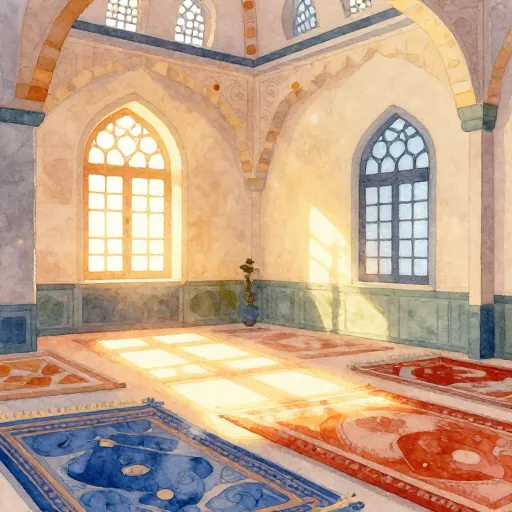
Imagine you are in a large mosque at noon. The floor is covered in soft, intricate carpets. Hundreds of people are standing in perfectly straight lines, side-by-side. When the leader bows, everyone bows at the exact same second. The only sound is the rustle of clothes and the low hum of voices. You are not just an individual anymore: you are part of a giant, moving pattern.
The Third Pillar: Zakat (The Giving)
The third pillar is Zakat, which is often translated as "charity," but it actually means "purification." It is the idea that our money and belongings don't really belong just to us.
Muslims believe that if you have more than you need, a small part of it (usually 2.5 percent) belongs to the poor. By giving it away, you "purify" the rest of your money, making it clean and full of goodness.
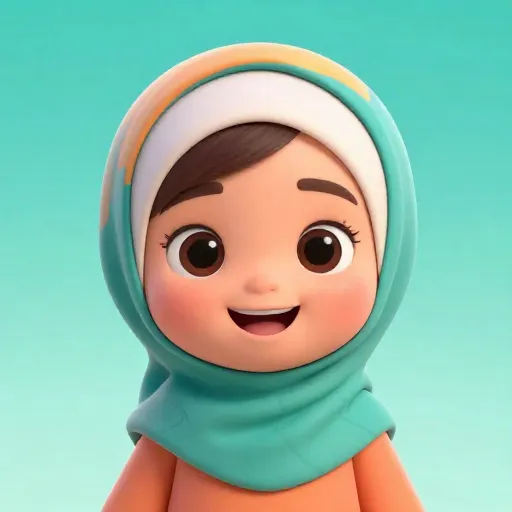
Even a smile is charity.
Zakat creates a sense of Ummah, which is the global community of all Muslims. It ensures that the "plumbing" of the world works correctly, so that wealth flows to the places that need it most, like a river watering a dry field.
It is not just about giving money: it is about realizing that we are all responsible for one another. When someone else is hungry, a piece of us is hungry, too.
Some people believe that charity should be a choice you make only when you feel like it, so that it comes truly from the heart.
In Islam, Zakat is a duty. It is like a tax for the soul, ensuring that the poor are always taken care of, regardless of how anyone feels that day.
The Fourth Pillar: Sawm (The Fasting)
Once a year, during the ninth month of the Islamic calendar called Ramadan, Muslims practice Sawm. This means they do not eat or drink anything from the moment the sun rises until the moment it sets.
Why would someone choose to be hungry? It sounds difficult, and it can be! But the purpose is to learn self-control and to feel what it is like for people who don't have enough food every day.
Mira says:
"Fasting reminds me of how my stomach feels when I'm really excited or nervous. It's like your body is telling you that something important is happening."
During Ramadan, the atmosphere changes. Families wake up early for a meal called Suhoor before the sun comes up. Then, they spend the day being extra kind and patient, focusing on their character rather than their stomachs.
When the sun finally goes down, there is a joyful meal called Iftar. Often, people break their fast with a single date, just as the Prophet Muhammad did centuries ago, before eating a big feast with friends and neighbors.
The Fifth Pillar: Hajj (The Journey)
The final pillar is the Hajj, a pilgrimage to the city of Mecca that every Muslim hopes to make at least once in their life. It is the ultimate road trip, but with a spiritual goal.
Millions of people from every corner of the globe travel to the same place at the same time. They all wear simple white clothes so that you can't tell who is rich and who is poor, or what country someone is from.
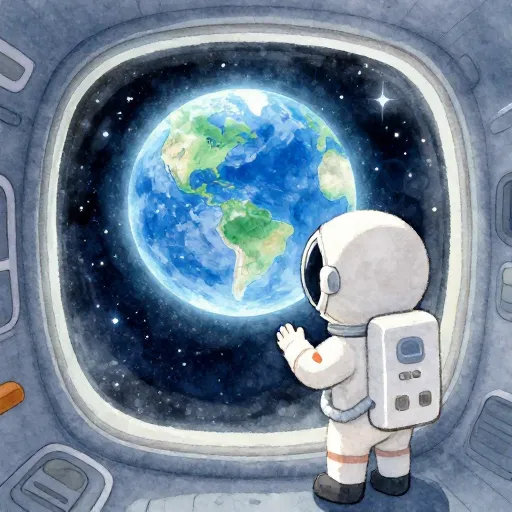
In 1985, Prince Sultan bin Salman became the first Muslim in space. He had to figure out how to pray and face Mecca while orbiting the Earth at 17,000 miles per hour! He decided to face Earth and do his best, showing that the pillars can adapt to any situation.
During Hajj, pilgrims walk around a cube-shaped building called the Kaaba. It is the center point that all Muslims face when they pray, no matter where they are on Earth. Standing in that crowd is a reminder that while we are all individuals, we are also part of something much bigger than ourselves.
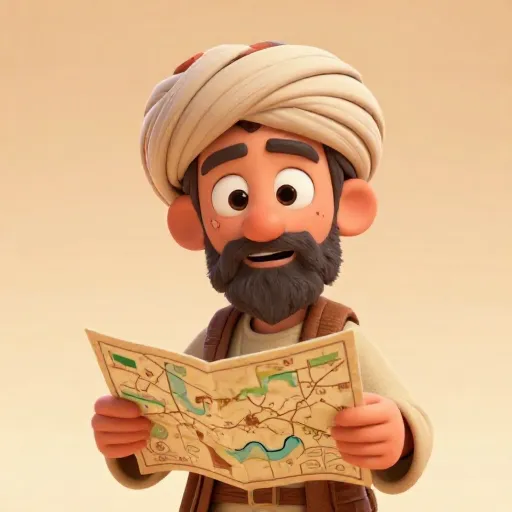
The world is a book, and those who do not travel read only a page.
Through the Ages
These Five Pillars have traveled through time and space, adapting to different cultures while keeping their core meaning. They have been practiced in the golden courts of Baghdad, the spice markets of Indonesia, and even in outer space.
Through the Ages
In the modern world, the pillars still look very similar to how they did 1,400 years ago. Today, there are apps to remind people of prayer times and websites to help people calculate their Zakat. Even though the technology changes, the human need for connection, charity, and meaning stays the same.
Something to Think About
If you had to choose five actions that would define who you are, what would they be?
There are no right or wrong answers here. Just as the Five Pillars give a framework to a religion, what five habits or values would give a framework to your own life?
Questions About Religion
Do kids have to fast during Ramadan?
What happens if someone is too poor to give Zakat?
Does everyone go on Hajj at the same time?
The Pillars in Your Pocket
The Five Pillars are a reminder that the biggest ideas in the world often come down to simple, daily actions. Whether it's a prayer, a shared meal, or a small donation, these practices show us how to build a life that is sturdy enough to weather any storm. You don't have to be a philosopher to understand the pillars: you just have to look at how we treat one another and the world around us.
