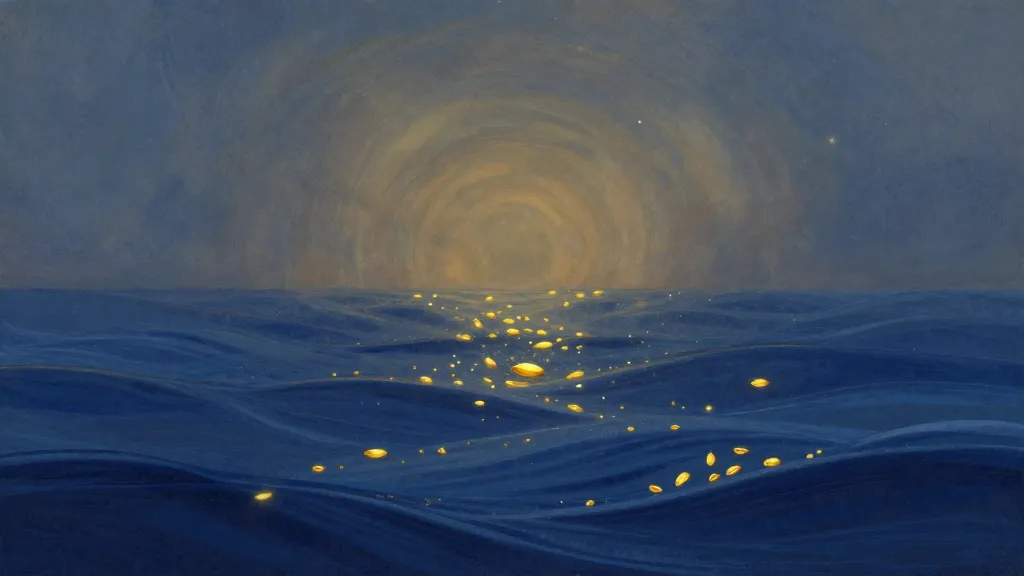
Have you ever sat by a window during a heavy rainstorm and wondered what would happen if the clouds simply never stopped pouring?
For thousands of years, people in almost every corner of the Earth have told stories about a giant flood that covered the world. These stories, which we call mythology, are more than just old tales: they are a way for humans to think about the power of nature and the possibility of starting over.
Imagine standing on a dry, dusty plain in ancient Mesopotamia, which is now part of Iraq. The sun is hot, and the ground is cracked.
Suddenly, the sky turns the color of a bruised plum. The rivers Tigris and Euphrates begin to swell and spill over their banks, turning the world into a vast, muddy sea.

Finn says:
"If the water started rising like that today, I'd have to make sure my cat had a tiny life jacket. How did they even decide which animals got to go on the boat?"
This isn't just a scene from a movie: it is the setting for the oldest written flood story in human history. Long before the stories we know today were written down, people were carving these memories into clay tablets using a wedge-shaped writing called cuneiform.
The First Hero: Utnapishtim
In the ancient Gilgamesh epic, a hero named Utnapishtim is warned by a god that a great storm is coming. He is told to tear down his house and build a massive boat to save his family and the "seeds of all living creatures."
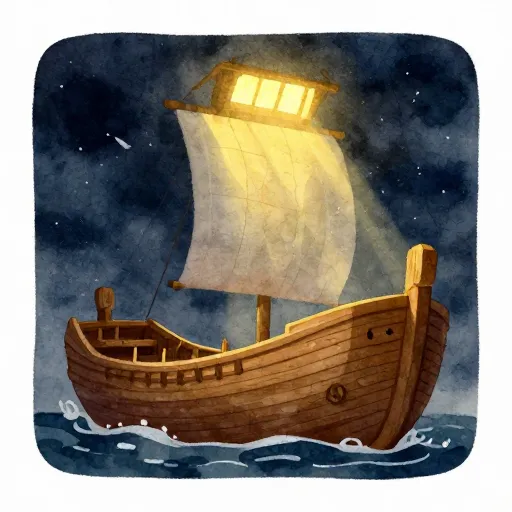
Imagine a boat the size of a city block, built entirely of cedar wood and coated in stinking, black tar to keep the water out. Inside, the air is thick with the smell of wet fur and dry hay, and the only light comes from a single small window at the very top.
When the storm finally ends, Utnapishtim releases a dove, then a swallow, and finally a raven to see if they can find dry land. This detail might sound familiar to you if you have heard the story of Noah's Ark, but the story of Utnapishtim was written hundreds of years earlier.

Mythology is not a lie, it is poetry: it is metaphorical. It has been well said that mythology is the penultimate truth: penultimate because the ultimate cannot be put into words.
It is curious how these stories travel. They aren't just copies of one another: they are like different people describing the same giant mountain from different sides. Each culture adds its own flavor, its own gods, and its own reasons for why the water came.
The Fish Who Saved the World
Now, let's travel east to ancient India. In this version of the story, a wise king named Manu is washing his hands in a river when a tiny fish swims into his palm.
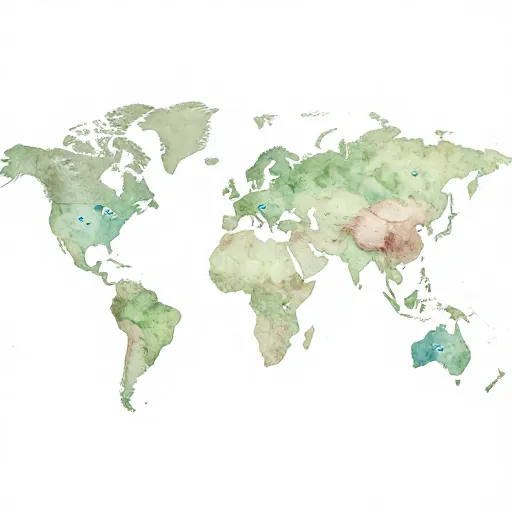
There are over 200 different flood myths from around the world. You can find them in the snowy mountains of North America, the islands of the Pacific, and the rainforests of South America.
The fish begs Manu to save him from the bigger fish in the river. Manu places the tiny fish in a jar, then a pond, then finally the ocean as it grows larger and larger.
This fish was actually an avatar, or a physical form, of the god Vishnu. As a reward for Manu's kindness, the fish warns him of a coming flood and tells him to build a boat.

Mira says:
"I like how the fish in the Indian story starts small and gets bigger. It's like the story is telling us that small things we do, like being kind to a tiny fish, can end up saving us later."
Instead of birds, the fish himself guides the boat through the waves by a rope tied to his horn. In this story, the flood isn't just a punishment: it is part of a giant cycle of time where the world is regularly cleaned and reborn.
Hard Work and the Great Yu
While many flood myths focus on a lucky family in a boat, the stories from ancient China are quite different. They focus on the Yellow River, a powerful waterway that often flooded and changed the lives of everyone nearby.
In these tales, a hero named Yu the Great doesn't build a boat to hide from the water. Instead, he spends thirteen years digging channels and moving mountains to drain the floodwaters back into the sea.
Next time you are at a beach or in a sandbox, build a small 'city' out of sand. Pour a bucket of water nearby and watch how the water carves new paths. Can you dig a 'canal' to lead the water away from your city, just like Yu the Great did?
Yu worked so hard that he supposedly didn't even go home to see his family for over a decade. This tells us something important about what that culture valued: not just survival by luck, but survival through hard work and clever engineering.
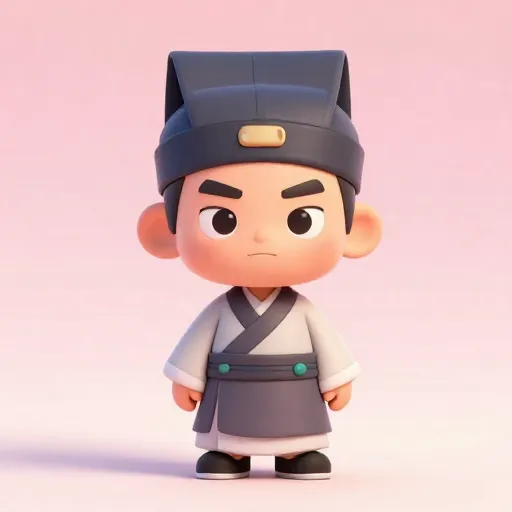
The flood was not a disaster to be escaped, but a problem to be solved through wisdom and labor.
In China, the flood myth is a story about how humans can work with nature to build a civilization. It shows that even when the world feels overwhelming, there is a way to find a path through it.
The Many Faces of the Water
If we sail across the ocean to the Americas, we find even more stories. The Maya people of Central America believed the gods created several versions of humans before finally getting it right.
The flood stories are literal history. They describe a specific time when the whole earth was covered in water as a punishment for human behavior.
The flood stories are symbolic. They represent the internal feeling of being 'washed clean' or the psychological need to start over when life gets too complicated.
One version of humans was made of wood, but they were stiff and had no heart. The gods sent a flood of thick resin to wash them away so they could try again and create humans who could think and feel.
A History of the Deep Water
In Greece, the story features Deucalion and Pyrrha, who survived by floating in a wooden chest. When the water went down, they were told to throw stones over their shoulders: the stones thrown by Deucalion became men, and the stones thrown by Pyrrha became women.
Is It True? The Science of the Splash
For a long time, people wondered if these stories were based on one single, massive event. Did the entire world really go underwater at the same time?
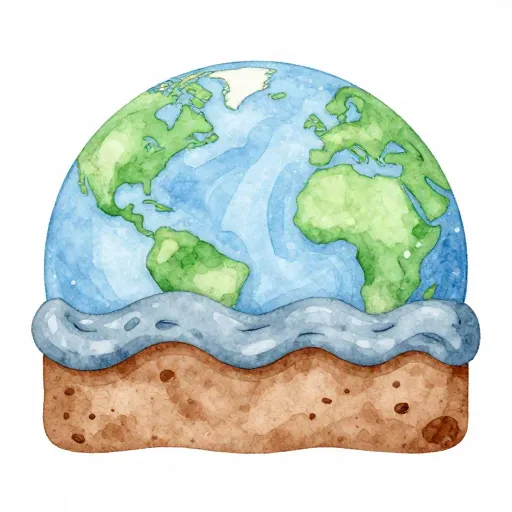
Archaeologists have found layers of silt and mud deep underground in Iraq that prove the rivers there had massive, catastrophic floods around 2900 BCE. These real floods likely became the 'Great Flood' in the stories of the people who lived there.
Most scientists today think it is unlikely that the whole planet was covered in water at once. However, they do think many of these stories were inspired by real, terrifying events that happened at the end of the last Ice Age.
As the world warmed up about 10,000 years ago, there was massive glacial melt. Huge walls of ice turned into water, causing sea levels to rise quickly and drown entire coastal villages.

We're finding that many of these 'myths' are actually grounded in very real, historical memories of a world that changed overnight.
For a person living back then, a rising sea would have felt like the end of the world. They didn't have maps of the whole globe: they only knew that their home, their fields, and everything they had ever seen was disappearing under the waves.
The Archetype of the Flood
Psychologists, who study how the human mind works, have a special word for these kinds of repeating stories: an archetype. An archetype is a pattern or an image that shows up in almost every culture because it represents a universal human experience.
Finn says:
"Maybe we tell these stories because we all know that feeling of being overwhelmed, like when my room is so messy I just want to clear everything off my desk and start over from scratch."
Water is the perfect symbol for an archetype because it has two sides. It is necessary for life, but it can also be incredibly destructive. It can wash away dirt, but it can also wash away a city.
When we tell flood myths, we are often talking about the cataclysm, or the big disaster, that changes everything. But we are also talking about the hope that comes after.
In almost every one of these stories, the world that comes after the flood is better, or at least newer, than the one that came before. It is a story about the resilience of life and the human spirit's ability to keep floating, no matter how high the water rises.
Something to Think About
If you were writing a story about the world starting over today, what would you want to save in your 'boat' for the future?
There are no right or wrong answers here. You might think of physical things, like books or seeds, or invisible things, like kindness or the ability to laugh.
Questions About Religion
Why are there so many flood stories if the whole world didn't flood at once?
Was Noah's Ark real?
Why do the stories always involve animals?
The Water Recedes
The next time it rains, take a look at the puddles forming on the ground. Think about how that same water has been recycling through the earth for billions of years: the same water that flooded ancient Sumer and the same water that Manu's fish swam in. We are all part of a very old, very wet story that is still being written today.