
Have you ever felt like life was a bit like a bicycle wheel that isn't quite round?
About 2,500 years ago, a man named Siddhartha Gautama noticed that everyone, from kings to ants, feels a sense of 'wobbliness' or unhappiness sometimes. He spent years searching for a solution, eventually reaching a state of deep wisdom called Enlightenment. He shared his discovery through the Four Noble Truths, a set of ideas designed to help people find lasting peace.
Imagine you are sitting in a dusty, green park in Northern India called Sarnath. The year is roughly 528 BCE. The air is warm, and the sound of deer rustling through the nearby trees fills the quiet afternoon.
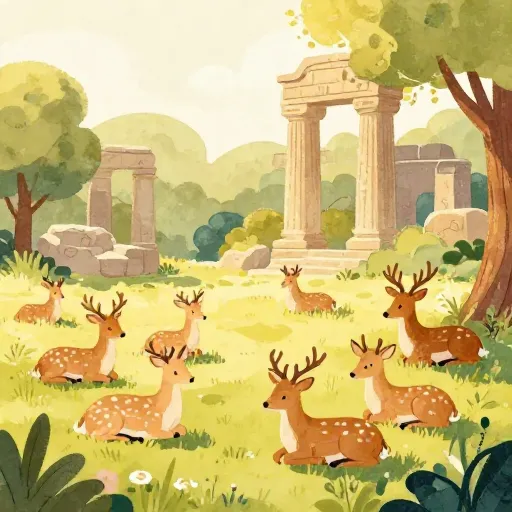
Imagine the Deer Park at Sarnath. The grass is long and golden. The trees are heavy with fruit. There are no buildings, just a few stone paths and the sound of birds. You are sitting on the ground with the first students of history's most famous philosopher.
A man sits under the shade of a tree, surrounded by five friends who have been waiting for him to speak. This man is the Buddha, which means 'The Awakened One.' He isn't claiming to be a god, but rather someone who has finally woken up to the way the world really works.
He is about to give his very first talk. He doesn't talk about magic or monsters. Instead, he talks about something very human: why we feel sad and how we can stop feeling that way.
The First Truth: The Bumpy Wheel
The Buddha’s first big idea is called Dukkha. In many books, this is translated as 'suffering,' but that sounds a bit too heavy. Think of it more like a wheel that is slightly off-center.

Mira says:
"It's like when you're at the beach and you're sad because you know you have to leave in an hour. Even while you're having fun, there's that tiny 'thump' of sadness in the back of your head."
When a wheel is off-center, the ride is bumpy. Even when the road is smooth, you can still feel that little 'thump-thump' of the axle. The Buddha noticed that life has these thumps, too.
- Sometimes the bumps are big, like falling off your bike.
- Sometimes they are medium, like being bored on a rainy day.
- Sometimes they are tiny, like knowing your favorite ice cream cone will eventually be finished.
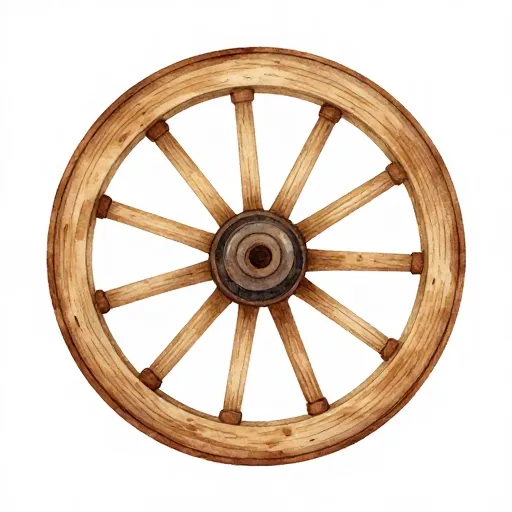
The word 'Dukkha' originally referred to a 'bad hole' in the center of a chariot wheel. If the hole was off-center or the axle didn't fit right, the chariot would wobble and shake, making the journey much harder than it needed to be.
The First Noble Truth is simply the observation that life contains these bumps. It isn't being 'negative' or 'gloomy.' It is just acknowledging that things don't always feel perfect, and that is a normal part of being alive.

I teach one thing and one thing only: suffering and the end of suffering.
The Second Truth: The Grabbing Hand
If life is a bit bumpy, the next question is: why? The Buddha’s Second Noble Truth points to something called Craving, or tanha in the ancient Pali language. This is the feeling of 'grabbing' at things.
Imagine you are at a party. You have a great piece of cake, but instead of enjoying the bite you have, you are already looking at the last piece on the platter, worried someone else might take it.
I must have that new video game right now! If I don't get it, I can't be happy. My happiness depends on this one thing.
I would really like that new video game, and I'll work for it. But if I don't get it, I can still enjoy playing outside with my friends today.
That 'grabbing' or 'wanting' is what makes the bumps feel worse. We want pleasant things to last forever, and we want unpleasant things to go away immediately. But the world is always changing, a concept known as Impermanence.
Because we try to hold on to things that are naturally changing, we feel a sense of Attachment. It is like trying to hold a handful of river water: the tighter you squeeze, the faster it runs through your fingers.

Finn says:
"What if I really like wanting things, though? Like, if I didn't want a new Lego set, would I ever build anything cool? Is all wanting bad?"
The Third Truth: The Cooling Down
This is where the story gets hopeful. The Third Noble Truth says that there is a way to stop the 'thump-thump' of the bumpy wheel. This state of peace is called Nirvana.
The word Nirvana actually means 'to blow out,' like blowing out a candle. It doesn't mean disappearing. It means blowing out the 'fires' of greed, anger, and confusion that make us feel so restless.

Next time you are feeling a 'bump' (like being annoyed that you have to do homework), try this: don't try to make the feeling go away. Just notice it. Say to yourself, 'Oh, there is a bump.' Watch it for a minute like you're watching a cloud pass by. Does it stay the same, or does it change?
Think about a time you really wanted a specific toy. You thought about it for weeks. Then, one day, you realized you didn't actually need it to be happy. That feeling of 'letting go' is a little tiny version of the Third Truth.
- It is the feeling of being okay right now, just as you are.
- It is the quiet after a loud noise.
- It is the moment you stop fighting against the rain and just realize you are wet.

No mud, no lotus.
The Fourth Truth: The Training Plan
The Fourth Noble Truth is the 'how-to' guide. The Buddha realized that just knowing the truths wasn't enough; you have to practice them. He called this plan the Eightfold Path.
It isn't a list of rules from a boss. It is more like a training program for your mind and heart. It involves practicing things like Mindfulness, which means paying attention to the present moment without judging it.
Mira says:
"I think the 'Path' is like a recipe. You can read the recipe for bread all you want, but you won't have anything to eat until you actually start mixing the flour and water."
It also involves Compassion, which is the wish for others to be free from their own 'bumpy' feelings. By changing how we think, speak, and act, we can slowly reshape our experience of the world.
The 'Eightfold Path' is often shown as a wheel with eight spokes. This is called the Dharma Wheel. It is one of the oldest symbols in history, appearing on the flag of India today!
This path isn't a quick fix. It is more like learning to play an instrument or becoming a good athlete. You don't just do it once; you live it every day, slowly finding more balance and less 'wobble.'
Through the Ages
These four simple ideas didn't stay in that deer park in India. They traveled across mountains and oceans, changing as they met different cultures while keeping their core message the same.
Through the Ages
Over the centuries, different schools of Buddhism formed. Some focused on deep Meditation, while others focused on helping every living being. But they all started with those same four observations made under a tree long ago.
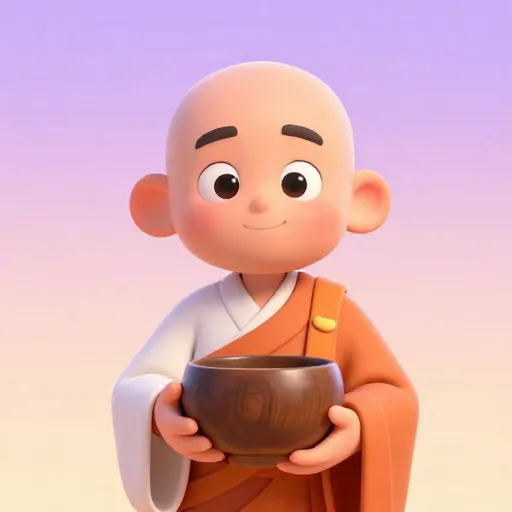
Just as the great ocean has one taste, the taste of salt, so also this teaching has one taste, the taste of liberation.
Today, you can find people practicing these truths in quiet monasteries in Japan, busy offices in New York, and schools in London. Even people who aren't religious often use these ideas to help them handle stress or find more kindness in their daily lives.
Something to Think About
If you could design a fifth 'truth' for people living today, what would it be?
Think about the world we live in now, with all its technology and noise. There are no right or wrong answers here, just your own observations about what makes life feel 'wobbly' or 'smooth.'
Questions About Religion
Is the Buddha a god?
Does the First Noble Truth mean life is always bad?
Can kids practice the Eightfold Path?
The Adventure of Looking Within
The Four Noble Truths are an invitation to be a scientist of your own mind. You don't have to believe them just because they are ancient. You can look at your own 'thumps' and 'wobbles' and see if these ideas help you find a bit more balance. After all, the Buddha's last words were an encouragement for everyone to find their own way: 'Be a light unto yourselves.'
