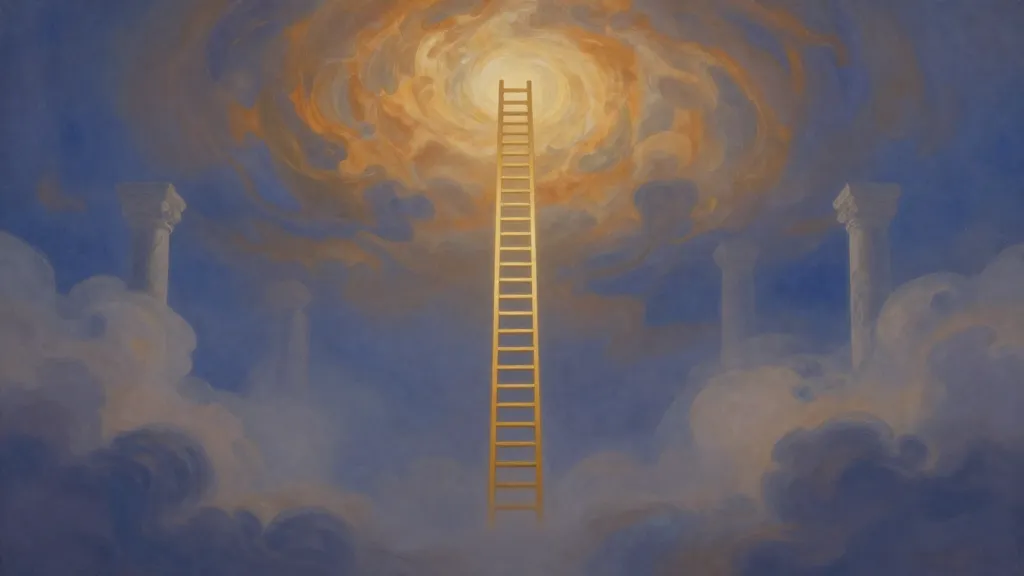
If you could design a god to explain why you feel angry, or why the sea is so wild, what would they look like?
Thousands of years ago, the people of Ancient Greece didn't just see the world as a collection of rocks and water. They saw it as a living drama populated by the Twelve Olympians, a family of powerful, messy, and deeply relatable gods who lived atop a cloud-hidden mountain.
Imagine standing on a rocky coastline three thousand years ago. The air smells of salt and wild thyme, and the Mediterranean Sea stretches out in a deep, shimmering blue that the poet Homer called the wine-dark sea. To an ancient Greek person, that sea wasn't just water: it was the temper of a god.

Imagine you are a traveler in Ancient Greece. You reach the foot of Mount Olympus. The peak is hidden by a thick, swirling ring of clouds that never moves, even on a windy day. People whisper that the gate to the heavens is right there, guarded by the Seasons. You can't see the palaces, but you can feel the air humming with a strange, golden energy.
When the waves crashed against the cliffs, it wasn't just a weather pattern. It was Poseidon, the earth-shaker, striking the ground with his trident because he was frustrated or slighted. This way of seeing the world is called Polytheism, the belief in many different gods, each responsible for a different slice of life.

Finn says:
"If the gods were immortal, do you think they ever got bored? I mean, if you can't ever die, does anything you do actually matter as much as it does for us?"
The Family on the Mountain
At the center of this world was Mount Olympus, the highest mountain in Greece. The Greeks believed that the most powerful gods lived there in a sprawling palace above the clouds. They weren't distant, perfect beings: they were a family, and like any family, they argued, felt jealous, and threw spectacular parties.
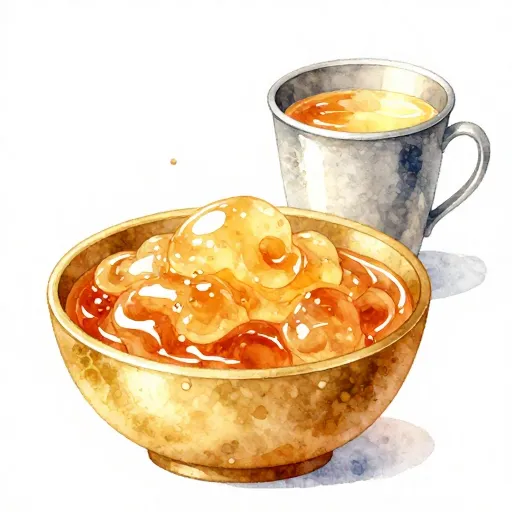
The Greek gods didn't eat regular food like bread or olives. Instead, they consumed Ambrosia and drank Nectar. It was said that this divine food gave them their immortality and made their blood turn into a golden substance called Ichor.
At the head of the table sat Zeus, the king of the gods. He controlled the sky and the lightning, but he was also known for his wandering eye and his many children. Beside him was Hera, the queen of the gods and the protector of marriage, who often spent her time tracking down the people Zeus had been visiting on Earth.
First of all, Chaos came to be, and then broad-bosomed Earth, the ever-sure foundation of all the deathless ones who hold the peaks of snowy Olympus.
Then there were the children and siblings. Athena, who burst fully grown and armored from Zeus's forehead, represented wisdom and the strategic side of war. Her brother Ares represented the messy, bloody side of fighting. There was Apollo, the god of light and music, and his twin sister Artemis, the fierce goddess of the hunt.
- Demeter: Goddess of the harvest, whose sadness caused the winter.
- Hephaestus: The master blacksmith who was thrown from Olympus and walked with a limp.
- Aphrodite: The goddess of love, who was said to have risen from the sea foam.
- Hermes: The messenger god with winged sandals who moved between worlds.
- Dionysus: The god of wine, theater, and losing control.
Gods Who Looked Like Us
The most fascinating thing about the Greek gods is their Anthropomorphism. This is a big word that simply means giving human characteristics to things that aren't human. Unlike the gods of ancient Egypt, who often had the heads of animals, the Greek gods looked exactly like people, only taller, stronger, and more beautiful.
The gods were literal beings who lived on a mountain and could physically visit Earth to help or hinder you. If you didn't sacrifice to them, your crops might fail.
The gods are metaphors. They are a way for us to talk about psychology, nature, and the human experience using stories instead of clinical words.
Because they looked like humans, they acted like humans too. They got their feelings hurt. They had favorite humans they protected and enemies they punished. They were like a giant, immortal mirror held up to the Greek people, reflecting back all the best and worst parts of being alive.

Mira says:
"It's like the gods are a giant set of mirrors. When we see Ares getting angry, we're actually seeing our own anger, but blown up to the size of a mountain. It makes our feelings feel less lonely."
Why would a civilization want gods that were so... difficult? Perhaps it was because the world itself felt difficult. A storm doesn't care if you are a good person, and a drought can happen to anyone. By making the gods human-like, the Greeks made the unpredictable nature of the world feel like something they could understand, or at least talk to.

The gods envy us. They envy us because we’re mortal, because any moment might be our last. Everything is more beautiful because we’re doomed.
Living with the Divine
For a child growing up in ancient Athens or Sparta, the gods were everywhere. You didn't just go to a building to find them. You found them in the grove of trees outside the city, at the hearth fire in your kitchen, and in the marketplace. Every activity had a patron god who looked over it.
- Sailors offered prayers to Poseidon before leaving the harbor.
- Weavers dedicated their finest cloth to Athena.
- Athletes in the Olympic Games competed to honor Zeus.
- Sick people slept in the temples of Asclepius, hoping for a healing dream.
Next time you feel a very strong emotion, like being incredibly brave or suddenly very creative, try to 'personify' it. If that feeling were a Greek god or goddess, what would they be wearing? What animal would follow them around? What would their weapon or tool be? Drawing your own 'inner god' can help you understand your feelings better.
Religion wasn't about a set of rules or a holy book. It was about Ritual, the acts of showing respect to keep the gods happy. If you ignored a god, you were inviting trouble. This wasn't about being "good" in a modern sense: it was about balance and acknowledging the powers that ruled the world.
The Strings of Fate
Even the gods had to answer to something. The Greeks believed in Fate, a power represented by three old women known as the Fates. One spun the thread of a person's life, one measured it, and one cut it. Even Zeus, with all his lightning, could not change what the Fates had decided.
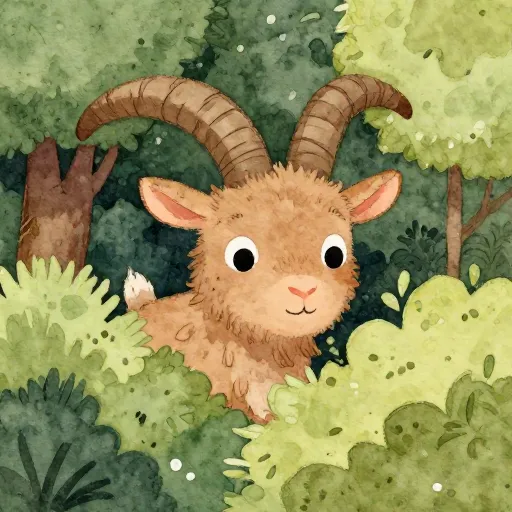
The word 'Panic' actually comes from the Greek god Pan, the god of the wild. He was known for letting out a scream so terrifying that it caused 'pan-ic' in anyone who heard it, making them run without knowing why.
This created a strange tension in Greek life. If your life was already decided by Fate, why did it matter what you did? The Greeks answered this through the idea of Heroism. A hero was someone who knew they were mortal and would eventually die, but chose to do great things anyway, making their name live forever in stories.
Through the Ages
Why We Still Tell the Stories
After the Roman Empire took over Greece, they didn't get rid of the Greek gods. Instead, they adopted them and gave them new names. Zeus became Jupiter, Hera became Juno, and Ares became Mars. This process is called Syncretism, the blending of different beliefs and cultures into something new.
Mira says:
"I noticed how the Romans changed the names but kept the personalities. It's like the gods are actors who just keep changing their costumes and scripts as they travel through time."
Centuries later, during the Renaissance, artists became obsessed with these stories again. They filled palaces with paintings of Venus and statues of David. Even today, we see the Greek gods in our movies, our books, and even our language. When we talk about an "Achilles' heel" or a "Midas touch," we are speaking the language of ancient Greek religion.

The Greeks made their gods in their own image. It was a revolution in thought. Human beings had become the center of the universe.
These gods have survived for thousands of years not because people still believe they live on a mountain, but because the things they represent never went away. We still feel the wildness of the sea, the heat of anger, the spark of a new idea, and the mystery of why things happen the way they do.
Something to Think About
If the Greek gods appeared today, which one do you think would be the most confused by our modern world, and which one would fit right in?
There isn't a right answer to this. It's a way to think about how much our world has changed, and how much human nature has stayed exactly the same.
Questions About Religion
Did the Ancient Greeks really believe the gods lived on top of Mount Olympus?
Why are the Greek gods so mean in some stories?
What is the difference between a myth and a religion?
The Infinite Story
The Greek gods aren't just old statues in a museum. They are the vocabulary we use to describe the world when simple facts aren't enough. As long as people still fall in love, get angry, seek wisdom, or wonder at the stars, the Olympians will be right there with us, hiding just behind the clouds.