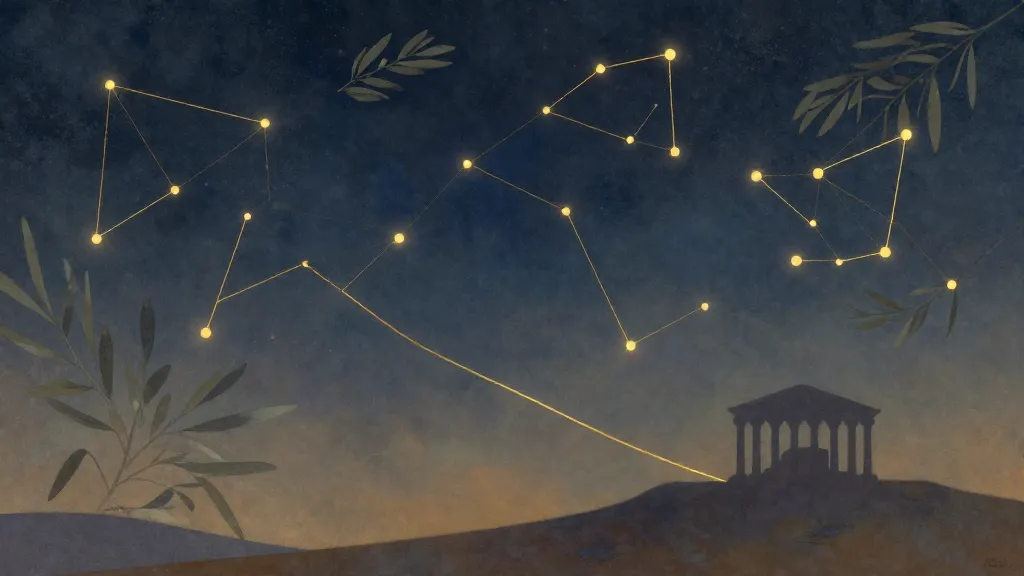
If you looked up at the night sky three thousand years ago, what would you see?
You wouldn't see satellites or city lights. Instead, you would see a map of stories known as Greek Mythology, a collection of tales from Ancient Greece that helped people make sense of a wild and beautiful world.
Close your eyes and imagine a world where every rustle of the leaves or crack of thunder was a message. This was the world of the Greeks living around the Mediterranean Sea nearly 3,000 years ago. They lived in independent city-states, separate communities that shared a language, a culture, and a very crowded family tree of gods.
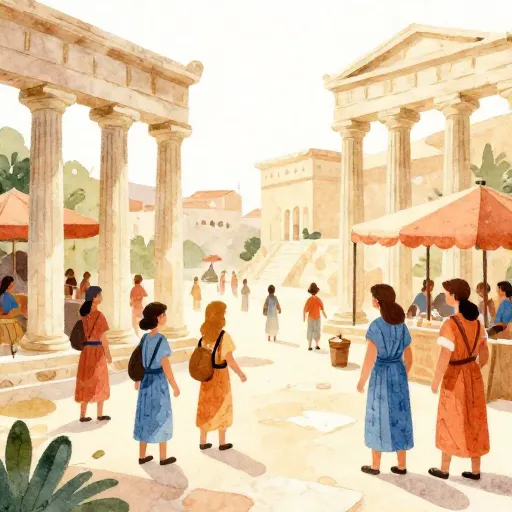
Imagine you are standing in a crowded Greek marketplace (an agora). You hear the sizzle of meat over coals, the clinking of silver coins, and the loud voice of a storyteller. He isn't reading from a book: he is performing. He uses different voices for the gods and moves his hands like he's holding a spear. For a moment, everyone forgets their shopping and watches the hero sail across the sea in their mind.
These people did not have the scientific tools we have today to explain the weather or the stars. Instead, they had stories. These stories were not just for fun, though they were certainly exciting. They were a way of asking, "Why is the world like this?" and "How should a person live?"
Finn says:
"Wait, so if they didn't have science, did they actually think a giant goat-man was making the wind blow? That sounds pretty busy for the goat-man!"
The Land of Living Stories
Ancient Greece was a place of dramatic contrasts. It had jagged, snow-capped mountains and a sea so blue it looked like ink. In this landscape, the Greeks practiced polytheism, which is the belief in many different gods and goddesses rather than just one.
Every part of nature had a personality. The sea was not just water: it was the temper of a god who could be calm one moment and raging the next. The sunrise was not just orbital mechanics: it was a golden chariot pulling the light across the sky.
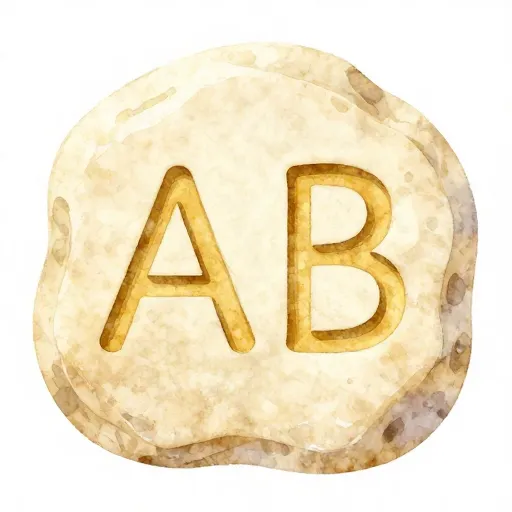
The word 'Alphabet' actually comes from the first two letters of the Greek writing system: Alpha and Beta. Even the way we learn to read is a gift from the people who told these myths!
To understand Greek Mythology, we have to understand that these stories were alive. They weren't written down in a single book like a dictionary. Instead, they were part of an Oral Tradition, passed from parents to children and from poets to kings by word of mouth for hundreds of years.
Myths are public dreams, dreams are private myths.
The Pantheon: A Family Portrait
The most powerful gods were said to live on Mount Olympus, the highest mountain in Greece. This group, known as the Pantheon, functioned like a massive, powerful, and very messy family. They weren't perfect examples of good behavior: they got jealous, they threw tantrums, and they fell in love.
Mira says:
"It's like the gods are just a giant mirror. When we look at Zeus getting angry, maybe we're actually looking at our own anger, just with more lightning bolts."
This is one of the most interesting things about the Greek gods. While some religions have gods that are distant and perfect, the Greeks made their gods look and act a lot like humans. They were like us, but "dialed up" to a thousand. They were bigger, faster, and lived forever, but they still felt the same things we do.
The Greeks gave the gods 'attributes' or symbols to help identify them. Zeus had the lightning bolt: Athena had the owl. If you were a Greek god or goddess, what would your symbol be? Try drawing a shield with a symbol that represents your biggest strength, like a book for wisdom or a sneaker for speed.
Why would a culture want gods who make mistakes? Perhaps it was because the Greeks realized that life itself is complicated and messy. By telling stories about gods who struggled with their feelings, they were really exploring what it means to be a person.
These things never happened, but are always.
Heroes, Monsters, and the Mirror
If the gods were the stars of the show, the heroes were the ones who had to do the hard work. A hero in Greek Mythology was usually a human with a bit of "divine spark" in them. Think of Hercules or Perseus. They faced monsters that represented the things we are most afraid of.
Some think myths were just early attempts to explain how the physical world works, like why it rains or why the sun disappears at night.
Others believe myths were always meant to be psychological, teaching us about courage, fear, and how to treat other people.
These monsters were often a metaphor, which is a way of using one thing to represent another. A multi-headed snake might represent a problem that keeps growing every time you try to fix it. A maze might represent the confusing thoughts inside our own heads.
Finn says:
"I wonder if we have modern monsters. Maybe a computer virus is like a Hydra, because every time you delete one, two more pop up!"
When a hero faced a monster, the story was testing their character. The Greeks were very interested in a concept called Hubris, which means having too much pride or thinking you are better than the gods. Many stories, like the flight of Icarus, were warnings about what happens when we forget our limits.
Where Do the Stories Go?
Greek mythology did not disappear when the ancient temples fell into ruin. Instead, it moved. It changed shape and traveled across the world. When the Romans conquered Greece, they adopted the Greek gods and gave them new names. Ares became Mars: Aphrodite became Venus.
Through the Ages
Later, during a time called the Renaissance, artists and thinkers looked back at these myths to find inspiration for some of the world's most famous paintings and sculptures. They saw in the myths a deep understanding of human nature that science couldn't quite capture.
Even today, we use the language of the Greeks. We talk about having an "Achilles' heel" to mean a weakness, or an "odyssey" to mean a long journey. We name our space missions Apollo and our stars after the characters in these old tales.
The Greeks didn't want their gods to be perfect, they wanted them to be bright.
The Mystery of the Myth
So, did the Greeks actually believe these stories were "true"? That is a difficult question to answer. For some, the stories were like a religion. For others, they were a way to talk about deep truths that weren't about facts, but about feelings and the soul.
Mount Olympus is not a fictional place. It is the highest mountain in Greece, reaching 9,573 feet into the clouds. Today, you can actually hike to the top, though you probably won't find Zeus sitting on a throne when you get there!
We might think of myths as a bridge. On one side is the world we can see and touch: the rocks, the trees, and the ocean. On the other side is the world of our imagination, our fears, and our hopes. The myths sit right in the middle, helping us cross from one side to the other.
When you read a Greek myth today, you aren't just reading a fairy tale. You are listening to an echo that has been bouncing around the world for thirty centuries. You are participating in a conversation that started long before you were born and will likely continue long after.
Something to Think About
If you could add one new story to Greek Mythology today, what would it be about?
There are no right or wrong answers here. Myths are always growing. Think about a problem in our world today and imagine what kind of god or hero might help us understand it.
Questions About Religion
Did the Ancient Greeks actually believe the myths were real?
Why are the Greek gods so mean sometimes?
Which Greek myth is the most important?
The Never-Ending Story
Greek mythology isn't a dusty old book at the back of a library. It is a living language of wonder. Whether you are looking at the stars or facing a 'monster' of a challenge in your own life, these ancient stories are there to remind you that you aren't the first person to feel small, brave, or curious. The gods might be silent now, but the questions they helped us ask are louder than ever.
