Have you ever wondered why people build walls between themselves, even when they live in the same neighborhood?
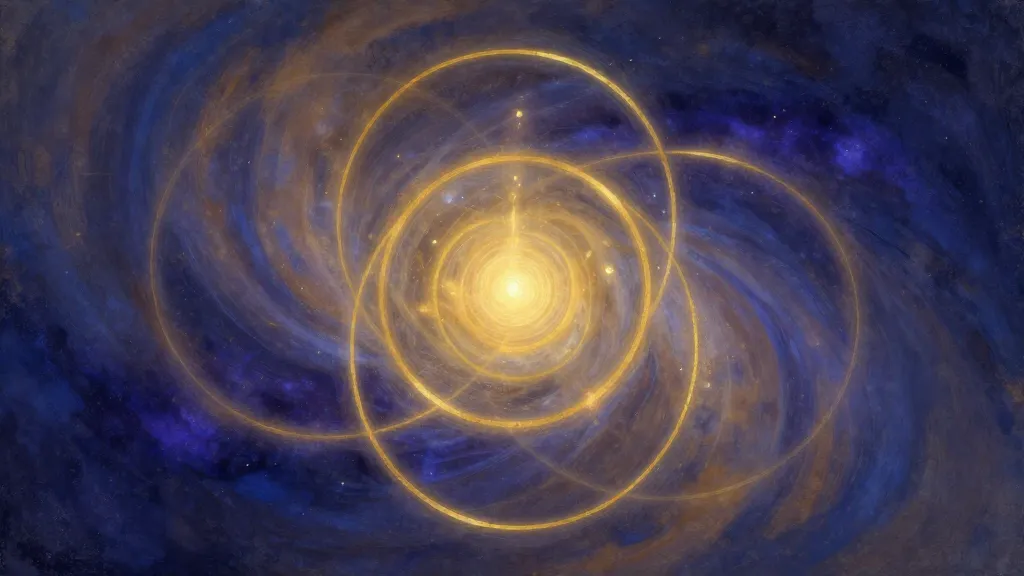
Over 500 years ago, a man named Guru Nanak spent his life walking across Asia to ask that very question. He became the founder of Sikhism, a way of life built on the idea that everyone is equal and connected by a single, mysterious divine light.
Imagine a world where your clothes, your last name, and even the way you prayed determined who was allowed to be your friend. In the year 1469, in a region called the Punjab (which is now split between India and Pakistan), this was exactly how life worked. People were divided by a strict caste system and by their religious labels.
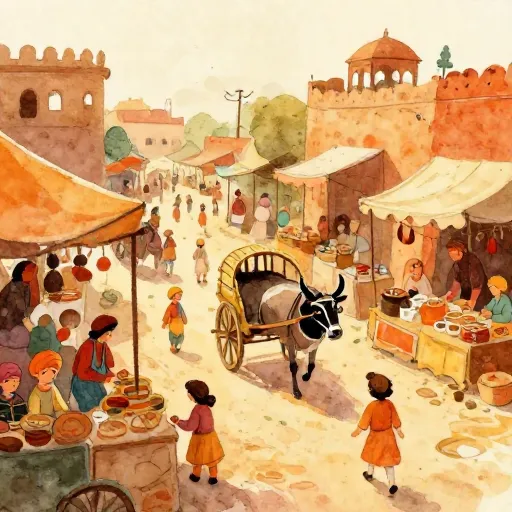
Imagine the Punjab 500 years ago. The air smells of roasting spices and dusty roads. You hear the sounds of Persian, Punjabi, and Sanskrit languages mixing in the marketplaces. There are no cars, just the clip-clop of horses and the slow creak of bullock carts carrying grain.
Nanak was born into a family that expected him to follow the rules of the time. But even as a young boy, he was different. He didn't just accept things because 'that is how they are done.' He wanted to know why people treated some as 'high' and others as 'low.'

Finn says:
"If Nanak didn't want the sacred thread, was he saying that the things we wear to look 'special' actually make us feel more separate from each other?"
When Nanak was only nine years old, his family arranged a ceremony to give him a 'sacred thread' to wear, which would show his high social rank. Nanak refused. He told the priest that a thread could break, get dirty, or be burnt. He asked for a thread made of kindness and contentment instead.
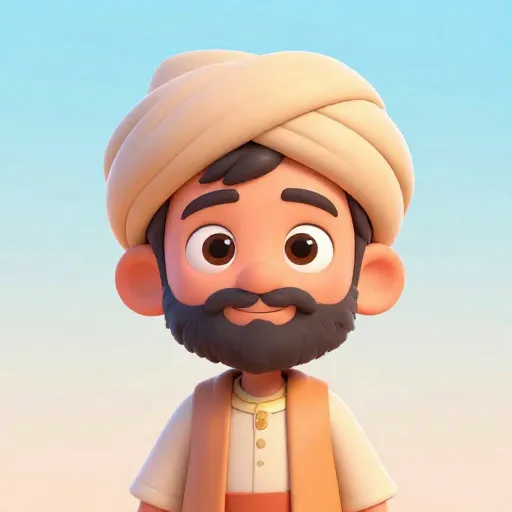
Make contentment your earrings, humility your begging bowl, and meditation the ashes you apply to your body.
As he grew up, Nanak worked as a storekeeper, but his mind was often elsewhere. He spent his mornings bathing in the river and his evenings talking with travelers of all faiths. He was searching for a way to see past the labels people wore like heavy coats.
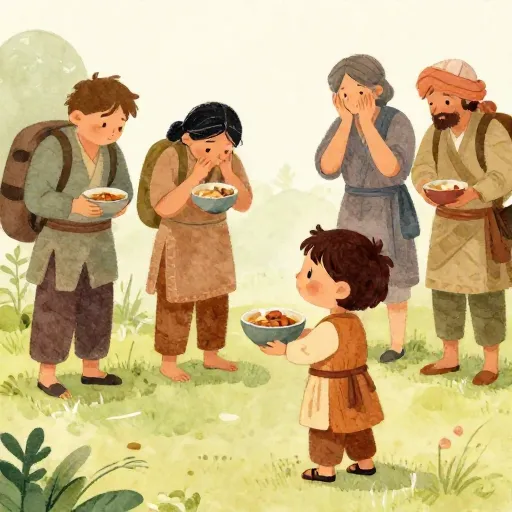
When Nanak was a teenager, his father gave him money to start a business. Instead of buying goods to sell, Nanak used the money to buy food for a group of hungry travelers he met. He called this 'Sacha Sauda,' which means 'The True Bargain.'
One morning, when Nanak was about 30 years old, something extraordinary happened. He went down to the river Kali Bein for his morning bath, dived into the water, and did not come back up. His friends and family waited for hours, then days, but the river was silent.
The Three-Day Silence
Everyone assumed Nanak had drowned. But three days later, he stepped out of the water, looking peaceful and transformed. For an entire day, he didn't say a single word. When he finally spoke, he said something that shocked everyone: "There is no Hindu, and there is no Muslim."

Mira says:
"It's like when you're at the beach and you see the waves. They all look different, but they're all just the same ocean. Maybe Nanak saw the ocean, not just the waves."
This didn't mean those religions didn't exist. It meant that in the eyes of the Creator, those labels didn't matter. He believed that if God is like the sun, then different religions are just different windows through which we see the same light.
That following specific rituals and wearing certain symbols was the only way to be close to God.
That rituals were like empty boxes: they only mattered if they were filled with honest actions and love for others.
Nanak decided that he couldn't stay in one place anymore. He became a Guru, which means a teacher who brings light to darkness. He gave away all his belongings and began a series of long journeys called Udasis.
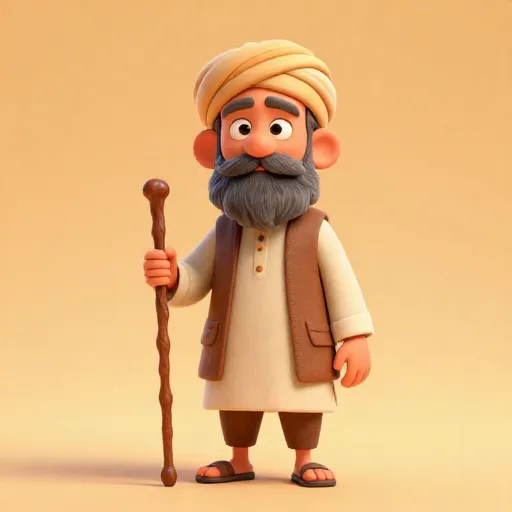
Truth is the highest virtue, but higher still is truthful living.
Accompanied by his friend Mardana, a talented musician who played a stringed instrument called a rabab, Nanak walked thousands of miles. They traveled to the snowy mountains of Tibet, the deserts of Mecca, and the busy streets of Baghdad. Everywhere they went, they used music to share their message.
Guru Nanak's best friend, Mardana, was a Muslim, while Nanak's family was Hindu. In their time, people from these different backgrounds rarely traveled together as equals. Their friendship was a living example of Nanak's message.
One of the most famous stories from his travels is about a wealthy, greedy man named Malik Bhago. Malik threw a giant feast to show off his power. Nanak refused to attend, choosing instead to eat simple bread with a poor carpenter named Lalo.
Mira says:
"The milk and blood story is interesting. It's not about what the food tastes like, but the *energy* that went into making it. It makes me wonder about the things I own."
When Malik Bhago angrily asked why Nanak preferred the carpenter's food, Nanak supposedly took a piece of Malik's rich food in one hand and Lalo's simple bread in the other. When he squeezed them, milk flowed from the carpenter's bread, but blood dripped from the rich man's food. This was a symbol: one was earned with honest hard work, the other through hurting people.
Through the Ages
The Kitchen of Equality
In his later years, Guru Nanak settled down and founded a village called Kartarpur, which means 'City of the Creator.' Here, he turned his big ideas into daily habits. The most important of these was the Langar, or community kitchen.
Next time you are eating with a group of people: a school lunch, a family dinner, or a party: try to imagine that every single person there has the same 'light' inside them. How does it change the way you look at the person you usually find difficult to talk to?
In the Langar, everyone had to sit on the floor in a straight line, side by side. Kings had to sit next to servants. Rich people had to sit next to the poor. By eating the same food in the same way, the walls between them began to crumble.

Recognize the whole human race as one.
Guru Nanak taught that you don't have to live in a cave or climb a mountain to be a good person. You find the divine by living a normal life, working hard, and helping others. He called this Seva, which is service that expects nothing in return.
Something to Think About
If you could only use your actions, and not your words or your clothes, how would people know who you really are?
There isn't a single right answer to this. Guru Nanak believed that our 'true self' is found in how we treat others when no one is watching.
Questions About Religion
Was Guru Nanak a king or a priest?
Why is he called a 'Guru'?
Did Guru Nanak start a new religion on purpose?
The Journey Continues
Guru Nanak’s life was a long walk toward a world without walls. He didn't leave behind a set of complicated rules, but rather a simple, challenging invitation: to see the divine in every face we meet. Whether we are in a busy city or a quiet room, that invitation is still open to us today.