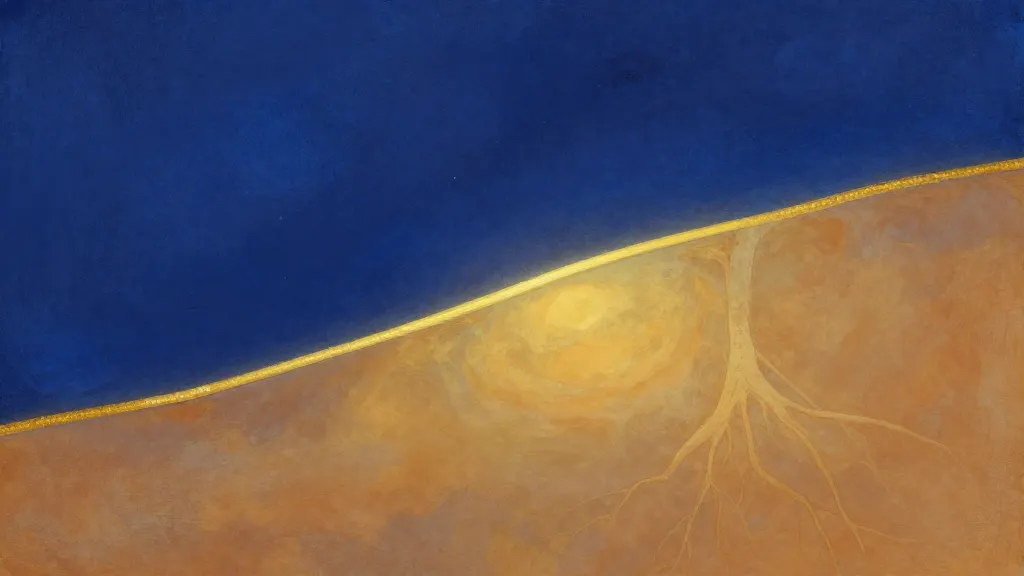
Have you ever wondered what happens to a secret once it is forgotten, or where the roots of a giant oak tree truly end?
In Ancient Greece, people looked at the earth and saw more than just soil and rocks. They believed in a vast, invisible kingdom ruled by a god named Hades, the silent brother of Zeus who held the keys to the Underworld.
The ground beneath your feet feels solid, but for the people living in Greece three thousand years ago, it was merely a roof. Below the mountains and the olive groves lay a kingdom that no living person could see.
This was the realm of Hades, a god whose name was so powerful that many people were afraid to even speak it out loud. They called him the Unseen One or the Host of Many, believing that he was always watching over the things we lose or leave behind.
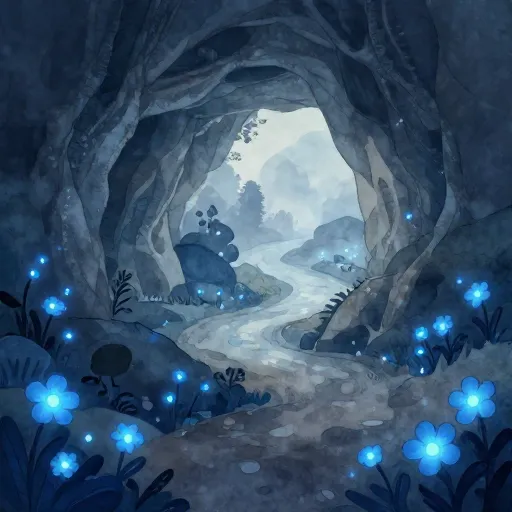
Imagine you are walking through a deep, cool cave. As you go further, the air smells like damp earth and ancient stone. Suddenly, the cave opens up into a massive field of gray flowers that glow softly in the dark. There is no sun, but the ceiling of the cave is so high you can't see the top. This is the entrance to the realm of the Unseen.
History tells us that the Greeks did not think of Hades as a villain in a black cape. In their minds, he was more like a very serious, very busy librarian.
He had the massive job of keeping track of every soul that had ever lived. While his brother Zeus ruled the bright, noisy sky, Hades ruled the quiet, dark depths where everything eventually comes to rest.
The Silent King and His Invisible Crown
Hades was the eldest son of the Titans Cronus and Rhea. After a great war against the giants, he and his brothers, Zeus and Poseidon, drew lots to see who would rule which part of the universe.
Zeus got the heavens, Poseidon got the sea, and Hades was left with the earth below. To help him rule this hidden world, the Cyclopes gave him a magical gift: the Helm of Darkness, a helmet that made the wearer completely invisible.

Mira says:
"If I had a helmet of invisibility, I think I'd just use it to see what my cat does when she thinks no one is looking. But for Hades, it's about being the person who sees everything without being seen back. That's a huge responsibility."
This helmet is a clue to how the Greeks felt about death and the unknown. They understood that the most powerful forces in nature are often the ones we cannot see, like the wind, the passage of time, or the thoughts inside our heads.
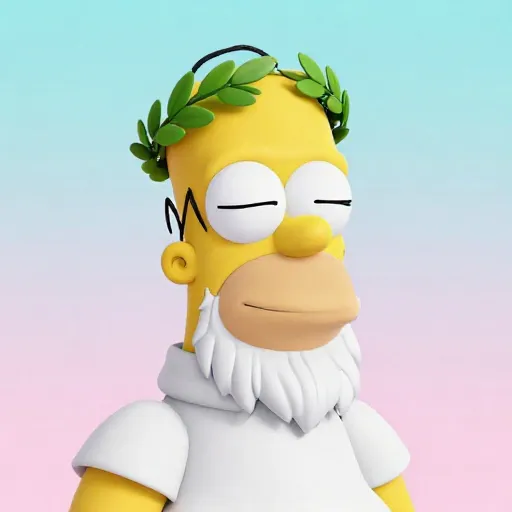
The house of Hades is a place of gloom, but it is also a place of order. He is the one who keeps the balance.
Because Hades was invisible, he became a symbol for the parts of life that are mysterious. He was the god of the "hidden," which included not just the spirits of the dead, but also the physical riches found in the earth.
The Land of Gold and Seeds
You might think a kingdom of the dead would be empty or sad, but the Greeks also called Hades by another name: Pluto, which means "The Wealthy One."
- He owned all the gold, silver, and precious gems buried in the mountains.
- He looked after the seeds that slept in the dirt during winter before sprouting.
- He was the guardian of everything that was "stored" underground for the future.
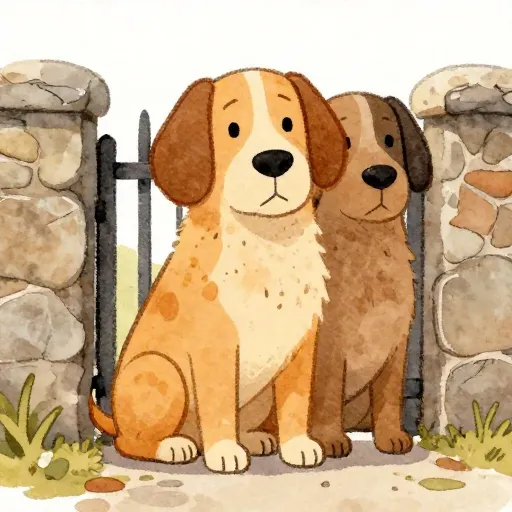
The name 'Cerberus' might actually come from an ancient word meaning 'spotted.' This means that the terrifying, three-headed guardian of the Underworld might have essentially been named 'Spot.'
Think about a garden in the winter. It looks dead, but underneath the frost, there is a lot of work going on. The Greeks believed Hades was the one supervising that quiet growth, making sure the world was ready to turn green again when spring arrived.
A Journey Across the Five Rivers
To get to the kingdom of Hades, a soul had to go on a long journey. The Underworld was separated from the world of the living by five magical rivers, each representing a different human emotion or experience.
- The Styx: The river of hatred and the boundary across which souls were ferried.
- The Lethe: The river of forgetfulness, where souls drank to erase their memories.
- The Acheron: The river of woe or sorrow.
- The Phlegethon: A river of fire that didn't burn anything but stayed hot forever.
- The Cocytus: The river of lamentation or wailing.
Hades is a cold, harsh jailer who traps souls in a dark kingdom and never lets them leave, even to say goodbye.
Hades is a fair and honest judge who makes sure that everyone, whether they were a king or a beggar, is treated exactly the same in the end.
Crossing these rivers required a guide. The most famous was Charon, a grumpy ferryman who took souls across the River Styx in his small, creaky boat.

Finn says:
"Wait, if the River Lethe makes you forget everything, do you forget your name? Or your favorite flavor of ice cream? Maybe that's why the Underworld is so quiet: everyone is trying to remember where they put their keys."
But the ferry was not free. Families would place a small coin, called an obol, in the mouth of the deceased to pay Charon for the ride. If you didn't have a coin, you were said to wander the banks of the river for a hundred years.
The Three-Headed Guard Dog
Once a soul made it across the water, they encountered the most famous pet in history: Cerberus. This was a massive dog with three heads and a tail like a serpent.
Cerberus was not there to keep people out: he was there to keep the souls in. Hades was a very strict ruler who believed that once something belonged to his kingdom, it should stay there forever.
He is called Hades because he is the benefactor of those who are below. He binds them with the strongest of chains: the desire for virtue.
Cerberus represents the idea of a threshold, a point where you cannot turn back. In the Greek mind, life was a journey moving in one direction, and Hades was the final, quiet destination where everyone was eventually equal.
The Story of Persephone
No story about Hades is complete without Persephone, the daughter of the earth goddess Demeter. The myth says that Hades fell in love with her and took her down to the Underworld to be his queen.
Demeter was so sad that she stopped all the plants from growing, creating the very first winter. Eventually, a deal was made: Persephone would spend part of the year with her mother and part of the year with Hades.
Take a piece of paper and draw a line across the middle. Above the line, draw things that represent 'Now' (like your school, your friends, and the sun). Below the line, draw things that represent 'Memory' or 'Hidden' (like old toys you lost, roots of trees, or dreams you've had). How do the two halves connect?
Before she left the Underworld for the first time, Hades gave Persephone a few pomegranate seeds to eat. Because she had tasted the food of the dead, she was forever tied to his kingdom.
- When she is with Hades, the world is cold (Winter).
- When she returns to her mother, the world blooms (Spring).
- This cycle showed the Greeks that life and death are not opposites, but parts of a circle.
Hades Through the Ages
Why Hades Matters Today
We might not believe in three-headed dogs or grumpy ferrymen anymore, but we still use the ideas that Hades represents. When we talk about "digging deep" into a problem or finding a "hidden gem" of an idea, we are using the language of the Underworld.
Mira says:
"I like the idea that the King of the Dead is also the King of Gold. It's like saying that even the things that are over still have a lot of value. Nothing is ever truly wasted, it's just stored somewhere else."
Hades teaches us that the end of something is not always a bad thing. Just like a book needs a final chapter to make sense of the whole story, the Greeks believed that the Underworld gave meaning to the lives they lived in the sun.
Easy is the descent into the Underworld; night and day the gates of dark Hades stand open.
We often fear the dark because we can't see what's in it. But as Hades shows us, the dark is also where seeds grow, where treasures are hidden, and where our memories go to be kept safe.
Hades is the only major Greek god who almost never appears in art or stories with the other gods on Mount Olympus. He preferred to stay in his own kingdom, minding his own business and keeping his world running smoothly.
Something to Think About
If you had to design a world for things that are forgotten or lost, what would it look like?
There are no right or wrong answers here. Some people imagine a dusty attic, while others imagine a deep ocean or a quiet forest. Your idea of the 'unseen' is uniquely yours.
Questions About Religion
Is Hades the same as the Devil?
Why does Hades have a three-headed dog?
Was Hades lonely in the Underworld?
The Beauty of the Unseen
Hades reminds us that just because we can't see something doesn't mean it isn't there. Whether it is the roots of a tree, the gold in a mountain, or the memories of people who came before us, the 'unseen' world is what supports the world we see every day. Next time you look at the ground, remember that there is a whole other story happening beneath your feet.
