Have you ever looked up at the night sky and wondered if there is something more beyond the stars?
For thousands of years, people in every corner of the world have asked what happens after a life ends. They created the idea of Heaven, a place or a state of being that offers comfort, justice, and a chance to be reunited with those we love. This Afterlife is one of the biggest mysteries in human history, acting as a map for our hopes and a safe place for our questions.
When you think of the word heaven, you might imagine fluffy white clouds, golden gates, or people playing harps. But the history of this idea is much older and more varied than the pictures we see in cartoons.
The word itself comes from the Old English word heofon, which simply meant the sky or the canopy above the earth. For ancient people, the sky was the most mysterious thing they could see, so it made sense that the most mysterious parts of life would happen there.
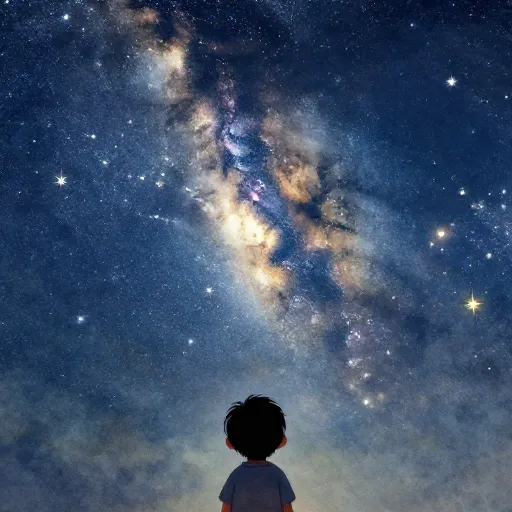
Imagine you are standing in a field 4,000 years ago. There are no city lights, no cars, and no phones. The Milky Way looks like a bright river of milk spilled across the black sky. To you, those stars aren't just giant balls of gas: they look like the campfires of ancestors or the glowing windows of a city in the clouds.
Before there were telescopes or spaceships, the sky felt like a physical ceiling to our world. People looked at the sun, the moon, and the stars and felt they were looking into the home of something greater than themselves.
Because the sky never seemed to change, it became a symbol for things that last forever. If things on earth get old or break, the sky remains constant, and that gave people a sense of peace.
The Weighing of the Heart
One of the earliest detailed maps of the afterlife comes from Ancient Egypt. They didn't just see heaven as a place to sit and rest: they saw it as a reflection of the life you lived on earth.
To reach the Field of Reeds, which was their version of heaven, a person's spirit had to travel through a dangerous landscape. At the end, their heart was weighed on a scale against the Feather of Truth, representing the concept of Ma'at, or cosmic balance.

Finn says:
"Wait, a heart weighed against a feather? That sounds a bit scary. I hope I've been kind enough that my heart doesn't feel heavy with all the times I forgot to share my toys."
If the heart was as light as the feather, the person could enter a land that looked exactly like Egypt, but better. There was no hunger, the crops grew tall without hard labor, and you would meet your ancestors under the shade of trees.
This idea provided Containment for the fear of death. It suggested that as long as you were kind and truthful, you had nothing to worry about when your time on earth was finished.
If I find in myself a desire which no experience in this world can satisfy, the most probable explanation is that I was made for another world.
The Isles of the Blessed
Across the sea, the Ancient Greeks had a different way of dividing the world beyond. Most people went to a shadowy place called Hades, which wasn't necessarily bad, just a bit dull and quiet.
But for the heroes and the truly virtuous, there was a place called Elysium, or the Isles of the Blessed. These were islands at the edge of the earth where the sun never set and the air was always sweet with the smell of flowers.
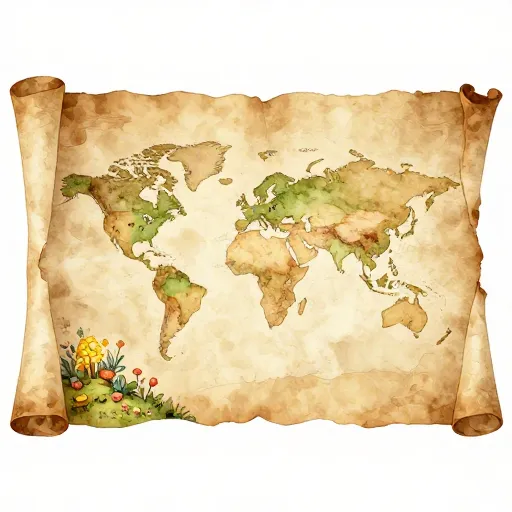
In the Middle Ages, some maps actually included the location of the Garden of Eden and the entrance to Heaven. Explorers would sail across the ocean hoping to find the physical place where the sky met the earth. They didn't realize that the world was round yet!
What makes the Greek version interesting is how it changed over time. Early on, only heroes like Achilles could go there, but later, philosophers argued that anyone who lived a good life could reach these beautiful islands.
It shows how humans started to believe that heaven shouldn't just be for famous leaders, but for anyone who showed courage and kindness in their own small way.
The Walled Garden
In many traditions, the most common way to describe heaven is as a beautiful garden. In fact, the word Paradise comes from an ancient Persian word, pairidaeza, which means a walled-in space or a royal garden.
Imagine a world where the desert is hot and dusty, but behind a high stone wall, there is cool water, fruit trees, and green grass. That feeling of safety and refreshment is what many people have searched for when they imagine the afterlife.
Some people believe heaven is a real, physical place where we go in our bodies, with houses, food, and neighborhoods just like earth, only more beautiful.
Others believe heaven is a spiritual energy, where we don't have bodies anymore and instead become part of a giant feeling of love and light that connects everyone.
In the Islamic tradition, heaven is often described as Jannah, which also means garden. It is a place with four rivers: one of water, one of milk, one of honey, and one of ginger: representing everything that is delicious and life-giving.
For people living in harsh environments, heaven wasn't a place in the clouds. It was a place with plenty of shade and enough water for everyone, showing how our surroundings shape our dreams.

Mira says:
"I like the idea of heaven being a walled garden. It's not about keeping people out, but about creating a space where everything is protected and can grow without being hurt by the wind or the cold."
A City of Light and Music
During the Middle Ages in Europe, the idea of heaven shifted from a garden to a magnificent city. This was a time when cities were the centers of learning, beauty, and safety from the wild forests outside.
Thinkers like Dante Alighieri wrote long poems describing heaven as a series of concentric circles, like the layers of an onion, leading up to a point of pure light and music.
Heaven Through the Ages
This version of heaven was very organized. Everyone had a place, and the main activity was singing or contemplating the beauty of the divine. It was a way of imagining a world where there was no more chaos or war.
Art from this period often shows angels with golden halos and streets paved with precious stones. It was the most expensive and beautiful thing people could imagine, meant to show that the afterlife was more valuable than anything on earth.
The Seven Heavens
In many religions, including Judaism, Islam, and some forms of Christianity, there isn't just one heaven, but seven. This idea, known as the Seven Heavens, relates to how ancient people saw the planets.
They believed that as you moved further away from the earth, you passed through different layers of reality. Each layer was more peaceful and closer to the ultimate truth than the one before it.
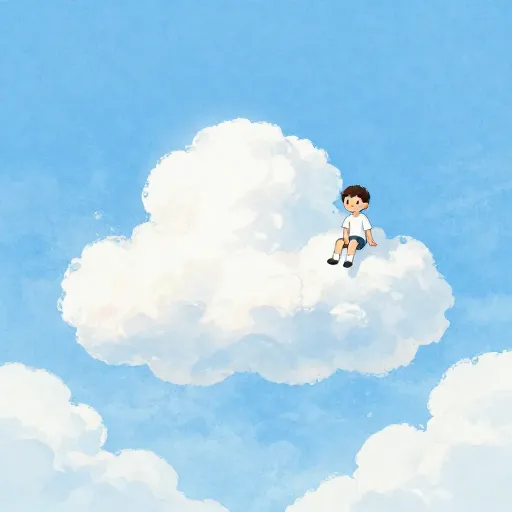
The idea of 'Cloud Nine' comes from meteorology, but it's often used to mean heaven. In the 1950s, the International Cloud Atlas classified the highest, fluffiest clouds as 'Type 9.' Being on Cloud Nine meant you were as high as you could possibly go!
This concept allowed for a sense of growth. It suggested that even after we leave this life, we might keep learning and moving toward something even better.
It also explains why we still use the phrase "I'm in seventh heaven" today when we are extremely happy. It means we have reached the very top layer of joy.
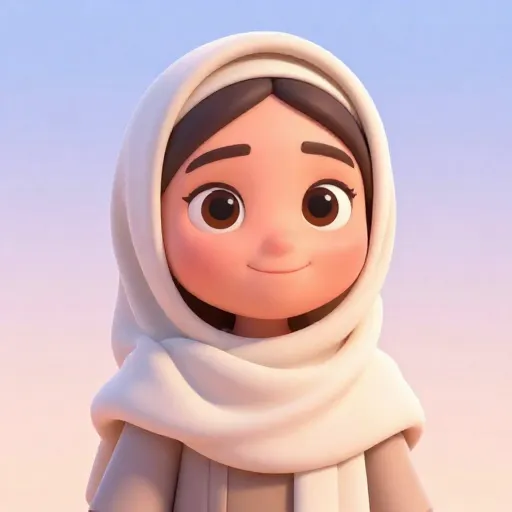
Heaven is not a place, but a state of mind; it is the presence of God within us.
The Inner Heaven
As time went on, some thinkers began to suggest that heaven isn't a place you go to with your feet, but a state of mind you carry in your heart. This is often called a state of Consciousness.
They argued that if you are full of anger and greed, you wouldn't be happy even in a garden of gold. But if you are full of love and peace, you are already living in a kind of heaven right now.
Close your eyes and think of your 'Safe Place.' It might be a treehouse, your bed, or a beach you visited once. What does it smell like? What sounds do you hear? Many people believe that imagining this feeling of total safety is the best way to understand what the idea of heaven is trying to do for us.
In some Eastern traditions, like Buddhism, the goal isn't a physical place but a state called Nirvana. This is a moment where all suffering and wanting stop, and the spirit feels as calm as a candle flame in a room with no wind.
This shift changed the focus from waiting for the future to being present in the now. It suggests that we can build "heaven on earth" by how we treat the people and animals around us today.
Memory and the Stars
For people who don't follow a specific religion, heaven can take a different form. It can be the way we live on in the memories of others, like a story that never stops being told.
Scientists sometimes point out that we are all made of "stardust," because the atoms in our bodies were created inside stars billions of years ago. When we die, those atoms go back into the earth and the sky to become part of new trees, new flowers, and perhaps new stars.
Finn says:
"I think I like the stardust idea best. It makes me feel like I'm part of the whole universe, and that even if I can't see someone, they're still part of the same big story I am."
This is a form of Transcendence, which means going beyond the limits of our individual selves. It is a way of saying that nothing is ever truly lost: it just changes shape.
Whether it is a garden, a city, or a cycle of atoms, the idea of heaven helps us hold the difficult feeling of missing someone. It gives us a way to say, "I don't know exactly where you are, but I believe you are safe."
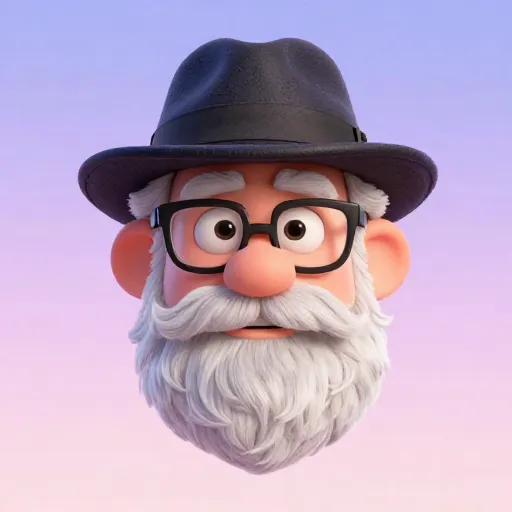
No one is actually dead until the ripples they cause in the world die away.
Staying with the Mystery
Talking about heaven is really a way of talking about how much we value life. We imagine a place where the things we love about this world: like friendship, light, and peace: are kept safe forever.
It is okay to have your own picture of what heaven looks like, or to not have a picture at all. The mystery itself is a big, quiet space where all of our hopes are allowed to exist without needing to be proven.
Something to Think About
If you were designing a place where everything you loved was kept safe, what would it look like?
There are no right or wrong answers here. Some people imagine a quiet library, others a loud party with all their friends, and some just imagine a warm light. What feels most like 'peace' to you?
Questions About Religion
Where is heaven actually located?
Do pets go to heaven?
Do you have to be perfect to get in?
Holding the Mystery
Whether you see heaven as a garden, a city, or a beautiful memory, the idea exists to help us feel safe in a big, wide universe. It is a way of holding onto hope even when things feel difficult. As you grow, your idea of heaven might change, and that's okay: it's a mystery that has plenty of room for all your questions.
