Have you ever wondered how one thing can be many things at the same time?
In the ancient traditions of Hinduism, which began over 4,000 years ago in the Indus Valley, this is one of the most beautiful mysteries. Instead of seeing the divine as just one person, Hindu thinkers imagine a vast Brahman: a universal spirit that shows up in millions of different forms.
To understand the Hindu gods, we have to travel back a very long way in time. Imagine standing on the banks of the Indus River thousands of years ago. You would see people who were already asking the same big questions we ask today: Why does the sun rise? What makes the flowers bloom? Who are we, really?
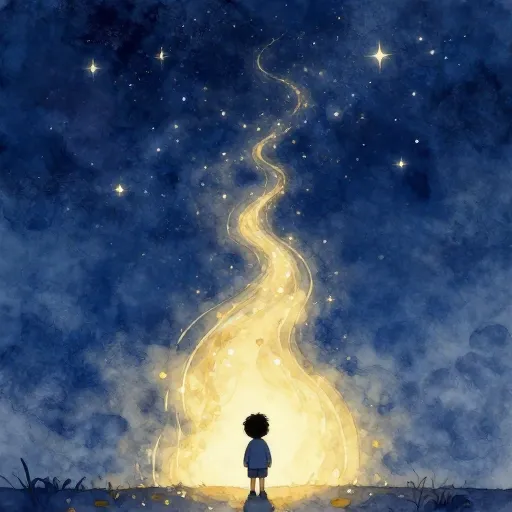
Imagine the night sky. You see thousands of individual stars, each with its own name and sparkle. But all of those stars are part of one single thing: the Universe. This is how many Hindus see the gods: as the individual stars that make up the one great light.
These ancient people didn't find just one answer. They found many. They began to see the world as a place where the divine, or the sacred, lived in everything. They saw it in the wind, in the water, and in the fire. They began to call these different powers by name.
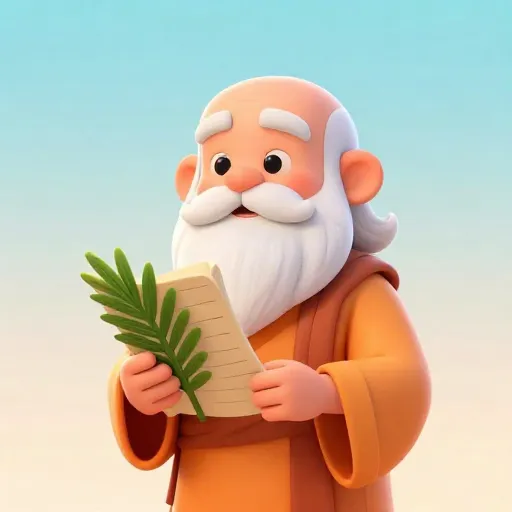
Truth is one; the wise call it by many names.
This quote from the Rig Veda, one of the oldest books in the world, tells us something important. It suggests that even if we use different names or see different faces, we might be talking about the same mystery. It is a bit like how the ocean is one thing, but it has many waves, bubbles, and currents.
The Big Idea: One and Many
Many people are surprised to learn that Hinduism can be seen as having millions of gods, yet many Hindus believe in one ultimate reality called Brahman. Think of Brahman like a giant, invisible energy or a universal spirit that connects everything in the universe. It is the silence between notes in a song and the life inside a seed.

Mira says:
"It is like how I am a daughter to my mom, a student to my teacher, and a captain to my soccer team. I am the same person, but I have different 'modes' depending on who needs me!"
Since Brahman is so big and hard to imagine, the Hindu tradition provides many different windows into it. These windows are the gods and goddesses. Each one shows a different side of what it means to be alive. They are like different characters in the world's longest, most colorful story.
Think about the people you love. If you had to describe your best friend using only one word, could you do it? Probably not! You might need words like 'funny,' 'brave,' and 'kind.' The Hindu gods work the same way: it takes millions of 'words' (gods) to describe the greatness of the universe.
If you wanted to understand the power of wisdom, you might look at one god. If you wanted to understand the power of protection, you might look at another. This allows people to connect with the divine in a way that feels personal and real. You can choose the "window" that helps you see most clearly today.
The Trimurti: The Great Cycle
In the Hindu world, the universe is always moving through a cycle of birth, life, and ending. This cycle is looked after by three major gods known as the Trimurti. Each one has a specific job to do to keep the world spinning.
- Brahma is the Creator. He is often shown with four heads, looking in every direction. He represents the beginning of ideas and the start of the world.
- Vishnu is the Preserver. His job is to look after the world and make sure everything stays in balance. He is famous for coming to Earth in different forms called avatars whenever things get too difficult.
- Shiva is the Transformer. People sometimes call him the destroyer, but it is not a scary kind of destruction. It is the kind where old things clear away so that new things can grow, like a forest fire that makes the soil rich again.
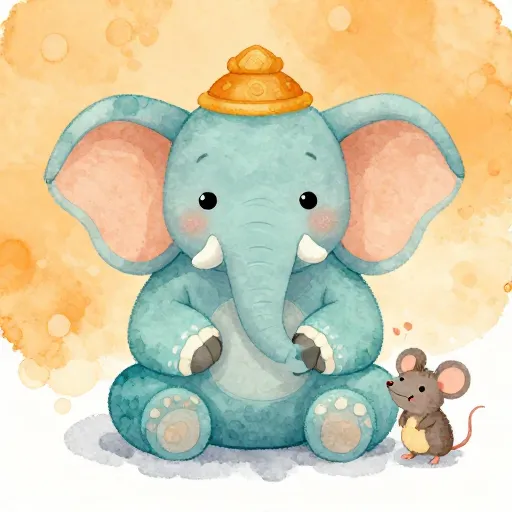
Most Hindu gods have a 'Vahana,' or a special animal vehicle they ride! Vishnu rides a giant eagle named Garuda. Shiva has a bull named Nandi. Even Ganesha has a tiny mouse! These animals represent different human qualities that the gods have mastered.
These three gods show us that change is a natural part of life. You cannot have a beginning without an ending. And you cannot have growth without someone to look after it. It is a beautifully organized system of teamwork.
The Tridevi: The Power of the Goddesses
Just as there are three great male gods, there are three great goddesses known as the Tridevi. In Hindu thought, power or energy is often seen as feminine, called Shakti. Without Shakti, the gods wouldn't be able to do their jobs.
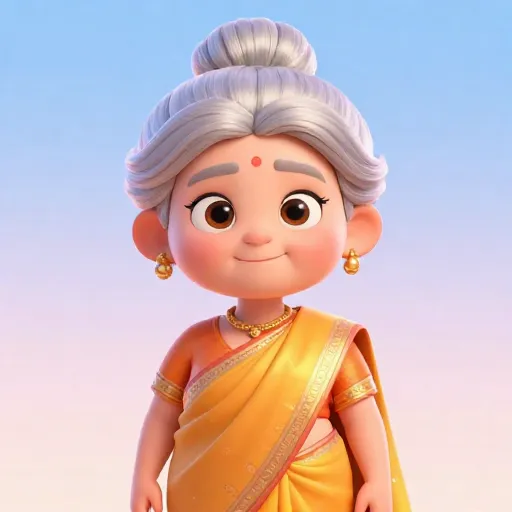
Where women are honored, there the gods are pleased.
Saraswati is the goddess of learning, music, and art. She is usually shown in white, sitting by a river with a musical instrument. Students often pray to her before exams because she represents the clear light of knowledge. She reminds us that being smart and being creative are two sides of the same coin.

Finn says:
"So if Saraswati is the goddess of music, does that mean every time I practice my drums, I am actually doing something religious? That makes practice feel way more important."
Then there is Lakshmi, the goddess of wealth and good fortune. But for Hindus, wealth isn't just about money in a bank. It is about having a rich life full of friends, health, and kindness. During the festival of Diwali, people light lamps to show Lakshmi the way into their homes.
Finally, there is Parvati, who takes many forms, including the fierce and powerful Durga. Durga represents the strength we need to fight against things that are unfair. She is often shown riding a lion or a tiger, carrying many tools to show she is ready for anything. She teaches us that being kind doesn't mean being weak.
Some people say Hinduism has 330 million gods because every single living thing has a spark of the divine in it.
Other people say Hinduism has only one God (Brahman) and all the others are just different ways of looking at that one light.
Famous Faces: Ganesha and Hanuman
Some gods are so popular that you will see their pictures everywhere in India: in taxis, on shop windows, and in people's kitchens. One of the most beloved is Ganesha, the god with the head of an elephant. He is known as the "Remover of Obstacles."
People often say a little prayer to Ganesha before they start something new, like a new school year or a long trip. His big elephant ears remind us to listen more, and his small eyes remind us to focus. He is a gentle, wise figure who helps people feel brave when they face a challenge.
Mira says:
"I like that Ganesha has an elephant head. It makes him feel like he belongs to the whole world of animals and nature, not just to humans."
Another famous figure is Hanuman, the monkey god. He is the ultimate symbol of devotion and strength. In the great story of the Ramayana, Hanuman leaps across the ocean to help his friend, King Rama. He shows us that when we care deeply about something, we can do things that seem impossible.
Avatars: God Coming to Earth
One of the most interesting ideas in Hinduism is the avatar. This word actually means "descending." It is the idea that the divine comes down to Earth in a physical form to help humans. Vishnu is said to have ten main avatars.
Through the Ages
One of the most famous avatars is Krishna. He is often shown as a mischievous young boy who loves to play the flute and eat butter. As an adult, he is a wise teacher who speaks about duty and love. Through Krishna, people see that the divine can be a friend, a child, or a guide.
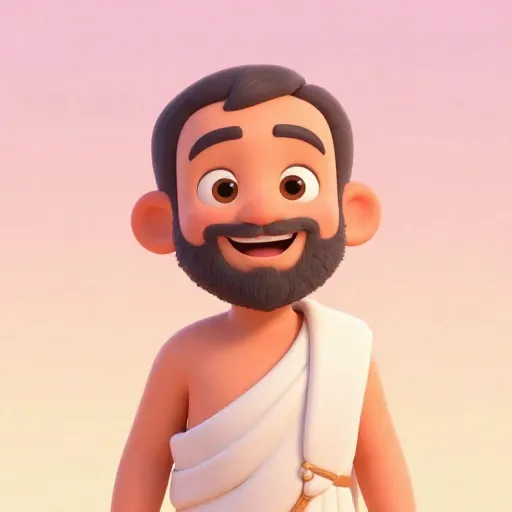
As many faiths, so many paths.
Ramakrishna was a famous teacher who lived in the 1800s. He loved to explain complicated ideas using simple stories. He believed that even though people might follow different gods, they were all trying to reach the same sense of peace and goodness. It is like climbing a mountain from different sides: the view from the top is the same.
Living with the Gods
For many kids growing up in Hindu families, the gods aren't just characters in old books. They are like members of the family. People might have a small altar at home where they offer flowers or fruit to a statue, which is called a murti.
In Hindu homes, gods are treated like honored guests. People might offer them fresh water, ring a small bell to 'wake them up,' or wave a lamp called an 'Aarti' to show them respect. It turns daily life into a conversation with the sacred.
Festivals are the times when the stories of the gods really come to life. During Holi, people throw colorful powder to celebrate the arrival of spring and the stories of Krishna. During Ganesh Chaturthi, giant statues of Ganesha are carried through the streets with music and dancing. It is a way of saying that the sacred isn't just in a temple: it is in the streets, the colors, and the laughter.
Religion, in this sense, is about more than just rules. It is about wonder. It is about looking at a mountain and seeing Shiva, or looking at a book and seeing Saraswati. It is a way of making the whole world feel like a magical, connected place.
Something to Think About
If you could design a 'window' to the universe, what would it look like?
There are no right or wrong answers here. Would your window be a person, an animal, a tree, or maybe something completely different, like a piece of music?
Questions About Religion
Why do some Hindu gods have blue skin?
Why do some gods have so many arms?
Is Hinduism polytheistic (many gods) or monotheistic (one god)?
A World Full of Wonders
The world of Hindu gods is a reminder that the universe is too big to be explained by just one story. By looking at these many faces, we can find parts of ourselves reflected in the divine. Whether it is the courage of Durga or the curiosity of Ganesha, these ancient ideas continue to help people find their way in the world today.