Have you ever looked at a river and wondered where the water began and where it will end?
For thousands of years, people in South Asia have used stories to explore the deepest questions of life. This collection of ancient wisdom, often called Hindu Mythology, offers a way to look at the world as a place of endless cycles, brave choices, and a hidden connection between all living things. It is part of a living tradition known as Sanatana Dharma, or the eternal way.
The Land of Five Rivers
To understand these stories, we have to travel back over 5,000 years to the banks of the Indus River. This is in a part of the world we now call India and Pakistan. The people who lived there built grand cities with brick houses and clever drainage systems. They didn't just build with stones, they built with sounds.
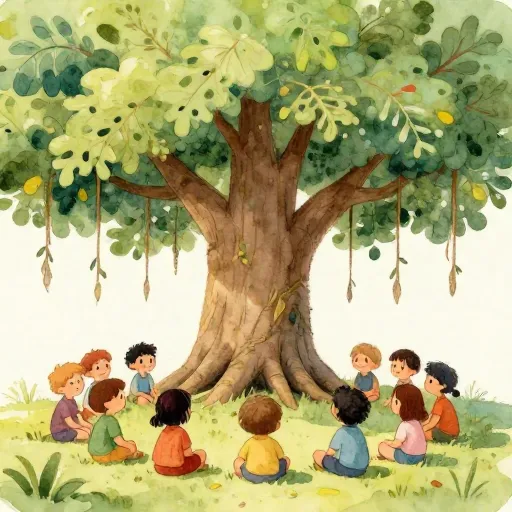
Imagine a classroom with no books, no pencils, and no iPads. Instead, you sit under a giant Banyan tree. Your teacher chants a long poem, and you repeat it back until the rhythm lives in your heartbeat. This is how the most ancient Hindu stories were kept safe for over a thousand years.
These people, and the groups that followed them, developed a tradition of chanting. They didn't write their stories down at first. Instead, they memorized thousands of lines of poetry and passed them from teacher to student. This ensured that the stories stayed alive in the human voice for centuries before they ever touched a page.
These early texts are called the Vedas. They describe the natural world as being full of spirit and power. The wind, the fire, and the rain weren't just weather: they were seen as characters with their own moods and responsibilities. This was the beginning of a map that helped people navigate the mystery of being alive.
The One and the Many
One of the most complex ideas in Hindu mythology is that everything in the universe is actually part of one single reality. This ultimate reality is called Brahman. Think of it like the ocean: every individual person, animal, and star is like a single drop of water. Even though the drops look separate, they are all made of the same ocean.
Mythology is not a lie: it is poetry. It is metaphorical. It has been well said that mythology is the penultimate truth: penultimate because the ultimate cannot be put into words.
Because Brahman is too big for a human mind to fully grasp, the stories give us many different gods and goddesses to represent different parts of it. Some gods represent wisdom, some represent strength, and others represent the messy, changing nature of time. It is a way of breaking down a giant mystery into smaller, more relatable pieces.
Finn says:
"If everything is part of the same Brahman, does that mean even a mosquito and a mountain are kind of like siblings?"
This means that when someone prays to a specific god, they are really connecting with a specific quality of the universe. If you need help learning, you might look to Saraswati, the goddess of music and arts. If you are facing a big obstacle, you might think of Ganesha, the elephant-headed god who helps clear the path.
The Dance of the Three
In these myths, the universe doesn't have a single beginning and end. Instead, it moves in a giant circle. To explain how this circle works, the stories introduce three main figures known as the Trimurti. Each one has a specific job to keep the universe moving.
- Brahma is the Creator, who dreams the world into existence.
- Vishnu is the Preserver, who steps in to keep things balanced and fair.
- Shiva is the Destroyer, who clears away the old so something new can begin.
Destruction is the end of everything. It is sad and scary because things we love disappear.
Destruction is just clearing the stage. You can't draw a new picture until you have a clean sheet of paper.
This cycle can feel a bit strange if we are used to thinking of time as a straight line. But if you look at nature, everything moves in circles. The seasons repeat every year: the moon grows and shrinks: trees drop their leaves only to grow new ones in the spring. Shiva's destruction isn't meant to be scary, it is a necessary part of making space for Brahma's next creation.
When the World Needs Help
Sometimes, the balance of the world gets tilted too far toward chaos or unfairness. In Hindu mythology, this is when Vishnu decides to visit Earth. When he does this, he takes on a physical form called an Avatar. It is a bit like a player entering a video game by choosing a specific character.
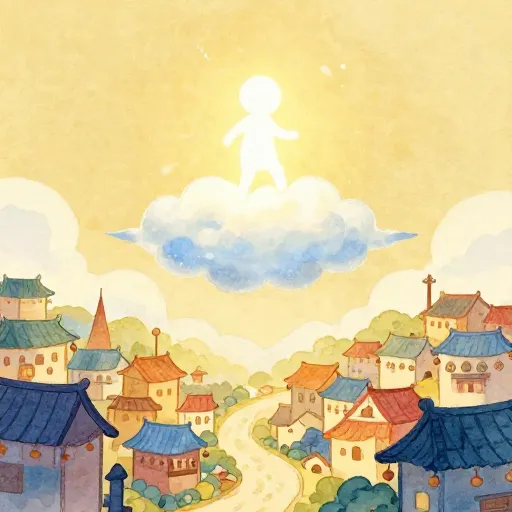
The word 'Avatar' comes from the Sanskrit word 'Avatara,' which means 'to descend.' Long before it was a movie or an internet profile picture, it described a god coming down to Earth to help humans.
There are ten famous avatars of Vishnu, ranging from a giant fish to a brave prince. Two of the most famous are Rama and Krishna. Their lives are told in two massive epic poems: the Ramayana and the Mahabharata. These aren't just adventure stories: they are guides on how to live a good life.
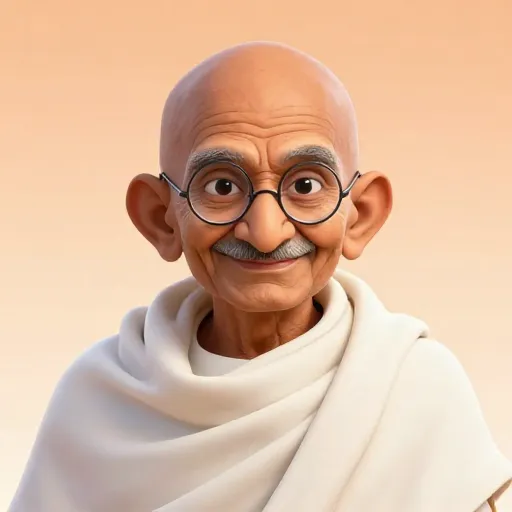
Truth is the ultimate goal: and the way to it is through Dharma.
In the Ramayana, Prince Rama has to rescue his wife, Sita, from a ten-headed demon king. Along the way, he teaches us about Dharma, which means doing the right thing even when it is incredibly difficult. It is the idea that we all have a specific duty to our family, our friends, and the world around us.
The Choice of the Hero
The Mahabharata is much longer and more complicated. It tells the story of a great war between two groups of cousins. In the middle of the battle, the hero Arjuna feels sad and confused. He doesn't want to fight his own family. His charioteer, who is actually the god Krishna in disguise, stops time to talk to him.
This conversation is a famous book called the Bhagavad Gita. Krishna explains that we cannot always control what happens to us, but we can control how we act. He suggests that the best way to live is to do your work with all your heart, without worrying about whether you will get a reward. This is a very different way of thinking about success.

Mira says:
"I like the idea of doing something just because it’s right, not because you want a trophy. It makes the doing part feel more important than the winning part."
Arjuna learns that being a hero isn't always about winning. Sometimes, being a hero is about having the courage to face a situation where there are no easy answers. The mythology doesn't hide the fact that life is hard: it just gives us tools to keep walking through the difficulty.
Power and Wisdom: The Goddesses
While the gods are very important, the stories say they wouldn't have any power without the Devi, or the Great Goddess. The goddesses represent Shakti, which is the raw energy that makes everything happen. Without energy, even a god cannot move.
- Durga is a warrior who rides a tiger and carries weapons to protect the world.
- Lakshmi brings light and prosperity, reminding us to be grateful for what we have.
- Kali represents the wild, untameable power of time and change.
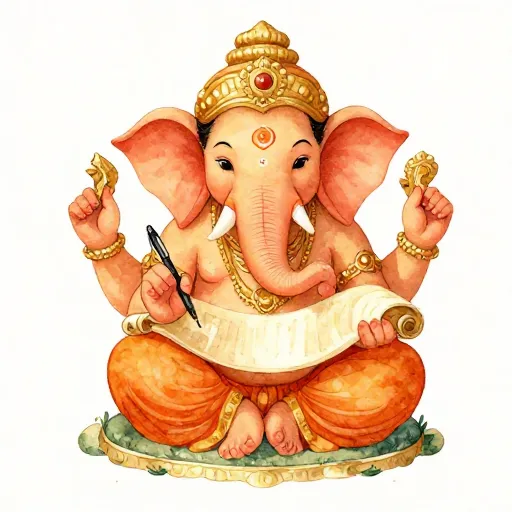
Ganesha is often shown with one broken tusk. Legend says he broke it off himself to use as a pen so he could finish writing down the massive story of the Mahabharata without stopping.
These figures show that power comes in many forms. Sometimes it is the quiet power of a mother’s love, and sometimes it is the fierce power of a storm. By including many different types of goddesses, the mythology suggests that every person has both gentle and strong qualities inside them.
Animals as Teachers
One of the most beautiful parts of these myths is how they treat animals. Many gods have a Vahana, or a special animal that they ride. This shows a deep respect for the natural world. It suggests that humans are not the only important creatures on the planet.
Finn says:
"What if Hanuman's 'hidden strength' is something we all have? Maybe we just need a friend to remind us to take that first big leap."
Take Hanuman, the monkey god. He is one of the most beloved characters because he represents total devotion and hidden strength. He once forgot how powerful he was until his friends reminded him. This story reminds us that we all have inner strengths that we might have forgotten or haven't discovered yet.
Through the Ages
Through the Ages
These stories have survived for thousands of years because they are flexible. They aren't stuck in stone. They have changed as the world changed. In the past, people performed these stories through dance and shadow puppets. Today, you can find them in comic books, animated movies, and even video games.
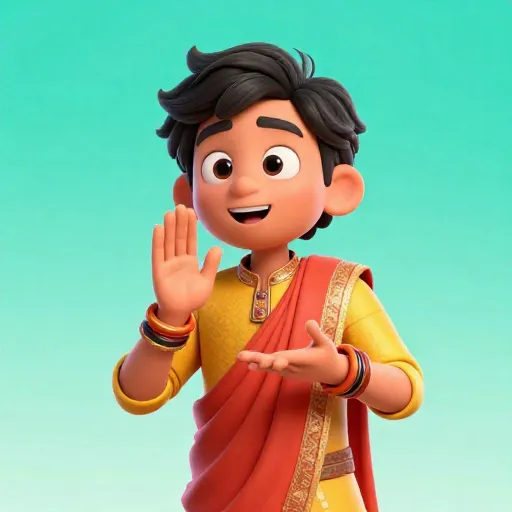
Within infinite myths lies the eternal truth. Who sees it all? Varuna has but a thousand eyes, Indra has a hundred, and I, only two.
Mythology is like a river. The water is always moving, but the river itself stays in the same place. The details of the stories might change depending on who is telling them, but the big ideas - about duty, love, and the mystery of time - remain the same. They continue to help people make sense of their lives, no matter where they live.
The next time you are outside, try to find a circle in nature. It could be the rings inside a tree stump, a spiderweb, or the way a flower opens. Hindu mythology suggests that if we look closely at these circles, we can understand the rhythm of the whole universe.
As you explore these stories, you might notice that they don't always provide a simple "moral" at the end. Instead, they often end with a question or a complicated situation. They invite us to think for ourselves and to find our own place in the great cycle of the world.
Something to Think About
If you were an avatar sent to help the world today, what quality would you bring with you?
There is no right answer to this: some might bring courage, others might bring humor or the ability to listen. Think about what you feel the world needs most right now.
Questions About Religion
Are there really millions of Hindu gods?
What is the difference between a myth and a lie?
Why does Ganesha have an elephant head?
The Story Continues with You
Hindu mythology isn't a finished book: it is a conversation that has been going on for thousands of years. Every time you think about your duty to others, or wonder about the cycles of nature, you are touching the same ideas that ancient thinkers pondered by the river. The wonder of these stories is that they don't just tell us about the past: they give us a mirror to see ourselves more clearly today.
